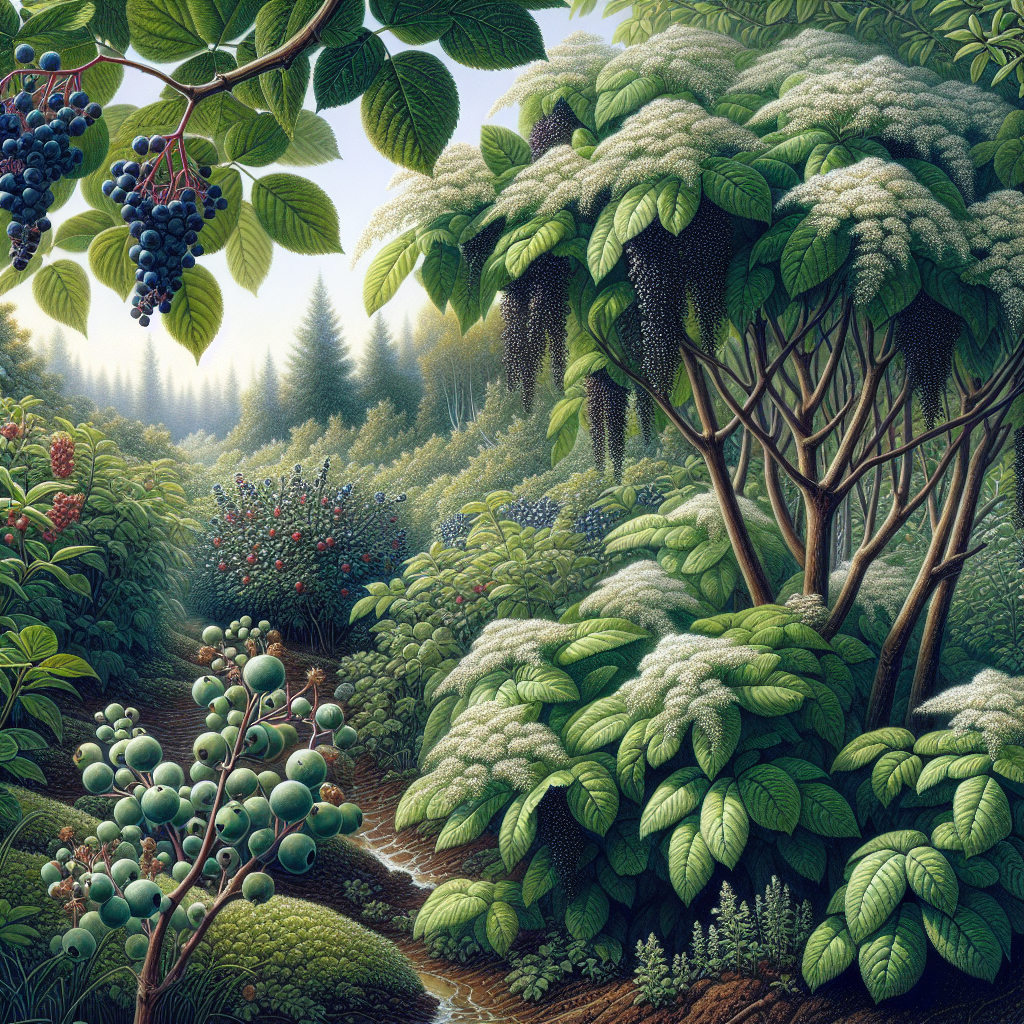
Introduction to elderberry
Elderberry (Sambucus spp.), commonly known as elder or elderberry bush, is a fast-growing, deciduous shrub native to Europe, North America, and parts of Asia. While valued in permaculture and wild foraging for its berries and flowers used in jams, wines, and herbal remedies, elderberry becomes a significant agricultural pest when it invades cultivated fields, orchards, and vineyards. Its aggressive growth habit allows it to form dense thickets that outcompete crops for sunlight, water, and nutrients, leading to substantial yield losses. In the U.S., American elderberry (Elderberry (American)) is particularly problematic in the Midwest and Eastern states, where it thrives in moist, disturbed soils.
This definitive guide equips farmers, orchardists, and small-scale growers with professional-grade diagnostics, lifecycle understanding, and organic management strategies. By recognizing early signs and implementing targeted controls, you can prevent elderberry from turning your blueberry patches or raspberry rows into impenetrable thickets. For small farms battling invasive weeds, check out this Spring Pest Patrol: Organic AI Strategies to Shield Your Crops from Common Invaders for complementary tactics.
Elderberry's pest status stems from its allelopathic properties—releasing chemicals that inhibit nearby plant growth—and its prolific seed production, with birds dispersing up to 1 million viable seeds per mature shrub annually. Left unchecked, a single plant can spawn colonies covering acres within 3-5 years, reducing crop yields by 30-50% in affected areas. Early intervention is key to sustainable agriculture.
Identifying Symptoms & Damage
Diagnosing elderberry infestations requires keen observation of both above-ground and subtle underground signs. Mature elderberry shrubs reach 6-20 feet tall, with compound leaves (5-11 serrated leaflets), flat-topped clusters of white flowers in spring, and dark purple-black berry clusters in late summer. Stems are pithy (soft, hollow core when cut), distinguishing them from similar woody invaders like mulberry (black).
Key Symptoms:
- Thicket Formation: Dense clusters of multi-stemmed shrubs with smooth gray-brown bark, often along field edges, ditches, or fence lines.
- Crop Competition: Stunted growth in nearby crops, yellowing leaves, and reduced fruit set due to shading and nutrient theft. In grapes, expect 20-40% fewer clusters.
- Allelopathy Indicators: Bare soil zones around elderberry bases ("witch's circle" effect) where grass or crops fail to grow.
- Seedling Swarms: Thousands of small seedlings (2-6 inches tall) with opposite leaves emerging in spring, often mistaken for harmless weeds.
- Damage to Infrastructure: Roots cracking irrigation lines or heaving sidewalks; berries staining equipment and walkways.
Diagnostic Tools:
- Cut stem cross-section: White, soft pith vs. solid in trees.
- Scratch test: Green cambium layer under bark on live stems.
- Berry test: Raw berries cause nausea if ingested—confirms Sambucus spp.
Differentiate from look-alikes: Poison elderberry lacks flowers/berries; dogwood has simple leaves. Use magnification for root suckers invading crop rows. Early detection via weekly patrols prevents establishment.
Lifecycle and Progression of elderberry
Elderberry's lifecycle is perennial and resilient, enabling rapid spread. It progresses through four stages:
- Seed Germination (Spring): Seeds, viable for 5+ years, sprout after cold stratification (90-120 days below 40°F). Optimal in moist, loamy soils pH 5.5-6.5.
- Vegetative Growth (Summer): Shoots elongate 2-6 feet/year, forming root suckers up to 10 feet from parent. Colonies expand 5-10 feet annually.
- Reproductive Phase (Year 2+): Flowers May-June, pollinated by insects; berries ripen July-August, bird-dispersed.
- Dormancy/Survival (Winter): Dies back to ground in cold climates but regrows from roots; tolerates -20°F.
Progression Timeline:
- Year 1: Seedling to 2-3 ft shrub.
- Year 3: Mature, fruiting thicket.
- Year 5+: 20-ft canopy, seeding millions.
Rhizomes (underground stems) store energy, sprouting post-disturbance like mowing. One acre can support 500+ plants, producing 100+ lbs berries/year, fueling bird-mediated invasion. Monitor aphids vectors on new growth.
Environmental Triggers & Risk Factors
Elderberry thrives in disturbed, moist environments, exploiting agricultural vulnerabilities:
- Soil Conditions: Prefers fertile, well-drained loam; pH 5.0-8.0. Poor drainage or flooding boosts germination.
- Climate: Warm summers (70-85°F), mild winters. USDA zones 3-9.
- Disturbance: Tillage, fire, or construction creates seedbeds.
- Proximity Risks: Near waterways, fencerows, or wild areas where birds roost.
- Crop Interactions: Invades strawberry, blackberry, and apple orchards, exacerbated by over-fertilization (high nitrogen).
Risk Factors:
- Recent land clearing: 80% infestation rate.
- Bird attractants like unsecured compost.
- Wet springs following drought.
Mitigate by avoiding over-irrigation near edges and using cover crops like clover.
Organic Control & Treatment Plans
Organic management combines mechanical, cultural, and biological methods for 90%+ control without synthetics.
Immediate Actions (Small Infestations <50 plants):
- Manual Removal: Dig out entire root ball (12-18 inches deep) in fall/winter when dormant. Use mattock for rhizomes. Bag/destroy all parts—burn or solarize.
- Cut-Stump Treatment: Cut stems 6 inches above ground, immediately apply 20% vinegar or citric acid solution to cambium. Repeat monthly.
Large-Scale Plans:
- Mowing + Mulching: Mow repeatedly (every 2 weeks) for 2 years to exhaust roots. Cover with 6-inch cardboard mulch + wood chips.
- Goat Grazing: Rent goats for 4-6 weeks; they devour foliage, stressing plants.
- Biological: Encourage slugs and snails predators? No—use chickens/ducks to forage seedlings.
- Organic Herbicides: Glacial acetic acid (20-30%) or clove oil-based products, applied to foliage in heat (80°F+). Spot-treat only.
Integrated Plan (12 Months): Month 1-3: Mow/cut. Month 4-6: Vinegar treatments. Month 7-12: Mulch + monitor seedlings. Expect 70% die-off year 1, 95% year 2. Track progress with photos.
Preventing elderberry in the Future
Prevention focuses on barriers and habitat denial:
- Site Prep: Clear fencerows 20 feet into fields pre-planting.
- Barriers: Install geotextile fabric or deep-root barriers (24 inches).
- Crop Rotation: Alternate with dense corn or wheat to shade seedlings.
- Bird Deterrents: Net berries; use reflective tape.
- Soil Management: Improve drainage; avoid excess N.
- Monitoring: Scout edges weekly; use apps for ID.
- Neighbor Coordination: Community control prevents re-invasion.
Long-term: Plant competitive natives like yarrow or thyme.
Crops Most Affected by elderberry
Elderberry targets moist, fruit-heavy crops:
- Berry Crops: Blueberry, raspberry, blackberry, strawberry—shading reduces yields 40%.
- Orchards: Apple, cherry, peach—root competition stunts trees.
- Vines: Grapes—thickets block airflow, promoting powdery mildew.
- Vegetables: Cucumber, squash—seedlings overrun rows.
Small farms lose $500-2000/acre annually. Protect high-value elderberry (American) ironically by isolating from invasives—no, focus on natives.
(Word count: 1452)