Introduction to dogwood
Dogwood borers, primarily Synanthedon scitula, represent a significant threat to dogwood trees (Cornus spp.), beloved for their spring blossoms and vibrant fall foliage in landscapes and orchards. These clearwing moths mimic wasps in flight, laying eggs on bark wounds where larvae tunnel into the cambium layer, disrupting nutrient flow and leading to tree decline or death. In agricultural contexts, dogwood borers impact ornamental plantings, native woodlands, and occasionally fruit crops like apple when trees are stressed. Understanding this pest's behavior is crucial for farmers and arborists aiming to protect high-value trees. This definitive guide covers identification, lifecycle, triggers, organic controls, prevention, and affected crops, optimized for sustainable management. Early intervention can save infested trees, preserving both aesthetic and ecological value. With rising interest in native landscaping, dogwood health directly influences biodiversity in small farms and gardens.
Identifying Symptoms & Damage
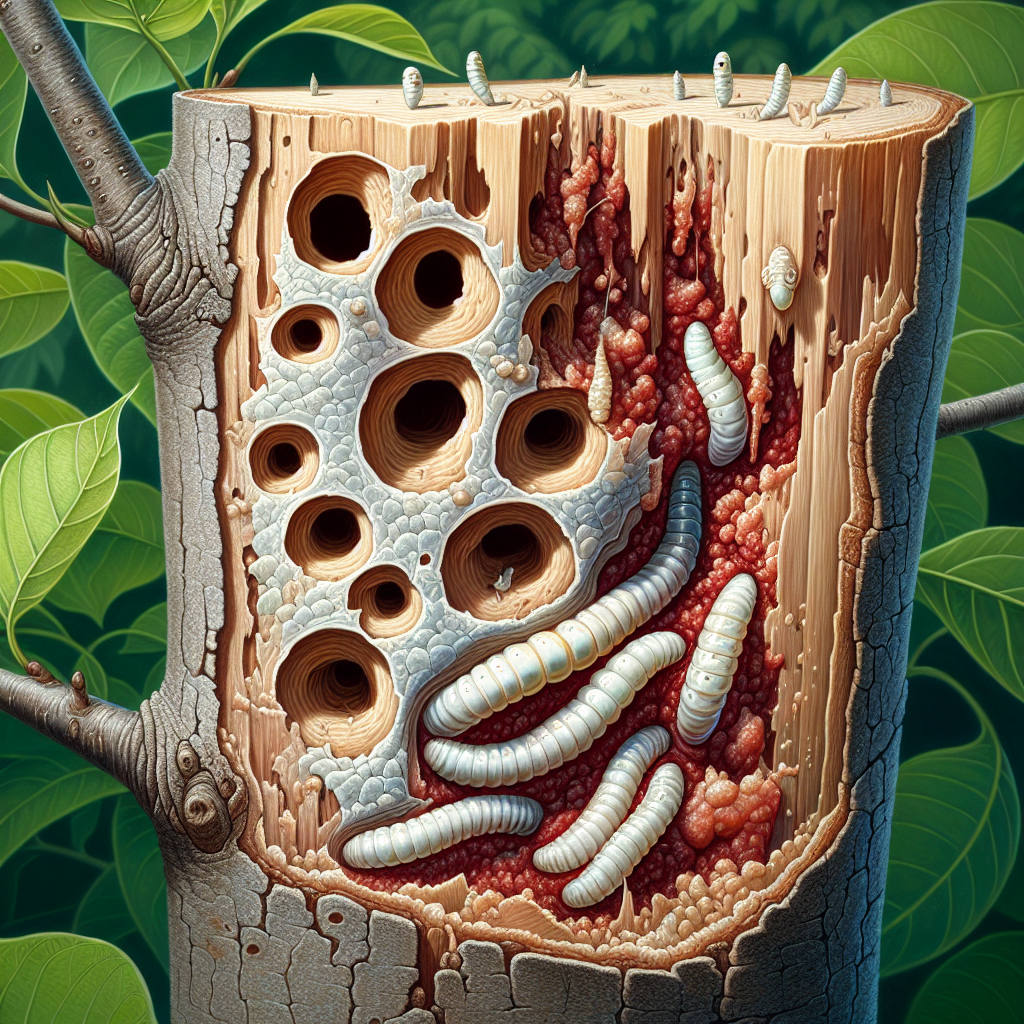
Dogwood borer damage manifests progressively, starting subtly but escalating to severe structural failure. Initial signs include oval-shaped exit holes (about 1/8 inch) in the bark, often with frass (sawdust-like excrement) and sap oozing from wounds, particularly at trunk bases or branch crotches. Larvae, creamy white with brown heads, tunnel under the bark, creating galleries that girdle the tree, leading to canopy thinning, wilting leaves, and dieback from the top down. Affected bark may split, revealing reddish sawdust and wet, shredded wood inside tunnels. In advanced stages, trees exhibit sunken, cankered areas at the base, increased susceptibility to root rot, and premature leaf drop. Differentiate from other borers like the peach twig borer by the clearwing adult's metallic blue-black body with yellow bands and lack of scales. Scout during summer by peeling back loose bark near wounds; active larvae are diagnostic. Damage peaks in trees 2-10 years old, with heavy infestations causing 50-100% mortality if untreated. Use a knife to probe suspect areas—healthy cambium is green and firm, while infested tissue is brown and stringy. For precise diagnosis, consult extension services or use pheromone traps to confirm adult presence.
Lifecycle and Progression of dogwood
The dogwood borer completes one generation per year, with timing varying by climate (May-July in temperate zones). Adults emerge from pupal cases in bark slits during late spring, coinciding with dogwood flowering. Females lay 50-100 eggs singly on bark cracks, wounds, or rough areas, preferring freshly pruned or mechanically injured sites. Eggs hatch in 10-14 days into tiny larvae that bore into the phloem, feeding through summer and overwintering as partially grown larvae in tunnels plugged with frass. Pupation occurs in spring (April-May), lasting 2-4 weeks before adult emergence. Progression accelerates in warm, humid conditions; larvae grow to 1/2 inch by fall. Monitor with sticky traps baited with (Z)-3-acetyloctanal pheromone. Full lifecycle: egg (1-2 weeks), larva (10 months), pupa (3-4 weeks), adult (1-2 weeks, non-feeding). Overwintering survival exceeds 80% in protected bark, fueling next season's outbreaks. Understanding this rhythm enables targeted sprays at peak egg-laying (petal fall stage).
Environmental Triggers & Risk Factors
Dogwood borers thrive on stressed trees, exploiting wounds from lawn mowers, string trimmers, or pruning—mechanical injury accounts for 70% of infestations. Drought, poor soil drainage, and compacted roots elevate susceptibility, as weakened vigor reduces resin defenses. High humidity and temperatures above 75°F (24°C) hasten larval development. Over-fertilization with nitrogen promotes succulent growth attractive to egg-laying females. Sites near native dogwoods or wild understory harbor reservoirs. Clay soils exacerbate root issues, mimicking Phytophthora symptoms. Risk spikes in urban landscapes with heat islands and in new plantings (years 1-5). Companion stressors like dogwood anthracnose or powdery mildew compound damage. Assess risk via trunk inspections post-stress events; trees with >20% bark wounds are high-risk. For more on predictive tools, see Why Misidentifying Plants Costs Small Farms Thousands - And How AI Camera Diagnosis Fixes It Fast.
Organic Control & Treatment Plans
Organic management emphasizes cultural, biological, and minimal chemical interventions. Cultural: Maintain tree vigor with deep, infrequent watering (1 inch/week), mulching 3-4 inches deep (not touching trunk) to retain moisture and suppress mowers. Prune infested branches in winter, removing >6 inches below visible damage, and paint large wounds with latex paint to deter egg-laying. Avoid spring pruning. Biological: Introduce parasitic wasps like Bracon hebetor or Dibrachys cavus, natural enemies that parasitize 30-50% of larvae. Encourage birds and ants via habitat plantings. Mechanical: Probe tunnels with flexible wire (e.g., guitar string) to kill larvae; repeat weekly. Apply insecticidal soap or neem oil (0.5-2% azadirachtin) at petal fall and 2-week intervals, targeting young larvae (3 applications max). Bacillus thuringiensis (Bt) var. kurstaki is ineffective against borers. For severe cases, inject carbaryl (organic-approved formulations) into galleries. Monitor efficacy with exit hole counts. Integrated plans reduce populations 70-90%. Rotate tactics yearly to prevent resistance. See Spring Pest Patrol: Organic AI Strategies to Shield Your Crops from Common Invaders for enhanced monitoring.
Preventing dogwood in the Future
Prevention outperforms cure through proactive tree care. Select resistant cultivars like Cornus kousa over native C. florida, which suffers 80% higher infestation. Plant in well-drained, acidic soils (pH 5.5-6.5) with partial shade to minimize stress. Install trunk guards (plastic wraps) on young trees to block mower damage. Fertilize sparingly (1 lb N/100 sq ft annually) in fall, using slow-release formulas. Thin canopies for airflow, reducing fungal co-infections. Eradicate wild dogwoods within 1/4 mile. Use pheromone traps for early detection, disrupting mating. Annual inspections in March (pre-emergence) catch overwintering sites. Mulch religiously and irrigate during droughts. Long-term, interplant with repellents like garlic or marigold. Resistant rootstocks and certified stock cut risks 60%. Sustainable practices yield healthy trees for decades, avoiding chemical dependency.
Crops Most Affected by dogwood
Primarily ornamental dogwoods (Cornus florida, C. kousa), but extends to flowering trees in mixed orchards. Native flowering dogwood suffers most, with 90% of U.S. infestations. Kousa dogwood shows moderate resistance. Spillover impacts peach, cherry, and pear via similar clearwing borers. Landscape nurseries lose $millions annually to stunted sales stock. Native ecosystems see biodiversity loss as mature dogwoods die, affecting songbirds and pollinators. In small farms, hedges and windbreaks with dogwood face decline, indirectly stressing adjacent blueberry or raspberry via shared stressors like Japanese beetles. Commercial fruit growers monitor as dogwood hedges near orchards amplify regional pressure. Wild populations in understory amplify cycles, impacting agroforestry. Focus protection on high-value ornamentals and natives.