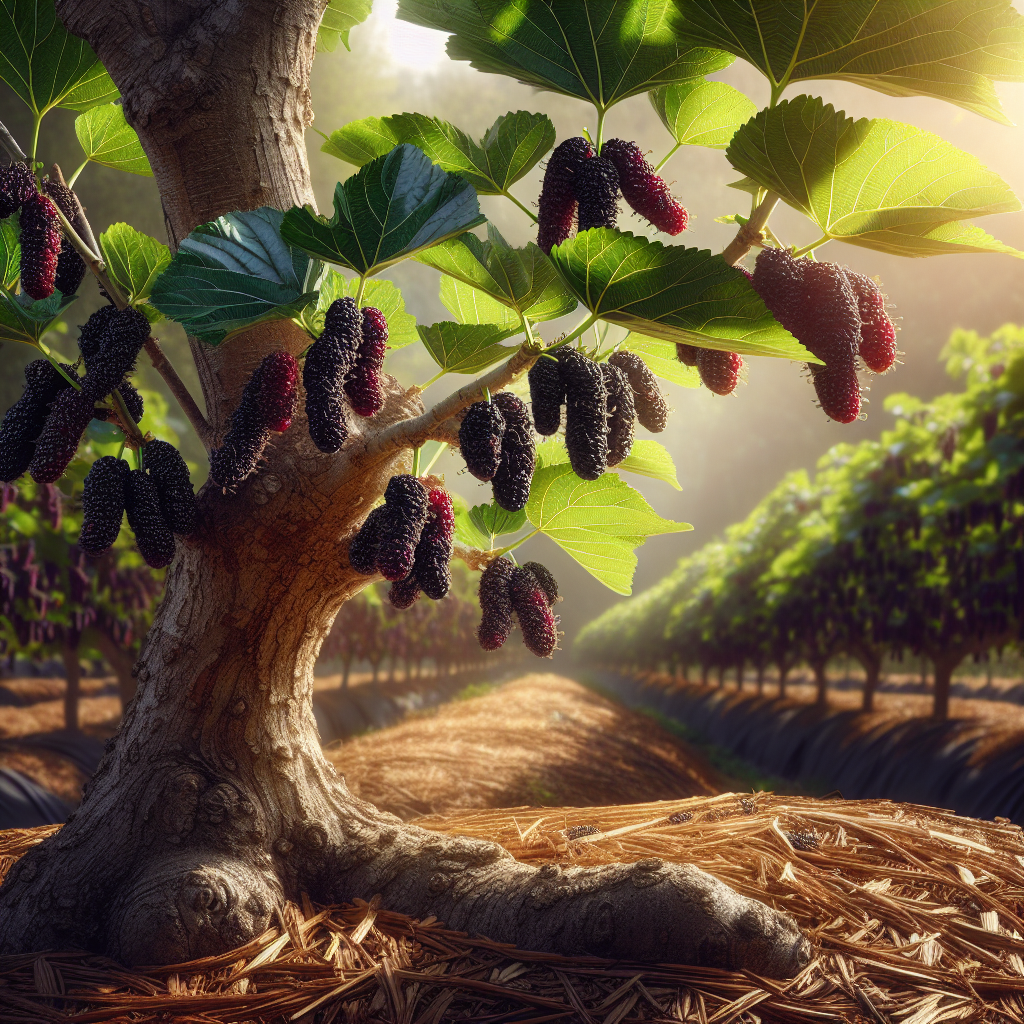
Introduction to Mulberry (Black)
Native to western Asia and cultivated for centuries across the Middle East, Mediterranean basin, and parts of Europe, black mulberry is one of the oldest domesticated fruit trees in traditional gardens. It is distinct from white mulberry and red mulberry not only in berry color, but in growth habit, leaf texture, fruit chemistry, and flavor intensity. Growers often discover that many trees sold simply as “black mulberry” are actually dark-fruited forms of other species; true black mulberry, Morus nigra, produces shorter, broader, rough-textured leaves and fruit with a richer acid-sugar balance that is especially valued for fresh eating, syrups, preserves, and fermentation.
This species is notably durable. Mature specimens can remain productive for decades, sometimes centuries, if planted in a suitable site. It is also more compact and slower growing than many mulberries, making it better suited to smaller orchards and managed homestead plantings. Compared with faster-growing mulberry types, black mulberry typically offers superior fruit quality but somewhat more modest annual extension growth. For growers interested in tree-fruit diversification, it fits well alongside mixed-fruit systems; if you also manage soft fruit blocks, compare pruning and canopy airflow principles with a Blackberry guide.
Commercial-scale black mulberry production remains limited in many regions because the fruit is delicate, bruises easily, and ripens over an extended period rather than in one machine-harvest window. That limitation is actually an advantage for direct-market farms and home orchards, where flavor matters more than shipping durability. When managed correctly, a black mulberry tree becomes a low-input perennial crop with excellent ecological value for pollinators, birds, and soil stability.
Botanical Profile of Mulberry (Black)
Morus nigra belongs to the Moraceae family, which also includes figs and breadfruit. It is generally a deciduous tree with a rounded, spreading canopy, often reaching 6-10 m tall under cultivation, though old trees may become larger. In many managed settings it is maintained at 3-5 m through pruning for ease of harvest. The bark becomes dark and fissured with age, and young twigs are stout compared with white mulberry.
Leaves are alternate, coarse, thick, and rough on the upper surface, usually heart-shaped to broadly ovate, often 8-20 cm long. Juvenile shoots may occasionally bear lobed leaves, but mature fruiting wood more often carries unlobed foliage. This rough leaf texture is a helpful field trait for distinguishing true black mulberry from Morus alba selections. The root system is deep and wide-ranging if soil permits, which contributes to drought resilience but also means the tree dislikes repeated disturbance once established.
The flowers are small, inconspicuous catkins. Black mulberry is typically self-fertile, so a single tree can crop well without a pollinizer. Fruit is a multiple fruit formed from many tiny drupelets that merge into an elongated aggregate. Berries are usually dark red turning nearly black at maturity, 2-3 cm long, soft, juicy, and heavily staining. Ripening is often staggered over several weeks in late spring to summer depending on climate.
One important botanical nuance is ploidy and species confusion. True Morus nigra is cytogenetically distinct and often less vigorous in juvenile growth than white mulberry. Many nursery trees marketed as black mulberry are dark-fruited Morus alba hybrids, which may bear well but differ in flavor and tree architecture. For growers seeking authentic Morus nigra, verify the source, examine mature leaf texture, and buy from specialty fruit nurseries with species-level accuracy.
Soil, pH, and Climate Requirements for Mulberry (Black)
Black mulberry performs best in deep, fertile, well-drained loam with good moisture-holding capacity and ample organic matter. Ideal soil depth is at least 1-1.5 m for long-term root development. While the tree tolerates a range of textures, the best combination is a structured loam or sandy clay loam that drains freely after rain yet does not dry into hard, cracked layers every week. Heavy clay can work if it is improved and the site never remains waterlogged. Pure sand is less desirable unless frequent irrigation and organic matter management are available.
The preferred pH range is about 6.2-7.5, though the species tolerates slightly more alkaline conditions than many small fruits. Below pH 5.8, nutrient availability can become uneven and growth may slow, especially if calcium or magnesium is limiting. Above pH 7.8, iron chlorosis may appear in calcareous soils, especially on young trees. Chlorosis shows first as yellowing between green leaf veins on newer foliage. If this occurs, add compost, improve drainage, avoid overliming, and use chelated iron where needed.
Drainage is critical. Mulberry roots need oxygen as much as moisture. Soil that stays saturated for more than 48-72 hours after heavy irrigation or rainfall can predispose the tree to root decline. In practical terms, after a deep watering, the top 5 cm of soil may dry slightly, but the 15-30 cm zone should remain evenly moist rather than swampy. If you dig a small inspection hole 20 cm deep and find gray, sour-smelling soil or standing water, the site is too wet. Raised berms 20-40 cm high are recommended in marginal soils.
Climatically, black mulberry favors warm temperate to subtropical regions. It generally performs best where winters are cool enough for dormancy but not brutally severe. It is often adapted to USDA zones roughly 5-9, though site exposure matters. It tolerates summer heat well once established, especially in dry air, but fruits best with full sun and moderate spring warmth. Late spring frost can damage new shoots and reduce crop on exposed sites, so low frost pockets should be avoided.
Chilling requirements are not discussed as rigidly as with many pome or stone fruits, but the tree benefits from a definite cool season. Humid tropical lowlands are usually less suitable than subtropical highlands or Mediterranean-type climates. In very humid regions, canopy thinning and sanitation become more important to reduce fungal pressure. Wind exposure should also be managed; strong, dry winds during fruit swell can reduce berry size and accelerate drop.
For long-term soil building in mixed orchard systems, perennial mulches, composted manures, and legume understories are useful. Broader soil management principles from soil health strategies apply especially well to mulberry because it is a permanent crop that benefits from steady biological improvement rather than aggressive annual tillage.
Step-by-Step Planting & Propagation
Choose a site with at least 8 hours of direct sun, good air movement, and enough room for the mature canopy. For free-standing orchard trees, spacing of 6-8 m between trees is appropriate for standard forms. For smaller managed trees pruned annually, 4-5 m may suffice. Keep trees well away from patios, driveways, or light-colored surfaces because ripe fruit stains intensely and bird activity can be heavy.
Before planting, test the soil for pH, organic matter, and major nutrients. Remove perennial weeds in at least a 1-1.5 m diameter circle. If soil is compacted, rip or broadfork deeply before planting season. Incorporate well-finished compost into the broader planting zone rather than creating a highly amended pocket that discourages outward root exploration.
Plant dormant bare-root trees in late winter to early spring where winters are cold, or plant container-grown trees in spring or autumn where frost is moderate. Dig a hole two to three times as wide as the root spread, but no deeper than the root system. Set the tree so the root flare sits at or slightly above finished soil grade. If grafted, keep the graft union above the soil line. Backfill with native soil, firm gently, and water thoroughly to settle air pockets.
Apply 5-8 cm of mulch after planting, keeping it 8-10 cm away from the trunk to prevent rot and rodent damage. Good mulches include shredded leaves, aged wood chips, or straw that has not gone moldy. In the first year, stake only if the site is windy or the planting stock is top-heavy. Overstaking can reduce trunk strength.
Propagation is possible from hardwood cuttings, softwood cuttings, layering, grafting, or budding, though black mulberry can be more reluctant to root than white mulberry. Hardwood cuttings 20-25 cm long, taken during dormancy from pencil-thick wood, may root under mist or in a protected nursery bed with bottom warmth. Better success is often obtained by whip grafting or budding onto compatible mulberry rootstocks. Air layering can also work for small-scale propagation of named trees.
Seed propagation is not recommended when varietal fidelity matters, because seedlings vary and may take longer to bear. Named cultivars of true black mulberry should be clonally propagated. Young grafted or cutting-grown plants often begin producing lightly in 2-4 years, while more substantial cropping may take 5-7 years depending on rootstock, climate, and pruning style.
Care & Maintenance regimes for Mulberry (Black)
Water management changes significantly with age. During establishment, maintain consistent soil moisture in the root zone without saturation. A newly planted tree typically needs one deep irrigation per week in mild weather, increasing to two in hot, drying periods on sandy soils. The target is moist soil 20-30 cm deep. A practical check: squeeze a handful of soil from that depth. It should feel cool and hold together lightly, not drip water or crumble into dust.
Signs of underwatering include wilting by midday that persists into evening, small dull leaves, premature fruit drop, and berries that remain undersized or dry. Signs of overwatering include yellowing leaves with soft growth, persistent surface wetness, algae or moss near the trunk, sour-smelling soil, and shoot dieback from root stress. Chronic overwatering is more damaging than occasional mild drought once the tree is established.
Mature black mulberry trees are drought tolerant, but irrigation during flowering, fruit set, and fruit swell improves berry size and reduces premature drop. In dry climates, provide deep irrigation every 10-14 days during active growth if rainfall is absent. Avoid frequent shallow watering, which encourages surface rooting and poorer drought resilience.
Nutrient needs are moderate. Excess nitrogen produces lush, sappy shoots at the expense of fruiting balance and can make the canopy harder to manage. In early spring, apply compost or a balanced organic fertilizer based on soil test results. As a broad guideline, young trees may benefit from light feeding split into early spring and early summer, while mature trees often need only one spring application if soil fertility is decent. If annual shoot growth exceeds 45-60 cm on mature bearing trees, reduce nitrogen inputs.
Pruning should be purposeful and relatively restrained. Mulberries can bleed sap if pruned heavily during active growth or late winter just as sap rises. The best windows are mid-summer after harvest for size control, or deep dormancy in colder climates when bleeding risk is lower. Train young trees to an open-centered or modified central leader form with 3-5 well-spaced scaffold limbs. Remove crossing wood, crowded interior shoots, root suckers, and low limbs that obstruct access.
Fruit is usually borne on current season growth arising from older wood and on short spurs, depending on cultivar and training. Overpruning can trigger excessive vegetative regrowth and reduce accessible fruiting wood the next season. For home and small-market systems, keep height to 3-4 m through gradual annual reduction cuts rather than severe topping.
Weed competition matters most during the first 3-5 years. Maintain a weed-free mulch ring around the trunk, ideally 1 m radius for young trees and wider as the canopy expands. Avoid mechanical cultivation close to the tree because feeder roots can lie near the surface. White trunk guards may help prevent sunscald and rodent injury in cold winter areas.
Bird pressure can be severe near ripening. Netting is effective for smaller trained trees, but impractical on very large specimens. Ground cloths or tarps placed under the canopy can simplify collection of naturally falling ripe fruit.
Pests, Diseases & Organic Management
Black mulberry is generally considered resilient, but no orchard tree is entirely trouble-free. Pest and disease pressure varies strongly by region, humidity, cultivar authenticity, and sanitation.
Common insect issues include scale insects, mealybugs, aphids, spider mites, whiteflies in protected settings, and occasionally borers in stressed trees. aphids and whiteflies usually attack soft young growth and may produce honeydew that leads to sooty mold. Small infestations can be tolerated or washed off with water. Beneficial insects often keep them in check if broad-spectrum insecticides are avoided. Horticultural oils applied during dormancy help suppress scale populations, while summer oils can be used cautiously outside extreme heat.
spider mites become more troublesome in hot, dusty conditions. Symptoms include stippled leaves, bronzing, and fine webbing on undersides. Improve irrigation consistency, reduce dust, and encourage predatory mites. mealybugs and soft scale can be physically pruned out on small trees if caught early.
birds are among the most significant “pests” because ripe fruit is highly attractive. Harvest frequently and consider netting or decoy strategies. Fallen fruit should be collected promptly to reduce wasps, vinegar flies, and fermenting mess.
Disease problems include bacterial blight, leaf spot fungi, powdery mildew in some climates, cankers, and root disorders in poorly drained soils. Symptoms of leaf spot include small brown or black lesions that may merge under humid conditions. powdery mildew appears as a pale whitish coating, often on young leaves. Good airflow, sun exposure, mulch management, and avoidance of overhead irrigation late in the day are the first lines of defense.
root rot is the most serious preventable issue and is almost always tied to drainage failure. If foliage yellows while the soil remains wet, and the tree shows weak growth despite adequate fertility, inspect roots and site hydrology before adding more fertilizer. Planting on raised mounds and keeping mulch away from the trunk base are powerful preventive measures.
Organic management relies on prevention: clean pruning tools, balanced nutrition, sanitation of dropped fruit, removal of diseased twigs, and maintenance of tree vigor without excess nitrogen. Copper-based products may help with some bacterial and fungal issues when used according to local regulations, but cultural control should remain primary. Avoid wounding trunks and major limbs, since stressed or injured tissue invites secondary pathogens.
Harvesting, Curing & Optimal Storage
Fruit is harvested when fully colored, soft, aromatic, and easily detached. Unlike some fruits, black mulberries do not improve significantly after picking if harvested underripe. The best berries are usually almost black, glossy to slightly dull depending on surface bloom, and release with minimal tug. Taste is the final indicator: mature fruit has deep sweetness backed by noticeable acidity and perfume.
Harvesting is usually done by hand every 1-3 days during the ripening window. Another traditional method is to spread clean sheets or tarps under the tree and gently shake branches so only ripe fruit drops. This works best on dry mornings after dew has evaporated. Avoid harvesting wet fruit for storage because surface moisture accelerates collapse and mold.
There is no true curing stage as with onions or garlic; instead, careful postharvest handling is the priority. Place berries in shallow containers no deeper than a few layers to reduce crushing. Remove leaves, twigs, overripe fruit, and any berries showing leakage. Because black mulberries are delicate, they are best cooled immediately to 0-4°C with high relative humidity around 90-95%.
Even under refrigeration, storage life is short, typically 2-5 days at best. For this reason, most growers process excess fruit quickly into jam, syrup, molasses-style reductions, juice, wine, freezer packs, or dehydrated leather. Freezing preserves quality well: spread dry berries in a single layer to freeze individually, then pack into airtight containers. For drying, use only fully ripe but not leaking fruit; expect a very dark, intensely flavored dried product.
Fruit stains hands, fabric, concrete, and harvest bins, so use washable containers and gloves if appearance matters. Harvest timing is crucial because overripe fruit drops, ferments rapidly, and attracts insects. In direct sales, emphasize same-day or next-day consumption.
Companion Planting for Mulberry (Black)
Because black mulberry eventually forms a broad canopy and a competitive root zone, companion planting should focus on support species that improve soil biology, attract beneficial insects, and tolerate partial shade at the canopy edge. Avoid aggressive vines or thirsty annuals planted right against the trunk. Keep the first 60-90 cm around the trunk free of dense understory, especially while the tree is young.
Clover is one of the best understory companions in orchard alleys and around the dripline, but not packed against the trunk. It helps protect soil, adds organic matter, supports pollinators, and contributes biologically fixed nitrogen when managed as a living mulch. Mow or scythe it periodically so it does not compete excessively for moisture in dry climates.
Thyme works well in sunny, well-drained positions near the outer root zone. Its low habit suppresses some weeds, attracts beneficial insects during bloom, and does not create the dense, wet stem contact at the trunk base that can encourage disease. It is especially useful in Mediterranean-style orchards.
Yarrow is a strong biodiversity plant for orchard margins. Its flowers attract parasitic wasps, hoverflies, and other beneficials, and its deep rooting habit can help cycle nutrients. Plant it where it receives enough light and trim after flowering if self-seeding is undesirable.
Nasturtiums can also be used seasonally in young orchards as trap and pollinator plants, though they are better suited to wider tree spacing and lighter soils than to crowded mature orchards. In all cases, companion plants should support the tree system rather than compete with it. The goal is a biologically active orchard floor, stable mulch coverage, and improved beneficial insect presence without creating excess humidity around the trunk or robbing the tree of water during fruit fill.