Introduction to duck (livestock integration)
Duck integration involves incorporating domestic ducks into mixed farming systems to provide natural pest control, weed suppression, and nutrient cycling. When managed correctly, ducks reduce reliance on synthetic inputs while enhancing biodiversity. However, without proper fencing, stocking rates, and rotation, these birds can become a significant agricultural pest by grazing seedlings, compacting soil, and spreading pathogens.
Farmers practicing Rice and Wheat rotations frequently employ ducks for insect and weed management, yet the same animals can devastate young Tomato or Lettuce beds if containment fails. Understanding the balance between benefit and risk is essential for sustainable livestock-crop integration.
Identifying Symptoms & Damage
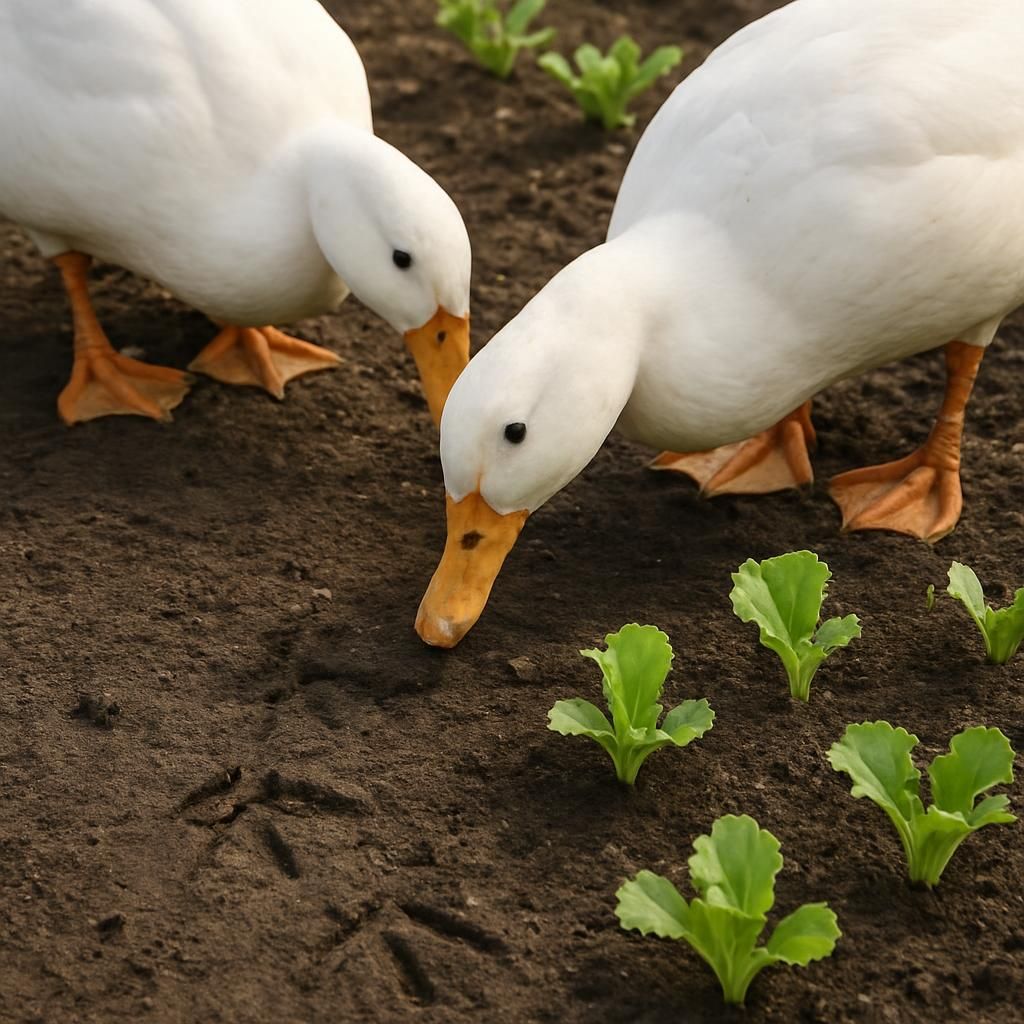
Visible signs of duck-related damage include cleanly sheared seedling stems at soil level, ragged leaf margins on low-growing crops, and extensive webbed-foot prints in moist soil. In severe cases, entire rows of germinating Corn or Soybeans may disappear overnight.
Soil compaction appears as hardened pathways and reduced water infiltration, while white or greenish droppings signal potential bacterial contamination near irrigation sources. Early detection through regular scouting prevents escalation from beneficial ally to costly pest.
Lifecycle and Progression of duck (livestock integration)
The progression from integrated asset to pest follows predictable stages driven by seasonal behavior and management lapses.
| Stage | Description | Typical Duration | Key Indicators |
|---|---|---|---|
| Egg | Hens lay 8–16 eggs in concealed nests near water sources | 28 days incubation | Nesting activity in crop borders |
| Duckling | Precocial young forage independently within 24 hours | 6–8 weeks | Rapid group movement through seedlings |
| Juvenile | Flight feathers develop; exploratory foraging increases | 8–16 weeks | Expanded range into new fields |
| Adult | Full size, peak grazing pressure during breeding season | Ongoing | Persistent trampling and fecal deposition |
Environmental Triggers & Risk Factors
High soil moisture after irrigation or rainfall increases both duck foraging efficiency and compaction risk. Warm spring temperatures accelerate duckling growth, amplifying damage potential during vulnerable crop establishment phases.
Dense plantings of low-growing crops such as Strawberry or Cabbage provide cover that encourages ducks to linger. Proximity to permanent water bodies and absence of perimeter fencing rank among the strongest predictors of integration failure.
Organic Control & Treatment Plans
Effective management relies on exclusion, habitat modification, and targeted deterrents rather than chemical intervention.
| Treatment Option | Application Method | Frequency | Notes |
|---|---|---|---|
| Temporary electric netting | Install 30-inch poultry netting around vulnerable beds | Seasonal, check daily | Highly effective for Potato and Onion plantings |
| Guard dogs or herding | Rotate livestock guardian dogs along field edges | Continuous during daylight | Reduces duck residency time |
| Reflective tape and balloons | Hang Mylar tape and predator-eye balloons at 10 m intervals | Replace every 7–10 days | Works best in open Wheat fields |
| Habitat modification | Remove standing water and tall grass within 50 m of crops | Monthly during growing season | Lowers attractiveness for nesting |
| Timed grazing windows | Allow ducks into fields only after harvest or pre-planting | 2–4 hours per session, 3x weekly | Maximizes pest control while protecting seedlings |
Preventing duck (livestock integration) in the Future
Design permanent infrastructure including 4-foot buried fencing and dedicated duck paddocks separated from annual crop zones. Implement strict stocking densities of no more than 4–6 birds per acre in mixed vegetable systems.
Rotate ducks through cover-crop blocks such as Clover before planting high-value crops, and maintain buffer strips of tall grasses to discourage movement into sensitive areas. Regular monitoring and immediate corrective action at the first sign of escape prevent chronic problems.
Crops Most Affected by duck (livestock integration)
Low-growing leafy greens suffer the highest losses. Lettuce, Spinach, and young Cabbage are frequently stripped to the ground. Root crops including Carrot and Beet experience indirect damage through soil compaction that restricts root expansion.
Grain crops such as Barley and Oats may benefit from duck foraging on insects yet face lodging when flocks rest in dense stands. Fruiting vegetables like Bell Pepper and Eggplant sustain stem breakage and fruit pecking during late-season foraging.
For more on integrated livestock strategies, see the Wiki page on Rice systems and the practical guidance in The Truth About Weather Patterns and Small Farm Resilience.