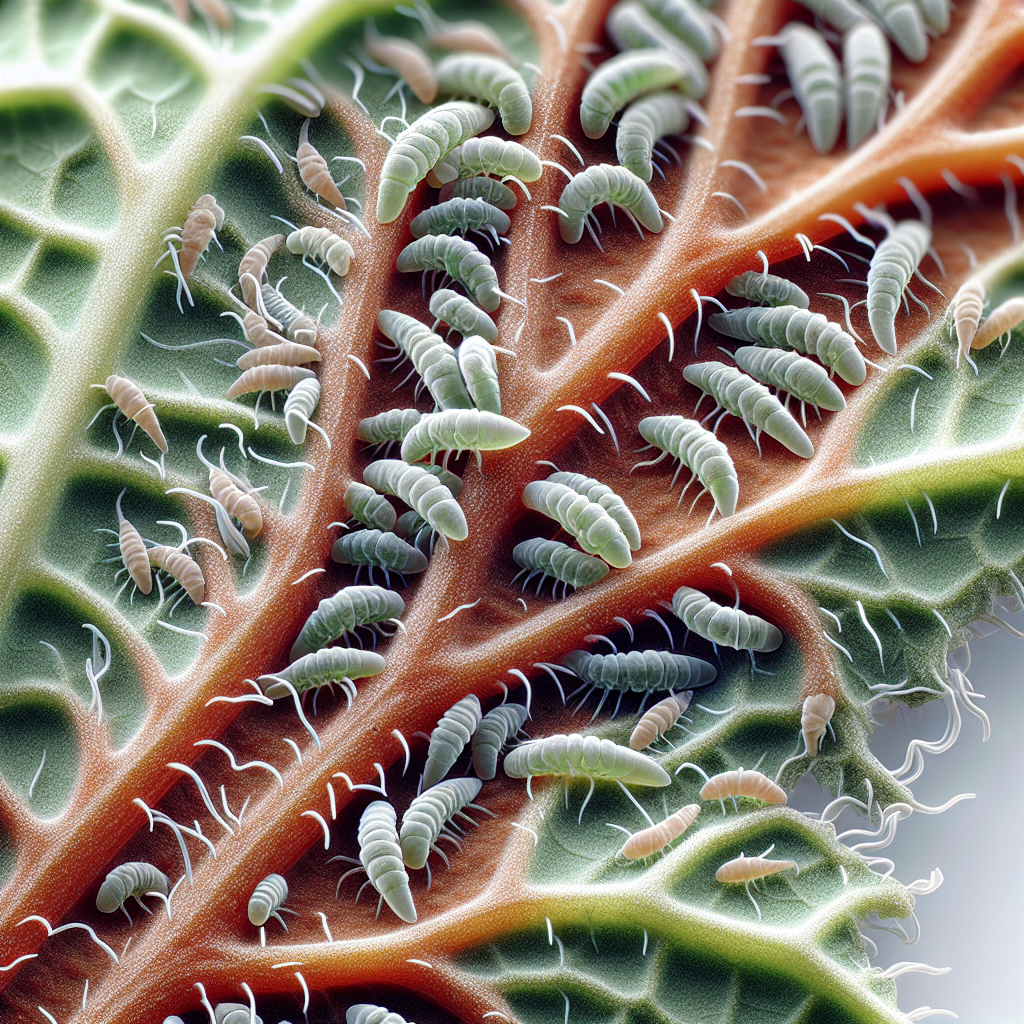
Introduction to Broad mites
Broad mites, scientifically known as Polyphagotarsonemus latus, represent one of the most insidious pests in modern agriculture, particularly in greenhouse and high-value crop production. These tiny arachnids, measuring just 0.2-0.3 mm in length, evade casual inspection due to their microscopic size and translucent, worm-like appearance. Unlike more visible pests like aphids or spider mites, broad mites target the newest growth, injecting toxic saliva that causes dramatic physiological damage. This leads to leaf curling, bronzing, blistering, and severe stunting, often mimicking viral infections or nutrient deficiencies.
First identified as a major pest in the early 20th century, broad mites have since spread globally, thriving in warm, humid environments common to tropical and subtropical crops. They pose a significant threat to both commercial operations and small farms, with infestations capable of wiping out entire plantings if undetected. Early diagnosis is critical, as populations explode under optimal conditions, doubling every 3-4 days. For growers battling these elusive invaders, understanding their biology and implementing integrated pest management (IPM) is essential. Read our comprehensive Spring Pest Patrol blog post for additional seasonal strategies.
The economic impact is profound: studies show yield losses up to 80% in untreated peppers and tomatoes. Broad mites also vector plant viruses indirectly by wounding tissues, compounding damage. This guide equips you with professional-grade diagnostics, organic treatments, and prevention tactics to safeguard your crops effectively.
Identifying Symptoms & Damage
Recognizing broad mite damage requires keen observation, as the pests themselves are nearly invisible without 20x magnification. Initial symptoms appear on the youngest leaves and growing tips, where mites congregate. Look for tight downward cupping or crinkling of leaves, giving plants a 'twisted' appearance. Affected foliage often develops a dull, bronze or coppery sheen, progressing to blackening and necrosis at margins.
New growth becomes brittle, stunted, and deformed—buds fail to open properly, resembling 'blind buds.' On stems, you may see russeting or longitudinal cracking. Fruiting crops like tomato and chili pepper show scarred, malformed fruits with hardened rinds. Unlike thrips, which cause silvery scarring, broad mite damage features glossy, water-soaked lesions that blister and rupture.
A telltale diagnostic is the 'charcoal' appearance of blackened leaf tips on severely infested plants. Vines and herbaceous crops exhibit 'witch's broom' growth—excessive axillary shoots due to hormonal disruption from mite saliva. Differentiate from powdery mildew by absence of white fungal growth; broad mite damage lacks webbing seen in spider mites. Use a hand lens: active infestations show mites moving rapidly on undersides, unlike slower-moving rust mites.
Damage escalates quickly: mild infestations stunt growth by 20-30%, while heavy ones cause 70-100% defoliation. In pepper crops, flowers abort, reducing yields by half. Always check lower leaves last, as mites migrate upward. Confirm with sticky traps or alcohol wash under microscope—broad mites appear as tiny, banana-shaped bodies with two hind legs.
Lifecycle and Progression of Broad mites
Broad mites complete their lifecycle in just 5-9 days under ideal conditions (75-85°F, 80-90% humidity), enabling 20-30 generations per season. Eggs, comprising 60% of the population, are translucent and laid singly on leaf undersides or in bud axils—up to 50 per female over 10-15 days. Larvae hatch within 2-3 days, passing through two nymphal instars before maturing into adults in 2-4 days.
All stages feed voraciously, but adults are most mobile, dispersing via wind or on worker clothing/tools. Females are pear-shaped (0.3 mm), males slightly smaller and faster-moving. Unlike spider mites, no webbing is produced. Progression follows a boom-bust cycle: populations peak in spring/summer, crashing in cool weather below 60°F.
Overwintering occurs as eggs or deutonymphs in plant debris. In greenhouses, continuous reproduction leads to year-round issues. Monitor with 60x hand lens weekly; thresholds are 1-2 mites per leaf for action. Lifecycle speed varies: at 68°F, it extends to 12 days, buying time for interventions.
Environmental Triggers & Risk Factors
Broad mites flourish in warm (77-86°F), humid (80%+ RH) conditions, common in greenhouses or tropical fields. High nitrogen fertilizers exacerbate outbreaks by promoting succulent growth. Poor airflow and dense canopies trap moisture, ideal for mite proliferation. Introduced via infested transplants or weeds, they spread rapidly on air currents.
Risk spikes with overhead irrigation, creating leaf wetness. Susceptible crops under stress from drought or root rot attract mites to tender tissues. Companion pests like whiteflies facilitate spread. Geographical hotspots include Florida, California, and Southeast Asia; imported avocado cuttings often harbor them.
Organic Control & Treatment Plans
Organic management emphasizes cultural, biological, and minimal chemical controls. Immediate Actions: Isolate infested plants; prune and destroy 20%+ symptomatic growth. Increase ventilation to drop humidity below 70%; use horizontal airflow fans.
Biological Controls: Release predatory mites like Amblyseius swirskii (1-2 per sq ft weekly) or Neoseiulus cucumeris. These devour broad mites without residue. Ladybugs and lacewings provide secondary control.
Organic Sprays: Sulfur (0.5-1% wettable, 3-5 day intervals) burns mites at high temps (80°F+). Apply at dusk to avoid phytotoxicity. Insecticidal soaps (2% potassium salts) or neem oil smother eggs/larvae—rotate to prevent resistance. Horticultural oils (1-2%) penetrate hiding spots; test on small areas.
Treatment Plan: Week 1: Sulfur + prune. Week 2: Predators + soap. Week 3: Oil + release more predators. Scout weekly; reapply if >1 mite/leaf. Avoid pyrethrins—they repel predators. For heavy infestations, 3x miticide rotations (abamectin if allowed) with 7-day PHI.
Soil Drenches: Beneficial nematodes (Steinernema feltiae) target soil stages. Success rates: 85-95% with IPM vs. 40% sprays alone. See Soil Health Mastery blog for soil support.
Preventing Broad mites in the Future
Prevention hinges on exclusion and monitoring. Quarantine new plants 2 weeks; inspect under magnification. Use UV-reflective mulches to deter landing. Maintain 68-77°F, <70% RH with dehumidifiers. Crop rotation disrupts lifecycles—avoid solanaceous sequences.
Plant resistant varieties like certain pepper hybrids. Scout weekly with tapping trays: mites fall as white specks. Sticky traps catch dispersers. Clean tools in 10% bleach. Introduce predators preemptively in high-risk areas. Sanitation: destroy crop residue; steam sterilize greenhouses.
IPM thresholds: 5% plants infested triggers action. Educate workers on hygiene. Long-term: diversify crops, enhance biodiversity with marigold borders repelling mites.
Crops Most Affected by Broad mites
Broad mites attack over 60 hosts, favoring tender perennials and vegetables. Top victims: peppers (all types, 70% losses), tomato (cherry tomato, roma tomato), eggplant, cucumber, strawberries, avocado (Hass avocado), beans, cotton. Tropicals like mango, banana, papaya suffer bud drop. Greenhouse herbs (basil, cyclamen) and ornamentals hit hard. Field crops: cotton, soybean. Avoid confusion with cyclamen mites on strawberries.