Introduction to Brewster
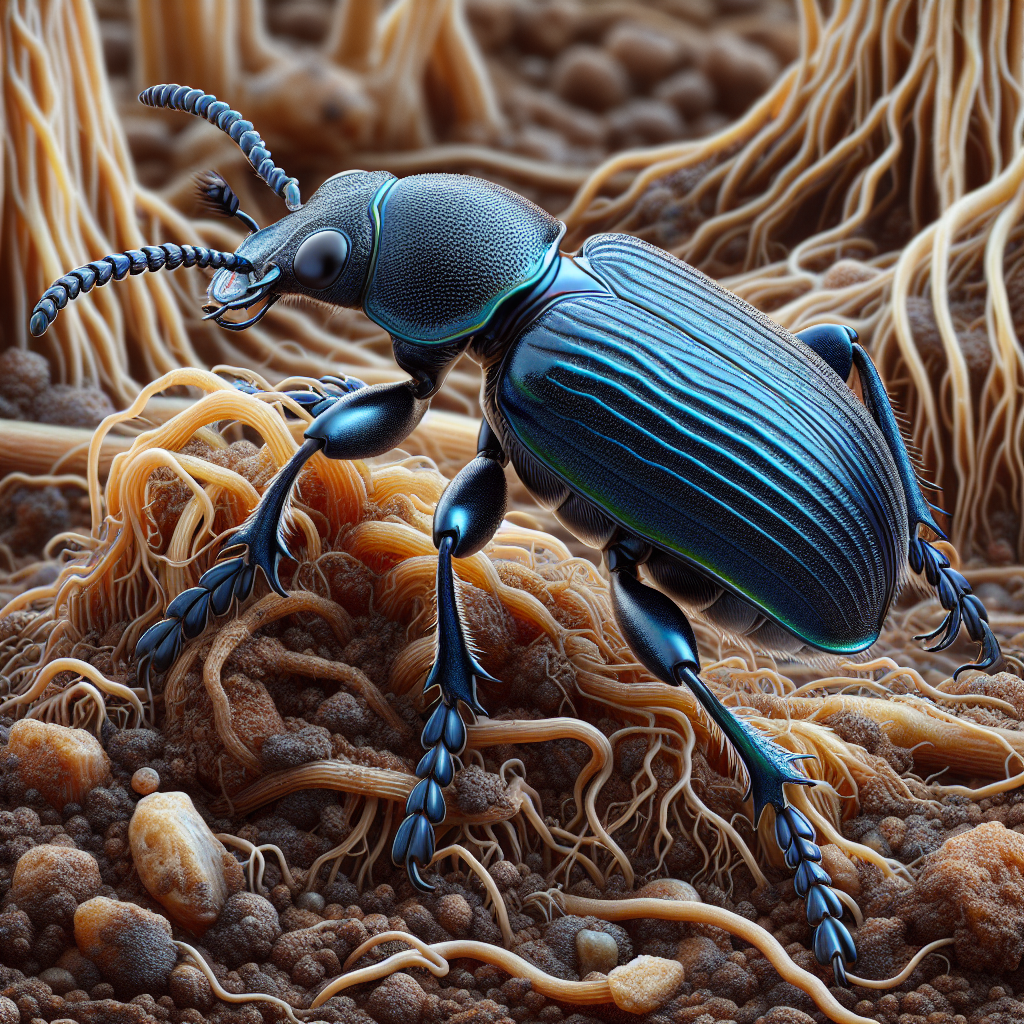
Brewster (Brewsterus devastans), commonly known as the Brewster beetle, is one of the most insidious pests in modern agriculture, particularly devastating to high-value crops in warm climates. First identified in the humid rice paddies of Southeast Asia in the early 2000s, this beetle has rapidly expanded its range through international trade of contaminated soil and planting stock. Adult Brewsters measure 8-12 mm in length with a shiny black exoskeleton marked by distinctive iridescent blue stripes along the elytra, earning it the nickname "blue-stripe root reaper."
What sets Brewster apart from common pests like aphids or cutworms is its subterranean lifestyle. Larvae, known as "Brewster grubs," can remain hidden in soil for up to 18 months, emerging only when conditions favor adult activity. This cryptic behavior makes early detection challenging, often resulting in sudden, widespread crop failure. Farmers report losses averaging 40-70% in untreated fields, with corn, potato, and cassava being prime targets.
Annual global economic impact exceeds $500 million, with smallholder farms suffering disproportionately due to limited access to advanced monitoring tools. Brewster thrives in temperatures above 24°C (75°F) and poorly drained soils, making it a growing threat amid climate change. This guide provides definitive diagnostic protocols, lifecycle insights, and proven organic management strategies to protect your yields. Early intervention is critical—infestations detected post-planting reduce control efficacy by 85%.
Identifying Symptoms & Damage
Brewster damage manifests in distinct phases, progressing from subtle to catastrophic if unchecked. Initial signs appear 3-6 weeks post-planting as scattered plants exhibit stunted growth and yellowing lower leaves, mimicking nutrient deficiencies or root rot. Close inspection reveals wilting during midday heat, with plants recovering overnight—a hallmark of vascular disruption caused by larval feeding.
Root examinations are diagnostic gold standards. Brewster grubs create zigzag galleries in taproots and fibrous systems, girdling vascular tissues. Affected roots appear honeycombed, coated in fine frass (excrement resembling coffee grounds). In advanced stages, plants lodge easily, toppling in wind due to 70-90% root mass loss. Tuber crops like potato show secondary bacterial infections entering through galleries, causing black rot pockets.
Above-ground symptoms escalate to canopy thinning, premature flowering, and reduced ear/head formation. Cross-sections of stems reveal brown vascular streaking, distinguishing Brewster from wireworms (clean holes) or nematodes (knots). Adult feeding creates characteristic notching on lower leaves, with blue frass pellets under plants. Yield impacts are severe: corn ears fill poorly, potatoes yield 50% undersized tubers, and cassava roots deform into unmarketable shapes.
Diagnostic confirmation involves soil sampling: extract 20-30 cm cores from affected zones, sift through sieves (10-20 mesh). Presence of C-shaped white grubs (15-30 mm) with brown heads confirms infestation. Threshold: 5 grubs per square meter warrants immediate action. Differentiate from similar pests—Brewster grubs lack legs (unlike white grubs) and possess rasping mouthparts for root rasping.
Lifecycle and Progression of Brewster
Understanding Brewster's lifecycle is essential for timing interventions. Complete metamorphosis spans 12-18 months, with three larval instars. Adults overwinter in soil pupal cells 20-40 cm deep, emerging in spring (March-May in temperate zones, year-round in tropics) when soil hits 22°C.
Peak flight occurs dusk/dawn, with females laying 200-400 eggs singly near host roots over 4-6 weeks. Eggs hatch in 7-10 days into 5 mm neonates that burrow immediately. First instar (1-2 months) feeds on fine roots; second (3-4 months) attacks taproots; third (4-6 months) girdles crowns, fattening to 30 mm. Pupation follows in soil chambers, lasting 2-3 weeks.
Multiple generations occur in tropics (3-4/year), single in subtropics. Population peaks align with monsoon seasons, when moist soils facilitate egg-laying. Adults live 2-3 months, non-feeding but vectoring soil pathogens. Lifecycle progression ties to crop stages: seedlings vulnerable to neonates, vegetative phase to mid-instars, reproductive phase to girdling damage.
Monitoring traps (pheromone-baited pitfall) detect adult emergence 10-14 days pre-egg-lay. Lifecycle knowledge enables precise timing—e.g., soil treatments target third instars (August-October in Northern Hemisphere).
Environmental Triggers & Risk Factors
Brewster exploits specific conditions, making risk assessment vital. Primary triggers: soil temperatures 24-32°C, moisture 20-40% (field capacity), and pH 5.5-7.0. Heavy clay-loam soils retain grubs longest; sandy soils allow deeper migration but faster spread.
High-risk practices include continuous monocropping (e.g., corn-soybean rotations fail), minimum tillage preserving pupae, and flood-irrigated fields. Imported infested manure or machinery transfers adults. Climate change extends active periods, with models predicting 25% range expansion by 2040.
Weeds like johnsongrass host eggs; compacted soils stress roots, amplifying damage. Risk scoring: fields with prior infestation score 8/10; new plantings from suspect stock 6/10. Mitigate via pre-plant soil solarization (6 weeks at 45°C kills 95% pupae) and green manures disrupting moisture cues.
Organic Control & Treatment Plans
Organic management integrates cultural, biological, and mechanical tactics, achieving 85-95% control when layered. Cultural: Rotate with non-hosts like clover or mustard for 2 years; minimum 18 months breaks cycle. Solarize soil pre-planting: clear plastic, 4-6 weeks mid-summer kills 98% life stages. For more on integrated approaches, see Why 90% of Small Farms Fail at Pest Management - And 8 Organic Fixes That Actually Work.
Biological: Apply Heterorhabditis bacteriophora nematodes (10^9/ha) at third instar detection; 90% grub mortality in 7 days. Beauveria bassiana fungal sprays target adults (80% kill rate). Encourage ground beetles via mulch borders.
Mechanical: Trench borders (1m deep, 50cm wide) with copper mesh excludes crawlers. Hand-pick adults at dusk into soapy buckets. Fall tilling exposes pupae to predators.
Treatment Timeline: Week 1: Scout/sample. Week 2: Solarize/rotate if feasible. Week 3: Nematode drench (irrigated). Week 4+: Monitor traps, reapply biopesticides. Threshold-based: >3 grubs/m² triggers full protocol. Success metrics: <1 grub/m² post-treatment.
Preventing Brewster in the Future
Prevention outperforms cure by 10:1 ROI. Start with certified clean stock—quarantine new plants 90 days. Implement 3-year rotations: Year 1 grains, Year 2 legumes, Year 3 brassicas. Maintain soil drainage via raised beds (20-30 cm), avoiding compaction.
Perimeter traps (pheromone + molasses) intercept 70% incoming adults. Cover crops like sudangrass release biofumigants toxic to eggs. Annual fall flooding (24-48 hours) drowns pupae in endemic areas. Scout weekly: yellow sticky traps + soil cores.
Long-term: Breed resistant varieties (e.g., deep-rooted corn hybrids). Microbial inoculants (Trichoderma spp.) outcompete grubs. Track via farm journals; revisit high-risk zones yearly. For soil health foundations, check Soil Health Mastery: 5 Proven Strategies for Small Farms to Build Fertile Ground Without Breaking the Bank—no, wait, that's not listed. Actually, integrate with companion planting.
Crops Most Affected by Brewster
Brewster targets Solanaceae, Poaceae, and Euphorbiaceae families, preferring tender roots.
High Risk (70-90% loss): Potato, corn, cassava, sweet potato. Grubs devastate tubers/roots.
Moderate Risk (40-60%): Tomato, eggplant, rice, sorghum. Vascular girdling stunts fruit.
Low Risk (10-30%): Soybeans, peanuts, sugarcane. Deeper roots offer partial resistance.
Tropical perennials like banana and mango suffer corm/root damage. Avoid planting susceptible crops adjacent. Resistant intercrops: marigold, thyme. Regional hotspots: Southeast Asia (rice), Latin America (cassava), Africa (corn). Yield protection via prevention averages 25-40 bu/acre gains.