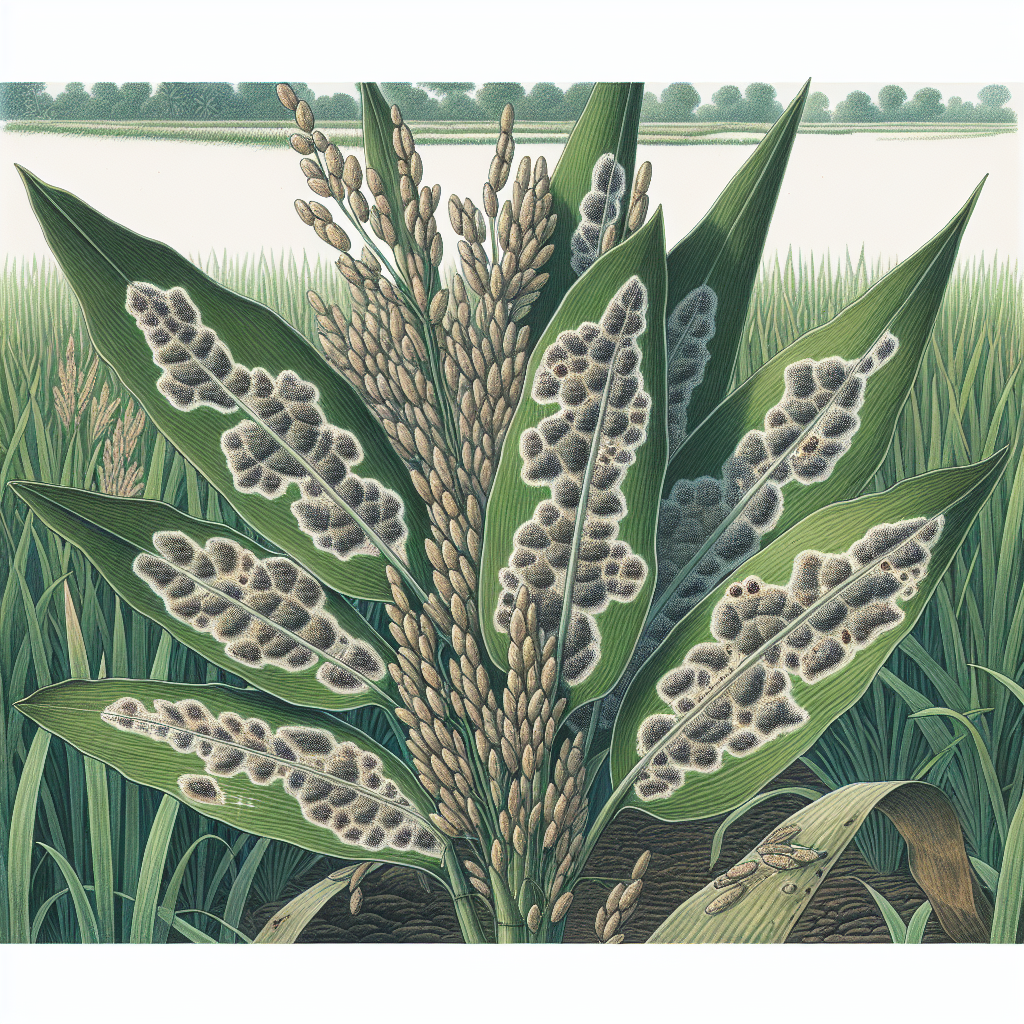
Introduction to blast
Rice blast, commonly known as 'blast,' is one of the most destructive diseases impacting global rice production, caused by the ascomycete fungus Pyricularia oryzae (formerly Magnaporthe oryzae). First identified in Japan in 1892, this pathogen has since spread to virtually all rice-growing regions, causing annual losses estimated at 10-30% of global yield, equating to millions of tons of rice. Beyond rice, it affects wheat, barley, millet, and turfgrasses, making it a formidable challenge for cereal farmers.
The disease's name derives from the 'blasting' or sudden withering of infected plant parts, particularly panicles, which resemble explosion damage. In severe epidemics, entire fields can be wiped out, threatening food security in Asia, Africa, and Latin America where rice is a staple. Understanding blast is crucial for farmers adopting integrated pest management (IPM) strategies. This guide provides professional-grade diagnostics, lifecycle insights, organic treatments, and prevention tactics optimized for small-scale and commercial operations. For real-world case studies on timing interventions, see Why Timing Kills Small Farm Profits - And How AI Task Scheduling Saves Your Harvests.
Blast's economic impact is staggering: in high-risk areas, unprotected fields lose up to 100% of yield. Symptoms progress rapidly under favorable conditions, underscoring the need for vigilant scouting. Resistant cultivars like those used in basmati rice offer partial protection, but integrated approaches are essential for long-term sustainability.
Identifying Symptoms & Damage
Accurate diagnosis begins with recognizing blast's hallmark lesions. On leaves, initial symptoms appear as small, water-soaked spots 1-3 mm in diameter, evolving into grayish-white centers with dark brown to black borders, often diamond- or spindle-shaped, 1-10 mm long. These lesions may develop grayish spore masses under humid conditions, visible as finger-like projections under magnification.
Neck blast, the most yield-diminishing form, targets the panicle node (neck), causing it to rot and produce chalky, unfilled grains. Infected necks show brownish discoloration, leading to panicle collapse and 'whitehead' symptoms where grains fail to fill. Node blast produces girdling lesions at tiller bases, causing seedling death or lodging.
On quinoa or oats, symptoms mimic rice but are smaller. Differentiate from brown spot (disease) by lesion shape and spore production; blast lesions lack concentric rings. Yield losses correlate with lesion density: 20-40 lesions per leaf reduce yields by 30-50%. Scout weekly from tillering to heading, using a 10x hand lens to confirm appressoria formation.
Severe infections cause 50-100% panicle sterility, with economic thresholds at 5% neck infections. In sorghum, panicle blast leads to grain shriveling. Document symptoms with photos for precise fungicide timing.
Lifecycle and Progression of blast
Pyricularia oryzae completes its lifecycle in 5-10 days under optimal conditions, with three main phases: mycelial growth, conidiation, and infection. The fungus overwinters as mycelium or conidia in infected debris, seeds, or collateral hosts like weeds or wild grasses. Primary inoculum disperses via wind or rain splash.
Conidia germinate within 4-6 hours in free water at 25-30°C, forming appressoria—specialized infection structures that penetrate leaf cuticles enzymatically. Penetration occurs within 24 hours, with symptoms visible in 3-5 days. Each lesion produces 10,000-100,000 conidia, enabling polycyclic epidemics with 10-20 infection cycles per season.
Sexual reproduction via ascospores is rare but contributes to genetic diversity. Progression accelerates post-tillering: leaf blast peaks at booting, neck blast at heading. In finger millet, lifecycle mirrors rice but with longer latent periods in cooler climates. Disease gradients follow humidity fronts, modeling via downy mildew dynamics.
Environmental Triggers & Risk Factors
Blast thrives at 25-30°C with 90-100% relative humidity for 6-12 hours, leaf wetness >8 hours, and high nitrogen fertilization. Night temperatures of 20-25°C with daytime spikes favor conidiation. Flooded paddies retain moisture, exacerbating splash dispersal.
Risk factors include susceptible varieties like indica rices, dense planting (>200 plants/m²), excessive N (>150 kg/ha), and cloudy weather. Acidic soils (pH <5.5) and silica-deficient fields heighten vulnerability. In pearl millet, irrigation timing is critical. Climate change extends epidemics via warmer nights. For hyper-local forecasting, integrate weather data with historical patterns.
Organic Control & Treatment Plans
Organic management emphasizes cultural, biological, and botanical controls. Resistant varieties: Deploy Pi-ta, Pi-b genes in hybrids; rotate with foxtail millet. Sanitation: Destroy stubble by deep plowing (20 cm), flood fields 30 days pre-planting to kill inoculum.
Biologicals: Apply Trichoderma viride (5 kg/ha) or Pseudomonas fluorescens (2.5 kg/ha) as seed treatments or sprays every 10-14 days from tillering. Botanicals: Neem oil (5 ml/L) + garlic extract inhibits spore germination; apply at 7-day intervals. Silicon solubilizers like potassium silicate (2 kg/ha) bolster cell walls.
Timing: Initiate at 1% leaf severity, repeat at flag leaf. Bicarbonate sprays (sodium/potassium, 5 g/L) suppress sporulation. Integrate with armyworms control for synergy. Monitor via sticky traps. Yields increase 20-40% with IPM.
Preventing blast in the Future
Long-term prevention hinges on IPM: Crop rotation (2-3 years with legumes like chickpeas), balanced nutrition (Si 50-100 kg/ha via slag), water management (alternate wetting-drying). Use certified seeds, space plants 20x15 cm.
Forecasting: Track DMI (disease management index) using leaf wetness hours. Quarantine: Avoid infested machinery. For small farms, Soil Health Mastery: 5 Proven Strategies for Small Farms to Build Fertile Ground Without Breaking the Bank. Build silica-rich soils via rice hull ash. Breed multilines, scout grids (1/m²). Eradicate collateral hosts. Sustainable yields rise 25%.
Crops Most Affected by blast
Primarily rice (30% global loss), wheat, barley, oats, rye, sorghum, millet, foxtail millet, pearl millet, finger millet, teff, quinoa, turfgrasses. Indica rices most vulnerable; japonica moderately resistant.