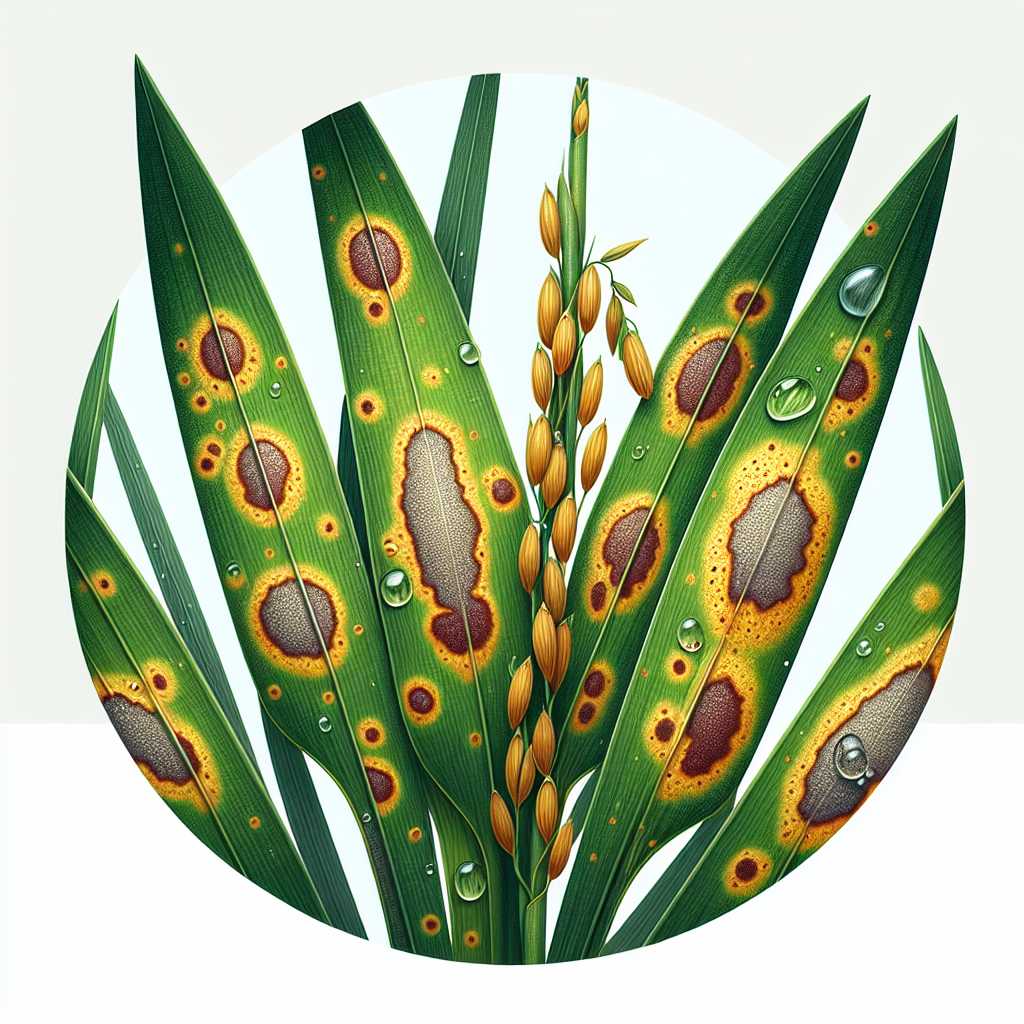
Introduction to brown spot (disease)
Brown spot (disease), scientifically known as brown spot caused by Bipolaris oryzae (formerly Helminthosporium oryzae), stands as one of the most ubiquitous and destructive foliar diseases in rice production worldwide. First identified in Japan in the early 1900s, it has since spread to virtually every rice-growing region, from the paddies of Asia to the fields of Latin America and Africa. This fungal pathogen targets the leaves, sheaths, and glumes of rice plants, manifesting as characteristic oval to circular brown spots that can coalesce into large blighted areas, drastically reducing photosynthetic capacity and grain quality.
The economic impact of brown spot cannot be overstated. In severe epidemics, yield losses can exceed 40-50% in susceptible varieties, particularly under stress conditions like nitrogen deficiency or prolonged flooding. For smallholder farmers reliant on Rice (crop), which feeds over half the world's population, brown spot represents a persistent threat to food security. Unlike more dramatic diseases such as rice blast, brown spot progresses stealthily, often going unnoticed until significant damage is done. Early detection and integrated management are crucial, blending cultural, biological, and organic chemical strategies to minimize losses without compromising environmental health.
This comprehensive guide equips rice growers, agronomists, and agricultural enthusiasts with professional-grade diagnostic tools, lifecycle insights, and actionable management plans. By understanding environmental triggers and implementing prevention tactics, farmers can safeguard their harvests against this resilient foe. Whether managing Basmati Rice (crop) or Jasmine Rice (crop), mastering brown spot control elevates farm resilience and profitability. For deeper insights into optimizing small farm operations, explore Why Companion Planting Feels Like Guesswork for Small Farms - And How AI Makes It Foolproof.
Identifying Symptoms & Damage
Accurate identification of brown spot (disease) is the cornerstone of effective management. The disease announces its presence with small, oval to elliptical lesions on rice leaves, typically measuring 0.3 to 1.0 cm in length. These spots start as grayish-white centers surrounded by a distinctive brown to reddish-brown margin, often with a yellow halo on younger leaves. As the infection matures, the centers darken to a smoky-brown or olivaceous hue, sometimes developing a zonate pattern resembling concentric rings—a hallmark diagnostic feature.
On leaf sheaths and blades, lesions may elongate and merge, creating irregular blighted patches that give foliage a scorched appearance. Under high disease pressure, entire tillers can yellow and die prematurely. During the reproductive stage, brown spot invades panicles, producing dark brown spots on glumes and lemmas. Affected grains become discolored, shriveled, and lightweight, leading to poor milling quality and reduced head rice recovery.
Damage quantification varies by growth stage. Seedling infections cause damping-off, with 20-90% stand loss in direct-seeded fields. Vegetative stage attacks impair tillering and root development, while panicle infections directly slash grain fill. Secondary invaders like bacteria often colonize dead tissues, exacerbating damage. Differentiate brown spot from look-alikes: Cercospora leaf spot (disease) features smaller, gray-centered spots without zonation; Alternaria leaf spot (disease) shows darker, target-like lesions; narrow brown spot (Sphaerulina reiliana) produces linear streaks along veins.
Field scouting protocols: Inspect 20-30 plants per hectare weekly from tillering onward. Use the Standard Evaluation System (SES) scale: 1 (no spots) to 9 (>75% blighted area). Thresholds for action hover at SES 5-6. Microscopic confirmation reveals Bipolaris oryzae conidia—curved, 5-7 septate, brown, 100-300 μm long—on lesion surfaces under humid conditions.
Lifecycle and Progression of brown spot (disease)
Bipolaris oryzae follows a polycyclic lifecycle optimized for rice's wet cycle. Primary inoculum overwinters as stromata, mycelia, or conidia in rice debris, seeds, and alternate hosts like crabgrass (Digitaria spp.) and barnyard grass (Echinochloa spp.). Spores germinate in free water (dew, rain) at 20-30°C, with optima at 25-28°C. Germ tubes penetrate leaves directly or via stomata within 4-6 hours of wetting.
The incubation period spans 3-5 days, yielding visible lesions. Under favorable conditions (95-100% RH, leaf wetness >12 hours), conidiophores emerge from stomata, releasing 10-100 conidia per lesion daily. Each conidium disperses via wind, rain splash (up to 2m), or irrigation water, initiating new infections. A single lesion can produce millions of spores over weeks, fueling epidemics.
Disease progression follows a sigmoidal curve, accelerating during tillering to heading (30-80 days after sowing). Multiple infection cycles (4-6 per season) compound damage. Seedborne inoculum (1-20% in poor seed) sparks early outbreaks. Mycelial growth in planta persists latently, reactivating under stress. Understanding this cycle informs timely interventions, targeting spore germination and lesion expansion.
Environmental Triggers & Risk Factors
Brown spot thrives where rice stress meets fungal favorability. Key triggers include high humidity (>90% RH), temperatures 22-32°C, and leaf wetness periods exceeding 8-12 hours daily—hallmarks of tropical monsoon seasons. Poor nitrogen nutrition heightens susceptibility; N-deficient plants show 2-3x more lesions due to thinner cuticles and altered defenses.
Soil factors amplify risk: acidic, low-fertility paddies (pH <5.5, low K, Zn) predispose varieties. Flooded, anaerobic conditions favor conidial survival in debris. High plant density (>40 hills/m²) creates microclimates for splash dispersal. Late planting aligns tillering with peak monsoon rains, synchronizing pathogen and host.
Risk factors extend to agronomics: Continuous rice monoculture builds inoculum (up to 10⁶ spores/g debris). Poor water management—alternating wet-dry cycles—triggers spore release. Susceptible varieties like IR8, PR106 amplify epidemics. Seed from endemic areas carries 5-15% infection. Climate change exacerbates via erratic rains and warming nights. Integrated assessments using weather data predict outbreaks 7-10 days ahead.
Organic Control & Treatment Plans
Organic management of brown spot emphasizes prevention and bio-controls, avoiding synthetic fungicides. Start with certified pathogen-free seed, hot-water treated (52°C/10 min) or solarized. Deploy resistant varieties like IR36, IR72, or local landraces bred for tolerance.
Cultural tactics: Balance N fertilization (split applications, 20-30 kg/ha topdress) and supplement ZnSO₄ (25 kg/ha basal). Maintain 3-5 cm water depth during tillering, avoiding stress. Rotate with chickpeas (crop) or lentils (crop) to decompose debris. Eradicate volunteer rice and weeds. Silicon amendments (rice hull ash, 1-2 t/ha) fortify cell walls, reducing lesions 30-50%.
Biological agents shine: Trichoderma harzianum (5-10 g/kg seed) colonizes debris, outcompeting B. oryzae. Pseudomonas fluorescens (2.5 kg/ha foliar) induces systemic resistance, cutting disease 40%. Bacillus subtilis sprays (5 ml/L, 3x at 10-day intervals) inhibit spore germination.
Organic fungicides: Copper oxychloride (2-3 g/L, SES >4) or neem oil (5 ml/L + soap) provide contact protection. Potassium phosphite (3 ml/L) boosts defenses. Apply evenings to minimize phytotoxicity. Integrate with Spring Pest Patrol: Organic AI Strategies to Shield Your Crops from Common Invaders for holistic protection.
Treatment timeline: Scout weekly; act at SES 4-5. Three sprays at 10-14 day intervals from tillering to booting. Combine with nutrition for synergy. Field trials show 25-40% yield rescue.
Preventing brown spot (disease) in the Future
Long-term prevention hinges on cultural revolution. Adopt 2-3 year rotations with upland crops like corn (crop) or legumes, slashing inoculum 80%. Flood fields post-harvest (20-30 cm, 3 weeks) to rot debris. Use disease-free transplants from raised nurseries.
Varietal resistance forms the backbone: Plant moderates like Swarna, Sahbhagi Dhan alongside hybrids. Site-specific management: Map hotspots via GPS, target silicon/K to deficiencies. Improve drainage to cut wetness duration.
Forecasting tools: Monitor RH, temp, and trap spores. Threshold-based decisions prevent unnecessary sprays. Farmer field schools build capacity for IPM. Clean equipment and boots halt spread. Seed certification programs ensure clean starts. Sustainable practices not only curb brown spot but enhance soil health and biodiversity, future-proofing farms against evolving pathogens.
Crops Most Affected by brown spot (disease)
Rice reigns as the primary host, with all 120,000+ varieties susceptible to varying degrees. Upland and lowland ecologies suffer most, especially in Asia (90% global outbreaks). Wheat (crop) experiences minor foliar spotting, while sorghum (crop), barley (crop), and oats (crop) report sporadic infections. Turfgrasses like bermudagrass host related strains. Non-grass alternates include Leersia spp. and Panicum weeds. Focus vigilance on rice; collateral management protects cereals.