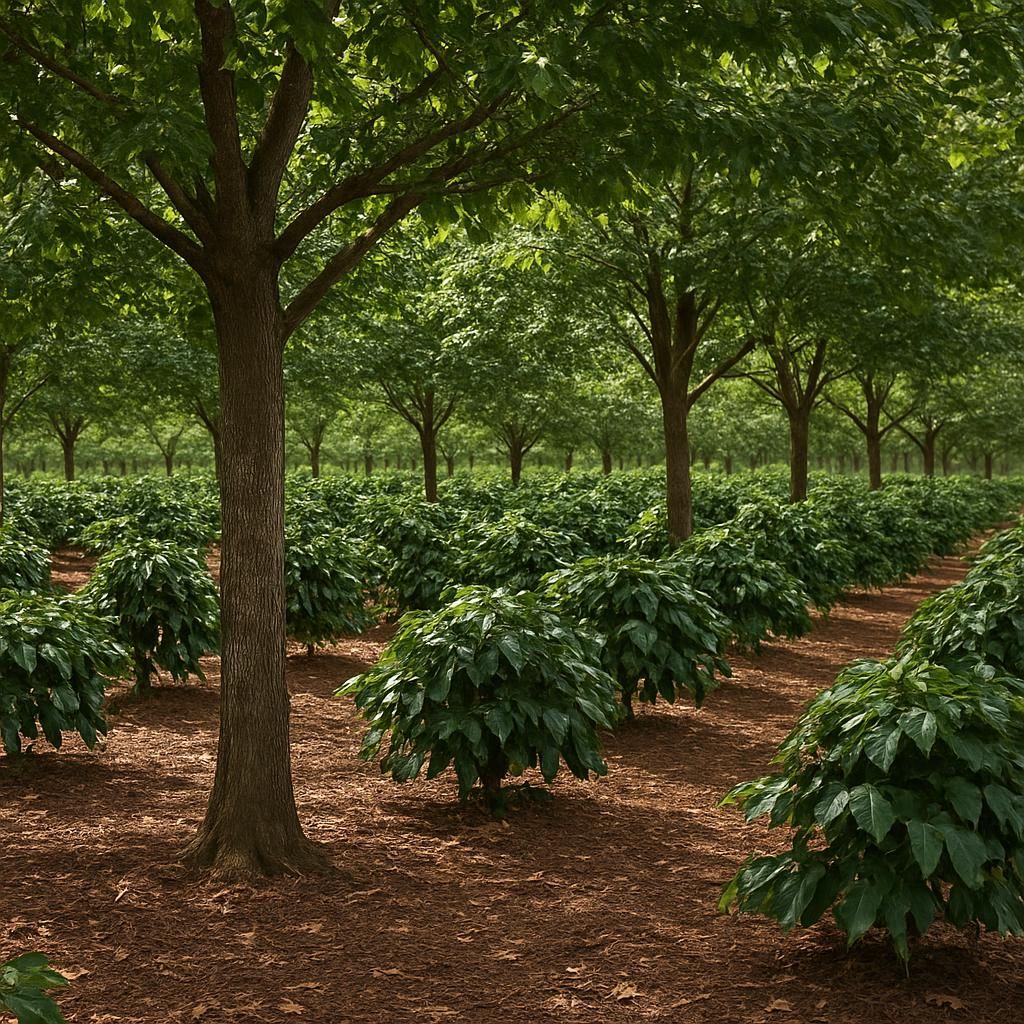
Agroforestry: A Professional Guide to Integrated Tree-Crop-Livestock Systems
Agroforestry combines woody perennials with annual crops or livestock on the same land. The practice improves microclimate stability, nutrient cycling, and income diversification while reducing input costs over time. Farmers worldwide use it to increase resilience against drought, pests, and market volatility.
Core Benefits and Economic Returns
Well-designed agroforestry systems raise land-use efficiency by 20–40 % compared with monocultures. Trees supply timber, fruit, fodder, or fuel while protecting understory crops from wind and extreme temperatures. Livestock gain shade and supplemental browse, lowering feed expenses. Over a 10–15 year rotation, net present value often exceeds conventional cropping by 15–30 % when high-value species such as Hass Avocado or Alphonso Mango are included.
Site Assessment and Species Selection
Begin with soil tests for pH, texture, and nutrient status. Match tree and crop tolerances to rainfall, frost risk, and drainage. Choose multipurpose species that provide at least two products or services (e.g., nitrogen fixation plus timber). Leguminous trees such as Gliricidia and Pigeon pea improve soil nitrogen while supplying fuelwood.
Recommended Species Combinations by Climate
| Climate Zone | Overstory Trees | Understory Crops | Livestock Integration | Expected First Harvest (years) |
|---|---|---|---|---|
| Tropical Humid | Cacao, Coconut | Black Pepper, Cardamom | Free-range poultry, goats | 3–5 (cacao), 5–7 (coconut) |
| Subtropical | Mango, Avocado | Coffee, Banana | Dairy goats, bees | 4–6 |
| Temperate | Walnut, Apple | Wheat, pasture grasses | Sheep, cattle | 6–10 (walnut), 3–4 (apple) |
| Semi-arid | Acacia, Pecan | Sorghum, Millet | Camels, goats | 4–7 |
Layout, Spacing, and Alley Cropping
Establish tree rows on contours or windbreaks aligned with prevailing winds. Maintain 8–12 m between timber rows and 4–6 m within rows for fruit species. Leave 3–5 m alleys for annual crops or pasture. Use temporary stakes and GPS marking for precise alignment. Prune lower branches annually to maintain 2 m clearance for machinery and livestock.
Soil Health and Nutrient Management
Trees recycle deep nutrients to surface layers via leaf litter. Incorporate 2–4 t ha⁻¹ of pruned biomass each season. Interplant nitrogen-fixing shrubs such as Hairy vetch or Clover to reduce synthetic fertilizer needs by 30–50 %. Monitor soil organic carbon annually; expect 0.5–1 % increases within five years on sandy loams.
Pest and Disease Dynamics
Biodiversity reduces pest pressure, but some systems favor specific insects. Monitor Aphids on young shoots and Spider mites during dry spells. Use reflective mulches and beneficial insects rather than broad-spectrum sprays. Remove alternate hosts of Phytophthora species near irrigation lines.
Harvesting, Pruning, and Timber Thinning
Prune fruit trees at the end of the dormant season to balance vegetative growth and yield. Thin timber species at years 8–10 to favor straight boles. Stagger harvests so understory crops receive adequate light. Record yields and market prices each season to refine the next rotation plan.
Financial Planning and Market Access
Develop a 15-year cash-flow model that includes establishment costs, annual maintenance, and multiple revenue streams. Seek certification for organic or fair-trade timber and fruit to capture price premiums. Cooperative marketing of Coffee or Vanilla grown under shade trees often returns 20–35 % higher farmgate prices.
Common Challenges and Mitigation
Initial competition for light and water can reduce crop yields 10–15 % in the first three years. Mitigate by selecting deep-rooted trees and using drip irrigation. Secure land tenure before planting long-cycle species. Budget for fencing to protect seedlings from livestock.
Scaling from Pilot to Commercial Operation
Start with 0.5–2 ha demonstration plots on marginal land. Document microclimate data, soil changes, and labor hours. Use results to secure financing or government subsidies for larger plantings. Share findings through farmer field schools to accelerate regional adoption.
Conclusion
Agroforestry is a proven, science-based approach that balances productivity with ecosystem services. Success depends on matching species to site conditions, maintaining soil health, and managing multiple enterprises simultaneously. Farmers who invest in careful planning and adaptive management realize higher long-term returns and greater resilience to climate and market shocks.