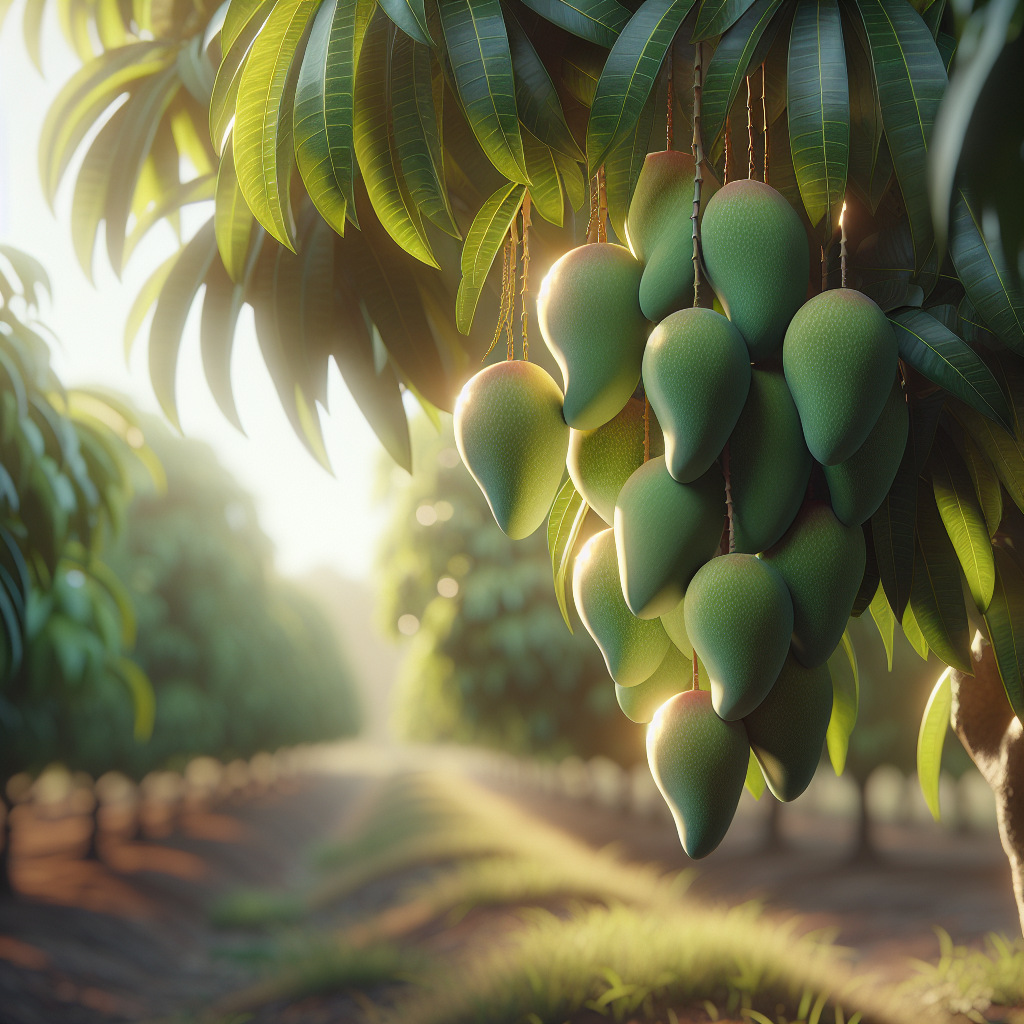
Introduction to Alphonso Mango
Among premium mango cultivars, this variety holds an almost legendary reputation for flavor, texture, and export quality. Originating from western India and especially associated with the Konkan belt of Maharashtra, Goa, and nearby coastal zones, it has long been regarded as a benchmark for dessert mangoes because of its rich sweetness, complex floral notes, smooth non-stringy flesh, and attractive golden-yellow skin that may develop a red blush under favorable conditions.
Its commercial value is high, but so are grower expectations and management demands. This is not the most forgiving mango for poor drainage, erratic moisture, severe frost, or heavy vegetative overgrowth caused by excessive nitrogen. Fruit quality is strongly influenced by site selection, rootstock vigor, irrigation discipline, canopy management, and pest control during flowering and fruit set. For general species-level context, see the broader Mango guide.
In well-managed orchards, trees can remain productive for decades. However, success depends on understanding that premium fruit quality comes from balancing vegetative growth with timely flowering, keeping the root zone aerated, and protecting the panicles and young fruits from Powdery mildew, Anthracnose, hoppers, and Fruit flies. Alphonso rewards precision: a tree that looks healthy but grows too lush may actually crop poorly.
Botanical Profile of Alphonso Mango
This cultivar belongs to the species Mangifera indica, family Anacardiaceae. Like other mangoes, it is an evergreen tree with a dense canopy, leathery lanceolate leaves, terminal panicles, and a deep-rooting habit when planted in suitable soil. Young flushes often emerge reddish to coppery before hardening to glossy green. Mature trees may reach 8-15 meters if unmanaged, but commercial orchards usually keep them significantly lower through strategic pruning for easier harvest and spray coverage.
The inflorescence is a terminal panicle bearing hundreds to thousands of tiny flowers, most of which are male, with a smaller proportion of hermaphrodite flowers capable of setting fruit. Fruit set is naturally low relative to flower number, so any stress at bloom can sharply reduce yield. Alphonso tends to flower seasonally after exposure to a dry, mild period, and flowering can be irregular if trees are excessively vigorous, shaded, or kept too wet.
The fruit is medium-sized, generally oblique-ovate, with a relatively smooth skin and thin to medium peel. Flesh is deep yellow to saffron-orange, melting, aromatic, and notably low in fiber, which is one reason it commands premium fresh-market prices. The stone is comparatively thin, improving flesh recovery. The flavor profile is often described as intensely sweet with resinous-floral complexity rather than simple sugar alone.
A key cultivar characteristic is sensitivity. Compared with some tougher commercial mangoes such as Tommy Atkins, Alphonso is more exacting about climate and disease pressure but usually surpasses it in eating quality. It is also prone to alternate bearing in some locations, especially when trees are stressed, overcropped one year, or poorly nourished.
Soil, pH, and Climate Requirements for Alphonso Mango
The single most important soil requirement is drainage. This tree tolerates seasonal dryness much better than prolonged root-zone saturation. Ideal soils are deep, well-drained sandy loam, loam, lateritic loam, or gravelly loam with at least 1.5-2 meters of effective rooting depth. Heavy clay can be used only if planted on broad raised mounds or ridges and if runoff is controlled so water never ponds around the trunk.
Optimal soil pH is about 5.5-7.5. It will grow in slightly more alkaline conditions, but micronutrient lock-up becomes more likely above pH 7.8, especially zinc and iron. In strongly acidic soils below pH 5.0, root performance and nutrient balance may decline unless corrected with liming based on a soil test. Electrical conductivity should remain low to moderate; mango is not among the most salt-tolerant fruit trees, and saline irrigation can cause leaf tip burn, reduced flush quality, and poor fruit set.
In terms of climate, the best performance occurs in tropical to warm subtropical regions with:
- Annual temperatures commonly between 24-32°C during active growth
- A cool-to-mild dry period that encourages flower induction
- Low to moderate rainfall during flowering and early fruit set
- Frost-free winters
- Good sunlight intensity and air movement
Flowering and fruit quality suffer in persistently humid, cloudy weather, especially if rains occur during bloom. Ideal annual rainfall is roughly 750-2500 mm, but distribution matters more than total volume. Heavy rain during flowering increases Anthracnose and pollination failure, while heavy irrigation late in fruit maturation can dilute flavor, increase splitting risk in some conditions, and reduce keeping quality.
Soil moisture should be managed, not maximized. During establishment, the root zone should remain evenly moist but never waterlogged. A practical target is moist soil in the upper 20-30 cm with free drainage below. If you squeeze a handful of soil from the wetted zone, it should hold together lightly without releasing water. Overwatering signs include sour or anaerobic soil smell, persistent dark green overly soft growth, reduced flowering, leaf yellowing despite wet soil, trunk collar stress, and in severe cases root rot and canopy dieback.
Wind also matters. Moderate airflow is beneficial because it reduces disease pressure in the canopy, but strong hot winds during flowering can desiccate panicles and reduce fruit set. Young trees benefit from wind protection in exposed sites.
Step-by-Step Planting & Propagation
Commercially, this cultivar should be established from grafted nursery trees, not seedling plants, if uniformity and true-to-type fruit quality are desired. Seedling mangoes are genetically variable and often take much longer to bear. Veneer grafting, epicotyl grafting, and softwood grafting are common propagation methods, with vigorous, disease-free rootstocks chosen for adaptability to local soils.
Select the site carefully. Choose a full-sun position with at least 8 hours of direct light daily. Avoid frost pockets, low-lying waterlogged areas, and sites where runoff accumulates around the trunk. If your land has marginal drainage, create raised planting basins or mounds 45-75 cm high.
Test the soil before planting. A professional soil test should assess pH, organic matter, phosphorus, potassium, calcium, magnesium, and micronutrients. Correct major problems before planting, because mature mango trees are harder to amend deeply later.
Prepare the planting pit properly. A common orchard standard is a pit around 60 x 60 x 60 cm to 1 x 1 x 1 m depending on soil quality. Separate topsoil and subsoil. Refill with topsoil mixed with well-decomposed compost or farmyard manure, but do not create a bathtub of rich media surrounded by impermeable soil in clay sites; that can trap water. In termite-prone areas, inspect organic amendments carefully and use well-rotted material only.
Plant at the correct depth. Set the grafted tree so the graft union remains well above soil level, usually 10-15 cm above the final settled surface. Planting too deep increases trunk disease risk and encourages scion rooting. Firm the soil gently to remove air pockets, then water thoroughly to settle the root zone.
Space with long-term canopy size in mind. Traditional spacing ranges from 8 x 8 m to 10 x 10 m. Moderate-density orchards may use 5 x 5 m to 6 x 6 m with disciplined pruning. In humid areas, wider spacing often improves spray penetration and reduces disease. Choose one system and manage consistently rather than letting trees overcrowd later.
Stake and protect young trees. If winds are strong, stake loosely to prevent root rocking. Install a trunk guard against sunscald, rodents, or mechanical injury. Keep mulch 15-20 cm away from the trunk to prevent collar rot.
Irrigate for establishment. Immediately after planting, irrigate enough to wet the full root ball and surrounding soil. For the first 2-3 months in dry weather, young trees often need watering 2-3 times weekly in light soils, less in heavier soils. The goal is deep moistening followed by partial drying, not constant surface dampness.
Train the framework early. Once the tree is established, encourage 3-4 well-spaced scaffold branches beginning 60-100 cm above the ground. Remove weak, crossing, or narrow-angled shoots. Early framework correction is far easier than correcting a mature crowded canopy.
Care & Maintenance regimes for Alphonso Mango
Water management changes with tree age and crop stage. Young trees require regular moisture to build canopy and roots. Mature bearing trees should not be irrigated indiscriminately year-round. In many production systems, irrigation is reduced or withheld before the expected flowering period to encourage reproductive behavior, then resumed carefully after fruit set. Excess water during floral initiation can push vegetative flush instead of bloom.
As a practical guide:
- Newly planted trees: irrigate when the top 4-6 cm begins to dry, ensuring moisture penetrates 25-40 cm deep.
- One- to three-year-old trees: deep irrigation every 5-10 days in dry weather depending on soil texture.
- Mature trees: irrigate deeply but less frequently, often every 10-20 days in dry periods after fruit set, adjusting for temperature, canopy size, and soil.
Drip irrigation is strongly preferred because it keeps foliage drier, improves water efficiency, and allows precise fertigation. Expand emitters outward as the canopy grows, because feeder roots concentrate near the drip line rather than close to the trunk.
Nutrition should be based on leaf and soil analysis, but broad principles are reliable. Nitrogen drives vegetative growth, phosphorus supports roots and flowering physiology, potassium supports fruit filling and quality, while calcium, magnesium, zinc, boron, and iron often influence fruit set, leaf function, and overall tree balance. Excess nitrogen is a classic mistake with this cultivar. It can produce dark, vigorous flushes at the expense of flowering and may worsen disease susceptibility in dense canopies.
A typical regime includes:
- Organic matter annually in the root zone as well-decomposed compost
- Split applications of NPK timed around post-harvest recovery, pre-flowering if locally appropriate, and fruit development
- Foliar micronutrients, especially zinc and boron where deficiencies are confirmed or common
- Minimal or no heavy nitrogen just before bloom unless deficiency is severe
Mulching is highly beneficial, especially in young orchards. Apply 5-10 cm of coarse organic mulch over the active root zone to moderate temperature and conserve moisture, but keep a clear ring around the trunk. Good mulches include dry leaves, chipped branches, and composted materials. For broader orchard floor strategy, see soil health tips.
Pruning should be light but regular. Mango does not usually require severe annual pruning like some temperate fruit trees, yet complete neglect leads to excessive height, poor spray penetration, interior shading, and reduced quality bloom. After harvest, remove dead wood, diseased twigs, crossing branches, and overly vigorous upright shoots. Aim for a rounded, open, sun-penetrated canopy where panicles can develop on mature terminals exposed to light.
In alternate-bearing situations, crop regulation becomes important. If the tree has carried an exceptionally heavy crop, post-harvest nutrition and moisture management are essential to rebuild reserves. Some growers also remove malformed or excessively crowded fruitlets to improve size and reduce branch stress.
Flowering management is highly climate-specific. In suitable regions, natural dry-season induction is enough. In marginal areas, excessive irrigation, heavy nitrogen, or late pruning may delay or suppress bloom. The best flowering usually occurs on mature, rested shoots rather than on soft new flushes.
Pests, Diseases & Organic Management
The most damaging pest complex usually appears from flowering through fruit maturity. Prevention depends on orchard hygiene, airflow, monitoring, and timely intervention.
Mango hoppers are among the most serious flowering pests. They suck sap from panicles and tender shoots, causing flower drop, reduced fruit set, and honeydew that encourages sooty mold. Infested panicles may appear sticky, blackened, and weak. Organic suppression includes neem-based sprays applied preventively at low to moderate pest pressure, yellow sticky monitoring in nursery or young plant settings, and pruning to reduce dense sheltered zones where populations build.
Mealybugs can colonize shoots, panicles, and fruit stalks. They are often associated with ants, which protect them from natural enemies. Control starts with ant management, trunk banding in vulnerable periods, destruction of weed bridges touching the canopy, and release or conservation of beneficial insects such as ladybird beetles where practical.
Fruit flies are a major pre-harvest and post-harvest threat. Females puncture maturing fruit to lay eggs, causing internal breakdown and premature drop. Orchard sanitation is crucial: collect and destroy fallen fruit daily during the risk period. Use bait traps, methyl eugenol traps for monitoring and male annihilation where appropriate, and harvest at correct maturity rather than leaving ripe fruit too long on the tree.
Anthracnose, caused by Colletotrichum spp., is one of the most important diseases in humid regions. It attacks flowers, young fruits, leaves, and harvested fruit. Symptoms include black lesions on panicles, blossom blight, fruit spotting, and latent infections that become visible after harvest. Disease pressure rises with rain, overhead irrigation, poor airflow, and dense shaded canopies. Organic management includes copper-based protectant sprays timed carefully before infection periods, biological antagonists where available, sanitation, and pruning for light penetration.
Powdery mildew can devastate bloom under cool dry nights with morning humidity. It appears as a white-gray powder on panicles, flowers, and young fruit, often followed by drop and poor set. Sulfur-based organic fungicides can help if used early and under temperatures safe for sulfur application. Avoid late reactive spraying after heavy colonization.
Stem-end rot and post-harvest rots often reflect both field infection and rough handling. Balanced calcium and potassium nutrition, timely harvest, sanitized tools, and dry post-harvest conditions help reduce losses.
Organic orchard management works best when integrated:
- Keep the canopy open and sunlit
- Remove diseased twigs and mummified fruit
- Avoid overhead irrigation during bloom and fruiting
- Monitor traps weekly during fruiting season
- Control ants to weaken mealybug outbreaks
- Use neem, copper, sulfur, and approved biologicals based on actual risk and growth stage
- Destroy fallen infested fruit promptly
Harvesting, Curing & Optimal Storage
Premium quality depends on harvesting at physiological maturity, not tree-ripened softness. Fruit harvested too early develops poor flavor, insufficient sweetness, and weak aroma. Fruit harvested too late bruises easily, attracts pests, and stores poorly.
Maturity indicators include shoulder development near the stem end, a change from deep green to lighter green, fullness of cheeks, cultivar-typical size, and elapsed days from fruit set appropriate to the local climate. Experienced growers also observe lenticel appearance and internal pulp color progression. Fruit should be clipped rather than pulled, leaving a short stalk initially to reduce sap burn. After picking, the stalk is trimmed once latex flow subsides.
Sap management is critical because mango latex can stain and burn the skin, reducing market grade. Harvest fruit into padded field crates, keep them shaded, and position them stem-end down or according to local de-sapping practice so latex drains away from the peel. Avoid dropping fruit even short distances; invisible bruises become obvious during ripening.
Curing in mango handling generally refers to de-sapping, drying the surface, and stabilizing fruit before packing rather than the root-crop style of curing. Fruit should be held in a clean, shaded, well-ventilated area after harvest so field heat dissipates. Wash only when necessary and dry thoroughly. Grading should remove cracked, insect-stung, sap-burned, undersized, or diseased fruit.
For local ripening, fruit is often held at around 20-24°C until color and aroma develop. For storage, mature-green fruit is best kept around 12-13°C with high relative humidity, roughly 85-90%. Temperatures below about 10-12°C can induce chilling injury, expressed as uneven ripening, skin pitting, browning, poor flavor, and increased decay. Fully ripe fruit has a much shorter storage life and is best consumed or marketed quickly.
Never seal damp fruit in non-ventilated packaging. Use clean, ventilated cartons or crates with cushioning to prevent abrasion. In premium supply chains, post-harvest hot water treatment or approved quarantine protocols may be required depending on destination market and fruit fly regulations.
Companion Planting for Alphonso Mango
In young orchards, companion planting should support soil health, pollinator activity, weed suppression, and beneficial insect habitat without creating excessive competition close to the trunk. The best companions are low-growing, manageable species or seasonal intercrops that do not shade the tree or demand heavy irrigation during floral induction.
clover is one of the best orchard-floor companions because it fixes nitrogen modestly, protects soil, reduces erosion, and supports pollinators when managed properly. It should be kept mowed low and prevented from forming a dense moisture-trapping collar at the trunk base.
peas can be useful as a seasonal legume intercrop in wider young orchards where winter or cool-season conditions allow. They contribute biomass and some nitrogen while generating additional short-term returns. Remove residues if disease pressure or excessive humidity near the trees becomes a concern.
garlic is valued by many growers as a low-stature companion that helps occupy open ground and may contribute to pest-disruption in diversified systems, though it should not be oversold as a standalone pest solution. It performs best where irrigation can be localized and not overapplied to the mango root zone.
marigold pages are not available here, but in practice many orchard managers use flowering insectary strips around, not directly under, the trees to attract natural enemies and pollinators. The key principle is separation: keep the immediate trunk area clean, keep companion species outside the collar zone, and prevent any companion from competing strongly with the tree during its first three years.
Avoid aggressive grasses right up to the trunk, tall shading intercrops, and water-hungry plants that force frequent irrigation. In mature orchards, a managed cover crop is usually more beneficial than repeated bare-soil cultivation, provided it is controlled before it competes heavily for moisture during dry months.