Introduction to citrus leaf miner
The citrus leaf miner, scientifically known as Phyllocnistis citrella, is one of the most pervasive pests affecting citrus orchards worldwide. Native to Southeast Asia, this tiny moth has spread to citrus-growing regions across Florida, California, Australia, and the Mediterranean, where it poses a significant threat to both commercial groves and home gardens. The pest's larvae create serpentine mines in tender new leaves, distorting growth and reducing photosynthetic capacity, which can lead to stunted trees and lower fruit yields.
First detected in Florida in 1993, citrus leaf miner rapidly became a major concern due to its multiple generations per year and ability to thrive in warm climates. While mature trees can tolerate some damage, young transplants and nursery stock suffer the most, with infestations causing up to 50-80% leaf drop in severe cases. Early detection and integrated management are crucial, as uncontrolled populations exacerbate issues like citrus greening vectored by the Asian citrus psyllid. This guide equips growers with professional-grade diagnostics, lifecycle insights, organic treatments, and prevention strategies to safeguard valuable citrus plantings. For more on related threats, see our detailed entry on citrus leafminer (pest).
Understanding this pest's biology is key to effective control. Adult moths are minuscule, with a wingspan of just 4-5 mm, and lay eggs on emerging flush. Larvae mine the leaf epidermis, feeding on mesophyll tissues, while frass lines their trails. Damage is most evident on spring and fall growth flushes, aligning with citrus's natural cycles. In subtropical areas, 8-12 generations can occur annually, amplifying the need for vigilant scouting. Economic thresholds vary, but action is recommended when 20-50% of terminals show mining. This pest not only affects aesthetics but also opens wounds for fungal pathogens like Alternaria, compounding losses.
Identifying Symptoms & Damage
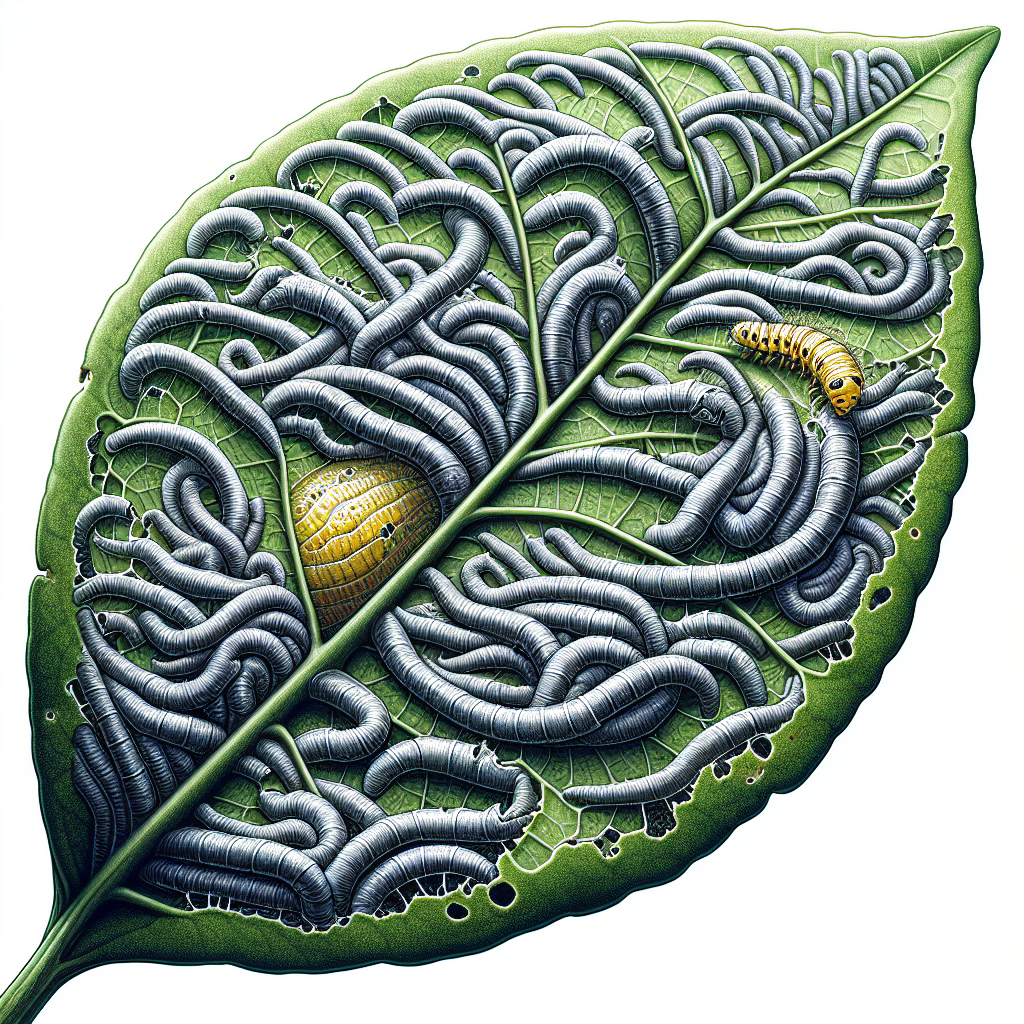
Diagnosing citrus leaf miner starts with recognizing its signature serpentine mines. These narrow, twisting silver-white trails appear on young leaves, often starting near the midrib and expanding outward. Fresh mines are silvery due to the intact lower epidermis reflecting light, while older ones turn brown and necrotic as larvae exit to pupate. Heavily mined leaves curl upward, become leathery, and drop prematurely, leading to sparse canopies.
Inspect new flush growth weekly, focusing on terminals and buds. Larvae, pale yellow flattened maggots 2-3 mm long, are visible wriggling within mines when leaves are held to light. Pupae form in curled leaf edges or bark crevices, appearing as tiny silken cocoons. Differentiate from mites or thrips by the absence of stippling or bronzing; leaf miner damage is strictly linear mining. Secondary signs include sooty mold on honeydew from concurrent scale insects, though leaf miner itself produces no exudate.
Damage severity correlates with tree age: seedlings lose vigor, reducing transplant survival by 30%; mature trees see 10-20% yield dips from defoliation. Mines on fruit rinds are rare but indicate heavy pressure. Use a 10x hand lens for confirmation. In mixed orchards, check lime and grapefruit alongside oranges, as susceptibility varies. For visual diagnostics, check Spring Pest Patrol: Organic AI Strategies to Shield Your Crops from Common Invaders. Photograph samples for tracking progression.
Lifecycle and Progression of citrus leaf miner
Citrus leaf miner's lifecycle spans 2-3 weeks under optimal conditions (75-85°F), enabling rapid population booms. Eggs (0.2 mm, flat, white) are laid singly on leaf undersides of 1-2 day-old flush. Hatching in 2-4 days, larvae (L1-L4 instars) immediately bore into the leaf, mining for 5-7 days. They molt within the mine, expelling frass that outlines their path. Mature larvae (3 mm) exit via a 'T'-shaped slit, spin silk to roll the leaf edge, and pupate.
Pupae (2-3 mm, brown) develop in 6-10 days, emerging as adults at dusk. Moths live 1-2 weeks, with females laying 50-100 eggs. Overwintering occurs as pupae in old leaves or bark. Generations overlap, with peaks during flush cycles. In cooler climates, development slows, reducing to 4-6 cycles yearly. Parasitic wasps like Ageniaspis citricola attack larvae, providing natural mortality up to 70%. Monitor with sticky traps baited for males to predict flights.
Progression: Eggs undetectable without magnification; mines visible day 3-4; leaf distortion by week 1; drop by week 2. Understanding timing allows targeted interventions, such as oils during early mining.
Environmental Triggers & Risk Factors
Warm temperatures (70-90°F) and high humidity (>60%) accelerate citrus leaf miner development, with peaks in spring/fall flushes. Excessive nitrogen promotes tender flush, prime oviposition sites; avoid late-season fertilizers. Poor airflow in dense canopies traps humidity, favoring eggs. Irrigation timing matters—overhead sprinkling wets leaves, deterring moths but risking fungal issues.
New plantings <3 years old are high-risk due to continuous flush. Proximity to unmanaged citrus harbors pests. Windless conditions aid moth dispersal. Drought-stressed trees produce less flush, indirectly reducing infestations, but recovery flush spikes vulnerability. Climate change extends seasons, boosting generations. Scout after rain or flush initiation. For companion insights, consider interplanting with marigold to disrupt cycles.
Organic Control & Treatment Plans
Organic management emphasizes IPM: monitoring, cultural, biological, and minimal mechanical controls. Scout weekly, treating at 20% terminal infestation. Cultural: Prune dense growth for airflow; time nitrogen for winter; remove infested flush and destroy. Biological: Introduce Cirrospilus sp. and Ageniaspis parasitoids; conserve predators like lacewings. Neem oil (0.5-1%) or spinosad (0.2%) targets larvae—apply evenings to spare beneficials. Horticultural oils smother eggs/larvae on flush <1 inch. Kaolin clay barriers deter oviposition.
Treatment Plan: 1) Scout/monitor traps. 2) Early flush: oil + neem weekly x3. 3) Mid-infestation: spinosad + release parasitoids. 4) Rotate modes to prevent resistance. Avoid broad-spectrum sprays killing whiteflies predators. Bacillus thuringiensis (Bt) ineffective against leaf miners. Test small areas. Success rates: 70-90% reduction with consistent IPM. Combine with leaf miners (pest) strategies for synergy.
Preventing citrus leaf miner in the Future
Prevention hinges on cultural resilience. Plant resistant rootstocks like trifoliate hybrids. Maintain moderate N (100-150 lb/acre/year), avoiding spring excesses. Prune annually for open canopies, enhancing spray penetration. Destroy volunteer seedlings harboring pests. Use yellow sticky traps (10/acre) for monitoring. Reflective mulches deter adults. Antitranspirants on flush reduce attractiveness. Calendar sprays on first flush only. Quarantine new stock. Long-term: Breed tolerant varieties. Monitor weather for flush predictions. Integrate with Soil Health Mastery: 5 Proven Strategies for Small Farms to Build Fertile Ground Without Breaking the Bank for robust trees.
Crops Most Affected by citrus leaf miner
Primarily attacks Citrus genus: orange (Navel, Valencia), lemon (Eureka, Lisbon), lime (Persian, Key), grapefruit, mandarin. Highly susceptible: young lemon, lime. Tolerant: mature grapefruit, trifoliate hybrids. Occasionally kumquat. Not avocado or non-citrus. Economic hits in orange groves: 10-30% yield loss untreated.