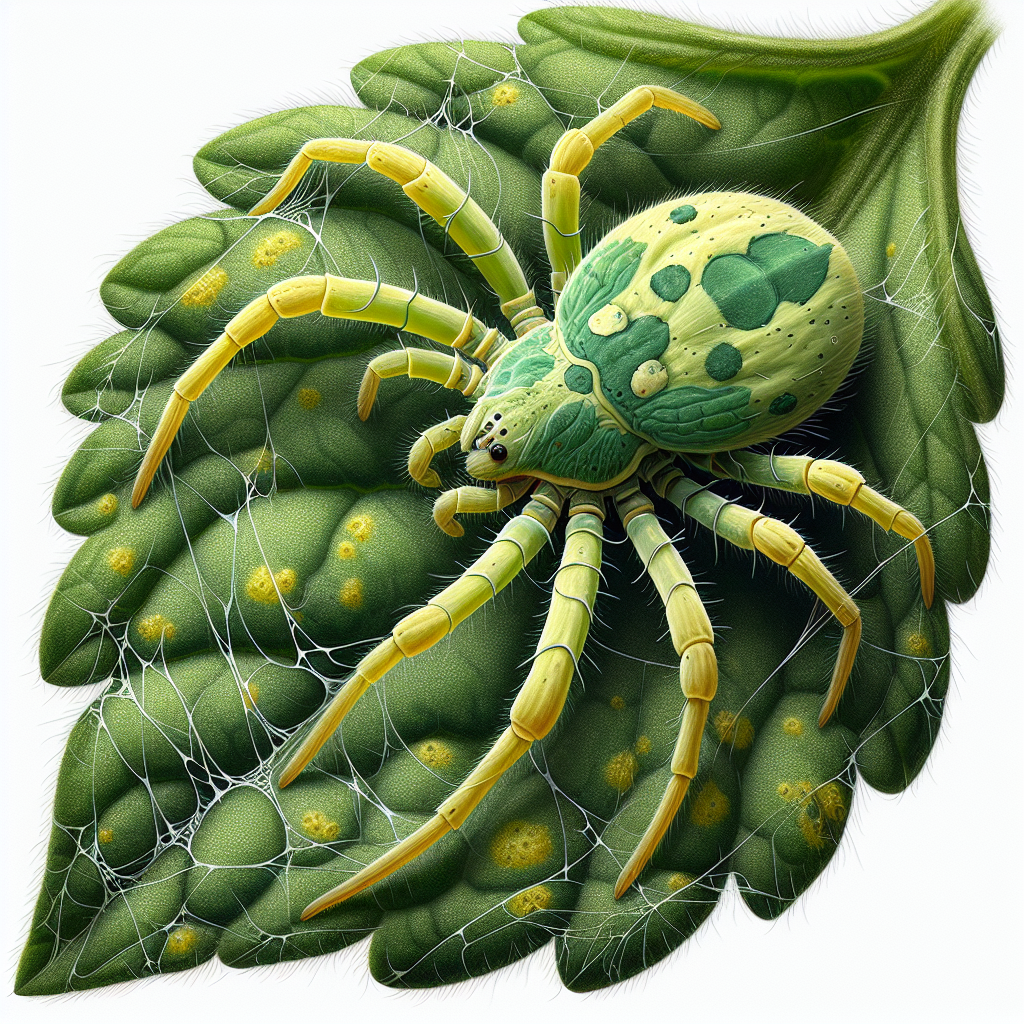
Introduction to Twospotted spider mites
Twospotted spider mites, scientifically known as Tetranychus urticae, are among the most notorious pests in agriculture, affecting over 200 plant species worldwide. These microscopic arachnids, not true insects, measure just 0.4-0.5 mm in length with females displaying two dark spots on their pale yellow-green bodies. They pierce plant cells with needle-like mouthparts to extract sap, causing rapid deterioration of foliage and reduced yields. In severe infestations, entire crops like tomato, strawberry, and Hass avocado can be defoliated within weeks.
Farmers often overlook these pests initially due to their size, mistaking early damage for nutrient deficiencies or powdery mildew. However, their populations explode in warm, arid environments, making them a primary threat in greenhouses, orchards, and field crops. Understanding their biology is crucial for timely intervention. This guide provides professional-grade diagnostics, organic management, and prevention strategies to safeguard your harvest. For more on integrated pest management, check our Spring Pest Patrol blog.
Their rapid reproduction—females lay up to 100 eggs—demands vigilant scouting. Without control, a single female can spawn thousands of descendants in a month, turning healthy fields into barren patches. Economic losses from twospotted spider mites exceed billions annually, underscoring the need for proactive measures.
Identifying Symptoms & Damage
Early detection is key to managing twospotted spider mites. Scout plants weekly using a 10x hand lens or by tapping foliage over white paper—mites appear as tiny moving specks. Initial symptoms include fine yellow or white stippling on leaf undersides, where mites congregate. As feeding intensifies, leaves bronze, curl, or drop prematurely, with characteristic silky white webbing covering infested areas.
Damage progresses from lower leaves upward. On cucumber and eggplant, expect chlorotic mottling and reduced fruit set. In apple orchards, fine webbing drapes branches, impairing photosynthesis and fruit quality. Severe cases cause leaf scorch, plant stunting, and up to 80% yield loss in susceptible crops like soybeans or cotton.
Differentiate from similar issues: Thrips cause silvery scars without webbing, while aphids produce sticky honeydew. Use the "tap test" for confirmation—mites crawl slowly, unlike faster whiteflies. Photosynthesis halts as chlorophyll is destroyed, leading to necrotic spots. In greenhouses, humidity below 50% exacerbates outbreaks, mimicking leaf spot diseases.
Monitor edges and veins first. On ornamentals like rose (though not listed, analogous to linked crops), fine stipple evolves to gray desiccated foliage. Yield impacts: 20-30% in beans, 50%+ in strawberries during fruiting.
Lifecycle and Progression of Twospotted spider mites
Twospotted spider mites complete their lifecycle in 8-12 days under optimal conditions (75-85°F, low humidity), enabling 20+ generations per season. Eggs, spherical and translucent, hatch in 2-4 days into larvae with three leg pairs. Protonymphs and deutonymphs follow, each stage lasting 1-2 days, molting to adults in 3-4 days total.
Females, larger at 0.5 mm, are prolific; males are smaller, reddish. Virgin females produce male-only offspring via arrhenotoky, accelerating populations. Diapause eggs overwinter in temperate regions, resuming in spring. Hot, dry winds disperse mites aerially, infesting new fields.
Progression: Eggs cluster on leaf undersides. Larvae cause minor stippling. Nymphs rampage, webbing increases. Adults peak damage, females laying 5-10 eggs daily for 2-4 weeks. Overcrowding triggers ballooning dispersal. In cool weather (>60°F slowdown), generations stretch to 3 weeks.
Understanding this cycle informs timing: Target eggs/nymphs for maximum mortality. Relate to spider mites for broader context.
Environmental Triggers & Risk Factors
Twospotted spider mites flourish above 70°F and below 50% relative humidity, common in mid-summer or drought-stressed fields. Dust from tillage or roads shields them from predators, while excessive nitrogen fertilizers tenderize foliage, boosting reproduction. Over-fertilization with N increases soluble sugars, ideal mite food.
Greenhouses amplify risks via stable warmth and low humidity from ventilation fans. Crop monocultures like strawberry fields lack diversity, aiding buildup. Water stress weakens plants, making sap more nutritious. Windy conditions spread mites miles away.
Risk factors: Adjacent infested weeds (not listed), imported transplants, or reduced pesticide use favoring outbreaks. Droughts spike populations 10-fold. Mitigate by maintaining 60%+ humidity via overhead irrigation.
Organic Control & Treatment Plans
Organic management emphasizes biologicals, oils, and soaps over chemicals. Release predatory mites like Phytoseiulus persimilis (1:10 ratio) early; they devour 5-20 mites/day. Neoseiulus californicus suits variable conditions.
Horticultural oils (1-2% neem or insecticidal soap) smother all stages—apply evenings to avoid phytotoxicity. Sulfur (post-bloom) disrupts eggs but burns tender leaves. Insecticidal soaps target soft bodies weekly.
Treatment plan:
- Scout weekly; act at 5-10 mites/leaf.
- Blast undersides with strong water streams (3x/week) to dislodge.
- Apply oils/soaps 7-day intervals, rotate modes.
- Introduce predators; avoid broad-spectrum sprays killing them.
- Prune infested tips, destroy debris.
For tomato, combine with whiteflies controls. Success rates: 80-95% with IPM. See mites wiki for variants.
Preventing Twospotted spider mites in the Future
Prevention beats cure. Plant resistant varieties like mite-tolerant strawberry cultivars. Intercrop with trap crops or yarrow attracting predators. Maintain 60% humidity via misting/irrigation.
Sanitize tools/greenhouses; quarantine newcomers. Mulch conserves moisture, deters dust. Encourage biodiversity: Release ladybugs, lacewings. Monitor with sticky traps.
Rotate crops, avoid nitrogen excess. Fall clean-up removes overwintering sites. Threshold: 1 mite/5 leaves triggers action. Long-term: Beneficial habitats reduce invasions 70%.
Crops Most Affected by Twospotted spider mites
Twospotted spider mites ravage fruits, vegetables, and field crops. Top victims: Tomato (stippling, fruit drop), strawberry (yield loss 50%), Hass avocado (foliar bronzing), apple (webbing), cotton (defoliation), soybeans (pod abortion), cucumber (scarring), eggplant (curling), pepper, [bean](/wiki/soybeans analogous). Ornamentals like citrus, roses suffer too. Field crops like corn see silk damage. In greenhouses, lettuce and herbs vulnerable. Losses peak in dry climates.