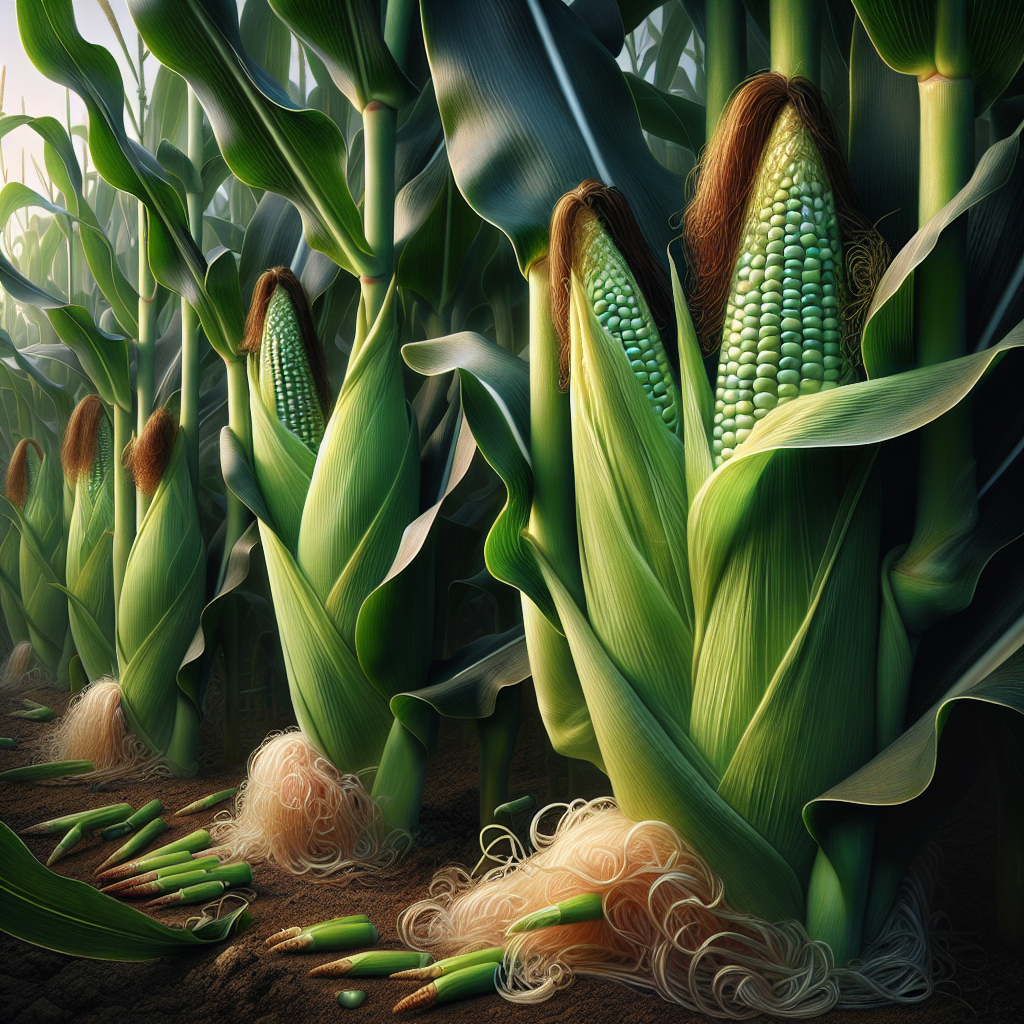
Introduction to Stowell's Evergreen Sweet Corn
An iconic American heirloom, this late-season white sweet corn was introduced in the 19th century and became famous for sweetness, tenderness, and its ability to hold eating quality on the stalk longer than many older cultivars. The name “Evergreen” does not mean the plants remain green indefinitely; rather, it refers to the ears staying in prime table condition for an extended period, which was a major advantage before modern supersweet genetics and refrigerated distribution.
This variety is best understood as a traditional sugary sweet corn rather than a modern sh2 supersweet type. That means the flavor is deeper and more corn-rich, with creamy texture and excellent fresh eating, but sugar begins converting to starch after harvest faster than in modern shipping cultivars. Gardeners and market growers value it for large ears, white kernels, strong stalks, and a classic heirloom eating experience. For general species-level background, see our Corn guide.
Plants are typically tall and vigorous, often reaching 7 to 9 feet under good fertility, with ears commonly borne at mid-stalk height. Because it is relatively late maturing, it rewards growers who can provide a full warm season, steady irrigation during tasseling and ear fill, and soil rich enough to support strong vegetative growth without causing excessive lodging.
Botanical Profile of Stowell's Evergreen Sweet Corn
This cultivar belongs to the grass family, Poaceae, and to the sweet corn grouping within Zea mays. Sweet corn differs from field corn because mutations affecting endosperm sugar-starch conversion leave kernels sweeter and more tender at the milk stage. In heirloom sugary types like this one, the seeds are often wrinkled when dry because sugars collapse as moisture leaves the kernel.
Stalks are technically culms with distinct nodes and internodes, and the broad leaves arise alternately from the stem. Corn is monoecious: male flowers are carried in the terminal tassel, while female flowers develop in lateral ears. Each silk is connected to a single potential kernel, so incomplete pollination produces gaps in the ear. This is why dense block planting is much more effective than a single long row.
Stowell's Evergreen is known for:
- Late maturity, often about 95 to 100 days from sowing depending on temperature
- White kernels with tender, creamy texture at harvest stage
- Large ears, often 8 to 9 inches long under favorable conditions
- Strong traditional sweet corn flavor rather than candy-like supersweet taste
- Better “field holding” than many older heirlooms, meaning ears remain usable a little longer on the plant
Because it is open-pollinated, saved seed can remain relatively true if isolated from other corn types. However, cross-pollination with nearby dent, popcorn, ornamental, or other sweet corn varieties can alter kernel characteristics in the next generation and may reduce eating quality in the current crop if pollen timing overlaps.
Soil, pH, and Climate Requirements for Stowell's Evergreen Sweet Corn
This crop needs full sun, high fertility, warm soil, and a relatively long frost-free period. Sweet corn is not a crop for marginal ground if top-tier eating quality is the goal. The best results come from deep, well-drained loam or sandy loam with high organic matter and strong biological activity.
Target soil conditions:
- pH: 6.0 to 6.8 ideal; acceptable up to about 7.2 if micronutrients remain available
- Organic matter: 3% to 6% preferred
- Drainage: rapid enough to prevent standing water after heavy rain, but with enough structure to hold moisture between irrigations
- Soil temperature for sowing: minimum 60°F (16°C), with 65 to 85°F giving much faster and more uniform emergence
If soil is colder than 55°F, emergence becomes slow and uneven, and seed is much more vulnerable to rots and wireworm injury. In heavy clay, poor aeration is a major risk: oxygen-starved roots lead to purple-tinged leaves, stalled growth, and weak nutrient uptake even where fertilizer is present.
For moisture, aim to keep the root zone evenly moist but never saturated. As a working target, the top 6 to 8 inches of soil should feel like a wrung-out sponge: cool, cohesive, and slightly damp, not sticky or puddled. Overwatering signs include yellow lower leaves, a sour soil smell, slow growth despite warm weather, and shallow root systems that make plants prone to lodging. Underwatering signs include leaf rolling by mid-morning, dull gray-green foliage, poor silk emergence, and tip fill problems on harvested ears.
This variety performs best in temperate to warm summer climates with daytime temperatures around 75 to 90°F. Growth slows below 60°F, and pollination suffers during extreme heat above 95°F, especially if accompanied by hot drying winds. Corn is wind-pollinated, so exposed sites are acceptable, but severe storm corridors may require windbreak planning or modest hilling to support stalk stability.
Nutrient demand is substantial, especially for nitrogen and potassium. Approximate nutrient priorities are:
- Nitrogen for leaf area, chlorophyll production, and ear size
- Phosphorus for early rooting and vigor, especially in cool soils
- Potassium for water regulation, stalk strength, disease tolerance, and grain fill
- Zinc and sulfur where deficient soils are common
Before planting, many professional growers work in finished compost plus a balanced pre-plant fertility program. A useful production mindset is to feed the soil early, then side-dress nitrogen before rapid stalk elongation and again just before tasseling if leaf color fades.
For broader fertility strategy, see Soil health tips.
Step-by-Step Planting & Propagation
This crop is propagated by seed and is almost always direct-sown. Transplanting is possible in biodegradable pots, but it is rarely ideal because corn dislikes root disturbance and can become uneven if checked early.
Prepare the bed 2 to 3 weeks ahead. Remove perennial weeds, loosen soil to at least 8 to 10 inches, and incorporate compost plus any needed phosphorus or potassium based on a soil test. Rake to a fine, level seedbed so seeds can be planted at consistent depth.
Wait for real warmth. Sow only after frost danger has passed and soil at planting depth is at least 60°F. For this late heirloom, rushing into cold ground costs more time than it saves.
Plant in blocks, not single rows. Use short rows grouped into a square or rectangle to improve pollen distribution. A minimum of 4 rows is strongly recommended.
Set depth and spacing correctly. Plant seed 1 to 1.5 inches deep in moist spring soil, or up to 2 inches deep if conditions are warmer and drier. Space seeds 8 to 12 inches apart in rows 30 to 36 inches apart. For small gardens, 10 inches in-row and 30 inches between rows is a practical standard.
Thin promptly. Once seedlings reach 4 to 6 inches tall, thin to final spacing if necessary. Crowding reduces ear size, light penetration, and airflow.
Stagger sowings if your season permits. Because this variety is late, only make succession sowings where a long warm season is available. A second sowing 10 to 14 days later can spread harvest, but avoid plantings so late that ears mature under shortening cool conditions.
Isolate from other corn types. For seed saving or best quality, separate from other corn by distance or flowering time. Isolation by 250 feet may reduce some crossing in home gardens, but much larger distances are better for reliable seed purity.
Expected emergence is usually 5 to 10 days in warm soil. If gaps exceed 15%, inspect for seedcorn maggot, rotted seed, crusted soil, or bird pulling.
Care & Maintenance regimes for Stowell's Evergreen Sweet Corn
Once established, the crop benefits from a deliberate, stage-based management plan rather than casual maintenance.
Water management is most critical during three phases: knee-high growth, tasseling/silking, and ear fill. Total water demand is usually about 1 to 1.5 inches per week, but sandy soil or hot wind can increase this considerably. During tasseling and silking, avoid any moisture stress. Even a short dry spell at this stage can reduce kernel set because silks may desiccate before pollen fertilizes them.
Best practice is deep irrigation that wets 8 to 12 inches of soil, followed by slight drying of the surface before the next watering. Daily shallow sprinkling encourages surface rooting and makes plants less resilient. Drip irrigation or soaker lines are ideal because they maintain stable soil moisture while keeping foliage drier.
Fertilization schedule for strong performance:
- Pre-plant: compost plus balanced fertilizer based on soil test
- First side-dress: when plants are 12 to 18 inches tall, apply nitrogen 4 to 6 inches from the row and water in
- Second side-dress: when plants are 30 to 36 inches tall or just before tassel emergence if color pales
Leaf color is a useful field diagnostic. Healthy plants should be medium to deep green. Pale green older leaves often indicate nitrogen shortage. Purpling in young plants can reflect phosphorus stress, often from cold soil more than true deficiency. Marginal scorch or weak stalks can indicate potassium shortage, particularly on sandy ground.
Weed control matters most in the first 4 to 6 weeks. Corn competes poorly while young, and early weed pressure permanently reduces yield potential. Use shallow hoeing, stale seedbed technique, or organic mulches applied once the soil has warmed. Avoid deep cultivation near the row after roots spread, since feeder roots are often close to the surface.
Hilling soil lightly around the base when plants are 12 to 18 inches tall can improve anchorage, especially in windy sites. Do not bury the stem excessively; a modest ridge is enough to support brace root development.
Pollination support can make a measurable difference in small plantings. If weather is still, humid, or rainy during pollen shed, gently shake tassels in late morning for several days to encourage pollen drop onto fresh silks. Each silk must receive pollen for its corresponding kernel to develop.
Pests, Diseases & Organic Management
Sweet corn attracts a predictable set of pests, and the timing of intervention matters more than heavy-handed treatment.
Common insect pests include Corn earworm, European corn borer, Fall armyworm, Cutworms, Wireworms, Flea beetles, Sap beetles, and Birds. Earworm is often the top quality pest in home and market production because larvae enter from the silk end and feed on developing kernels.
Organic management priorities:
- Use crop rotation of at least 2 to 3 years away from corn or grasses where possible
- Destroy stalk residues after harvest to reduce overwintering habitat for borers
- Encourage beneficial insects with flowering borders such as Yarrow and Nasturtium
- Apply mineral oil plus Bacillus thuringiensis or spinosad to silk channels where locally permitted and timed correctly for earworm pressure
- Protect seedling stands with collars if Cutworms are common
- Use row cover only until plants need open wind pollination; covers must be removed before tasseling
Diseases include Common rust, Northern corn leaf blight, Stewart's wilt, Smut, Damping-off, and assorted Stalk rots. Disease severity is strongly influenced by spacing, fertility balance, residue handling, and leaf wetness duration.
Watch for these symptoms:
- Rust: cinnamon-brown pustules scattered on leaves
- Northern corn leaf blight: elongated gray-green lesions that turn tan
- Smut: swollen silvery galls on ears, tassels, or stems
- Damping-off: seedlings collapse at soil line in cold wet soil
- Stalk rot: lower stem weakness, lodging, premature death after ear fill
Organic disease suppression relies on prevention: warm planting soil, well-timed irrigation, balanced nitrogen, adequate potassium, spacing for airflow, and immediate removal of severely diseased plants when practical. Avoid overhead watering late in the day. Excess nitrogen without matching potassium can create lush but vulnerable tissue.
Animal damage can also be serious. Raccoons are notorious for raiding just-ripe ears, often within 24 to 48 hours of ideal harvest. Electric fencing, harvest timing, and site security are often more effective than repellents.
Harvesting, Curing & Optimal Storage
Sweet corn is harvested, not cured in the way dry grain corn is, but postharvest handling determines whether the eating quality remains exceptional or declines quickly.
Stowell's Evergreen is usually ready around 18 to 24 days after silks first appear, depending on weather. Harvest at the milk stage. Reliable indicators include:
- Silks have turned brown and dry but husks remain mostly green
- Ear tip feels filled out rather than sharply pointed
- Kernels exude a milky sap when punctured with a thumbnail
- Kernels are plump, glossy, and fully sized, not watery or doughy
Harvest in the cool of morning when sugar levels and turgor are highest. Twist ears downward and away from the stalk with a clean snap. Handle gently; bruised kernels deteriorate fast.
This heirloom holds reasonably well on the stalk compared with many older sugary sweet corns, but waiting too long still causes starchiness and reduced tenderness. In hot weather, the ideal harvest window can be only a few days.
For immediate use, chill ears as soon as possible. Remove field heat quickly by refrigeration. Store unhusked ears at 32 to 40°F with high humidity. Best quality is within 1 to 3 days, though acceptable eating may extend slightly longer if cooling is prompt. Do not leave harvested ears in sun, truck beds, or warm kitchens, where sugar conversion accelerates rapidly.
For longer preservation:
- Blanch kernels or whole ears and freeze
- Cut kernels for cream-style freezing
- Pressure can plain kernels if following tested food safety guidance
If saving seed, leave selected ears on the plant until fully mature and dry, then finish drying under cover with strong airflow until kernels are hard and the cob is fully dry. Keep seed ears isolated from other corn to maintain varietal integrity.
Companion Planting for Stowell's Evergreen Sweet Corn
The classic ecological partnership is the “Three Sisters” pattern, where corn provides vertical support, pole beans contribute nitrogen through biological fixation, and squash shades soil to suppress weeds and conserve moisture. For this system, use a climbing bean such as Kentucky Wonder Pole Bean and a broad sprawling squash or pumpkin planted after the corn is established enough not to be overwhelmed.
Other useful companions include Clover as a living mulch in wider systems and Cucumber or low herbs nearby in adjacent beds, provided they do not compete heavily at the corn root zone. Flowering insectary plants at bed ends can support parasitic wasps, hoverflies, and predatory beetles that help moderate pest populations.
Companion planting should be spatially disciplined. Corn is a heavy feeder and should not be crowded by equally aggressive neighbors at the base of every stalk. Keep the row zone clean until plants are at least knee-high, then introduce companions in alleys or the outer edges of blocks. In humid climates, avoid creating a jungle of overlapping foliage that traps moisture and increases leaf disease.
Avoid close association with crops that cast shade onto young corn or that require constant overhead irrigation. Also avoid planting different corn types nearby if seed purity matters. When designed carefully, companions improve habitat diversity, pollinator activity around associated crops, soil cover, and overall resilience without compromising ear quality.