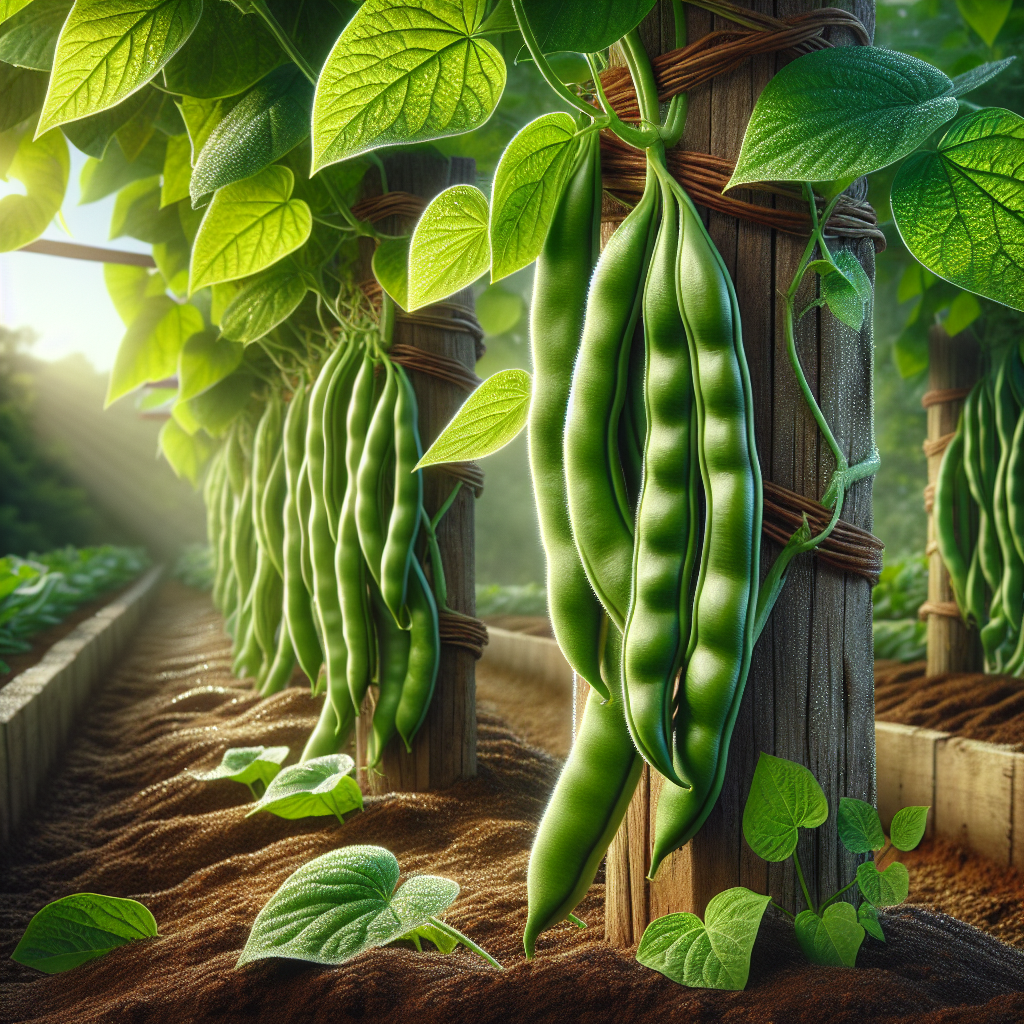
Introduction to Kentucky Wonder Pole Bean
Kentucky Wonder Pole Bean, often simply called Kentucky Wonder, stands as one of the most beloved heirloom bean varieties in American gardening, with roots tracing back to the late 19th century. First introduced commercially around 1856 by Grant Thorburn of New York, though its origins may extend to Southern gardens decades earlier, this pole bean gained fame for its reliability and superior taste. Unlike bush beans, its vigorous climbing habit—reaching 6-10 feet—allows for extended harvest periods, often yielding 1-2 pounds per plant over 8-10 weeks. The pods are flat, meaty, and famously stringless when young, turning flavorful even at larger sizes without the tough fibers plaguing many heirlooms. Botanically a snap bean, it's prized for fresh eating, canning, or freezing, boasting high vitamin A, C, and fiber content. Gardeners favor it for vertical space efficiency, making it ideal for small plots or containers with support. Its disease resistance, particularly to common bean mosaic virus, sets it apart from modern hybrids, though success demands precise cultural practices.
Botanical Profile of Kentucky Wonder Pole Bean
Kentucky Wonder Pole Bean belongs to Phaseolus vulgaris, the common bean species native to the Americas, domesticated around 7,000 years ago in Mesoamerica. This heirloom cultivar is an indeterminate pole type, characterized by twining stems with trifoliate leaves—three oval leaflets up to 6 inches long, deep green with prominent veins. Stems are robust, covered in fine hairs, and spiral counterclockwise around supports at rates up to 1 foot per day in peak growth. Flowers emerge in clusters of 4-6, white to pale purple with darker keels, self-pollinating but attracting bees for better set. Pods develop rapidly, averaging 6-8 inches long and 1 inch wide, straight to slightly curved, with a glossy green hue fading to yellow at maturity. Seeds inside are large, kidney-shaped, buff-colored with brown mottling, viable for 3-5 years if stored dry. Growth cycle spans 65-75 days to first harvest, with plants fixing 50-100 lbs of nitrogen per acre via root nodules harboring Rhizobium bacteria. Unique to this variety: pods remain tender up to 10 inches, a trait from selective breeding emphasizing culinary quality over uniformity.
Soil, pH, and Climate Requirements for Kentucky Wonder Pole Bean
Optimal growth hinges on well-drained, fertile loam with pH 6.0-6.8; test soil and amend with dolomite lime if below 6.0 to prevent molybdenum deficiency, which yellows leaves. Kentucky Wonder thrives in soils rich in phosphorus and potassium—aim for 40-60 ppm P and 150-250 ppm K via Mehlich-3 test—but low in nitrogen pre-planting to encourage nodulation. Incorporate 2-4 inches aged compost or 5-10-10 fertilizer at 2 lbs per 100 sq ft. Avoid heavy clays prone to waterlogging, which invites root rot; raised beds or hills improve drainage. Full sun (8+ hours) is essential, with daytime temps 70-85°F (21-29°C) ideal; germination fails below 60°F (15°C) soil temp. Heat above 90°F (32°C) reduces pod set due to pollen sterility—mulch with straw to cool roots. Frost-sensitive, plant after last frost when soil hits 65°F. In cooler climates (USDA 3-11), use black plastic mulch to warm soil 5-10°F. Humidity tolerance is moderate; prolonged wet foliage (>80% RH) fosters Anthracnose—ensure air circulation. Drought stress at flowering drops yields 30-50%; maintain even moisture.
Step-by-Step Planting & Propagation
Start with high-quality seeds from reputable sources, scarifying if needed by nicking seed coat for 80%+ germination. Sow direct post-frost when soil ≥65°F: create 4-6 inch tall hills spaced 3 ft apart, or rows 3-4 ft apart. Plant 4-6 seeds per hill, 1-1.5 inches deep, thinning to 3 strongest after true leaves emerge. For trellises, use 6-8 ft poles or netting; space plants 6-8 inches apart along supports. In containers (5+ gal), plant 2-3 per pot with bamboo teepee. Inoculate seeds with Rhizobium powder for poor soils to boost nitrogen fixation. Succession plant every 2 weeks for continuous harvest. Transplanting risks root disturbance—avoid unless starting indoors 3-4 weeks early in trays at 75°F bottom heat, hardening off gradually. Expect 7-10 days to sprout; thin seedlings to prevent crowding, which stunts climbers. For propagation, save dry pods (brown, rattling) post-harvest, thresh, and dry seeds at 10-15% moisture for storage in cool, dark conditions.
Care & Maintenance regimes for Kentucky Wonder Pole Bean
Water to maintain 1-1.5 inches per week, targeting 60-70% field capacity—soil should feel moist 2 inches deep but not soggy; wilting mid-morning signals underwatering, yellowing lower leaves indicates overwatering/root rot. Drip irrigation prevents wet foliage. Fertilize lightly: side-dress with 5-10-10 at 1 lb/100 ft row at flowering; excess N causes lush vines but few pods. Train vines weekly onto supports, pinching tips at 8-10 ft to focus energy on pods. Mulch 2-3 inches organic matter post-emergence to retain moisture, suppress weeds, and moderate soil temps. Scout weekly for nutrient issues: pale leaves = iron deficiency (pH too high), purple stems = phosphorus shortage (cool soils). Thin aggressively to ensure light penetration—crowded plants yield 20-40% less. In high winds, secure trellises deeply. Rotate crops 3-4 years to break pest cycles. Off-season, till in residues for green manure, enhancing soil tilth.
Pests, Diseases & Organic Management
Common pests include Mexican bean beetles (adults/larvae skeletonize leaves)—handpick eggs/larvae daily, release ladybugs (1,000/acre), or spray neem oil (0.5% solution) at dusk. Aphids cluster on tips: blast with water or insecticidal soap. Spider mites cause stippling in dry heat—mitigate with overhead misting and predatory mites. Diseases: Anthracnose (brown lesions on pods) thrives in wet conditions—use disease-free seed, 3-year rotation, copper fungicide preventatively. Rust (orange pustules) managed by sulfur dust and airflow. Bacterial blight (water-soaked spots) from overhead watering—sanitize tools, rogue infected plants. Bean root rot (Pythium) in cool/wet soils: solarize soil pre-plant, plant in warm conditions. Organic IPM: interplant with nasturtiums as traps, encourage birds with perches. Monitor with sticky traps; thresholds: 20% defoliation warrants action. Resistant strains like Kentucky Wonder reduce pressure, but vigilance yields healthy crops. See our Corn guide for nitrogen synergy insights.
Harvesting, Curing & Optimal Storage
Harvest when pods are 4-7 inches, plump but seeds undeveloped—snap easily, fibers absent; mature pods yellow, bulge with full seeds for dry use. Pick every 2-3 days to stimulate production; use two hands to avoid vine damage. Yields peak 60-70 days post-plant, continuing 2 months. For green beans, twist/pulled gently; yield 0.5-1 lb/plant weekly. Dry beans: leave pods on until brown/dry, thresh by rubbing, winnow chaff. Cure seeds 2-4 weeks in single layer at 70-80°F, 50% RH. Store green beans in fridge (35-40°F, 95% RH) up to 7-10 days in perforated bags; freeze blanched (3 min boiling, ice bath) for 12 months. Dry seeds in jars with silica packs at <10% moisture, cool/dark—viable 3-5 years. Check for weevils; freeze 48 hrs kills eggs.
Companion Planting for Kentucky Wonder Pole Bean
Leverage Kentucky Wonder's nitrogen-fixing ability by pairing with heavy feeders. Excellent companions: Corn (Three Sisters method—beans climb cornstalks, corn shades soil), Cucumber (ground cover suppresses weeds, mutual pest deterrence), Potato (beans improve soil N for tubers). Plant corn 1-2 weeks prior, cucumbers at base, potatoes nearby. Avoid onions/garlic (inhibit beans). Discover more in our Fall Companion Planting Guide. This synergy boosts yields 20-30%, enhances biodiversity.