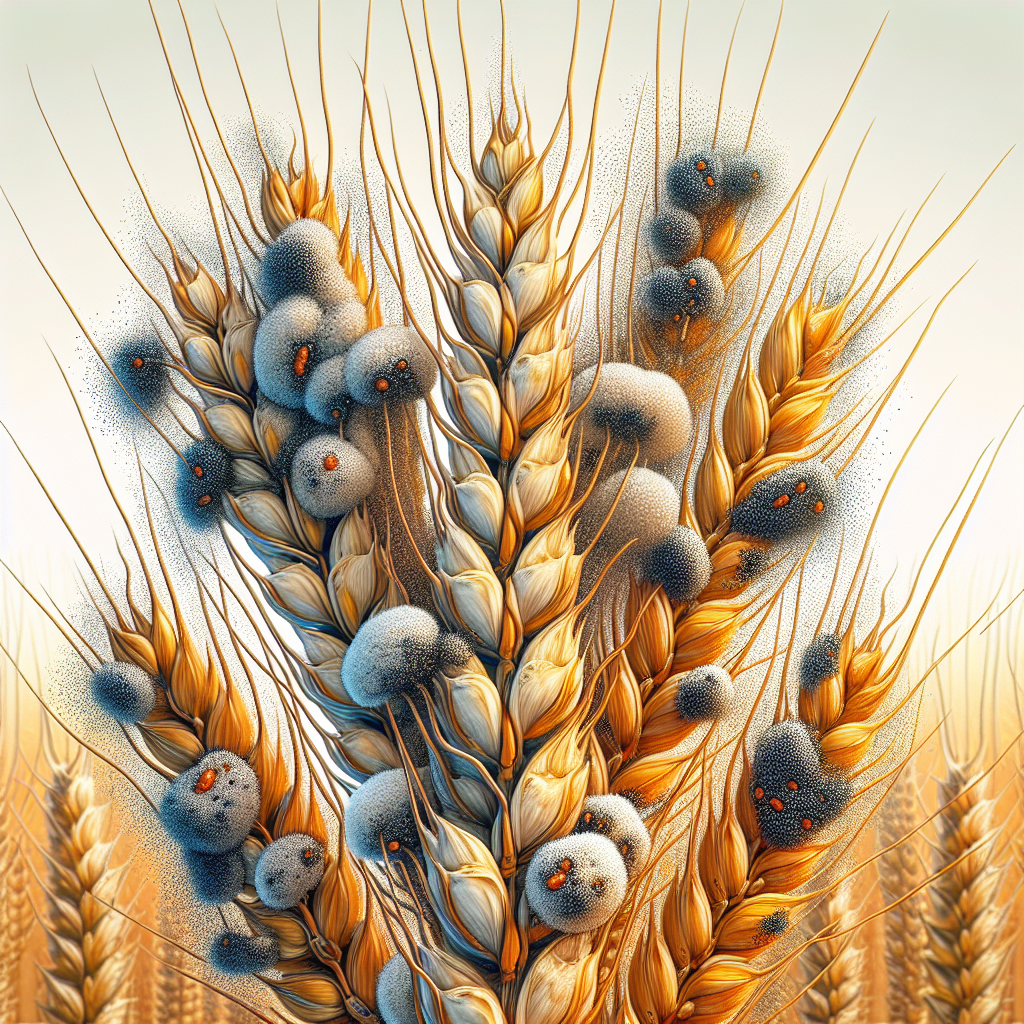
Introduction to Seed-borne smuts
Seed-borne smuts represent a critical group of fungal pathogens that pose severe threats to global agriculture, particularly in staple cereal crops. These diseases, caused primarily by basidiomycete fungi in genera like Ustilago, Tilletia, and Sphacelotheca, are transmitted directly through infected seeds, leading to systemic infections that culminate in the replacement of healthy grain with masses of teliospores—dark, powdery structures that resemble soot. Unlike soil-borne smuts, seed-borne variants infect during germination, spreading rapidly in fields planted with contaminated seed stocks.
The economic impact is staggering: in severe outbreaks, yield losses can exceed 80% in wheat, barley, and sorghum, devastating smallholder farmers and commercial operations alike. Historically documented since the 18th century, these smuts have driven innovations in seed certification and fungicide treatments. Today, with rising organic farming demands, understanding seed-borne smuts is essential for sustainable production. This definitive guide covers symptoms, lifecycle, risk factors, organic management, prevention, and affected crops, empowering growers to safeguard harvests. For more on general smut diseases, see our wiki resources.
Identifying Symptoms & Damage
Accurate diagnosis of seed-borne smuts hinges on recognizing distinct symptoms from seedling stage to maturity. Infected seeds often fail to germinate or produce weak seedlings with chlorotic leaves and stunted growth. As plants develop, symptoms vary by pathogen and host:
- Loose Smut (Ustilago nuda in barley, U. tritici in wheat): Heads emerge earlier than healthy ones, with entire floral structures replaced by dark brown spore masses that break apart easily, dusting leaves and soil. Unlike covered smuts, sori (spore masses) are exposed.
- Covered Kernel Smut (Ustilago hordei in barley): Grains swell and rupture, releasing black spores that cover the kernel surface, rendering seeds unmillable.
- Common Bunt (Tilletia caries, T. controversa in wheat): Kernels transform into large, fishy-smelling bunted grains filled with powdery teliospores, often distorting heads.
- Head Smut (Sphacelotheca reiliana in sorghum and corn): Inflorescences convert to galls filled with spores, causing 100% sterility in affected panicles.
Damage quantification reveals the severity: a 1% infection rate can produce enough spores to infect 10-20% of the next season's crop if untreated. Secondary symptoms include lodging from weakened stems and reduced test weight, leading to dockage at markets. Differentiate from loose smut, covered smut, or common bunt via lab tests like spore microscopy or PCR. Early scouting—checking 100 heads per field quadrant—prevents spread. Economic thresholds: rogue plants if >0.5% infection pre-heading.
Lifecycle and Progression of Seed-borne smuts
The lifecycle of seed-borne smuts is tightly synchronized with host development, ensuring efficient transmission. Infection begins when teliospores on the seed surface germinate under moist conditions, producing promycelia with basidiospores (sporidia) that penetrate the embryo during imbibition. This systemic colonization evades seedling defenses, remaining dormant until floral initiation.
Key stages:
- Dormancy in Seed: Spores viable for 10+ years, surviving harvest, storage, and planting.
- Germination and Penetration: Requires 8-12 hours moisture at 10-20°C; sporidia fuse (plasmogamy) and enter via coleoptile.
- Mycelial Growth: Hyphae grow intercellularly through meristems to ovaries/panicles.
- Sori Formation: At anthesis, dikaryotic mycelium forms spore masses, completing the cycle.
- Dispersal: Wind, rain, or machinery spread teliospores to healthy seeds post-harvest.
Progression accelerates in cool, humid springs followed by dry summers, with optimal infection at 15-25°C. In corn, head smut progresses from seedling blight to tassel galls in 60-90 days. Understanding this enables timed interventions, like hot water seed treatment during teliospore vulnerability.
Environmental Triggers & Risk Factors
Seed-borne smuts thrive under specific conditions, making risk prediction vital. Primary triggers include prolonged seed wetness (>12 hours) at 10-20°C during planting, high humidity (80-100%) during heading, and moderate temperatures (15-25°C). Cool, moist soils favor Tilletia spp., while warmer conditions boost Ustilago.
Key risk factors:
- Contaminated Seed: Highest risk; even 0.1% infection amplifies via spore production (1 bunted kernel yields 10^6 spores).
- Crop Rotation Deficits: Continuous cereals increase inoculum buildup.
- Poor Field Hygiene: Volunteer plants and residue harbor spores.
- Soil Type: Neutral pH (6.5-7.5) and high organic matter retain moisture.
- Climate: Temperate regions with wet springs (e.g., Pacific Northwest for bunt).
Interaction with Fusarium head blight or rusts exacerbates damage. Monitor via weather stations; risk models predict outbreaks when cumulative rain >50mm in 10 days pre-planting. For small farms battling weather, check Why 80% of Small Farms Battle Weather Disasters - And How Hyper-Local AI Forecasts Can Save Your Harvest.
Organic Control & Treatment Plans
Organic management of seed-borne smuts emphasizes prevention over cure, as no post-infection remedies exist. Certified organic seed treatment is cornerstone:
- Hot Water Treatment: Soak seeds at 52°C for 10-12 min (Ustilago) or 34°C for 4 hours (Tilletia), killing 95-99% spores without viability loss. Dry immediately.
- Solarization: Spread seeds on black plastic under sun (40-50°C for 48 hours).
- Biologicals: Trichoderma viride or Pseudomonas fluorescens seed dips (10^8 CFU/ml) suppress germination by 70%.
- Biopesticides: Aerated compost teas with Bacillus subtilis applied as foliar sprays during boot stage.
- Cultural Practices: Deep plowing buries spores; rogue infected heads pre-spore shed.
Integrated plan: Treat all seed + resistant varieties (e.g., 'Karat' barley) + 2-year non-host rotation (peas or clover). Field trials show 85% control combining hot water + Trichoderma. Monitor weekly; destroy >1% infected tillers. Avoid pythium synergy via well-drained beds.
Preventing Seed-borne smuts in the Future
Long-term prevention hinges on breaking the seed-spore cycle:
- Seed Certification: Use only smut-free, tested seed (0% tolerance in many regions).
- Resistant Varieties: Plant cultivars like 'Ernie' wheat (bunt-resistant) or 'Surpass' sorghum.
- Rotation: 3-4 years with soybeans, potato, or brassicas.
- Sanitation: Clean equipment; burn residues; avoid volunteers.
- Seed Storage: Dry to <12% moisture; store cool (<10°C).
- Scouting & Mapping: GPS-tag hotspots for future avoidance.
Integrated systems reduce incidence to <0.01%. Policy: Quarantine infested fields. For soil health aiding resilience, see Soil Health Mastery: 5 Proven Strategies for Small Farms to Build Fertile Ground Without Breaking the Bank. Annual audits ensure compliance.
Crops Most Affected by Seed-borne smuts
Seed-borne smuts predominantly afflict Gramineae family, with economic hotspots:
- Cereals: Wheat (bunt, loose smut), barley (loose, covered), oats (crown smut).
- Sorghum/Millets: Grain, head smuts (S. sorghi); sorghum, pearl millet.
- Corn: Head smut (S. reiliana); corn, sweet corn.
- Rice: False loose smut (rare); rice.
- Forages: Johnsongrass, sudangrass.
Global losses: 5-10% annual in developing regions. Hybrids often more susceptible; heirlooms like durum wheat vary. Co-infections with downy mildew compound risks.