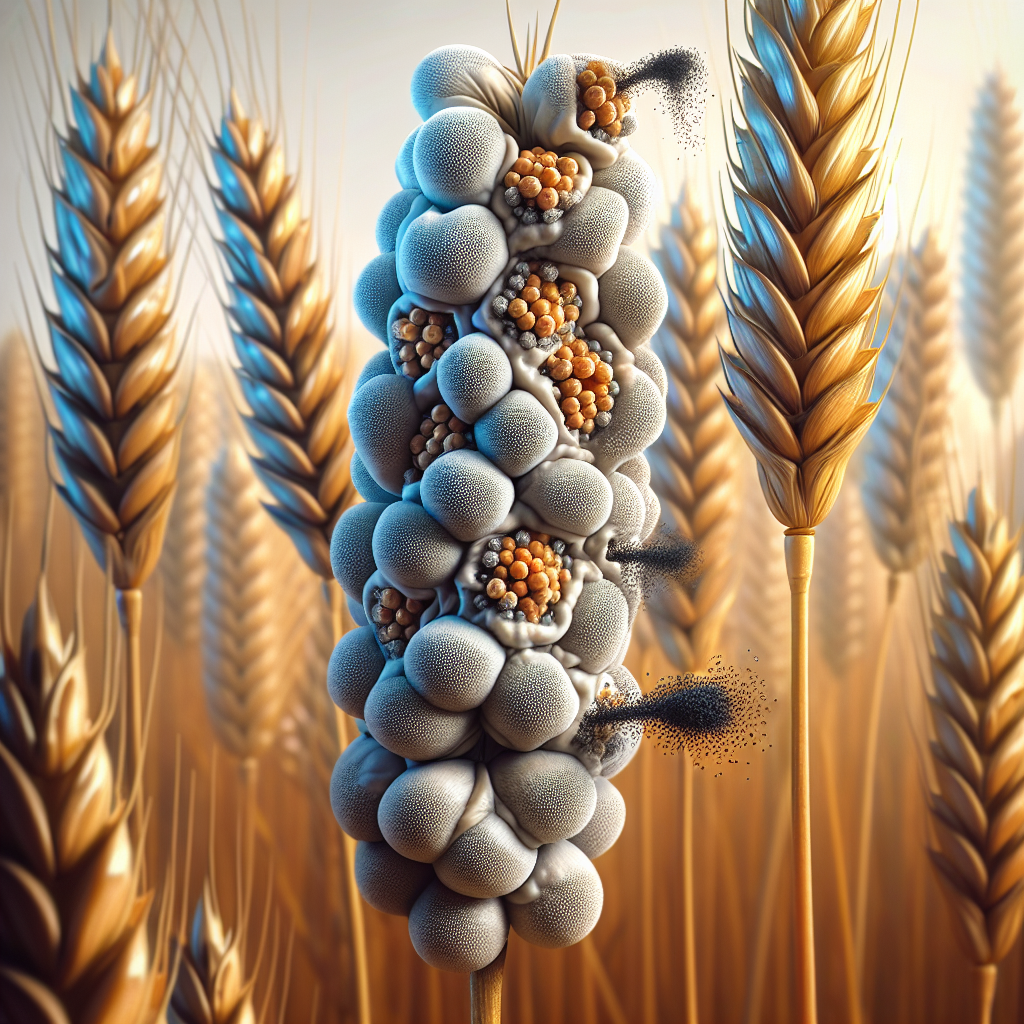
Introduction to Common bunt
Common bunt, also known as wheat bunt, stinking bunt, or covered bunt, represents one of the oldest recorded fungal diseases affecting cereal crops, with historical impacts dating back to ancient civilizations. Caused primarily by the basidiomycete fungi Tilletia tritici (syn. Tilletia caries) and occasionally Tilletia laevis, this soilborne and seedborne pathogen infects wheat during germination, remaining latent until heading. The disease is notorious for converting developing kernels into large, sooty-black spore-filled galls that rupture at maturity, releasing billions of teliospores that contaminate soil, equipment, and subsequent seed stocks.
In severe outbreaks, common bunt can destroy up to 80% of yield, producing grain unfit for milling, feed, or food due to its characteristic rotten-fish odor from trimethyl sulfide produced during spore germination. Globally significant in temperate wheat-growing regions like North America, Europe, Central Asia, and parts of India, it poses ongoing threats despite modern controls. This guide provides definitive diagnostic criteria, lifecycle insights, risk assessment, organic management protocols, and prevention strategies tailored for commercial wheat farmers, organic producers, and small-scale growers cultivating wheat, durum wheat, or hard red winter wheat. Early detection and integrated practices can minimize losses to under 1% annually.
Identifying Symptoms & Damage
Diagnosis of common bunt hinges on recognizing subtle early signs progressing to unmistakable mature symptoms. Unlike foliar diseases such as rusts or Fusarium head blight, bunt remains systemic and internal until anthesis.
Seedling Stage (Rarely Visible): Infected seedlings appear healthy but may show slight chlorosis or stunting 2-4 weeks post-emergence. Root systems occasionally exhibit brown discoloration under high infection pressure.
Tillering to Booting: Plants develop normally, with no external symptoms. Pathogen colonizes the apical meristem, redirecting nutrients to future spike development.
Heading and Maturity (Diagnostic Phase): Infected heads emerge slightly earlier, appearing plump and grayish-white. Kernels swell 2-3 times normal size, forming firm, rounded bunted sori covered by a thin, silvery-gray peridium (membrane). Unlike loose smut, the peridium remains intact until mechanical rupture during harvest or threshing.
Post-Harvest Confirmation: Exposed sori reveal powdery, dark brown to black teliospores (14-24 μm diameter, thick-walled). Crush a suspected kernel between fingers—the fishy odor confirms diagnosis. Yield losses correlate directly with infection rate: 1% infected seeds yield ~1% bunted heads, equating to 30-60 kg/ha loss per 1% incidence in 3 t/ha crops.
Differential Diagnosis: Distinguish from dwarf bunt (Tilletia controversa), which produces smaller sori and infects crowns; ergot (Claviceps purpurea), with elongated sclerotia; or wheat bulb fly larvae via dissection. Lab confirmation via spore microscopy (echinulate surface) or PCR ensures accuracy.
Damage extends beyond yield: contaminated grain incurs rejection premiums ($50-200/t penalties), elevates dockage, and spreads inoculum 10-100x via combines. For small farms, even trace infections disrupt direct marketing of clean spelt or heritage grains.
Lifecycle and Progression of Common bunt
Tilletia tritici completes its obligate parasitic lifecycle in 6-9 months, synchronized with wheat phenology. Primary inoculum resides as dormant teliospores in soil (viable 10-20 years) or on seed.
Spore Germination (Spring, 4-15°C): Teliospores imbibe water, karyogamy occurs, producing promycelia with 4-8 basidiospores (sporidia) after 12-24 hours. Optimal under cool, moist conditions (field capacity soil moisture).
Infection (Pre-Seedling): Sporidia germinate into hyphae, infecting embryos via coleorhiza or micropyle during 24-48 hours post-planting. Penetration succeeds at 5-15°C; >20°C blocks infection.
Colonization (Latent Phase): Mycelium grows intercellularly through seedling, tillering, and jointing, reaching rachis by booting without symptoms. Fungus hijacks host meristems, suppressing kernel development.
Sori Formation (Flowering-Maturity): At anthesis, dikaryotic mycelium forms diploid teliospores within expanding pericarp, maturing 3-4 weeks post-anthesis. Peridium ruptures via host drying or harvest.
Dispersal: Wind-blown sporidia travel <1m; teliospores move via soil/clay adhesion to boots, machinery (100-10,000/spike), seed (up to 10^6/kg), or manure. No alternate hosts; survives digestion in some ruminants.
Lifecycle efficiency peaks in direct-drilled, reduced-tillage systems retaining surface spores. For deeper insights into small-farm disease cycles, check Why Misidentifying Plants Costs Small Farms Thousands - And How AI Camera Diagnosis Fixes It Fast.
Environmental Triggers & Risk Factors
Common bunt thrives under specific abiotic conditions amplifying spore germination and infection:
Temperature: Cool springs (5-12°C soil) during planting maximize sporidia production; infection window closes >18°C.
Moisture: Wet soils (saturation >60%) for 48+ hours post-planting essential; irrigation or heavy dews exacerbate.
Soil Factors: Neutral-alkaline pH (6.5-8.0), clay/loam textures retaining spores near surface. Deep-plowed fields (>20cm) bury inoculum below germination zone.
Cultural Risks:
- Contaminated seed (>0.1% infection = outbreaks)
- Volunteer wheat harboring spores
- Short rotations (<2 years non-hosts like corn or soybeans)
- No-till/conservation tillage
- Susceptible varieties (e.g., old landraces vs. resistant modern hybrids)
Regional hotspots include Pacific Northwest USA, Volga region Russia, and Indo-Gangetic plains during cool winters. Climate change may expand risks via erratic cool/wet planting windows. Assess farm-specific risks via soil sampling (spore counts >10/g = high risk).
Organic Control & Treatment Plans
Organic management emphasizes cultural, biological, and approved physical controls, avoiding synthetic fungicides.
Seed Sanitation (Priority #1): Hot water treatment (52°C, 10-15 min) kills 95-99% surface spores without viability loss; aerate/dry post-treatment. Dry heat (65-70°C, 5 days) alternative for small batches.
Resistant Varieties: Plant certified organic seed of resistant cultivars (e.g., 'Eltan', 'Jagger') rated MR-MS on USDA scales. Rotate with barley or oats breaking cycles.
Biologicals: Trichoderma viride or Pseudomonas fluorescens seed inoculants (10^8 CFU/g) suppress via antagonism (70-85% control). Apply pre-planting.
Soil Health: Biofumigants like mustard green manures release isothiocyanates inhibiting spore germination. Aerobic composting manure destroys 90% viability.
Treatment Protocol:
- Test seed (bioassay: plant 400 seeds/field soil, assess 21 days).
- Treat positives (>0.5%) via hot water + biofungicide.
- Deep plow (25cm) inoculum hotspots.
- Scout boot stage; rogue infected heads (burn).
Integrated organic plans yield <0.2% incidence. Monitor via AI tools for precision—see Spring Pest Patrol: Organic AI Strategies to Shield Your Crops from Common Invaders for tech integration.
Preventing Common bunt in the Future
Long-term prevention builds resilient systems:
Seed Certification: Source seed <0.01% infection from accredited growers; on-farm selection from bunt-free plots.
Crop Rotation: 3-4 years non-grass hosts (peas, chickpeas, clover). Flood fallow kills 99% spores (anaerobic conditions).
Tillage: Strategic tillage (15-20cm) every 3rd year dilutes spore banks.
Planting Practices: Delay autumn sowing until soils >10°C; drill >5cm deep. Avoid overlapping with cool, wet periods.
Monitoring: Annual soil sampling (wet sieving, qPCR); field scouting at soft dough. Trap crops (susceptible borders) for early detection.
Regional Strategies: Participate in clean seed exchanges; quarantine machinery post-infested fields (steam clean).
Zero-tolerance programs in Australia/Argentina achieve eradication via these stacks, adaptable to organic wheat operations.
Crops Most Affected by Common bunt
Common bunt targets wheat species and close relatives:
- Triticum aestivum (bread wheat): Most widespread, 90% cases.
- Triticum durum (durum wheat): Semolina production highly susceptible.
- Triticum turgidum (emmer, spelt): Heritage varieties vulnerable.
- Triticum monococcum (einkorn): Minor infections.
Rare on triticale, rye (rye), barley (trace). No infection on maize or rice. Susceptibility varies: Australian standards classify varieties as Immune (0%), Resistant (0.1-0.5%), Moderately Resistant (0.6-2%). Selecting resistant wheat cultivars remains foundational.