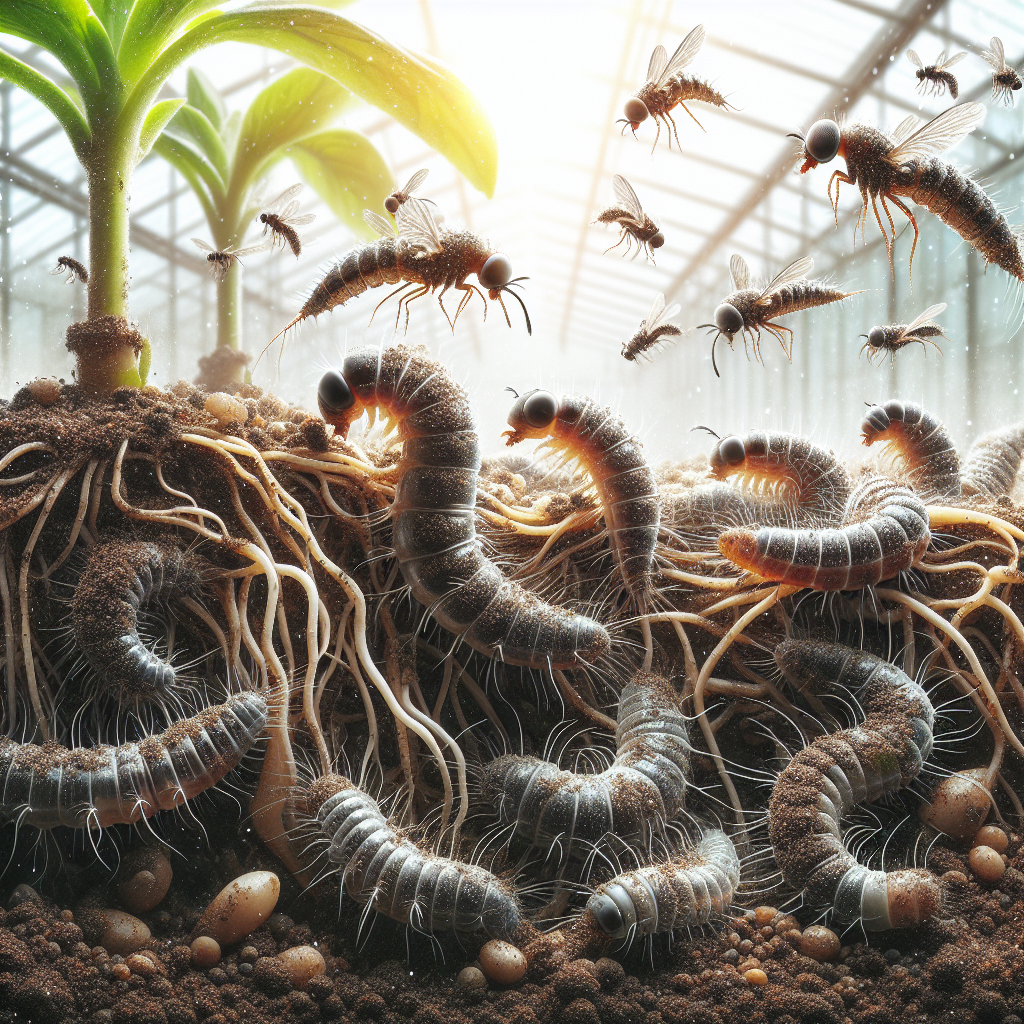
Introduction to Sciarid flies
Sciarid flies, commonly referred to as fungus gnats or soil gnats, belong to the Sciaridae family, with key species including Bradysia spp. and Lycoriella spp.. These tiny, dark-colored flies (2-4 mm long) are pervasive pests in agricultural settings, particularly in greenhouses, nurseries, and indoor plant production systems. While adult flies are merely nuisances, their larvae pose the real threat by burrowing into soil and feeding on tender roots, organic matter, and fungal hyphae.
Native to damp, organic-rich environments worldwide, sciarid flies explode in populations under high humidity and overwatering conditions. They are especially problematic for high-value crops like mushrooms, tomatoes, and herbs grown in controlled environments. Early detection and integrated management are crucial, as unchecked infestations can lead to 50-100% seedling loss. This guide provides professional-grade diagnostics, lifecycle insights, organic treatments, and prevention strategies optimized for small farms and commercial growers. For related soil pests, see fungus gnats.
Understanding sciarid fly biology empowers growers to disrupt their lifecycle effectively. Adults live 7-10 days, laying hundreds of eggs per female, while larvae develop in 10-21 days depending on temperature. Their rapid reproduction—up to 20 generations per year in greenhouses—demands proactive IPM (Integrated Pest Management) approaches. Check out this Spring Pest Patrol: Organic AI Strategies to Shield Your Crops from Common Invaders for broader seasonal tactics.
Identifying Symptoms & Damage
Spotting sciarid flies early prevents escalation. Adult flies appear as erratic, mosquito-like insects hovering around plant bases or soil surfaces, often resting on media. They don't bite humans but indicate underlying larval issues. Larvae are translucent-white, legless maggots (3-7 mm) with black heads, visible upon soil disturbance.
Primary damage manifests in seedlings and cuttings: stunted growth, wilting despite watering, yellowing lower leaves, and rapid collapse. Roots appear ragged, pruned, or blackened, with secondary infections from pathogens like Pythium or root rot exacerbating losses. In mature plants, damage is subtler—reduced vigor and poor nutrient uptake—but severe in hydroponics or plug trays.
Diagnostic tips:
- Yellow Sticky Traps: Place near soil; 10+ flies/trap/week signals infestation.
- Soil Sampling: Dig 5-10 cm deep; >5 larvae/100 cm³ confirms active damage.
- Plant Pull Test: Gently tug seedlings; loose roots with larval tunnels indicate sciarids.
Differentiate from root mealybugs (waxy, immobile) or wireworms (hard-bodied). Symptoms mimic overwatering or Phytophthora, so confirm with traps. In Oyster Mushroom production, mycelial grazing leads to bare patches and slow colonization.
Lifecycle and Progression of Sciarid flies
Sciarid flies complete their lifecycle in 14-28 days at 20-25°C (68-77°F), accelerating in warm, humid conditions. Eggs (0.2 mm, white) are laid in clusters of 50-200 in moist soil or media, hatching in 3-6 days.
Larvae progress through four instars over 7-14 days, feeding voraciously on roots, algae, and fungi. They pupate in soil (2-4 days), emerging as adults that mate immediately. Females oviposit within 24 hours, favoring freshly watered or organic-amended soils.
Progression stages:
- Eggs: Surface clusters in damp media.
- Larvae: Peak damage at 3rd/4th instar; migrate upward in dry conditions.
- Pupae: Inactive in upper soil.
- Adults: Short-lived, non-feeding on plants but vector pathogens.
Temperature drives speed: 30°C halves cycle time, explaining summer outbreaks. Overwinter as pupae in soil. Disrupt by targeting larvae, as adults evade most controls.
Environmental Triggers & Risk Factors
Sciarid flies exploit specific conditions:
- High Moisture: Constantly wet soil (>60% field capacity) is ideal; overwatering triggers egg-laying.
- Organic Media: Peat, coir, compost harbor fungi for larval food.
- Poor Drainage: Pots/trays without holes retain moisture.
- Greenhouse Conditions: 70-90% RH, 20-30°C, low light promote algae/fungi.
- Plant Stress: Weak seedlings from nutrient deficiency or root-knot nematodes attract oviposition.
Risk factors include new transplants, propagation benches, and reuse of infested media. In Tomato nurseries, bottom-watering systems amplify issues. Fungal pathogens like Rhizoctonia coexist, worsening damage. Monitor during propagation seasons.
Organic Control & Treatment Plans
Organic management emphasizes cultural, biological, and minimal chemical tactics. Avoid broad-spectrum insecticides to preserve predators.
Step-by-Step Treatment Plan:
Cultural Controls (Immediate):
- Allow top 2-5 cm soil to dry between waterings; reduces larvae 80-90%.
- Apply 20% horticultural sand or perlite top-dressing to deter egg-laying.
- Remove debris; sterilize tools.
Biological Agents (Week 1+):
- Bacillus thuringiensis israelensis (BTI): Mosquito Bits/dunks; drench at 1-2 g/L, repeat weekly. Targets larvae specifically.
- Steinernema feltiae (Nematodes): Apply 500,000/m² in evenings; 90% control in 7 days.
- Predatory mites (Hypoaspis miles): 500/m²; long-term soil residents.
Traps & Monitoring:
- Yellow sticky cards 5-10 cm above soil; replace weekly.
- Potato chunks: Bury slices; check for larvae after 48h, discard.
Organic Drenches:
- Neem oil (0.5%): Root drench biweekly.
- Hydrogen peroxide (3%): 1:4 dilution; aerates soil, kills larvae.
Integrated Rotation: Combine BTI + nematodes for 95% efficacy. In Potato seedbeds, solarize media pre-planting.
Monitor 2-4 weeks; reapply if traps catch >5 flies/trap/day. Success rates: 85-95% with consistent moisture control.
Preventing Sciarid flies in the Future
Prevention outperforms cure:
- Media Management: Use sterile, well-drained mixes (50% inorganic); pasteurize at 70°C for 30 min.
- Watering Discipline: Bottom-water or drip; never overhead.
- Quarantine: Inspect incoming plants; isolate propagules.
- Sanitation: Weekly bench cleaning; no standing water.
- Resistant Practices: Elevate benches; improve airflow to <80% RH.
- Crop Rotation: Avoid susceptible Lettuce after Cabbage.
Long-term: Introduce predatory mites proactively in greenhouses. Scout weekly with traps. For Oyster Mushroom farms, case only colonized substrate.
Crops Most Affected by Sciarid flies
Sciarids target crops with fine roots in moist media:
- Vegetables: Tomato, Cucumber, Lettuce, Pepper.
- Herbs: Thai Basil, Coriander.
- Mushrooms: Oyster Mushroom—up to 30% yield loss.
- Ornamentals/Seedlings: Geraniums, poinsettias, plugs.
- Root Crops: Minimal, but young Carrot, Potato vulnerable.
Greenhouse Strawberry and Sweet Potato slips suffer most. Hydroponic systems amplify risks due to constant moisture.