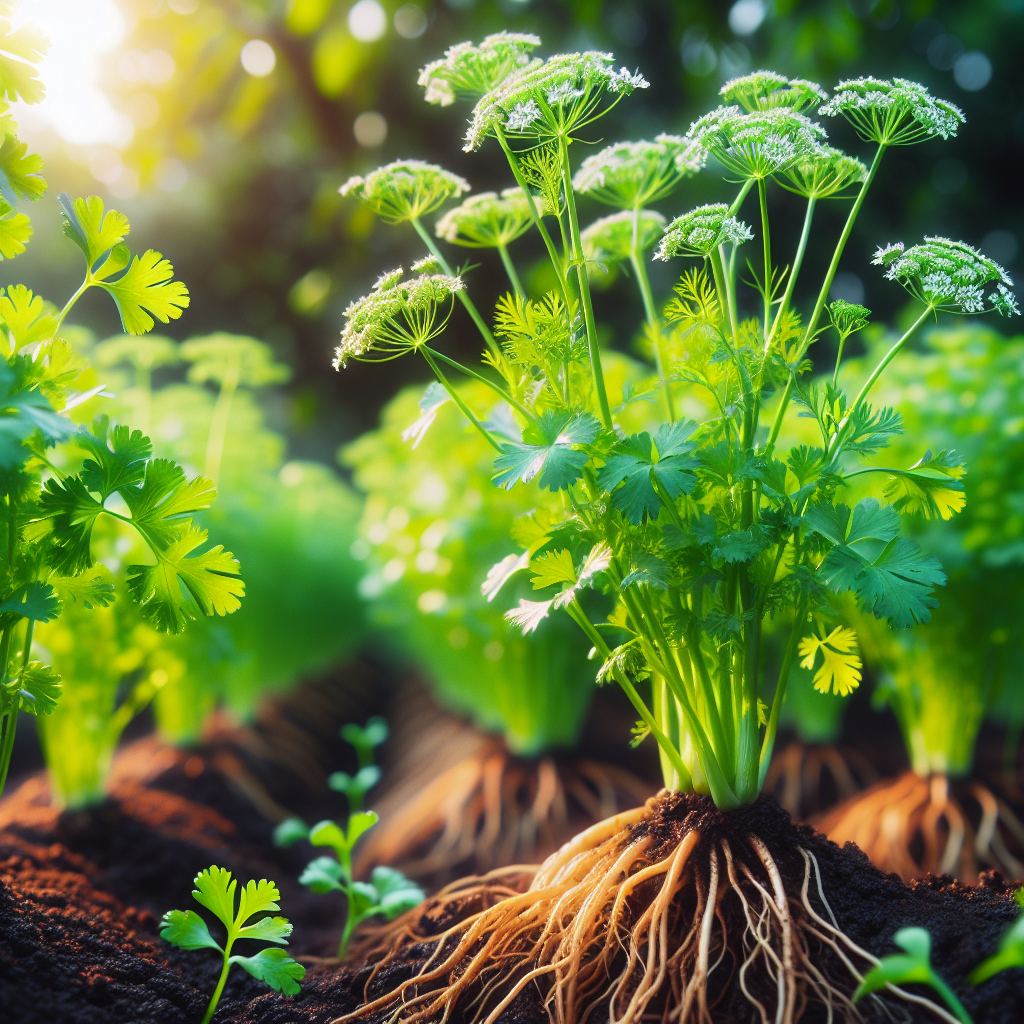
Introduction to Coriander
A member of the Apiaceae family, this crop is one of the oldest culinary herbs in cultivation, valued across South Asia, the Middle East, North Africa, Latin America, and Mediterranean cuisines. The plant provides two distinct harvest products: the fresh foliage often called cilantro in many regions, and the mature dry seed known as coriander. Understanding that these are two harvest stages of the same species is essential for crop planning, because production targets for leafy bunching and seed yield require slightly different sowing densities, fertility strategies, and harvest timing.
Historically, coriander appears in ancient Egyptian tombs, classical Greek writings, and early Ayurvedic and Persian agricultural traditions. Its long domestication history explains why many regional strains exist, ranging from slow-bolting leaf types to compact seed-focused cultivars. In commercial herb systems, coriander is especially valued because it matures quickly, can fit into succession planting schedules, and can serve as a beneficial insectary plant when allowed to flower.
From a grower’s perspective, the main challenge is not germination or growth rate but keeping the crop in its preferred cool, even conditions long enough to produce a high-quality harvest. Heat, erratic irrigation, root disturbance, and nutrient imbalance can trigger premature bolting, making leaves small, sharp-flavored, and less marketable. For that reason, coriander should be treated as a crop that thrives on consistency rather than forceful feeding or heavy watering.
For growers who also manage mixed herb beds, coriander pairs well with compatible aromatic herbs such as Thai Basil, especially when staggered for seasonal succession. Broad intercropping principles discussed in this companion planting article can also help design productive mixed beds.
Botanical Profile of Coriander
This species is a soft-stemmed annual that typically reaches 30 to 60 cm in height, though seed crops may stretch taller under fertile conditions. Seedlings first produce rounded, lobed basal leaves; as the plant matures, upper leaves become more dissected, feathery, and fern-like. This shift in leaf morphology is normal and becomes more pronounced as the crop approaches flowering.
The plant develops a slender taproot with relatively delicate lateral roots. That root structure explains two critical management points: first, coriander dislikes transplant shock more than many herbs; second, waterlogged or compacted soils quickly reduce vigor because the root zone lacks oxygen. In professional production, direct sowing is usually preferred unless climate or protected cultivation requires plug production.
Inflorescences are compound umbels typical of the carrot family, producing white to pale pink flowers that attract hoverflies, parasitic wasps, lacewings, and other beneficial insects. Once pollinated, the fruits develop as green schizocarps that later dry into the familiar tan to straw-colored coriander seed. Technically, what is sold as coriander seed is the dried fruit, which contains two joined mericarps.
Coriander’s aroma changes dramatically with plant stage. Leaves contain aldehydes and other volatile compounds responsible for the bright, pungent scent that some people perceive as citrusy and others as soapy. Seeds, by contrast, develop a warmer, sweeter, nutty-spiced fragrance dominated by linalool and related terpenes. This biochemical shift matters for harvest timing: leaf growers want vegetative tenderness, while seed growers want full physiological maturity.
Cultivars generally fall into three practical categories: slow-bolting leaf strains for bunching and fresh-cut use, dual-purpose types that provide acceptable leaf and seed yield, and seed-focused lines that branch more heavily and flower reliably. In warm regions, selecting slow-bolting genetics is one of the most important yield decisions.
Soil, pH, and Climate Requirements for Coriander
The crop performs best in friable, well-drained loam or sandy loam with high biological activity and moderate organic matter. Ideal soil pH is generally 6.2 to 7.5. It tolerates slightly alkaline conditions better than many leafy herbs, but strongly acidic soils below about pH 5.8 can reduce nutrient availability and root performance. If soil tests show acidity, agricultural lime should be incorporated well ahead of sowing. In high-pH soils above 7.8, watch for micronutrient lockout, especially iron and zinc, which can appear as pale new growth.
A target organic matter level of 3% to 5% is excellent for market-garden production. Too little organic matter causes rapid drying and uneven emergence; too much undecomposed manure or overly rich compost can stimulate lush but weak growth, making plants more prone to lodging, foliar disease, and inconsistent flavor. Use mature compost at moderate rates rather than fresh manure.
Soil structure matters as much as chemistry. The seed is small and requires fine tilth for uniform emergence, but the bed should not be powdery. Overworked soil crusts easily after irrigation, which can trap seedlings. Aim for a crumb structure in the top 2 to 3 cm, with firm seed-to-soil contact underneath.
Temperature drives crop success. Germination is best around 15 to 22°C, though seed can sprout at lower temperatures if soil is not saturated. Vegetative growth is strongest in cool to mild weather, roughly 10 to 25°C. Once temperatures repeatedly exceed 27 to 30°C, especially with long days and drying winds, bolting accelerates. In tropical and subtropical zones, coriander is often best grown during cooler months or shoulder seasons. In temperate zones, it excels in early spring and again in late summer to autumn.
The crop prefers full sun in cool climates, but in hot regions it benefits from light afternoon shade or 25% to 35% shade netting. This is particularly useful for leaf production because shading lowers canopy temperature, slows bolting, and preserves leaf tenderness. Wind protection is also valuable, since hot dry wind increases evapotranspiration and can shift plants into reproductive mode prematurely.
Moisture should be steady rather than excessive. The root zone should remain lightly and evenly moist, not wet. As a practical field indicator, soil at 5 cm depth should feel cool and slightly damp, forming a weak ball when squeezed in heavier soils but falling apart with a tap. If it feels slick, shiny, or leaves water on the hand, it is too wet. If it feels dusty or warm and fails to bind at all, irrigation is overdue. Water stress causes slowed leaf expansion, stronger pungency, and rapid bolting; overwatering causes yellowing, damping-off in seedlings, root decline, and poor aroma concentration.
Step-by-Step Planting & Propagation
Direct sowing is the standard method because the crop’s taproot resents disturbance. Use fresh seed where possible, since germination declines with age and poor storage. Many growers gently split the round seed fruit into two halves before sowing to improve germination uniformity, though this must be done carefully to avoid damaging the embryo.
- Prepare beds thoroughly. Remove clods, stones, and perennial weeds. Incorporate well-finished compost at about 2 to 4 kg per square meter if soil is low in organic matter.
- Irrigate the bed lightly before sowing if the surface is dry. Pre-moistened soil reduces the risk of washing seed too deep after planting.
- Sow seed 1 to 1.5 cm deep. Shallower sowing is preferred in heavy soil; slightly deeper is acceptable in sandy soil.
- Space rows 20 to 30 cm apart for leaf harvest in hand-managed systems, or 30 to 45 cm apart if mechanical weeding is needed. Within rows, sow densely and thin later for bunching production. For seed crops, final spacing of 15 to 20 cm between plants allows better branching and airflow.
- Keep the seedbed evenly moist until emergence, usually 7 to 14 days depending on temperature. Surface drying during this phase is a common reason for patchy stands.
- Thin when seedlings have 2 to 3 true leaves. For baby leaf or cut-and-come-again systems, plants may remain closer. For bunching, 5 to 10 cm spacing is common. For seed production, wider spacing improves umbel development.
Succession sow every 2 to 3 weeks in cool weather for continuous leaf supply. In warm periods, reduce interval to 10 to 14 days because later sowings may bolt faster. In protected cultivation, sowing into deep cell trays can work, but transplant before roots circle and disturb plugs as little as possible.
For container production, use pots at least 20 cm deep to accommodate the taproot. Broad troughs or window boxes work better than shallow herb pots. Ensure multiple drainage holes and avoid saucers that hold standing water.
Seed rate depends on production goal. Dense sowing gives finer stems and faster bunch harvest, while wider sowing gives larger individual plants and better seed set. Commercial growers should align sowing density with the intended market: fresh bunches, loose leaves, microgreens, flowering umbels, or dry seed.
Care & Maintenance regimes for Coriander
Irrigation should be frequent enough to maintain even growth but light enough to preserve root oxygen. During establishment, daily light watering may be needed in warm or windy conditions, especially on sandy beds. Once rooted, most outdoor plantings do best with deep but moderate irrigation 1 to 3 times per week, adjusted for soil type and weather. Sandy soils may need more frequent irrigation; clay loams need less frequent but carefully measured watering.
A useful rule is to wet the top 10 to 15 cm of soil for leaf crops, then allow the uppermost surface to begin drying before watering again. Do not allow repeated severe drying cycles. Signs of underwatering include dull bluish-green foliage, midday droop that does not recover by evening, shortened stems, and a sudden rise of a central flower stalk. Signs of overwatering include persistent limpness despite wet soil, yellow lower leaves, algae on the soil surface, sour-smelling media in containers, and slowed growth due to root stress.
Nutrient management should be restrained. Coriander is not a heavy feeder. Excess nitrogen produces soft, lush growth with weaker flavor and higher disease susceptibility. A balanced preplant fertility program is usually sufficient in fertile garden soil. As a general reference, modest nitrogen availability is desirable early, with adequate phosphorus for rooting and potassium for stress tolerance. In deficient soils, a light side-dress of compost or a diluted fish- or seaweed-based feed can be applied once plants are established, but avoid repeated high-nitrogen feeding.
Mulching helps stabilize soil temperature and moisture, especially in warmer climates. Use a thin layer of fine straw or clean shredded leaf mulch once seedlings are established. Keep mulch slightly back from the crown to maintain airflow. Plastic mulch is less ideal for coriander in hot weather because it can increase root-zone temperature and hasten bolting.
Weed control is most important during the first 3 to 4 weeks, when seedlings are small and uncompetitive. Shallow hoeing between rows is effective, but avoid deep cultivation that damages roots. Hand weeding near the row is often best.
For leaf production, remove any early flower stalks if the crop is intended for extended harvest, though this only delays bolting rather than preventing it entirely. In hot seasons, quality often declines quickly once the plant initiates flowering. For seed production, allow full flowering and support pollinator activity by avoiding broad-spectrum insecticides.
In greenhouse or tunnel culture, ensure strong ventilation. High humidity combined with dense foliage favors foliar disease and weak, elongated growth. Night temperatures that remain too warm also accelerate bolting, so protected cultivation is most effective in cool seasons rather than hot ones.
Pests, Diseases & Organic Management
Coriander is relatively resilient, but several issues can affect stand quality and marketability. Seedlings are vulnerable to damping-off caused by soilborne fungi and oomycetes, particularly in cold, wet, poorly aerated media. Prevention is more reliable than cure: use clean seed, avoid overwatering, sow into well-drained soil, and do not overcrowd emergence rows.
Aphids are among the most common insect pests, especially on tender new growth and flower umbels. They distort foliage, excrete honeydew, and can encourage sooty mold. A strong water spray, conservation of beneficial insects, insecticidal soap, or neem-based products can manage light infestations. Avoid excessive nitrogen, which attracts Aphids by producing overly succulent tissue.
Cutworms may sever seedlings at ground level. Use collars for small plantings, maintain weed control, and inspect at dusk if plants are disappearing overnight. Slugs and snails can also damage young plants in damp conditions; reduce hiding places, irrigate in the morning rather than evening, and use iron phosphate bait where needed.
Leaf miners occasionally tunnel in foliage, reducing fresh-market quality. Remove and destroy affected leaves early. Umbel crops in the carrot family can also attract caterpillars in some regions, though damage is usually sporadic.
Powdery mildew can appear late in the crop cycle under dry foliage but humid air conditions, especially when airflow is poor. Improve spacing, irrigate at the soil level, and remove senescent foliage. Sulfur or potassium bicarbonate products may help if applied early and according to local regulations.
Bacterial leaf spots and Fungal blights are favored by overhead irrigation, splashing soil, and dense canopies. Preventive sanitation is critical: rotate away from Apiaceae crops for at least 2 to 3 years where disease pressure is significant, remove crop residues promptly, and avoid working in wet foliage.
Root rots are strongly associated with waterlogging. If plants yellow, wilt despite moist soil, and fail to recover, inspect the root zone. Healthy roots are pale and firm; diseased roots become brown, soft, and sparse. Correcting drainage and irrigation scheduling is the primary remedy.
Bolting is not a pest or disease, but from a production standpoint it is one of the biggest quality losses. Its triggers include heat, long days, inconsistent watering, root restriction, nutrient imbalance, and varietal sensitivity. Organic management relies on seasonal timing, succession sowing, shading in warm climates, and selecting slow-bolting strains.
Harvesting, Curing & Optimal Storage
Leaf harvest usually begins 30 to 50 days after sowing, depending on temperature, variety, and density. For premium bunching quality, harvest when plants are 15 to 20 cm tall, before stems become fibrous and before significant elongation toward flowering. Cut whole plants at the base for bunches, or selectively remove outer leaves for prolonged harvest in home and small-market systems.
Harvest in the cool morning after dew has dried but before midday heat. Leaves harvested under cool conditions retain better turgor, aroma, and shelf life. Wash gently in clean, cold water if needed, then dry surface moisture quickly using shade, airflow, or salad-spinner style handling for small lots. Wet leaves packed without drying are prone to rapid decay.
For fresh storage, keep leaves at 0 to 5°C with very high relative humidity, ideally 95% or above. In practical terms, bunches last longest when stems are hydrated and foliage is kept cool but not frozen. Warm storage causes yellowing and aroma loss within days. Do not store near ethylene-producing fruit if possible.
For seed production, allow fruits to turn from green to straw-brown on the plant. Harvest when most seed heads are mature but before extensive shattering begins. Cut whole seed stalks and bundle them upside down inside paper bags or on drying tarps in a warm, shaded, well-ventilated place. Avoid direct harsh sun during drying because it can drive off volatile oils.
Once fully dry, thresh gently by rubbing umbels or beating dried stems inside a clean sack. Winnow out chaff, then finish-dry seed to a safe storage moisture content, generally around 8% to 10%. Properly dried seed should feel hard, brittle, and aromatic, not leathery. Store in airtight containers in a cool, dark place. For culinary quality, whole seed keeps far longer than ground spice.
If producing seed for replanting, select vigorous, true-to-type plants with delayed bolting if leaf production is your aim, or strong, well-filled umbels if seed yield is the priority. Isolate from other coriander populations if maintaining a particular strain.
Companion Planting for Coriander
This crop fits well into diversified beds because its flowers attract predatory and parasitic insects, while its fine root system and modest nutrient demand allow it to share space with many vegetables. It is particularly useful near fruiting crops and root vegetables when managed so it does not become shaded out.
Tomato benefits from the added insectary value coriander provides when some plants are allowed to flower. Coriander can be sown at the edge of tomato beds or in alternating strips, where early-season growth occupies space before tomato canopies fully expand.
Onion is another classic pairing because the upright habit of onions leaves room for low herb growth, and the contrasting scents may help create a more complex environment for pests. Both crops also appreciate reasonably well-drained soil and consistent but not excessive moisture.
Carrot is a logical companion because both belong to the same family in a botanical sense, but the practical value comes from similar cool-season timing and efficient bed use. However, because related crops can share some diseases and insect pressures, avoid repeated Apiaceae rotations in the same ground year after year.
Lettuce makes an excellent short-cycle companion in cool weather. Lettuce shades the soil lightly, while coriander fills gaps and provides harvest diversity. In warmer climates, partial canopy overlap can help reduce soil temperature and slow bolting.
Avoid placing coriander immediately beside aggressive, sprawling crops that will smother it early, or beside tall warm-season plantings that create stagnant, humid air with poor light penetration. The best companion strategy is often temporal: sow coriander as a quick intercrop before larger vegetables reach full size, then resow after those crops are cleared.