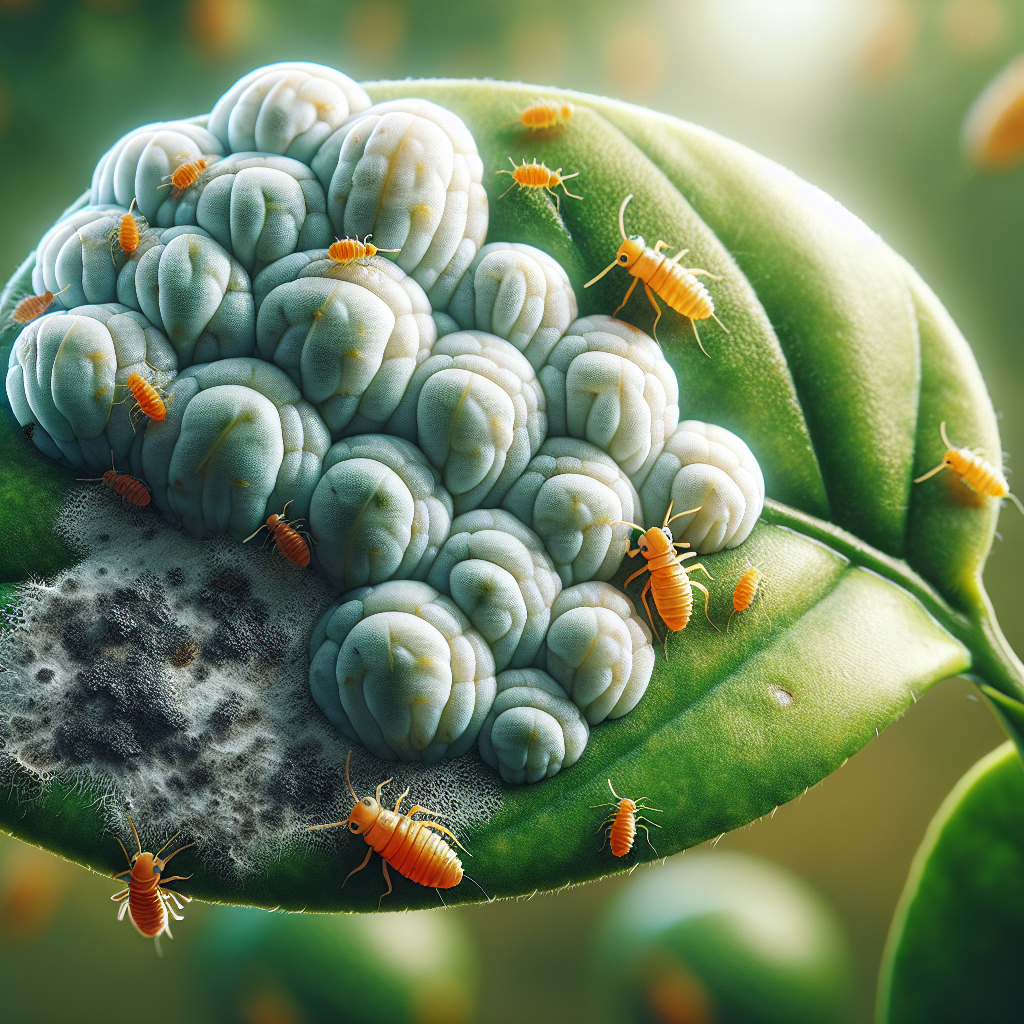
Introduction to scale
Scale insects represent one of the most pervasive pests in agricultural systems worldwide, notorious for their ability to camouflage themselves as harmless bumps on plant surfaces. Belonging to the superfamily Coccoidea, these pests encompass over 8,000 species, with armored scales (Diaspididae) and soft scales (Coccidae) being the most agriculturally significant. Females are sessile, legless, and protected by a waxy exoskeleton that makes them resistant to many pesticides. They insert piercing-sucking mouthparts into plant phloem, extracting sugars and nutrients, which starves the host plant and leads to stunted growth, leaf drop, and reduced yields.
In commercial crops like Hass Avocado and citrus, scale infestations can cause up to 50% yield loss if unchecked. Their populations explode in warm, dry conditions, spreading via wind, tools, or contaminated plant material. Early detection is crucial, as crawlers—the mobile juvenile stage—are the only vulnerable phase. This guide provides professional-grade diagnostics, lifecycle insights, organic treatments, and prevention strategies tailored for small farms and large operations alike. For detailed taxonomy, see the scale insects wiki page.
Scale damage often mimics nutrient deficiencies or drought stress, leading to misdiagnosis. Unlike aphids or mealybugs, scales produce minimal honeydew initially but can lead to sooty mold buildup. Integrated pest management (IPM) focusing on organic methods minimizes chemical use, preserves beneficial insects, and sustains soil health. Understanding their biology empowers growers to disrupt lifecycles effectively.
Identifying Symptoms & Damage
Scale infestations manifest through subtle yet progressive symptoms, starting with small, immobile bumps on stems, leaf undersides, veins, and fruits. Armored scales appear as raised, circular, or oyster-shell-shaped protrusions (1-2mm), often gray, brown, or white, while soft scales are larger (up to 5mm), hemispherical, and translucent. Use a magnifying glass to confirm: live scales resist scraping, while dead ones flake off.
Primary damage includes chlorosis (yellowing) around feeding sites due to toxin injection and nutrient theft. Leaves wilt, curl, and drop prematurely; branches die back, showing twig girdling. Heavy infestations cause sooty mold—a black fungal growth on honeydew excretions—blocking photosynthesis. Fruits develop russeting, cracking, or deformed growth, reducing market value. In severe cases, plants become defoliated, stunted, or girdled at the base.
Diagnostic tips: Shake infested branches over white paper; crawlers appear as tiny yellow-orange specks. Differentiate from leaf buds or lenticels by their immobility and waxy cover. Secondary signs include ant attendance (farming honeydew) and sooty mold. Compare with mites (dusty webs) or whiteflies (winged adults). Scout weekly during spring and summer, focusing on new growth. Threshold: 5-10 scales per leaf or 1-2 per fruit warrants action.
Economic impact is profound: in mango orchards, black scale reduces fruit size by 30%; in ornamentals, aesthetic damage spikes replacement costs. Document patterns for IPM tracking.
Lifecycle and Progression of scale
Scale lifecycles vary by species but follow a hemimetabolous pattern: egg, crawler (nymph), sessile nymphs, and adult. Females lay 10-5,000 eggs under their protective cover over 1-3 months. Eggs hatch into crawlers (first instar nymphs), the only mobile stage (1-2 weeks), dispersing via legs, wind, or animals. Crawlers settle, molt, and secrete waxy tests, becoming sessile for 6-12 weeks.
Armored scales have 2-3 nymphal instars; soft scales up to 5. Males develop wings, mate, and die; parthenogenetic reproduction is common in females. One to four generations per year, peaking in warm seasons. Overwinter as mated females or partial nymphs. Progression: light infestation (few adults) → crawler emergence → exponential growth → sooty mold and dieback.
Timing is key: Monitor with sticky traps or degree-day models (base 50°F/10°C). Crawlers are vulnerable for 1-3 days before settling. Disrupt at this stage for 90% control. Species-specific: California red scale completes cycle in 45-60 days at 75°F; San Jose scale overwinters as black eggs.
Environmental Triggers & Risk Factors
Scale thrives in temperatures 70-90°F (21-32°C), low humidity (<50% RH), and poor air circulation—common in greenhouses or crowded orchards. Drought stress weakens plants, increasing susceptibility; excess nitrogen promotes tender growth attractive to crawlers. Over-fertilization with NPK highs exacerbates outbreaks.
Risk factors: Importing infested nursery stock, inadequate pruning (shady canopies), and ant trails bridging plants. Poor soil drainage fosters root-weakened trees prone to top infestation. Climate change extends generations in subtropical zones. Proximity to hosts like citrus or figs heightens spread.
Check out Spring Pest Patrol: Organic AI Strategies to Shield Your Crops from Common Invaders for timely monitoring tips.
Organic Control & Treatment Plans
Organic management prioritizes cultural, biological, and mechanical controls before soaps/oils. Cultural: Prune infested parts (sterilize tools), improve airflow, and irrigate deeply to boost vigor. Reflective mulches deter crawlers.
Biological: Introduce parasitoids (Encarsia, Aphytis) and predators (ladybugs, lacewings). Release 1,000 per acre; conserve with flowering borders.
Mechanical: Blast with strong water streams targeting crawlers (weekly for 3 weeks). Rub off small populations with gloved hands or alcohol swabs.
Organic Sprays: Horticultural oil (2-3% summer rate) or insecticidal soap smothers crawlers (apply evenings, 7-10 day intervals, 3 apps). Neem oil disrupts feeding/hormones. Avoid on stressed plants >90°F.
Treatment Plan: 1. Scout/confirm crawlers. 2. Water blast + prune. 3. Apply oil/soap at crawler peak. 4. Release predators. 5. Re-scout in 2 weeks. Rotate modes to prevent resistance. Efficacy: 80-95% with timing.
For avocado, combine with ant baits (boric acid). Test small areas first.
Preventing scale in the Future
Prevention hinges on exclusion and monitoring. Inspect new plants; quarantine 4 weeks. Use sticky barriers on trunks, eliminate ants with borax baits. Maintain balanced nutrition (low N, high K) and irrigation schedules. Prune annually for open canopies.
IPM scouting: Yellow sticky traps, beat sheets. Threshold-based action prevents outbreaks. Crop rotation and resistant varieties (e.g., some citrus rootstocks) help. Clean tools/equipment between blocks. Mulch suppresses weeds hosting scales.
Long-term: Plant trap crops or companions like marigold. Monitor weather for crawler windows. Annual audits reduce recurrence by 70%.
Crops Most Affected by scale
Scale plagues woody perennials and ornamentals. Top targets: Citrus (orange, lemon), avocado, mango, apple, pear, peach, plum, fig, olive, ornamentals (ivy, hibiscus), and palms. Greenhouse crops like ferns and schefflera suffer too.
Citrus hosts 100+ species; avocados face black scale; Hass Avocado loses $millions yearly. Tropicals (banana, guava) in humid areas. Field crops less affected but ornamentals in nurseries decimated.