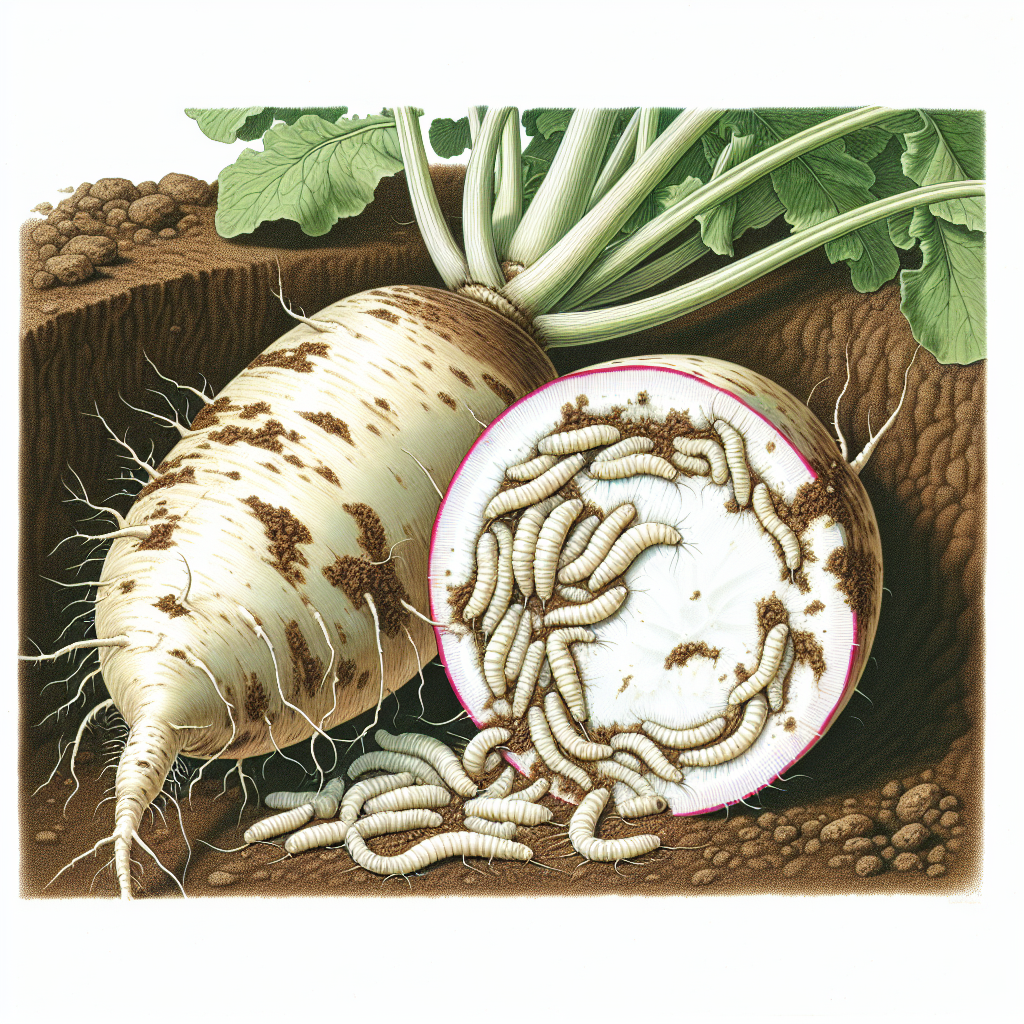
Introduction to root maggots
Root maggots represent one of the most insidious underground threats to vegetable growers, particularly those cultivating brassicas and alliums. These pests, belonging to the genus Delia (family Anthomyiidae), include species like the cabbage root maggot (Delia radicum), onion root maggot (Delia antiqua), and seedcorn maggot (Delia platura). The larvae—white, legless, tapered worms about 3-8 mm long—burrow into roots, stems, and seeds, feeding voraciously and often proving fatal to young plants.
Unlike aboveground pests, root maggots operate invisibly below the soil surface, making early detection challenging. They are especially problematic in cool-season crops, where they can destroy up to 80% of seedlings in untreated fields. Understanding their biology is crucial for farmers aiming to safeguard yields of radish, onion, cabbage, and related vegetables. This guide provides professional-grade diagnostics, lifecycle insights, organic management strategies, and prevention tactics to minimize losses. For more on related soil pests, see our entry on Seedcorn Maggot. Check out this Spring Pest Patrol: Organic AI Strategies to Shield Your Crops from Common Invaders for timely tips.
In commercial and home gardens alike, root maggots cause billions in annual losses worldwide, particularly in temperate regions. Their impact is amplified in organic systems where chemical soil drenches are off-limits. Proactive scouting and integrated pest management (IPM) are essential for sustainable control.
Identifying Symptoms & Damage
Diagnosing root maggot infestations requires a keen eye for subtle early signs, as damage manifests belowground. The hallmark symptom is seedling stunting or sudden wilting, where plants appear healthy one day and collapse the next, mimicking drought or root rot. Affected seedlings often lean or fall over due to severed roots, with a characteristic brown, mushy lesion at the soil line where maggots enter the stem.
Pull up suspect plants to reveal the culprits: clusters of white larvae tunneling through roots, often surrounded by frass (insect waste). Roots appear riddled with irregular tunnels, scarred, or completely consumed, leading to poor nutrient uptake and yellowing foliage. In brassicas like broccoli or turnip, secondary bacterial infections can cause foul odors and slime.
Advanced damage includes multiple generations hitting maturing plants, resulting in delayed maturity, undersized bulbs or heads, and reduced marketability. Differentiate from wireworms (hard, golden larvae) or cutworms (larger, nocturnal surface feeders) by the maggots' soft, hook-mouthed bodies and ribbon-like shape. Use a hand lens to spot entry holes (1-2 mm) at the plant base.
Scout weekly by digging 10-15 cm around 20 plants per field section. A threshold of 5-10% infested seedlings warrants action. In onions, look for loose, papery skins hiding maggot damage. Accurate ID prevents misdiagnosis with Pythium or Phytophthora, ensuring targeted interventions.
Lifecycle and Progression of root maggots
Root maggots complete 2-4 generations per year, synchronized with cool weather (10-25°C). Adult flies—small, greyish, resembling houseflies (5-7 mm)—emerge in early spring from overwintering pupae 5-15 cm deep in soil. Females lay 100-300 white eggs in clusters of 10-30 near plant bases or on soil cracks, hatching in 2-4 days.
Larvae (maggots) feed for 2-4 weeks, progressing through three instars: first-instars (0.5 mm) rasp roots superficially; later instars (up to 9 mm) bore deeply. Fully fed larvae pupate in soil, forming reddish-brown capsules (4-6 mm). The cycle repeats, with summer generations shorter (14-21 days) and fall broods overwintering.
Peak activity aligns with crop vulnerability: cabbage root maggots target brassicas from transplant to heading; onion maggots hit sets in spring and fall. Overwintering survival exceeds 70% in undisturbed soil, fueling next season's outbreaks. Monitor with yellow sticky traps (20 cm above soil) to track adult flights, peaking after 200-300 degree days (base 10°C).
Environmental Triggers & Risk Factors
Cool, moist conditions (soil temps 12-18°C, >60% moisture) trigger egg-laying, as adults seek damp soils for oviposition. Poor drainage, compacted fields, and high organic matter exacerbate issues by retaining humidity. Continuous cropping of host plants builds populations; brassica residues harbor pupae for 2+ years.
Early planting exposes seedlings to first-generation flies. Acidic soils (pH <6.0) and low-fertility fields stress plants, increasing susceptibility. Nearby weedy margins with wild mustard or shepherd's purse serve as reservoirs. Climate change extends generations in milder winters, while irrigation mismanagement creates ideal microhabitats.
Risk spikes after mild winters or in fields with >20% crucifer history. Assess via soil cores: >5 pupae/m² signals high risk. Companion crops like clover can dilute pressure if rotated properly.
Organic Control & Treatment Plans
Organic management emphasizes cultural, biological, and minimal physical controls. Row covers (Agribon AG-19) exclude adults from emergence to harvest, achieving 90-100% efficacy on small scales. Deploy immediately post-planting, sealing edges with soil or weights.
Biological controls include nematodes (Steinernema feltiae) applied as soil drenches (2-5 million/m²) at first scouting, effective against young larvae in moist soils (15-25°C). predatory rove beetles (Dalotia coriaria) target pupae; release 500-1000/m².
Organic-approved insecticides like spinosad (Entrust) or azadirachtin (Neemix) target adults via foliar/soil sprays at flight peaks, but efficacy is 50-70%—rotate with BTK (Bacillus thuringiensis) for larvae. Diatomaceous earth or wood ash barriers around stems deter oviposition.
Treatment plan: Week 1: Scout/install covers. Week 2: Apply nematodes if >5% damage. Week 4: Trap adults, spray if >10 flies/trap. Rotate with non-hosts like grains. Solarization (clear plastic, 4-6 weeks summer) kills 80% pupae. For onion fields, pelleted seed with hot water treatment reduces seedcorn maggots.
Preventing root maggots in the Future
Prevention hinges on breaking the lifecycle through IPM. Crop rotation (3-4 years away from hosts) reduces pupae by 90%. Delay planting until after first fly peak (yellow traps guide timing). Use transplants over direct seed for faster establishment beyond egg-lay windows.
Sanitation: Destroy crop residues promptly, till lightly to expose pupae to predators/birds. Cover crops like mustard (biofumigant varieties) suppress via glucosinolates. Soil amendments: raise pH to 6.5-7.0 with lime; incorporate rye or oats for allelopathy.
Trap crops: Border plantings of Chinese cabbage draw flies away. Resistant varieties like 'Marketmore' cucumber hybrids or 'Nemadoc' radish tolerate low infestations. Monitor long-term with soil sampling; threshold <2 pupae/m². Integrate with broader strategies from our Soil Health Mastery.
Crops Most Affected by root maggots
Root maggots preferentially attack Brassicaceae and Alliaceae, but also legumes and cucurbits. Top targets:
- Brassicas: Cabbage, broccoli, cauliflower, kale, radish, turnip, mustard—up to 100% loss in seedlings.
- Alliums: Onion, garlic, leeks, shallots—bulb damage in 2-3 generations.
- Others: Beet, carrot, peas, beans, sweet corn, spinach.
Seedcorn maggots hit germinating seeds of corn, soybeans, and cucurbits. Brassicas suffer most due to chemical attractants (isothiocyanates). Choose resistant cultivars like 'Protector' onion or 'Socrates' broccoli for high-risk zones.