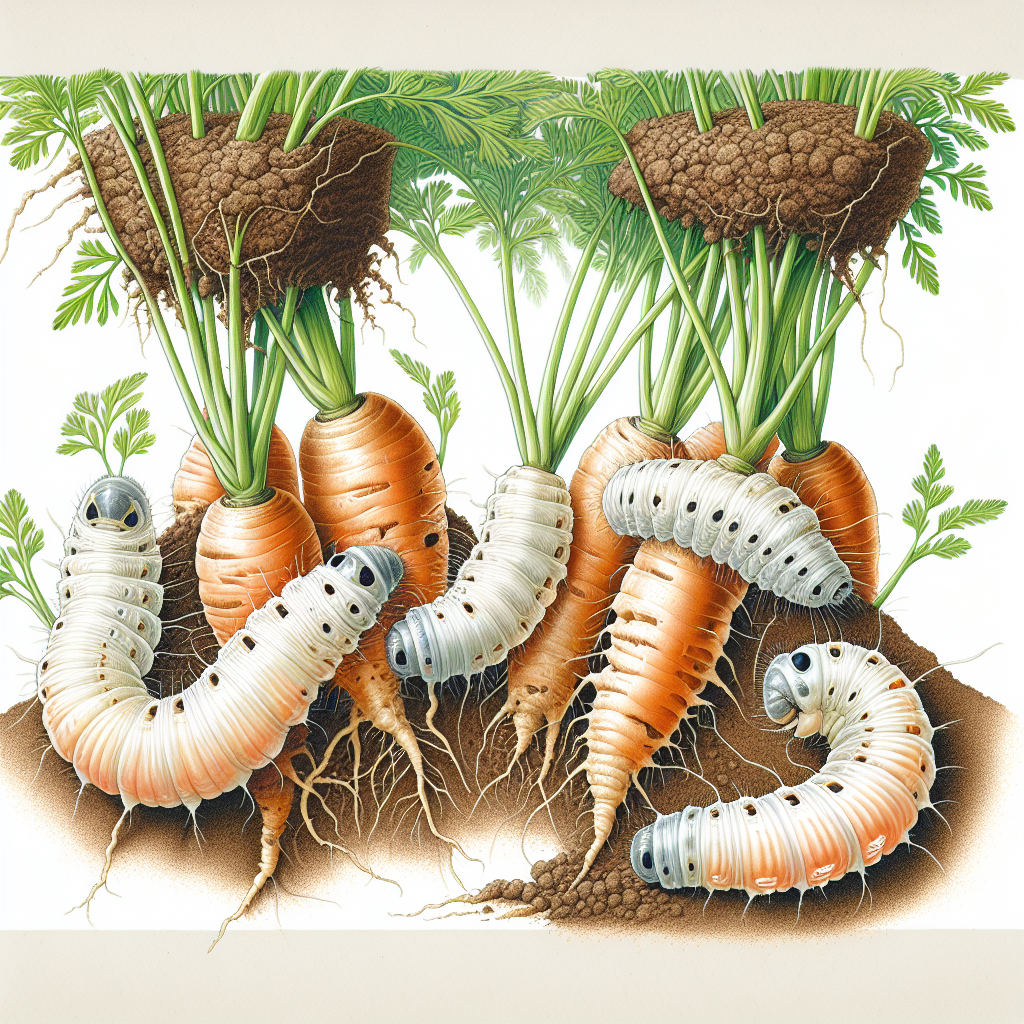
Introduction to Root borers
Root borers represent a diverse group of pests, primarily the larval stages of beetles (Coleoptera) and moths (Lepidoptera), that inflict severe damage by boring into the roots, rhizomes, and lower stems of plants. Unlike above-ground pests, root borers operate invisibly beneath the soil, making them challenging to detect until significant harm is done. Common culprits include species from genera like Prionus (long-horned beetles), Sphenophorus (billbugs), and various clearwing moths such as Synanthedon spp. These pests target a wide range of crops, leading to reduced nutrient and water uptake, plant stunting, and eventual death. In agricultural settings, root borer infestations can cause yield losses of 20-50% or more, particularly in perennial crops and root vegetables. Understanding their biology is crucial for effective management, as conventional chemical controls often fail due to the pests' protected subterranean habitat. This definitive guide equips farmers, gardeners, and agronomists with professional-grade diagnostics, organic treatments, and prevention strategies to safeguard crops. For more on related soil pests, see root-knot nematodes.
Identifying Symptoms & Damage
Diagnosing root borer damage requires keen observation of above-ground symptoms combined with soil inspection. Early signs include sudden wilting during the day, even under adequate moisture, as damaged roots fail to transport water effectively. Plants may exhibit stunted growth, yellowing lower leaves (chlorosis), and premature flowering or seed set as a stress response. In severe cases, entire plants collapse, resembling drought or root rot diseases.
To confirm root borers, excavate around the base of affected plants. Look for:
- Entry holes: Small, clean punctures (1-5 mm) at the soil line or on roots.
- Frass and sawdust: Saw-like excrement or wood-chip debris around holes.
- Larval tunnels: Clean, oval galleries inside roots or crowns, often 5-20 mm wide.
- Larvae: Creamy-white, legless grubs with brown heads, up to 5 cm long, C-shaped, and tough-skinned.
Damage patterns vary by species: Prionus larvae create large, meandering tunnels in woody roots, while billbug larvae target grasses and cereals with girdling at the crown. Differentiate from wireworms (slender, wire-like) or cutworms (surface feeders). Use a soil probe or shovel to sample 10-20 plants per field; if 5% show larvae, infestation is economically significant. For hyper-local pest ID tips, check this Spring Pest Patrol blog.
Lifecycle and Progression of Root borers
Root borers undergo complete metamorphosis: egg, larva, pupa, adult. Lifecycles span 1-5 years, with larvae causing 90% of damage.
- Eggs: Laid in soil near host roots in summer; tiny (1 mm), white, hatching in 2-4 weeks.
- Larvae: Primary damage stage; feed for 1-4 years, molting 5-10 times, growing from 5 mm to 5 cm. They bore into roots, preferring tender feeder roots first.
- Pupa: Overwinter in soil chambers; transform in spring.
- Adults: Emerge at night (June-August), short-lived (1-2 weeks), do not feed much but mate and lay eggs. Beetles are robust with long antennae; moths mimic wasps.
Progression aligns with crop growth: larvae peak in late summer/fall, girdling crowns. Multiple generations rare; most univoltine. Monitor with soil traps (buried carrots) or pheromone lures for adults. Lifecycle disruption is key to control.
Environmental Triggers & Risk Factors
Root borers thrive in specific conditions that farmers can mitigate:
- Soil type: Sandy, well-drained loams favor egg-laying and larval movement; heavy clays limit spread.
- Moisture: Drought-stressed plants are vulnerable as roots grow deeper into borer habitats.
- Temperature: Optimal 20-30°C (68-86°F) for larval activity; overwinter below 10°C.
- Crop history: Continuous monocropping (e.g., 3+ years potato) builds populations; weeds like grasses host alternate stages.
- Tillage: No-till fields harbor more borers due to undisturbed soil.
- pH and fertility: Neutral pH (6.0-7.0); low organic matter weakens plant resistance.
Risk spikes after drought or in fields near native grasslands/forests, where wild hosts like oak roots sustain Prionus. Scout high-risk zones post-rain when adults emerge.
Organic Control & Treatment Plans
Organic management emphasizes cultural, biological, and mechanical tactics, avoiding broad-spectrum chemicals.
1. Cultural Controls (Immediate): Rotate crops 3-4 years, avoiding hosts (e.g., follow roots with cabbage). Tillage in fall exposes larvae to predators/birds. Solarization: Cover moist soil with clear plastic 4-6 weeks pre-planting, heating to 50°C kills eggs/larvae.
2. Biological Controls: Introduce entomopathogenic nematodes (Heterorhabditis bacteriophora) at 10^9/m² in evening irrigation; effective against 2nd-3rd instar larvae. Apply Beauveria bassiana fungal sprays to soil. Encourage ground beetles (Carabidae) with mulch borders.
3. Mechanical/Trapping: Dig trenches around fields, hand-pick larvae. Use bucket traps with fermented fruit/molasses for adults. For crowns, slit and probe with wire to kill larvae.
Treatment Plan:
- Mild (<5% infestation): Rotate + nematodes.
- Moderate (5-20%): Solarize + nematodes + traps.
- Severe (>20%): Destroy plants, deep till, cover crop with mustard (biofumigant), nematodes year 1-2.
Monitor efficacy with soil samples; expect 70-90% reduction in 1-2 seasons.
Preventing Root borers in the Future
Prevention builds resilient systems:
- Crop Rotation: 4-year cycle: roots → brassicas → legumes → grains.
- Resistant Varieties: Choose borer-tolerant cultivars (e.g., sweet potato 'Beauregard').
- Soil Health: Add compost (5 cm/year) for robust roots; mycorrhizal inoculants enhance vigor.
- Barriers: Row covers pre-egg-lay; diatomaceous earth bands at base.
- Trap Crops: Plant sacrificial carrot borders, destroy weekly.
- Monitoring: Pheromone traps + soil cores every 2 weeks spring-fall.
- Sanitation: Remove plant debris; flood fields if feasible.
Integrated plans reduce outbreaks 80%; combine with weather-aware scheduling for best results.
Crops Most Affected by Root borers
Root borers attack 100+ species, prioritizing perennials and roots:
- Root Vegetables: Potato, carrot, sweet potato, onion.
- Tubers/Rhizomes: Cassava, ginger, taro.
- Grains/Grasses: Corn, wheat, turf.
- Trees/Perennials: Apple, avocado, Hass Avocado.
- Others: Peanuts, sugarcane, strawberries.
Economic impact highest in potato (billbugs) and ornamentals (Prionus). Scout accordingly.