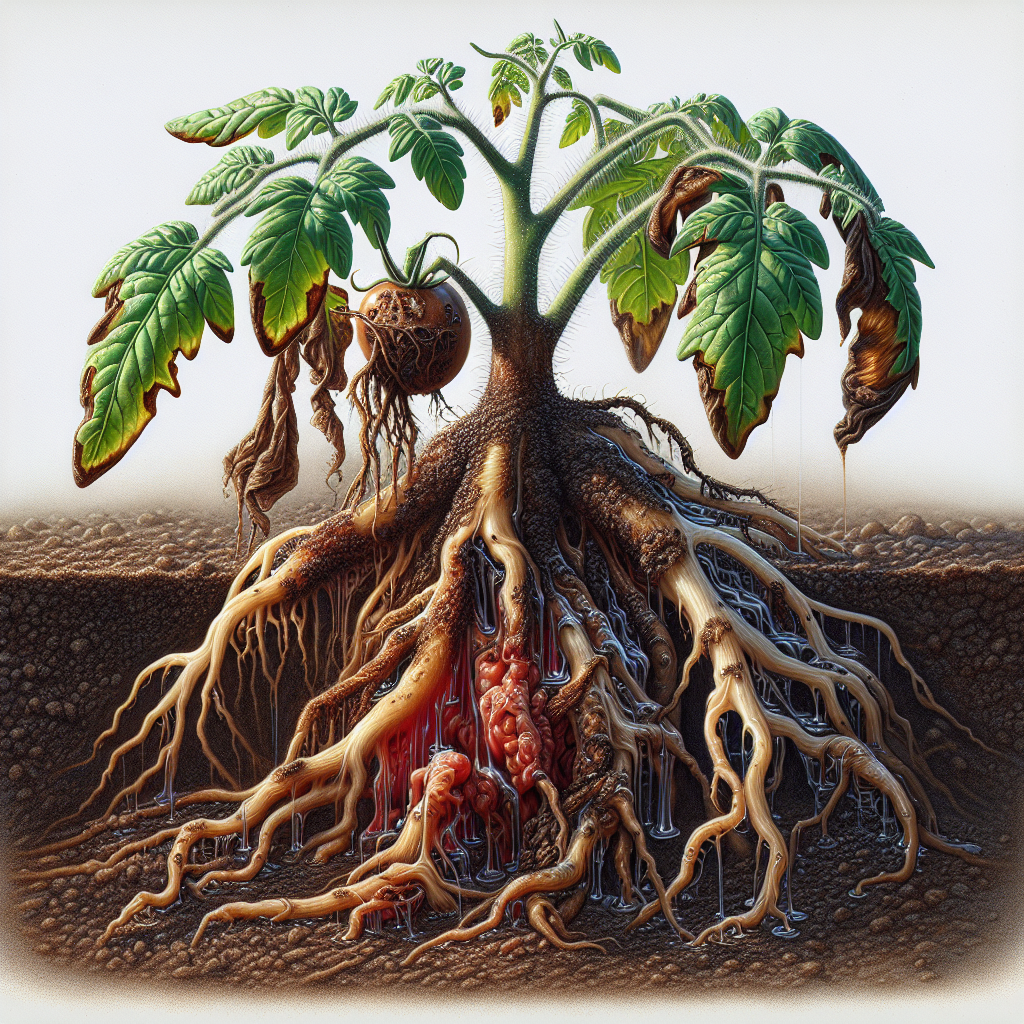
Introduction to Root and Crown Rots
Root and crown rots represent one of the most destructive disease complexes in agriculture, affecting a wide range of crops worldwide. These soilborne diseases are primarily caused by oomycetes like Phytophthora and Pythium species, as well as true fungi such as Rhizoctonia solani, Fusarium spp., and Sclerotium rolfsii. Unlike foliar diseases, root and crown rots strike below ground, making early detection challenging and often leading to sudden plant collapse.
The economic impact is staggering: in vegetable production, losses can exceed 50% in affected fields, while perennial crops like avocado and fruit trees suffer long-term decline. Crown rot specifically targets the junction between roots and stem (crown), where tissues are vulnerable to infection. Pathogens enter through wounds or natural openings, spreading via splashing water, tools, or irrigation. In warm, wet conditions, infections progress rapidly, producing mycelium, zoospores, or sclerotia that persist in soil for years.
Understanding root and crown rots is crucial for sustainable farming. This guide provides definitive diagnostic criteria, lifecycle insights, risk factors, organic management strategies, and prevention protocols tailored for small farms and commercial operations. By integrating these practices, growers can minimize losses and maintain soil health. For instance, in potato fields, integrating crop rotation with cover crops has reduced incidence by up to 70%. Early intervention is key—once symptoms appear, curative options are limited, emphasizing proactive cultural controls.
Identifying Symptoms & Damage
Accurate diagnosis begins with recognizing subtle early signs before plants collapse. Above-ground symptoms include sudden wilting during the day (with partial recovery at night), yellowing lower leaves, and stunted growth. Plants appear 'off-color' with sparse foliage, mimicking nutrient deficiencies or drought stress. Advanced stages show permanent wilting, lodging, and rapid death, often in patches due to uneven soil pathogen distribution.
Examine roots and crowns for confirmation: healthy roots are firm and white; infected ones are dark brown to black, mushy, and emit a foul odor from secondary bacterial invasion. Crown tissue at the soil line shows water-soaked lesions expanding into girdling cankers. In tomato, roots may shred into strands, while in ornamentals, rotted crowns ooze reddish gum. Differentiate from other issues: root-knot nematodes cause galls, not rot; overwatering alone lacks discoloration.
Damage varies by crop: seedlings suffer damping-off, collapsing at the base; mature plants show vascular browning when split longitudinally. Yield losses stem from reduced water/nutrient uptake—e.g., 30-100% in peppers. Conduct a 'root pull test': infected plants lift easily with decayed roots. Lab confirmation via plating on selective media (e.g., PARPH for Phytophthora) identifies pathogens. Scout low-lying field areas first, as water accumulates there.
Lifecycle and Progression of Root and Crown Rots
Root and crown rot pathogens exhibit complex lifecycles adapted to soil persistence. Oomycetes like Phytophthora produce sporangia releasing zoospores that swim in saturated soils to infect roots. These germinate mycelium colonizing cortex tissues, advancing upward to crowns. Under dry conditions, chlamydospores or oospores form, surviving years in soil or debris.
Fungi like Rhizoctonia spread via basidiospores or hyphae in soil, infecting via wounds. Sclerotia (hardened fungal bodies) of Sclerotium endure drought, germinating on contact. Progression: initial root tip infection → cortical rot → vascular invasion → crown girdling → canopy wilt. In strawberry, Phytophthora progresses from feeder roots to taproots in 7-14 days under 25°C and high moisture.
Temperature optima vary: Pythium thrives at 15-20°C, Phytophthora at 25-30°C. Cycles repeat with rain events mobilizing inoculum. In perennials like apple, chronic infections weaken trees over seasons, leading to dieback. Understanding this informs timing: avoid planting in cool, wet springs when Pythium peaks.
Environmental Triggers & Risk Factors
Excess soil moisture is the primary trigger, with pathogens needing free water for zoospore motility. Poor drainage, compaction, and over-irrigation create anaerobic conditions favoring infection. High soil temperatures (above 25°C) accelerate Phytophthora; cool, wet soils boost Pythium. Acidic soils (pH <6) exacerbate issues, as do high clay contents retaining water.
Risk factors include continuous monocropping, which builds inoculum; wounded plants from cultivation; and contaminated water/tools. In peanut, double-cropping increases risk by 40%. Shade and mulch retain moisture, promoting disease. Climate change intensifies events with heavier rains. Soil tests reveal high pathogen loads; solarization reduces viable propagules by 90%.
Organic Control & Treatment Plans
Organic management emphasizes integrated cultural, biological, and minimal chemical controls. No cure exists post-infection; focus on suppression. Remove and destroy infected plants to limit spread. Improve drainage via raised beds or tiling—reduces incidence by 60-80%. Apply Soil Health Mastery: 5 Proven Strategies for Small Farms to Build Fertile Ground Without Breaking the Bank principles: add compost to enhance aeration and microbial competition.
Biologicals shine: Trichoderma viride colonizes roots, outcompeting pathogens (apply 5-10g/kg seed). Bacillus subtilis suppresses via antibiotics. Mycorrhizal fungi boost root health, resisting infection. For active outbreaks, drench with hydrogen peroxide (3%) or potassium phosphite (0.1%)—phosphite induces defenses, effective against Phytophthora. Neem cake (200g/m²) inhibits sclerotia germination.
Crop rotation: 3-4 years with non-hosts like grasses breaks cycles. Biofumigants like mustard green manures release isothiocyanates killing pathogens. Solarize soil: cover with plastic 4-6 weeks in summer, heating to 50°C. In nurseries, use sterile media. Monitor with bait tests; treat high-risk fields pre-planting. Integrated plans yield 85% control in trials.
Preventing Root and Crown Rots in the Future
Prevention outperforms treatment. Select resistant varieties: e.g., resistant Hass avocado rootstocks. Optimize planting: elevate crowns above soil, avoid deep planting. Ensure well-drained sites; amend with gypsum for sodic soils. Drip irrigation minimizes foliage wetting.
Sanitize tools/water; test irrigation sources for pathogens. Mulch judiciously with pathogen-free materials. Foster beneficial microbes via compost teas (apply 20L/ha biweekly). Rotate crops, incorporating brassicas for biofumigation. Pre-plant fumigation alternatives: anaerobic soil disinfestation with carbon sources. Scout regularly; act on early wilting. Long-term: build soil organic matter to 4-5%, suppressing pathogens naturally. These steps sustain yields, cutting losses by 90%.
Crops Most Affected by Root and Crown Rots
Root and crown rots plague diverse crops. Vegetables: tomato, potato, pepper, cucumber, squash—losses up to 70% in wet fields. Legumes: soybeans, peanuts, beans suffer Phytophthora. Perennials: avocado (Phytophthora root rot), citrus, strawberry, apple. Ornamentals and turf also vulnerable. Tropicals like banana and mango face crown rot in monsoons. Field crops: cotton, sugarcane. Tailor prevention to crop: e.g., fumigate for strawberries.