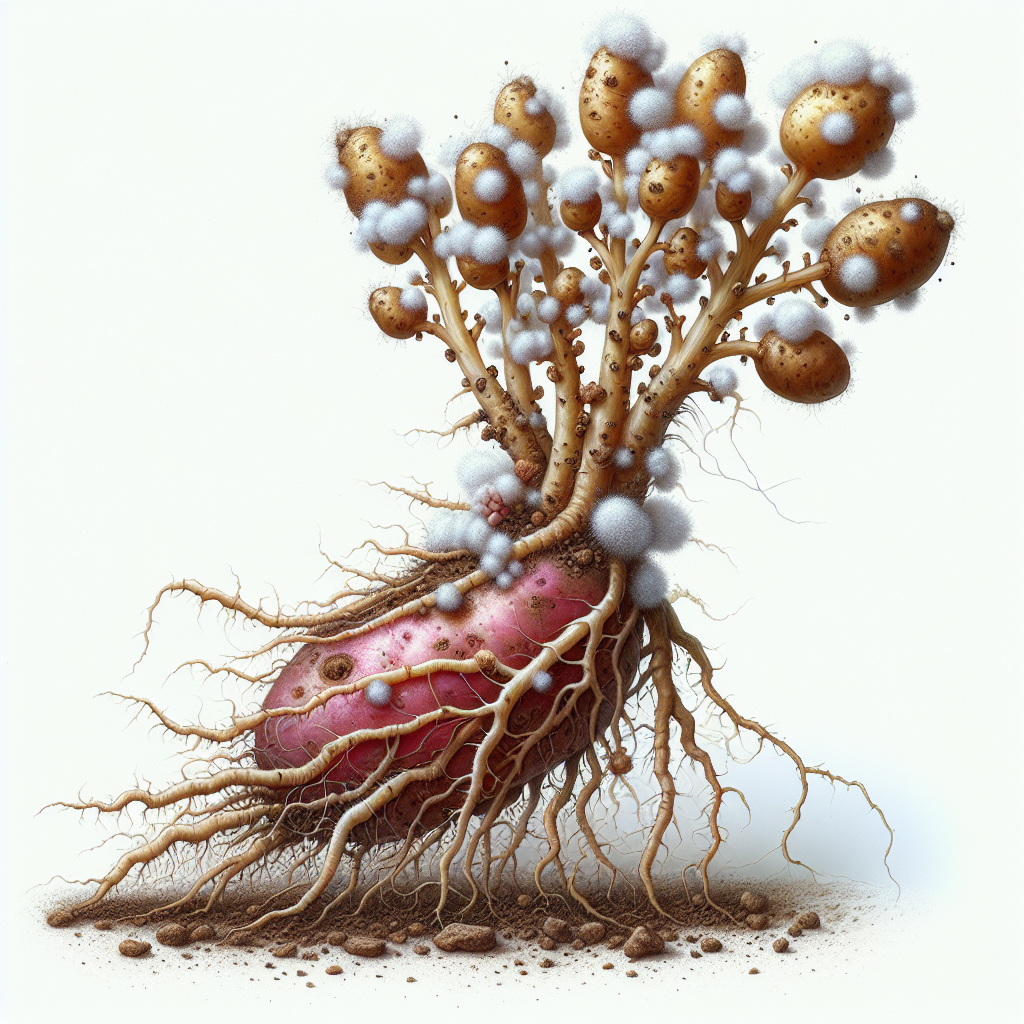
Introduction to Rhizoctonia solani
Rhizoctonia solani is one of the most destructive soilborne fungal pathogens affecting agriculture globally, responsible for diseases like root rot, damping-off, stem canker, and aerial web blight. This fungus belongs to the basidiomycete group and is characterized by its multinucleate hyphae and ability to produce durable sclerotia—resting structures that enable long-term survival in soil for years. With over 100 anastomosis groups (AGs), it exhibits host-specific virulence, making it a formidable challenge for growers of vegetables, grains, legumes, and ornamentals.
First identified in the late 19th century, R. solani causes billions in annual crop losses, particularly in warm-season crops under high humidity. Unlike foliar pathogens, it primarily attacks underground plant parts, leading to sudden wilting, stunted growth, and yield reductions up to 50-70% in severe outbreaks. Early detection is crucial as symptoms mimic root rot or Phytophthora infections. This guide provides definitive diagnostic criteria, lifecycle insights, and proven organic management for sustainable control. For more on Rhizoctonia diseases, explore our detailed wiki.
Identifying Symptoms & Damage
Accurate diagnosis of Rhizoctonia solani begins with recognizing its distinctive symptoms, which vary by crop stage and type. In seedlings, damping-off manifests as water-soaked lesions at the soil line, followed by rapid collapse and brown discoloration of roots and hypocotyls. Affected tissues often show fine, white-to-brown mycelial webs under humid conditions, a hallmark of R. solani.
In mature plants, symptoms include reddish-brown lesions on roots, crowns, and lower stems, progressing to cankers with shredded, fibrous decay. Lesions may girdle the stem, causing wilting of upper foliage despite adequate moisture. Characteristic sclerotia—small, brown, irregular lumps (0.5-2 mm)—form on infected tissues, confirming the pathogen. Foliar symptoms in web blight appear as blighted leaves webbed with tan mycelium during prolonged leaf wetness.
Damage is most evident in potato with black scurf (sclerotia on tubers), rice sheath blight, and soybeans root rot. Yield losses stem from reduced nutrient uptake, lodging, and poor stand establishment. Differentiate from Fusarium by the absence of pink pigmentation and presence of web-like growth. Lab confirmation involves isolating brick-red hyphae on potato dextrose agar. Early scouting in high-risk fields prevents escalation.
Lifecycle and Progression of Rhizoctonia solani
Rhizoctonia solani lacks a sexual stage but propagates via mycelium, basidiospores (rarely), microsclerotia, and sclerotia. Sclerotia, the primary inoculum, germinate under favorable conditions, producing infection hyphae that penetrate roots directly or through wounds. Mycelium grows rapidly (up to 10 mm/day at 30°C) in soil, colonizing organic matter and plant debris.
The disease cycle starts with soil or residue inoculum infecting germinating seeds or young roots, leading to pre-emergence damping-off. Post-emergence, hyphae spread via splashing water or tools, forming cankers. In warm soils, infection progresses systemically, with sclerotia maturing in 7-14 days on dead tissue. Overwinter survival exceeds 5 years in sclerotia, reactivated by host exudates.
Progression accelerates in dense plantings, with secondary spread via hyphal bridges between plants. Unlike Pythium, which favors cooler, wetter soils, R. solani peaks at 25-35°C. Crop rotation disrupts the cycle, but deep-planted sclerotia persist. Understanding this polycyclic nature informs timed interventions.
Environmental Triggers & Risk Factors
Rhizoctonia solani thrives in warm (25-35°C), moist soils with pH 5-7, high organic matter, and poor aeration. Compacted, waterlogged fields exacerbate infections, as oxygen depletion favors mycelial growth. High planting density promotes microclimate humidity, enabling web formation.
Key risk factors include acidic soils, excessive nitrogen favoring succulent growth, and residue from susceptible hosts like corn or wheat. Overwatering transplants or seedlings triggers outbreaks, as does direct seeding into infested soil. Warm nights (>20°C) with daytime highs >30°C signal high risk. Monocropping amplifies buildup, while cool, dry conditions suppress activity.
Climate change intensifies issues in tropical/subtropical regions. Test soil for sclerotia density (>10/g soil indicates high risk). Integrate with soil health mastery strategies to mitigate triggers.
Organic Control & Treatment Plans
Organic management of Rhizoctonia solani emphasizes cultural, biological, and physical tactics over chemical fungicides. Start with disease-free seed/transplants and solarize soil (cover with clear plastic 4-6 weeks in summer) to kill 70-90% sclerotia. Crop rotation (3-5 years) with non-hosts like grapes or clover reduces inoculum.
Biological controls include Trichoderma viride or Gliocladium virens (apply 10^9 CFU/g soil pre-planting), outcompeting R. solani. Bacillus subtilis or Pseudomonas fluorescens seed treatments suppress germination. Organic amendments like mustard cake, chitosan, or compost teas boost antagonistic microbes.
Physical methods: deep tillage buries sclerotia >20 cm, delaying germination. Improve drainage with raised beds (15-20 cm high). Foliar biofungicides (e.g., Bacillus amyloliquefaciens) target web blight. Remove infected debris and rogue plants promptly. For potato, hilling reduces tuber exposure. Monitor with baiting assays; treat at 5-10% incidence. Integrated plans yield 30-50% better control than single tactics.
Preventing Rhizoctonia solani in the Future
Long-term prevention hinges on integrated pest management (IPM) and soil stewardship. Select resistant varieties: e.g., 'Superior' potato or 'Patriot' beans. Use certified pathogen-free inputs and hot water treat rhizomes (50°C, 30 min) for ginger.
Enhance soil biology with cover crops (hairy vetch), mycorrhizal inoculants, and reduced tillage to foster suppressive microflora. Maintain balanced fertility; avoid excess N. Scout weekly, using apps for hyper-local forecasts to preempt wet periods. Sanitize tools with 10% bleach.
Resistant mulches (e.g., mustard green manure) and fumigation alternatives like allyl isothiocyanate work well. Annual soil tests guide amendments raising pH >7 if needed. Educate on companion planting with antagonists like marigold. Sustainable practices cut recurrence by 80%.
Crops Most Affected by Rhizoctonia solani
Rhizoctonia solani impacts over 200 species, with severe losses in high-value crops. Vegetables like potato (black scurf, stem canker), tomato (root rot), eggplant, and cucumber suffer damping-off up to 40%. Legumes including soybeans (web blight), chickpeas, and peas face root rots.
Cereals: rice sheath blight (20-50% losses in Asia), corn seedling blight, wheat root rot. Turfgrasses and ornamentals show brown patch. Tropicals like cassava and sugarcane are vulnerable. AG-1-IB targets rice/beans; AG-3 potatoes. Prioritize monitoring in these.