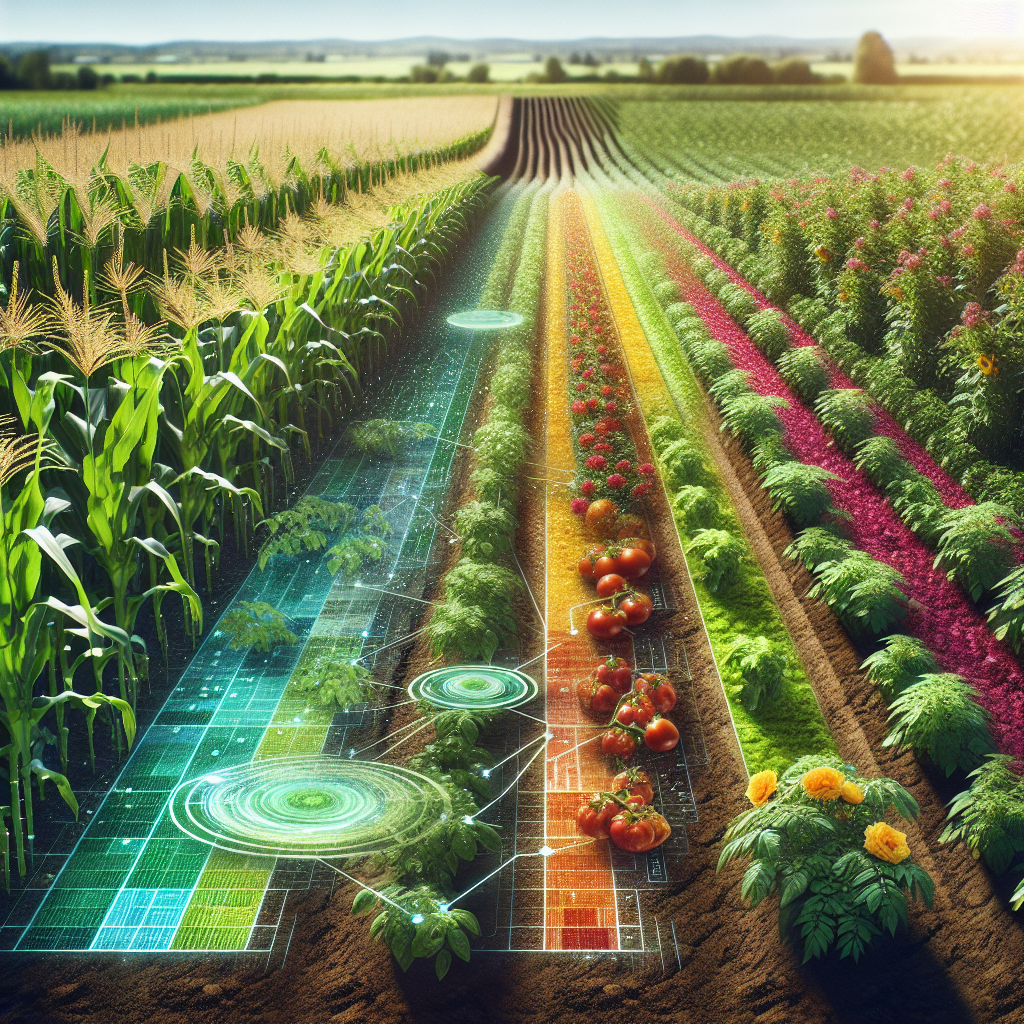
Introduction to OnlyCrops AI's Zone Management
Zone Management represents a paradigm shift in modern agriculture, transforming chaotic fields into precision-optimized production units. By segmenting land into distinct zones based on soil texture, nutrient profiles, moisture levels, topography, and microclimate variations, growers can apply hyper-specific inputs like customized irrigation, fertilization, and crop selection. This method addresses the inherent variability within fields—often overlooked in traditional uniform farming—leading to yields increases of 15-25%, water savings up to 35%, and fertilizer reductions of 20-40%.
For small farms, Zone Management is a game-changer, enabling profitability without vast acreage. Imagine dividing your 1-acre plot into 5-10 zones: one for high-drainage sandy areas suited to potato, another for clay-heavy spots ideal for squash, and shaded microclimates for lettuce. Data from soil sensors, drones, and satellite imagery informs zoning, ensuring each area receives exact needs. Check out Why Zoning Your Small Farm Chaos into Profit Zones Feels Impossible - And How AI Changes Everything for real-world implementation tips. Long-term, it builds soil health, minimizes erosion, and adapts to climate change, making it essential for resilient farming.
Botanical Profile of OnlyCrops AI's Zone Management
Zone Management isn't a single plant but a systemic approach treating the farm as a living ecosystem. Botanically, it optimizes for diverse crop physiologies: root crops like carrot thrive in loose, deep zones; fruiting plants such as tomato demand sunny, well-drained sectors; leafy greens like kale prefer cooler, moist micro-zones. Growth cycles vary by zone—annuals in fertile flats, perennials on slopes for erosion control.
Key traits include variable height (0.5-3m depending on crop), root depths from 15cm for shallow feeders to 2m for tapsroots, and canopy densities tailored to light interception. Phenological stages—germination, vegetative growth, flowering, fruiting—are synchronized per zone via precise planting dates. Nutrient demands shift: nitrogen-rich zones for leaves, phosphorus for roots, potassium for fruits. This profile demands understanding crop families: Solanaceae in warm zones, Brassicaceae in cooler ones, Fabaceae for nitrogen-fixing rotations. Biodiversity within zones enhances resilience, with pollinator strips boosting yields by 10-20%.
Soil, pH, and Climate Requirements for OnlyCrops AI's Zone Management
Success hinges on hyper-local soil mapping. Core requirements: loamy soils with 1-5% organic matter, but zones adapt—sandy loams (pH 6.0-7.0) for drainage-needy crops, clay loams (pH 5.5-6.5) for moisture-retentive ones. Test via grid sampling (every 0.1-0.25 acres) for N-P-K, CEC, and micronutrients. Amend per zone: compost for organics, lime for acidic spots, gypsum for sodic areas.
Climate zones within fields: south-facing slopes (full sun, 6-8+ hours) for heat-lovers like bell pepper; north-facing for shade-tolerant spinach. Temperature optima 15-30°C daytime, 10-20°C nights; humidity 50-70% to avoid diseases. Rainfall 500-1500mm annually, with drip irrigation in dry zones (500-800mm needs). Windbreaks define buffer zones, reducing evapotranspiration by 15%. USDA zones 5-10 viable with micro-zone adjustments; elevate frost-prone lows, ventilate heat pockets. Soil Health Mastery: 5 Proven Strategies for Small Farms to Build Fertile Ground Without Breaking the Bank details testing protocols.
Step-by-Step Planting & Propagation
Site Assessment (Weeks 1-2): Use soil probes, EM38 mapping, and drones for variability index. Delineate 5-20 zones via GIS software.
Zone Preparation (Weeks 3-4): Till lightly (10-15cm), incorporate cover crops like clover for green manure. Laser-level for uniform micro-topography.
Seed/Propagation Selection: Match varieties—early onion in cool zones, heat-tolerant corn in warm. Direct sow or transplant per zone calendar.
Planting (Week 5+): Row spacing 30-90cm based on canopy; depth 1-5cm. Precision planters ensure 80-95% uniformity. Mulch zones differently: straw for moisture retention, plastic for warming.
Establishment (Weeks 6-8): Irrigate to field capacity, monitor emergence (80% target). Thin to optimal density. Propagate perennials via cuttings in stable zones.
Yields scale with precision: 20-50% boosts from zone-specific seeding rates.
Care & Maintenance regimes for OnlyCrops AI's Zone Management
Daily: Scout zones for issues, adjust irrigation (ET-based, 20-40mm/week variable).
Weekly: Foliar feed deficient zones (e.g., calcium in fruit-heavy areas). Prune for airflow.
Monthly: Side-dress N in vegetative zones, rotate to prevent depletion. Weed via mechanical cultivation, tailored to zone density.
Seasonal: Cover crop interseeding in off-zones, compost applications (5-10t/ha). Pest thresholds per zone—lower in high-value areas. Fertility: 100-200kg N/ha split, P-K per soil test. Water: Drip zones at 1-2L/hr, pivot in flats. Monitor via NDVI for stress. Trellis vining crops in windy zones. This regime cuts labor 25%, inputs 30%.
Pests, Diseases & Organic Management
Pests cluster by zone: aphids in lush N-zones, root-knot nematodes in sands. Scout weekly, use thresholds (5% infestation). Organic controls: Neem oil sprays, Bt for caterpillars, beneficials like ladybugs.
Diseases: powdery mildew in humid zones, root rot in wet clays—prevent with rotation, resistant varieties. Copper fungicides, biofungicides like Trichoderma. Zone isolation halts spread. Companion traps crop marigold for nematodes. IPM: 70% cultural, 20% biological, 10% organic sprays. Spring Pest Patrol: Organic AI Strategies to Shield Your Crops from Common Invaders offers protocols. Losses drop to <5%.
Harvesting, Curing & Optimal Storage
Time per zone maturity: early cool zones first, main harvest staggered. Hand-pick high-value, mechanical for bulk. Yields: 20-40t/ha variable. Cure in zone-specific sheds—high humidity for roots, dry for grains.
Storage: 85-95% RH, 4-13°C by crop. Zone-sorted bins prevent mixing. Monitor CO2/O2 for CA storage. Post-harvest losses <2% with sorting. Process value-add: zone-specific drying for seeds.
Companion Planting for OnlyCrops AI's Zone Management
Zone synergies amplify benefits: thyme repels pests farm-wide, yarrow attracts predators. Pair N-fixers peas with heavy feeders squash. Trap crops nasturtium in borders. Avoid antagonists—onion away from beans. Multi-story: groundcover clover, mid tomato, tall corn. Boosts yields 15-30%, suppresses weeds. Why Companion Planting Feels Like Guesswork for Small Farms - And How AI Makes It Foolproof.