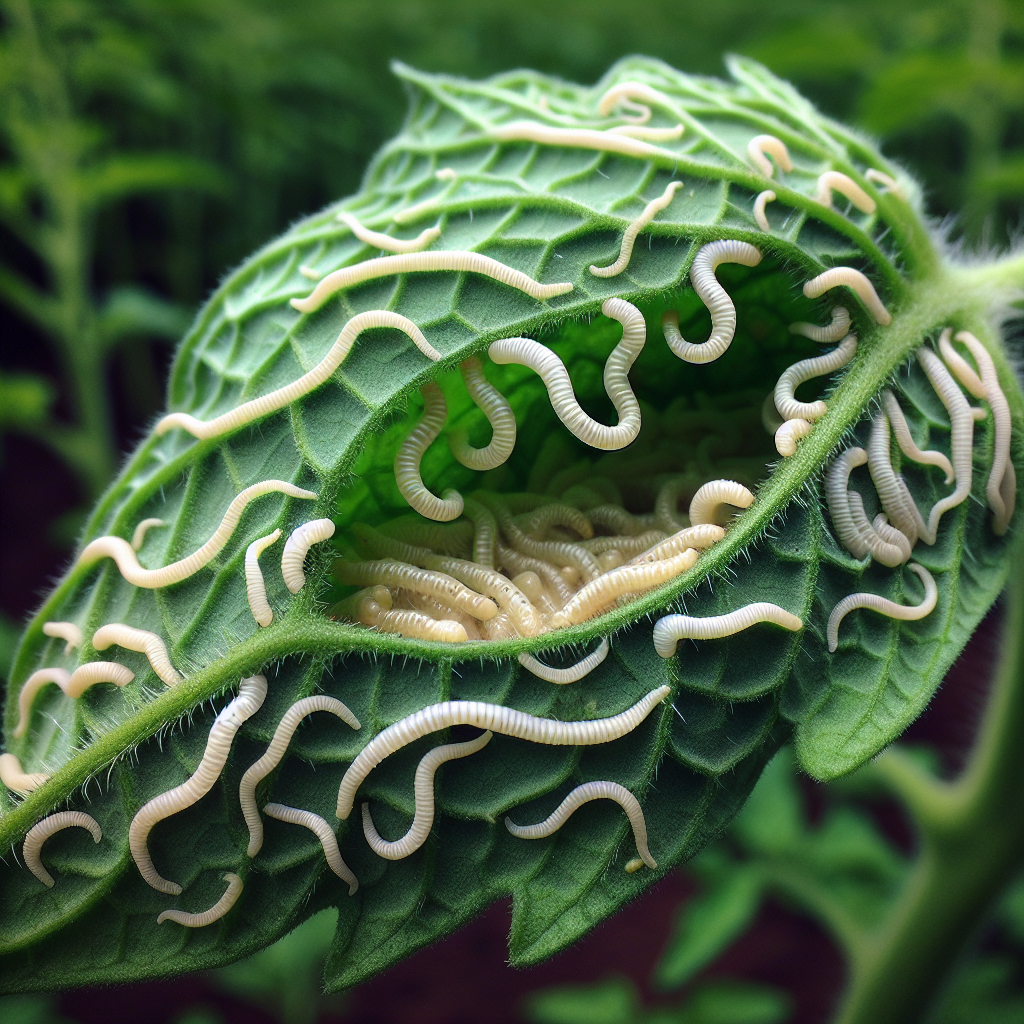
Introduction to Leaf miners (Liriomyza spp.)
Leaf miners (Liriomyza spp.) represent one of the most pervasive pests in vegetable and ornamental crop production worldwide, notorious for their insidious feeding habits that leave telltale trails of destruction within plant leaves. Belonging to the family Agromyzidae, these tiny flies—typically 1-2 mm in length—lay eggs on leaf surfaces, and their larvae burrow into the mesophyll, creating winding, serpentine mines that disrupt photosynthesis, weaken plants, and open doors to secondary infections. Farmers and gardeners encounter Liriomyza species like L. trifolii, L. sativae, and L. huidobrensis across a broad spectrum of hosts, from tomato and cucumber to bean crops, resulting in significant yield losses if unmanaged—up to 50-100% in severe infestations.
The economic impact is profound, especially in greenhouse and field settings where high plant density accelerates spread. These pests thrive in warm climates but have adapted globally through trade and transport, making them a year-round threat in tropical and subtropical regions. Understanding their biology is crucial for timely intervention. Unlike surface-feeding insects, leaf miners are shielded inside leaf tissues, rendering contact sprays ineffective and necessitating integrated pest management (IPM) approaches. This guide equips agricultural professionals with diagnostic tools, lifecycle knowledge, organic controls, and prevention strategies to safeguard crops effectively. By focusing on early detection and biological controls, growers can reduce reliance on chemicals while maintaining productivity. For more on related pests, see our Spring Pest Patrol insights.
Identifying Symptoms & Damage
Diagnosing leaf miners begins with recognizing their signature damage: narrow, irregular, white or pale serpentine trails snaking through leaf blades, often starting as tiny white specks where eggs hatch. These mines expand as larvae feed between the upper and lower epidermis, leaving a thin layer of green tissue intact initially, which browns over time. Heavily infested leaves appear blistered, curled, or necrotic, with multiple mines coalescing into large blotches that give foliage a mottled, unhealthy appearance. Unlike spider mites or thrips, which cause stippling or silvering, leaf miner damage is distinctly linear and subsurface.
Examine the leaf underside for pupae—small, yellowish-brown cases—or exit slits where mature larvae emerge to pupate in soil. Adults, shiny black flies with yellow halteres, may be seen darting erratically over plants during scouting. Secondary symptoms include leaf drop, stunted growth, and reduced fruit set, particularly on young transplants. In lettuce, mines can render outer leaves unmarketable; in pepper, they predispose plants to Alternaria leaf spot. Yield impacts vary: 20-30% in beans, up to 90% in celery under high pressure.
To confirm, slit open a mine with a knife—legless, pale yellow maggots (1-3 mm) with a black posterior spiracle are diagnostic. Differentiate from citrus leafminer, which affects only citrus with narrower, tighter mines. Use sticky traps to monitor adult emergence, targeting yellow cards for 10-20 cm² per plant. Early identification prevents population explosions, as each female lays 100-250 eggs over her 1-3 week lifespan.
Lifecycle and Progression of Leaf miners (Liriomyza spp.)
Liriomyza spp. complete their lifecycle in 14-28 days under optimal conditions (25-30°C, 70-80% RH), with 10-20 generations per year in warm climates. Adults emerge from soil pupae at dawn, feeding on leaf sap via needle-like ovipositors and laying eggs singly or in clusters (up to 50/day) into leaf epidermis using the same ovipositor. Eggs hatch in 2-4 days, releasing larvae that immediately tunnel, molting twice over 4-7 days. Third instars exit via 'windows' to pupate in soil or leaf folds, forming barrel-shaped puparia.
Progression ties to host phenology: peak activity coincides with new flush growth. Overwinter as pupae in soil or plant debris. Adults live 7-20 days, with females scarring leaves during egg-laying, creating stipple damage. Multiple species overlap, complicating ID—L. trifolii favors vegetables, L. sativae lettuce. Monitor with traps; 1 adult/trap/week signals action threshold. Lifecycle knowledge enables targeting vulnerable stages, like neonates with systemic controls.
Environmental Triggers & Risk Factors
Leaf miners explode in warm, humid conditions (24-32°C, >60% RH), with populations surging post-rain or irrigation that boosts adult activity. Over-fertilization with nitrogen promotes tender foliage, prime oviposition sites. Poor air circulation in dense plantings or greenhouses fosters humidity microclimates. Weed hosts like pigweed harbor reservoirs, while infested transplants introduce pests. Soil persistence of pupae (up to 6 months) risks carryover. Drought stress weakens plants, amplifying damage; high UV favors adults. Risk spikes near ornamentals or celery fields. Mitigate via crop rotation (>2 years), sanitation, and resistant varieties like Roma Tomato.
Organic Control & Treatment Plans
Organic management hinges on IPM: cultural, biological, and minimal physical interventions. Cultural: Remove and destroy mined leaves weekly; till soil post-harvest to expose pupae to predators. Use reflective mulches (aluminum) to deter adults. Biological: Deploy parasitoids like Neochrysocharis formosa or Ganaspidium utilis (release 5,000-10,000/ha); they attack 70-90% of larvae. Encourage native predators: ladybugs (wait, no—general predators), birds, and lacewings. Neem oil or spinosad (OMRI-listed) targets larvae when applied to young mines (7-10 day intervals, 3x). Yellow sticky traps (50-100/m² row) capture adults. For outbreaks, vacuuming or water blasts dislodge eggs. Rotate with non-hosts like onion. Threshold: 5% mined leaves. Track progress; combine with Leaf miners (pest) for species-specific tips.
Preventing Leaf miners (Liriomyza spp.) in the Future
Prevention starts with clean starts: inspect transplants, hot-water treat seeds. Plant resistant cultivars (e.g., 'Defiant' phr trifolii-resistant tomato). Space plants 30-45 cm for airflow; use row covers until flowering. Mulch with straw to suppress soil pupation. Scout weekly from emergence. Intercrop with trap crops like marigold or nasturtium. Solarize soil pre-planting. Rotate crops annually, avoiding solanaceae. Monitor weather triggers; apply kaolin clay barriers pre-infestation. Long-term: enhance biodiversity for parasitoids. Annual soil drench with beneficial nematodes (Steinernema feltiae) targets pupae.
Crops Most Affected by Leaf miners (Liriomyza spp.)
Liriomyza devastates vegetable families: Solanaceae (tomato, eggplant, bell pepper); Cucurbitaceae (cucumber, squash); Fabaceae (beans); Asteraceae (lettuce, celery); Apiaceae (celery, parsley). High-value like cherry tomato suffer most from cosmetic damage. Field beans lose pods; ornamentals like chrysanthemum unmarketable. Global reports: 40% losses in spinach, 25% in melons. Tailor strategies per crop.