Introduction to bean
Beans (Phaseolus vulgaris) represent one of the most important legume crops globally, valued for their high protein content, nitrogen-fixing ability, and versatility in fresh, dry, and processed markets. Major production regions include the Americas, Africa, and Asia, where both smallholder and commercial systems depend on healthy stands for food security and income. Effective pest and disease management begins with accurate identification and an understanding of the full lifecycle of threats that reduce yield and quality.
Identifying Symptoms & Damage
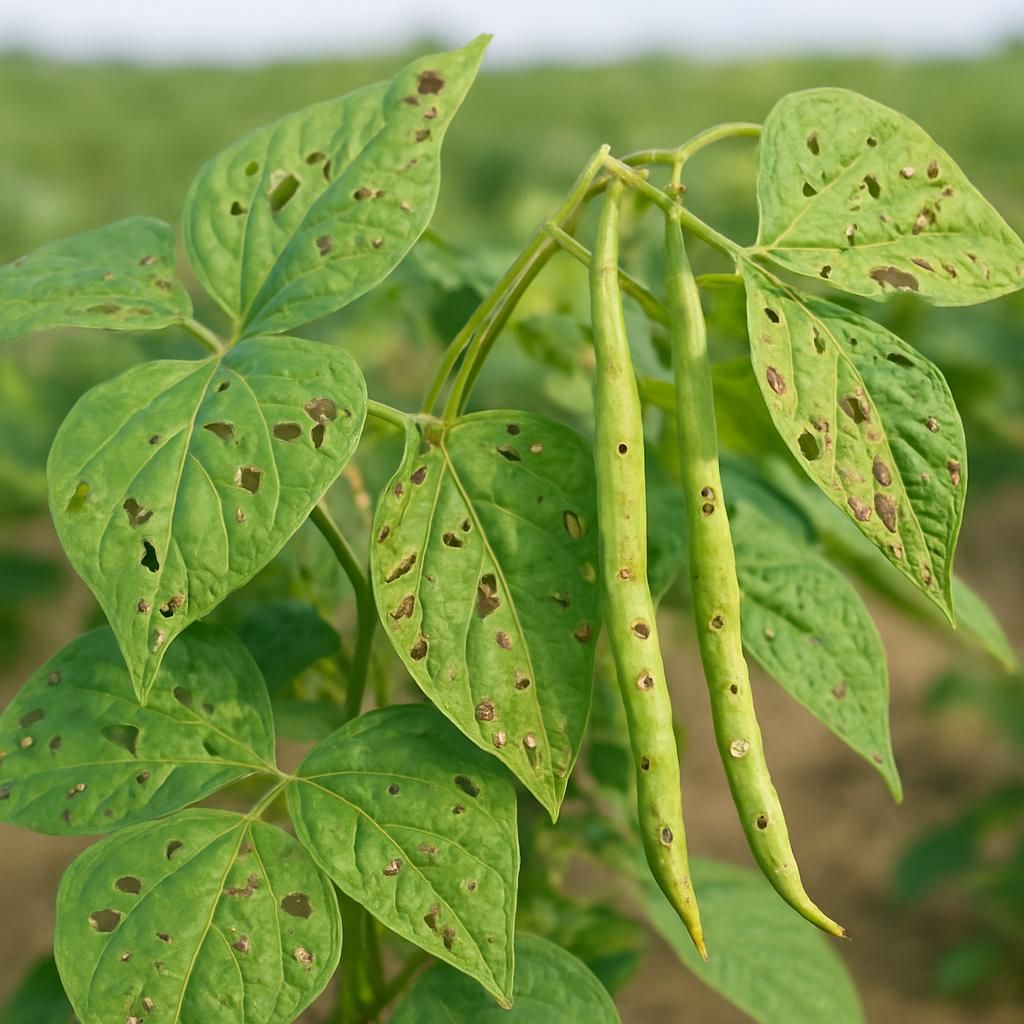
Early detection relies on regular scouting of foliage, stems, pods, and roots. Common signs include stippling and yellowing from sap-feeding insects, irregular holes and skeletonization from defoliators, and wilting or stunting caused by root and vascular pathogens. Pod damage appears as lesions, holes, or malformed seeds, while root symptoms range from galls to decay. Accurate diagnosis distinguishes between insect, mite, nematode, and disease damage to guide targeted interventions.
Lifecycle and Progression of bean
The progression of bean pests and diseases follows predictable seasonal patterns tied to temperature, moisture, and crop stage. Understanding these stages enables timely scouting and control.
| Stage | Description | Typical Duration | Key Indicators |
|---|---|---|---|
| Egg/Seed | Overwintering eggs on debris or seedborne pathogens | 7–21 days | Presence on crop residue or seed lots |
| Larva/Nymph | Active feeding on leaves, stems, or roots | 10–30 days | Visible larvae, mines, or galls |
| Pupa | Non-feeding transition stage in soil or on plant | 5–14 days | Pupal cases or soil chambers |
| Adult | Reproductive phase; dispersal and egg-laying | 7–30 days | Flying or crawling adults on foliage |
| Disease Cycle | Infection, colonization, sporulation | Variable | Lesions, wilting, fruiting bodies |
Environmental Triggers & Risk Factors
High humidity, warm temperatures (20–30 °C), and frequent rainfall favor many fungal and bacterial pathogens as well as rapid insect population growth. Poor soil drainage, compacted soils, and continuous bean monoculture increase risk of root rots and nematodes. Late planting, excessive nitrogen, and nearby alternate hosts further elevate pressure from aphids and bean leaf beetles.
Organic Control & Treatment Plans
Integrated organic strategies combine cultural, mechanical, biological, and approved organic pesticide tactics. Begin with resistant varieties and sanitation, then layer monitoring and timely interventions.
| Treatment Option | Frequency | Application Notes |
|---|---|---|
| Crop rotation (3–4 years) | Annual | Avoid planting beans after legumes or solanaceous crops |
| Row covers (insect netting) | At planting until bloom | Exclude flying pests while allowing pollination |
| Beneficial insect releases (lady beetles, lacewings) | Every 2–3 weeks during peak pressure | Release at first sign of aphids or mites |
| Neem oil or insecticidal soap | Every 7–10 days | Thorough coverage of undersides; reapply after rain |
| Bacillus thuringiensis (Bt) | Every 5–7 days during larval activity | Target young caterpillars on foliage and pods |
| Compost tea or microbial inoculants | Monthly during growth | Boost soil biology and suppress root pathogens |
| Hand removal and sanitation | Weekly | Remove infested leaves, pods, and crop debris |
Preventing bean in the Future
Long-term prevention centers on soil health, biodiversity, and vigilant monitoring. Implement diverse rotations, maintain optimal soil pH (6.0–7.0), and incorporate cover crops such as clover to suppress nematodes and improve structure. Use certified seed, practice sanitation between seasons, and scout weekly from emergence through pod fill. Companion planting with aromatic herbs and flowering strips supports natural enemies while reducing pest colonization.
Crops Most Affected by bean
While the primary host is common bean, related species experience similar pressures. Soybeans, chickpeas, peas, lima bean, and fava bean share many of the same insect and disease complexes. Rotating with non-hosts such as corn or wheat breaks pest cycles and reduces inoculum buildup.