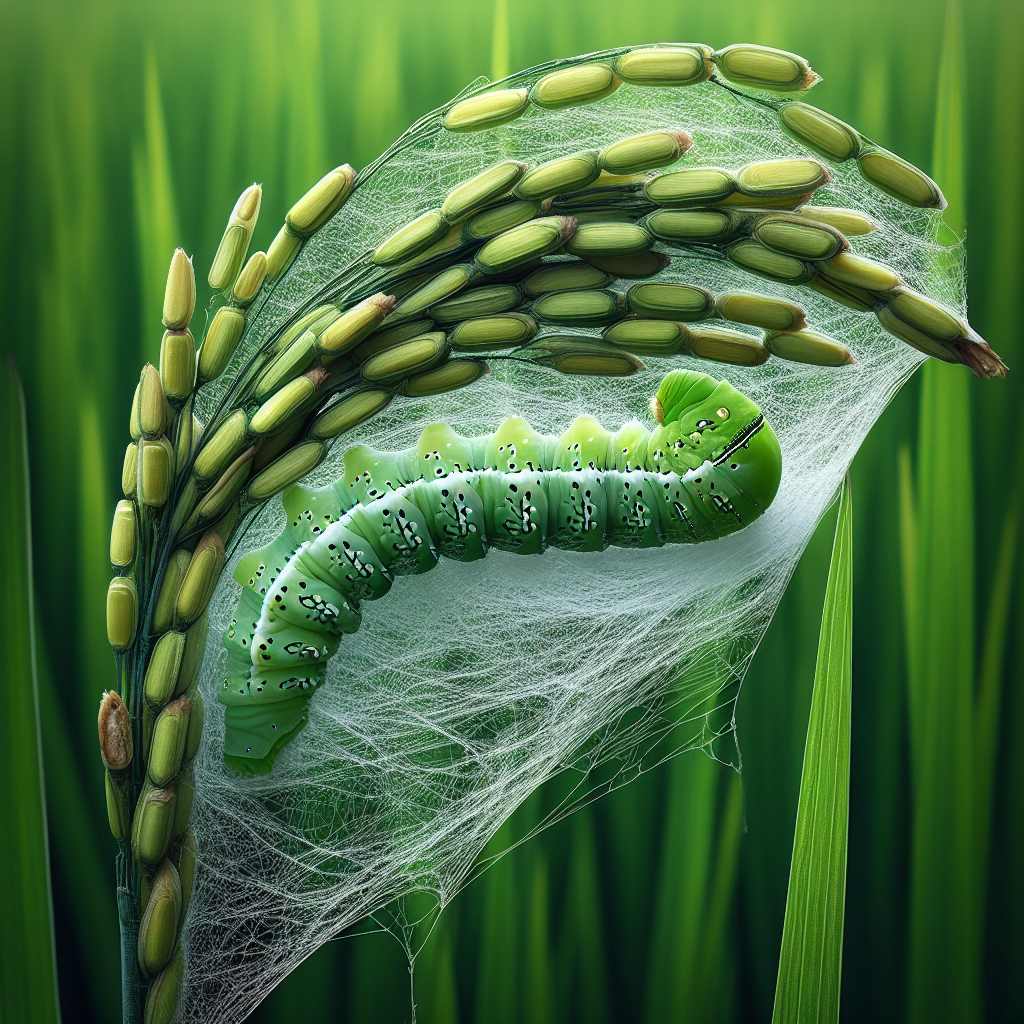
Introduction to Leaf Folders
Leaf folders, primarily species like Cnaphalocrocis medinalis (rice leaf folder) and Marasmia spp., are among the most notorious lepidopteran pests in tropical and subtropical agriculture. These caterpillars earn their name by folding leaves lengthwise with silk, forming tubular shelters where they feed voraciously on the leaf tissue. This feeding behavior scrapes the epidermis, leaving characteristic transparent windows or skeletons that stunt plant growth and slash photosynthetic capacity by up to 50% in severe infestations.
Farmers worldwide, especially in rice-growing regions of Asia, Africa, and Australia, dread leaf folders due to their rapid population buildups during warm, humid seasons. A single larva can damage multiple leaves, and synchronized outbreaks can devastate entire fields, leading to yield losses of 20-60%. Understanding their biology is crucial for timely diagnostics and integrated pest management (IPM), preventing economic disasters in staple crops like rice and corn. This guide provides professional-grade strategies for identification, lifecycle disruption, organic controls, and prevention, optimized for small to medium-scale farms.
Identifying Symptoms & Damage
Early detection is key to minimizing leaf folder damage. Scout fields weekly, focusing on lower leaves where infestations start. Look for:
- Longitudinal folds: Leaves folded parallel to the midrib, tied with silky webbing. Unfold gently to reveal green or brown caterpillars (1-2 cm long) feeding inside.
- Skeletonized leaves: Rasped mesophyll tissue leaving translucent 'windows' or vein-only skeletons. Damaged areas turn yellowish-brown.
- Frass pellets: Small black fecal droppings near folds, often indicating active larvae.
- Stunted growth: Young plants show tiller reduction; older plants have reduced panicle formation.
Damage escalates quickly: light infestations (<10% leaves affected) cause minor yield dips, but heavy attacks (>30%) trigger compensatory tillering failure and 30-40% grain loss. Differentiate from leafminers (serpentine tunnels) or armyworms (defoliation without folds). Use a 10x hand lens to confirm silk threads and live larvae. In rice, check 20-30 hills per acre; economic threshold is 5-10 folded leaves per hill at tillering stage.
Severity scales with larval density: 1-2 larvae/hill = low risk; >5 = spray immediately. Monitor edges and irrigation channels, hotspots for moth oviposition.
Lifecycle and Progression of Leaf Folders
Leaf folders complete 4-6 generations yearly, synced to host phenology. Adults are pale brown moths (15-20 mm wingspan) with white wavy lines, active at dusk.
- Eggs (2-4 days): Tiny, flat, yellowish scales laid singly or in clusters (10-50) on leaf undersides, 7-10 days pre-hatch.
- Larvae (15-25 days): Six instars; early ones mine leaves, later fold and feed. Mature larvae (20 mm, green with dark head) pupate.
- Pupa (5-7 days): Silky cocoon inside leaf fold or debris.
- Adults (5-10 days): Mate, lay 200-400 eggs; females prefer young tender leaves.
Total cycle: 25-40 days at 25-30°C. Overwinter as diapausing larvae/pupae in crop residues. Progression peaks at vegetative stages; panicle initiation sees maximal damage as larvae target flag leaves. In corn, whorl-stage attacks mimic European Corn Borer damage but with distinct folds.
Environmental Triggers & Risk Factors
Leaf folders thrive in warm (25-35°C), humid (>80% RH) conditions, exploding post-rainy seasons. Key triggers:
- Monsoon onset: High humidity favors egg hatch and larval survival.
- Nitrogen excess: Lush foliage attracts oviposition; avoid over-fertilization.
- Dense planting: Shady microclimates boost survival; wider spacing reduces risk.
- Weed hosts: Grasses like Echinochloa harbor populations; rogue fields.
- Previous crop residue: Stubble shelters pupae; deep plow post-harvest.
Risk spikes in continuous rice monocultures or ratoon crops. Drought stress indirectly aids by weakening plants, while irrigation mismanagement creates wet refuges. Monitor with pheromone traps (1-2/acre); >10 males/trap/week signals imminent larval surge. Climate change extends seasons, demanding vigilant scouting.
Organic Control & Treatment Plans
Prioritize IPM for sustainable, residue-free control. Spring Pest Patrol: Organic AI Strategies to Shield Your Crops from Common Invaders offers tech-enhanced scouting tips.
Cultural:
- Early planting evades peak generations.
- Flush irrigation drowns young larvae.
- Rogue weeds; destroy folded leaves.
Biological:
- Trichogramma wasps (egg parasitoids): Release 40,000/ha at moth peak.
- Neem oil (azadirachtin 0.03%): 5 ml/L weekly sprays; disrupts molting.
- Bt kurstaki (Bacillus thuringiensis): 1-2 g/L at early larval stage; targets Lepidoptera.
- Predators: Spiders, dragonflies; conserve via no broad-spectrum sprays.
Mechanical:
- Hand-pick/destroy folds in <1 ha plots.
- Light traps for moths (2-4/ha).
Treatment Timeline:
| Stage | Action | Threshold |
|---|---|---|
| Eggs | Scout | Visible clusters |
| Young larvae | Bt/Neem | 1-2/hill |
| Mature | Flush + parasitoids | >5/hill |
| Pests | Pheromone disruption | >10 moths/trap |
Rotate modes to prevent resistance. In cabbage, combine with caterpillars controls.
Preventing Leaf Folders in the Future
Long-term prevention builds resilient systems:
- Crop rotation: Alternate with legumes (chickpeas); breaks lifecycle.
- Resistant varieties: IR36, TN1 rice; seek local hybrids.
- Sanitation: Plow residues; flood fields 2-3 weeks post-harvest.
- Trap crops: Border corn with susceptible grasses.
- Mulching: Suppresses pupation.
- Timing: Synchronize planting with low-risk windows.
Monitor via apps; integrate with aphids and thrips plans. Annual audits cut recurrence 70%. For small farms, learn from Why Companion Planting Feels Like Guesswork for Small Farms - And How AI Makes It Foolproof using trap crops.
Crops Most Affected by Leaf Folders
Leaf folders strike 50+ grasses and vegetables:
- Grains: Rice (primary; 20-60% loss), corn, wheat, sorghum, millet.
- Vegetables: Cabbage, lettuce, eggplant, okra.
- Others: Sugarcane, mango (mango), avocado (avocado).
Rice suffers most: vegetative stage attacks halve yields. In maize, whorl damage mimics borers. Diversify to mitigate; pair with leaf-feeding caterpillars management.