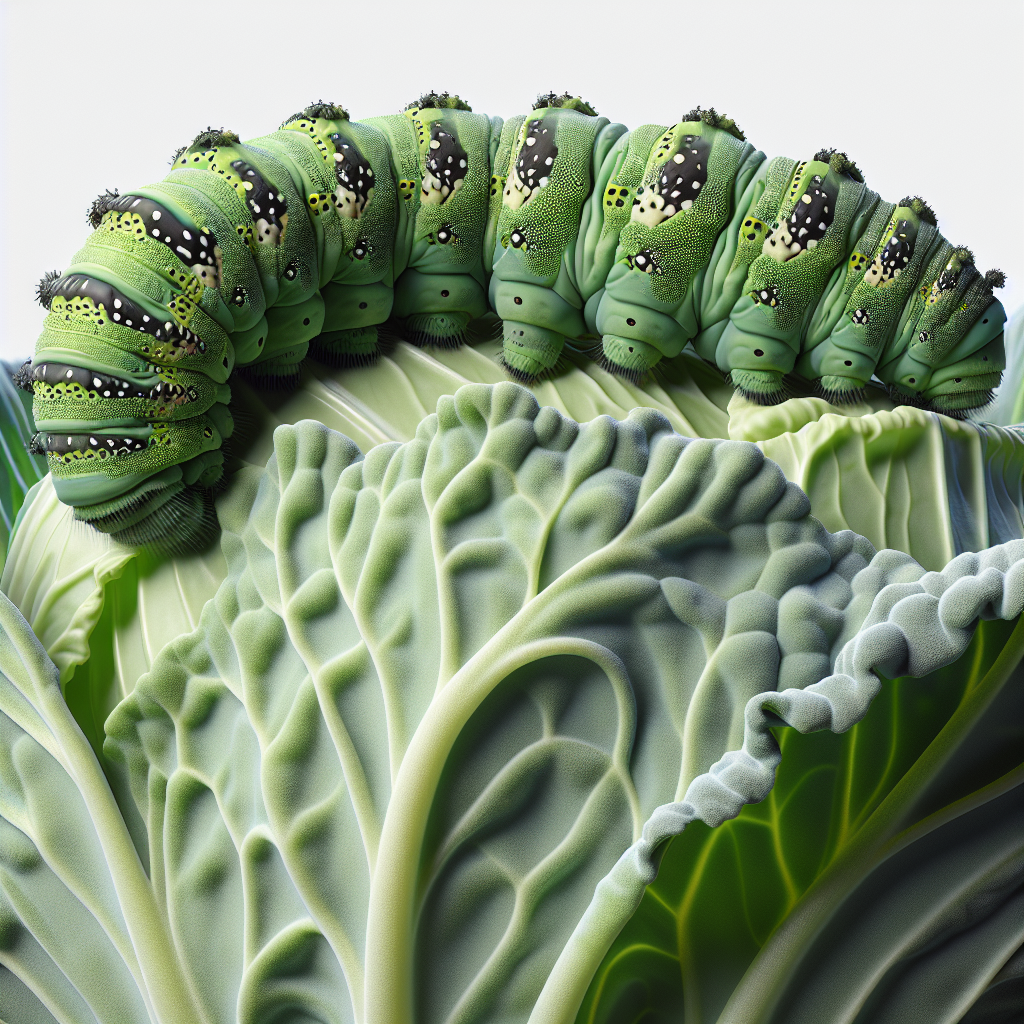
Introduction to Imported cabbageworm
The imported cabbageworm (Pieris rapae), often simply called cabbageworm, is one of the most notorious pests affecting brassica crops in North America and beyond. Native to Europe, this invasive species was first detected in North America in the 1860s and has since become a persistent threat to vegetable gardens and commercial farms alike. Adult butterflies are white with black spots, laying pale yellow eggs on the undersides of leaves. The larvae, velvety green caterpillars dotted with black, are the primary damage agents, voraciously feeding on foliage and leaving behind frass that contaminates produce.
This pest thrives in temperate climates, completing multiple generations per season, which amplifies its impact. Early detection is crucial, as unchecked infestations can defoliate plants entirely, reducing yields by up to 100% in severe cases. Understanding its biology enables targeted interventions, minimizing chemical use and preserving beneficial insects. For growers of cabbage, broccoli, and kale, proactive scouting and integrated pest management (IPM) are essential to safeguard harvests. This guide provides diagnostic tools, lifecycle insights, and proven organic strategies to combat imported cabbageworm effectively.
Identifying Symptoms & Damage
Spotting imported cabbageworm damage early prevents escalation. Look for large, irregular holes in leaves, often starting from the outer edges and moving inward. Unlike flea beetles that create pinpoint shots, cabbageworms chew substantial sections, skeletonizing leaves by consuming the soft mesophyll while leaving veins intact. Fresh damage appears clean-cut, but older wounds turn brown and ragged.
Examine leaf undersides for pale yellow eggs in clusters of 20-100, or small green larvae with faint yellow stripes and black spots. Mature caterpillars reach 1.25 inches, blending with foliage via camouflage. Black, granular frass (droppings) accumulates beneath plants, a telltale sign distinguishing it from cabbage loopers, which produce smoother pellets. Severe infestations cause stunted growth, yellowing, and head deformation in crops like cauliflower.
Secondary symptoms include sooty mold on honeydew-excreting pests, though cabbageworms don't produce honeydew. Use a hand lens to confirm larvae; they rear up defensively when disturbed. Differentiate from similar caterpillars by the distinct velvety texture and two black foreleg spots. Regular inspections, especially mornings and evenings when larvae feed, are key. For precise identification, check our Spring Pest Patrol blog post, which details AI-assisted scouting techniques.
Lifecycle and Progression of Imported cabbageworm
Understanding the imported cabbageworm lifecycle is pivotal for timing controls. Adults emerge in spring, coinciding with brassica planting. Females lay 300-400 eggs singly or in small groups on host leaves, hatching in 4-8 days depending on temperature (optimal 70-80°F). Larvae pass through five instars over 15-20 days, feeding ravenously before pupating into chrysalis on leaves or stems.
The full cycle spans 25-30 days, allowing 3-6 generations annually in mild climates. Pupae overwinter in plant debris, emerging as adults when temperatures exceed 50°F. Peak activity aligns with crop vulnerability: first generation hits seedlings, later ones mature heads. Monitor degree-day models (base 50°F) for predictions—adults fly when 200-300 heat units accumulate.
Parasitoids like Cotesia glomerata wasps target larvae, visible as white cocoons clustered on hosts. Birds and spiders also prey on them. Disrupt the cycle by removing pupae and encouraging predators. In fall, destroy crop residue to break overwintering. Lifecycle knowledge enables precise IPM, such as applying BT during early larval stages.
Environmental Triggers & Risk Factors
Imported cabbageworms flourish under specific conditions. Mild springs with average temperatures 60-75°F trigger early adult emergence, while prolonged warm weather supports multiple broods. High humidity (above 70%) aids egg hatching and larval survival, especially in irrigated fields. Over-fertilized plants with excess nitrogen produce tender, succulent leaves attractive to feeding larvae.
Monoculture brassica plantings heighten risk, lacking diversity to deter moths. Nearby weedy areas harboring wild mustards serve as reservoirs. Wind currents carry adults miles, so proximity to infested fields amplifies invasion. Poor airflow in dense plantings retains moisture, favoring pests over predators.
Soil type influences indirectly: loamy, well-drained soils support healthy brassicas resilient to damage. Drought-stressed plants suffer more, as larvae prefer weakened hosts. Scout after mild winters, as overwintering survival exceeds 80% above 32°F. Mitigate by diversifying rotations and monitoring weather—check cabbage pages for region-specific risks.
Organic Control & Treatment Plans
Organic management emphasizes prevention and biological controls. Bacillus thuringiensis (BT) kurstaki is gold-standard, targeting larvae when small (<0.5 inch). Apply evenings to avoid UV degradation, reapplying after rain. Spinosad offers secondary action, safe for bees if dry before foraging.
Row covers exclude adults during egg-laying peaks, using fine mesh (0.25mm). Handpick larvae daily into soapy water, effective for small plots. Introduce predators: trichogramma wasps parasitize eggs, ladybugs devour young larvae. Plant nectar-rich borders with thyme or yarrow to attract Cotesia wasps.
Neem oil or insecticidal soaps smother eggs/larvae; test on few leaves first. Companion planting with nasturtium, onion, or garlic repels via odors. For outbreaks, vacuum larvae mornings when cool. Rotate with non-hosts like potato or corn. Monitor with pheromone traps for adult flights. Integrated plans reduce populations 90% without synthetics, preserving cabbage worms natural enemies.
Preventing Imported cabbageworm in the Future
Long-term prevention hinges on cultural practices. Practice 2-3 year rotations, avoiding brassicas in same spots. Clean tillage buries pupae, reducing spring emergence by 70%. Plant resistant varieties like 'Cato' cabbage or 'Belstar' broccoli.
Timing sows matter: early spring or fall plantings evade peak flights. Mulch with straw suppresses weeds, hosts for moths. Encourage biodiversity: birds via feeders, ground beetles with cover crops like clover. Yellow sticky traps capture adults; place at canopy height.
Sanitize tools, transplants to prevent spread. Solarize soil pre-planting kills pupae. Scout weekly, using thresholds: treat at 1 larva/plant. For comprehensive strategies, explore Soil Health Mastery on our wiki. Consistent IPM yields pest-free crops year after year.
Crops Most Affected by Imported cabbageworm
Brassicas top the list: cabbage, broccoli, cauliflower, kale, brussels sprouts, collards, kohlrabi. Mustards, radishes (radish), turnips (turnip), and nasturtiums also suffer. Horseradish, watercress, alyssum host occasionally. Non-brassicas rarely affected, though heavy pressure spills to nearby lettuce or spinach. Focus vigilance on cole crops for maximal protection.