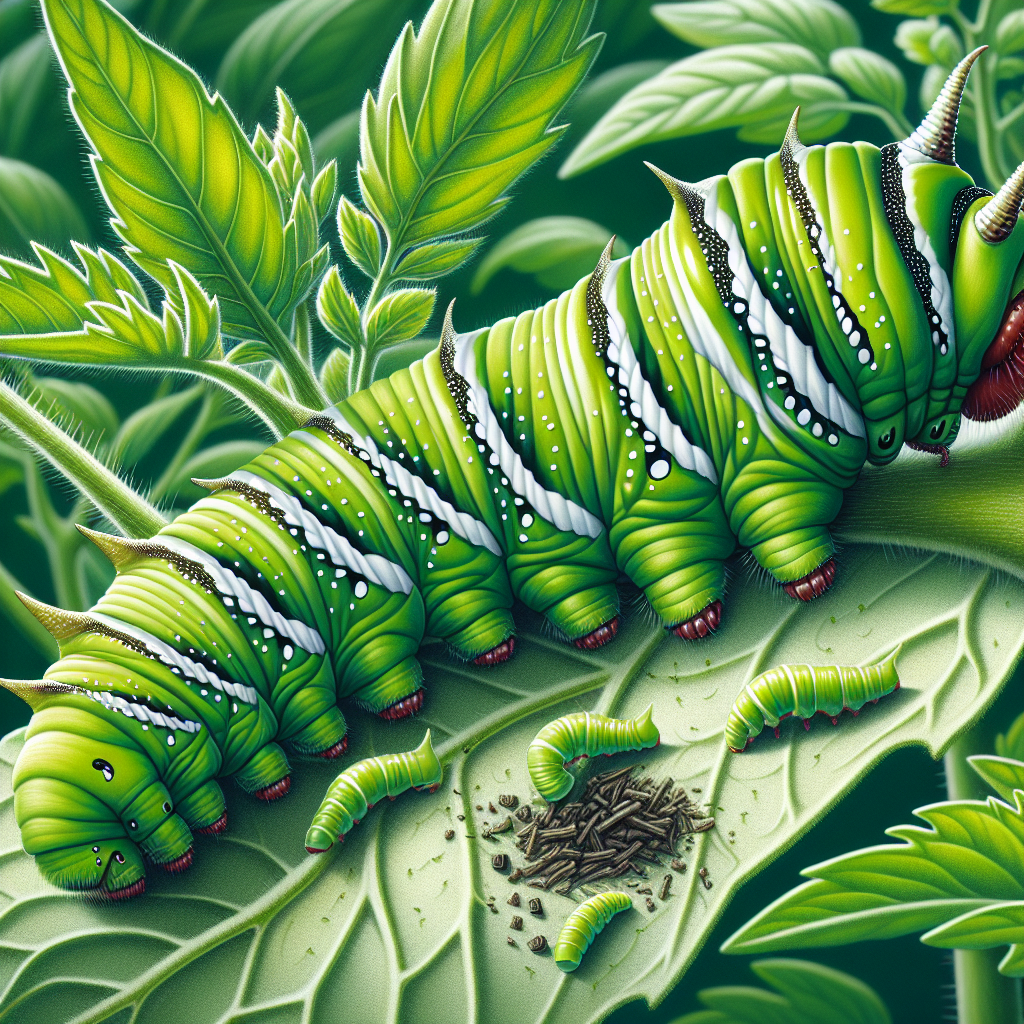
Introduction to Hornworms
Hornworms, the larval stage of sphinx or hawk moths (family Sphingidae), represent one of the most destructive pests in vegetable gardens and commercial farms, particularly targeting nightshade family crops. The two primary species are the tomato hornworm (Manduca quinquemaculata) and the tobacco hornworm (Manduca sexta), both notorious for their rapid feeding that can defoliate entire plants in days. These caterpillars grow up to 4-5 inches long, blending seamlessly with foliage due to their camouflage, making early detection challenging.
Farmers and gardeners often discover the damage too late, with plants skeletonized and fruits scarred or hollowed out. Understanding hornworm biology is crucial for integrated pest management (IPM). Native to the Americas, they thrive in warm climates but can appear wherever host plants grow. Annual outbreaks correlate with mild winters and abundant host plants, costing growers millions in lost yields. This guide provides diagnostic tools, lifecycle insights, organic treatments, and prevention strategies to safeguard your crops effectively. For small farms, timely intervention can preserve up to 90% of potential harvest. Check out this Spring Pest Patrol: Organic AI Strategies to Shield Your Crops from Common Invaders for broader seasonal tips.
Identifying Symptoms & Damage
Spotting hornworm activity early prevents catastrophic losses. Primary symptoms include massive defoliation: large sections of leaves vanish overnight, leaving only midribs and stems. Look for dark green frass (caterpillar droppings) resembling small pellets or sawdust piles beneath plants— a telltale sign of heavy feeding.
Affected leaves show jagged edges from selective chewing, avoiding veins initially. Fruits exhibit deep chew marks, boring tunnels, or entry holes filled with frass, leading to secondary rot infections like early blight or blossom end rot. Plants may wilt from severe stress, mimicking drought or root rot.
Hornworms themselves are masters of disguise: bright green with seven diagonal white stripes (tomato hornworm) or eight V-shaped marks (tobacco), a black horn on the rear, and a reddish 'head.' They often cover themselves with frass for camouflage. Use a magnifying glass to check undersides of leaves, stems, and crotches where they hide during the day. Differentiate from tomato toads (beneficial wasps parasitizing hornworms)—look for white egg-like cocoons on the back; leave these alone as they kill the pest.
Secondary damage includes sooty mold from honeydew if ants farm the worms, or increased vulnerability to caterpillars and aphids. Scout weekly during peak season (summer), shaking plants over white paper to dislodge larvae. Threshold: 1-2 worms per 10 plants warrants action.
Lifecycle and Progression of Hornworms
Hornworms complete one to three generations per year, depending on climate, with peak activity from June to September in temperate zones. Adults are large, brown-gray moths with 4-5 inch wingspans, pink or white stripes, and a hovering flight like hummingbirds. Females lay 100-400 pale green eggs singly on leaf undersides of host plants, hatching in 3-5 days at 80°F.
Larvae progress through five instars over 18-28 days: starting tiny (1/4 inch) and pale, growing rapidly to 4 inches by feeding voraciously on foliage. Early instars skeletonize leaves; later ones devour entire leaves and fruits. The horn, actually an osmeterium for defense, is harmless. Fully grown larvae drop to soil, burrow 4-8 inches deep, and pupate in brown, soil-like cases for 2-4 weeks (summer) or overwinter.
Adults emerge at dusk, mate, and seek nectar from flowers before egg-laying. Lifecycle totals 40-60 days. In southern regions, multiple broods overlap, prolonging pressure. Monitor with pheromone traps for adults. Soil disruption post-harvest kills pupae, breaking the cycle.
Environmental Triggers & Risk Factors
Hornworms explode in warm, humid conditions: optimal 75-85°F daytime, above 50°F nights, with low wind aiding moth flight. Mild winters allow pupal survival; overwintering pupae emerge early after 1,200-1,500 degree days. Heavy rain washes eggs away but promotes fungal diseases that rarely kill healthy worms.
Key risk factors: monoculture of solanaceous crops like tomato, eggplant, or bell pepper without rotation. Nearby weedy fields harboring nightshade (Solanum spp.) serve as reservoirs. Nitrogen-rich fertilizers boost leafy growth, attracting egg-laying. Poor scouting and late transplants extend vulnerability windows. Drought-stressed plants suffer more as worms target tender growth.
Climate change extends seasons, increasing generations. Urban gardens near fields face spillover. Companion plants like marigold deter via scents, but dense canopies hide infestations.
Organic Control & Treatment Plans
Prioritize IPM: scout, tolerate low levels, then act. Handpick worms into soapy water—effective for small plots, dropping populations 80%. For larger areas, apply Bacillus thuringiensis (BT) kurstaki at dusk to young larvae (under 1 inch); it paralyzes guts within 48 hours. Reapply every 5-7 days, up to three times, avoiding beneficials.
Introduce natural enemies: parasitic braconid wasps (already common), paper wasps, and trichogramma wasps for eggs. Neem oil or spinosad sprays disrupt feeding/molting safely. Homemade garlic-chili sprays repel but don't kill. Row covers exclude adults pre-egg-lay.
Treatment plan: Week 1 scout/handpick; Week 2 BT + predators; Week 3 monitor/soil drench. Avoid broad-spectrum insecticides preserving ladybugs and birds. For outbreaks, till soil post-season to expose pupae to predators.
Preventing Hornworms in the Future
Prevention beats cure: crop rotation every 2-3 years, avoiding solanaceous families consecutively. Plant trap crops like dill or basil away from mains. Use yellow sticky traps for adults, blacklight traps at night. Mulch heavily to deter soil pupation.
Encourage predators with hedgerows of yarrow and nasturtium. Early/late varieties escape peak flights. Reflective mulches confuse moths. Destroy crop residues promptly. Monitor with apps for degree-day models predicting hatches. Bt-seeded transplants offer early protection. Long-term: diverse polycultures reduce outbreaks 70%.
Crops Most Affected by Hornworms
Hornworms specialize in Solanaceae: tomato (all varieties, especially Roma Tomato, Cherry Tomato), eggplant (Black Beauty Eggplant), bell pepper (California Wonder Bell Pepper), chili pepper, tobacco, and potato (Russet Burbank Potato). Tomatoes suffer most, with 50-100% defoliation possible. Peppers show fruit scarring; eggplant entire plant loss. Wild nightshades amplify issues near fields. Non-hosts like cucumber or squash are safe. Rotate with corn or beans for breaks.