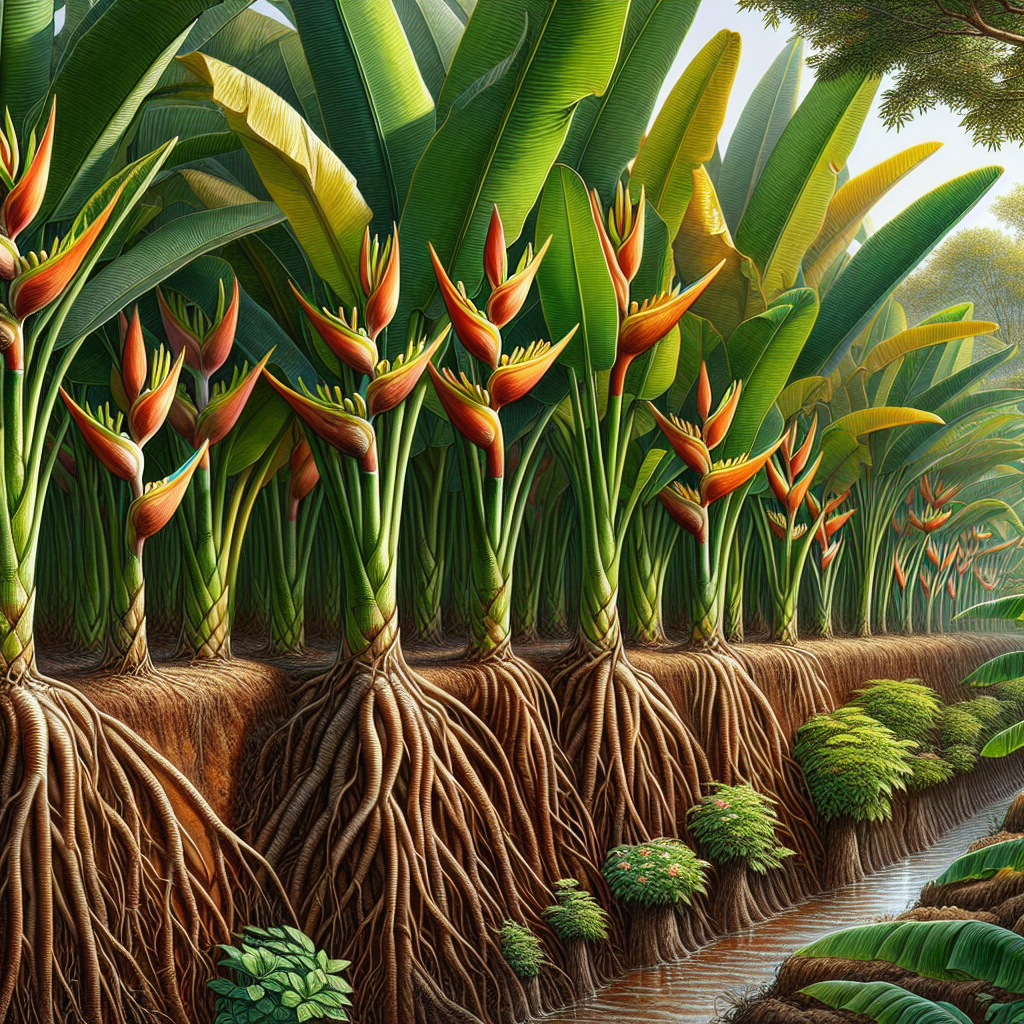
Introduction to Heliconia
Heliconia (Heliconia spp.), popularly known as lobster claw, wild plantain, or bird-of-paradise flower, is a genus of over 200 species of striking tropical plants native to the Americas, particularly Central and South America. While prized in ornamental horticulture for their vibrant, banana-like leaves and colorful, pendulous inflorescences, Heliconia can become a significant agricultural pest in non-native regions. Its rapid vegetative spread via rhizomes allows it to form dense thickets that smother crops, deplete soil nutrients, and reduce biodiversity in farmlands. In tropical and subtropical agriculture, Heliconia infestations can lead to yield losses of up to 50% in affected fields by outcompeting staple crops for light, water, and space.
Farmers in regions like Florida, Hawaii, Queensland (Australia), and parts of Southeast Asia frequently report Heliconia as an invasive weed. Unlike typical insect pests, Heliconia acts as a herbaceous perennial invader, persisting through underground rhizomes that regenerate even after aboveground cutting. Early detection and integrated management are crucial, as mature stands are notoriously difficult to eradicate without chemical intervention. This guide equips agricultural professionals with diagnostic tools, lifecycle insights, and organic control methods to reclaim infested lands. For more on small farm pest challenges, check this insightful blog post on organic strategies.
Understanding Heliconia requires recognizing its dual nature: a beloved ornamental that turns problematic when escaping cultivation. Its large, paddle-shaped leaves (up to 2 meters long) create canopy cover that shades out understory crops, while its rhizomatous growth enables it to colonize roadsides, ditches, and field edges rapidly. In agroecosystems, it often invades banana plantations and pineapple fields, where humidity and rich soils favor its proliferation. Economic impacts include increased labor costs for manual removal and reduced marketable yields from shaded or competed plants.
Identifying Symptoms & Damage
Diagnosing Heliconia infestations begins with visual scouting. Look for clusters of tall, upright pseudostems (leaf sheaths) emerging from ground level, topped with broad, glossy green leaves resembling oversized banana foliage. Inflorescences are boat-shaped bracts in vivid reds, oranges, yellows, or greens, often drooping like parrot beaks—hence the lobster claw moniker. Unlike true bananas, Heliconia leaves have a characteristic zigzag midrib and lack fruit production.
Damage manifests as competition rather than direct feeding. Crops exhibit stunted growth, yellowing leaves (chlorosis), and reduced yields due to shading and nutrient competition. In pineapple fields, Heliconia thickets can block access for harvesting machinery. Rhizomes spread laterally up to 1-2 meters per year, forming monocultures that suppress native vegetation and crop seedlings. Secondary symptoms include increased root-knot nematodes populations in infested soils, as Heliconia roots harbor these pests, exacerbating damage to nearby cassava or taro.
Field edges and disturbed soils show the first signs: scattered plants 1-3 meters tall, progressing to dense stands. Differentiate from ornamentals by wild, untended growth and lack of staking. Use a shovel to probe for extensive rhizome networks—mature infestations feature fibrous roots up to 30 cm deep. Associated issues include higher slugs and snails activity in moist leaf litter and potential aphids vectors on flowering stalks. Early identification via weekly perimeter walks prevents establishment.
Lifecycle and Progression of Heliconia
Heliconia exhibits a perennial lifecycle adapted to tropical climates, with evergreen foliage in frost-free areas. Plants emerge from rhizomes in spring, producing 5-12 leaves per pseudostem over 6-12 months. Flowering occurs year-round in humid tropics, peaking in wet seasons, with bracts lasting 2-3 months. Pollination by hummingbirds or bees leads to seed production, though vegetative spread via rhizomes is primary—each rhizome segment can sprout new shoots.
Progression: Year 1 seedlings (from seed or rhizome fragments) reach 1 meter; Year 2-3, mature clumps 2-4 meters tall dominate 10-20 m². Dormancy occurs in dry seasons, with pseudostems dying back but rhizomes surviving. In subtropical zones, cold snaps (<10°C) cause leaf wilt, but recovery is swift. Full canopy closure in infestations happens within 2-4 years, with biomass accumulation choking crops. Banana weevil larvae sometimes exploit decaying Heliconia pseudostems, linking it to broader pest complexes.
Lifecycle bottlenecks include young shoot vulnerability and reliance on moist soils. Seeds have low viability without bird dispersal, making rhizome chopping a key control point. Monitor for ratoon shoots post-flowering, as these perpetuate infestations.
Environmental Triggers & Risk Factors
Heliconia thrives in USDA zones 10-12, requiring 25-35°C days, >60% humidity, and 1500-2500 mm annual rainfall. Triggers include overwatering in nurseries, flooding, and soil disturbance from tillage, dispersing rhizome fragments. High organic matter soils (pH 5.5-7.0) and partial shade favor invasion, common near mango or avocado orchards.
Risk factors: Proximity to ornamental plantings, hurricane debris, and poor field sanitation. Introduced via landscape waste, it escapes into waterways, spreading via floods. Climate change expands its range northward. Companion pests like spider mites weaken stressed crops, aiding Heliconia dominance. Avoid planting near ginger or turmeric, which share rhizomatous habits.
Organic Control & Treatment Plans
Organic management emphasizes integrated strategies: mechanical, cultural, and biological. Step 1: Manual Removal – Cut pseudostems at base with machete, then dig out rhizomes (wear gloves; sap irritates skin). Solarize soil with clear plastic (6-8 weeks, 50°C+) to kill fragments. Repeat every 2 weeks for 6 months.
Step 2: Mulching & Smothering – Cover cleared areas with cardboard + 15 cm wood chips or cover crops like clover to suppress regrowth. Step 3: Biological Aids – Introduce rhizome-feeding nematodes (Heterorhabditis spp.) or goats for browsing. Vinegar (20% acetic acid) sprays desiccate foliage.
Treatment Timeline: Week 1-4: Cut & mulch; Month 2-6: Monitor & spot-dig; Year 1+: Rotate with corn or sweet potato. Combine with marigold borders to deter spread. Success rates: 80-90% with persistence. Avoid tilling, which spreads rhizomes.
Preventing Heliconia in the Future
Prevention starts with exclusion: Inspect nursery stock, quarantine ornamentals. Maintain 2-meter buffer zones around fields using gravel barriers. Promote diverse rotations with squash or cucumber to outcompete invaders. Regular mowing of perimeters (biweekly) prevents seed set. Soil testing guides amendments to unfavor moist, fertile conditions. Community cleanups reduce roadside sources. Learn from Soil Health Mastery on building resilient soils. Long-term: Mycorrhizal inoculants enhance crop vigor against competitors.
Crops Most Affected by Heliconia
Heliconia primarily impacts tropical fruit and root crops: Banana (shading reduces bunches 30-50%), Pineapple (rhizome competition halves slips), Mango (edge invasion), Papaya, Cassava, Taro, Ginger, Turmeric. Ornamental fields and pastures also suffer. In Hawaii, it invades 20% of sugarcane borders. Early intervention protects these high-value crops.