Introduction to Headworms
Headworms represent one of the most devastating pest complexes in grain production worldwide, particularly affecting cereal crops during their critical reproductive stages. These pests, primarily the larval stages of noctuid moths including the corn earworm (Helicoverpa zea), fall armyworm (Spodoptera frugiperda), and other species like Helicoverpa armigera, are notorious for infesting panicles, ears, and heads. Farmers often discover them too late, as larvae bore deep into grains, frass-filled tunnels promoting secondary infections like Fusarium head blight or grain mold.
In major grain belts from the U.S. Corn Belt to African sorghum fields and Asian rice paddies, headworms can reduce yields by 20-50% in untreated fields. Their adaptability to various hosts and resistance to some insecticides make them a persistent challenge. This guide provides definitive diagnostics, lifecycle insights, and organic management strategies to protect your harvests. Early scouting is key—infestations often coincide with peak flowering, turning promising heads into wasted biomass. Understanding headworm biology empowers growers to implement integrated pest management (IPM) that minimizes chemical use while maximizing profitability. For small farms, timely intervention can mean the difference between surplus grain and feed-only yields.
Identifying Symptoms & Damage
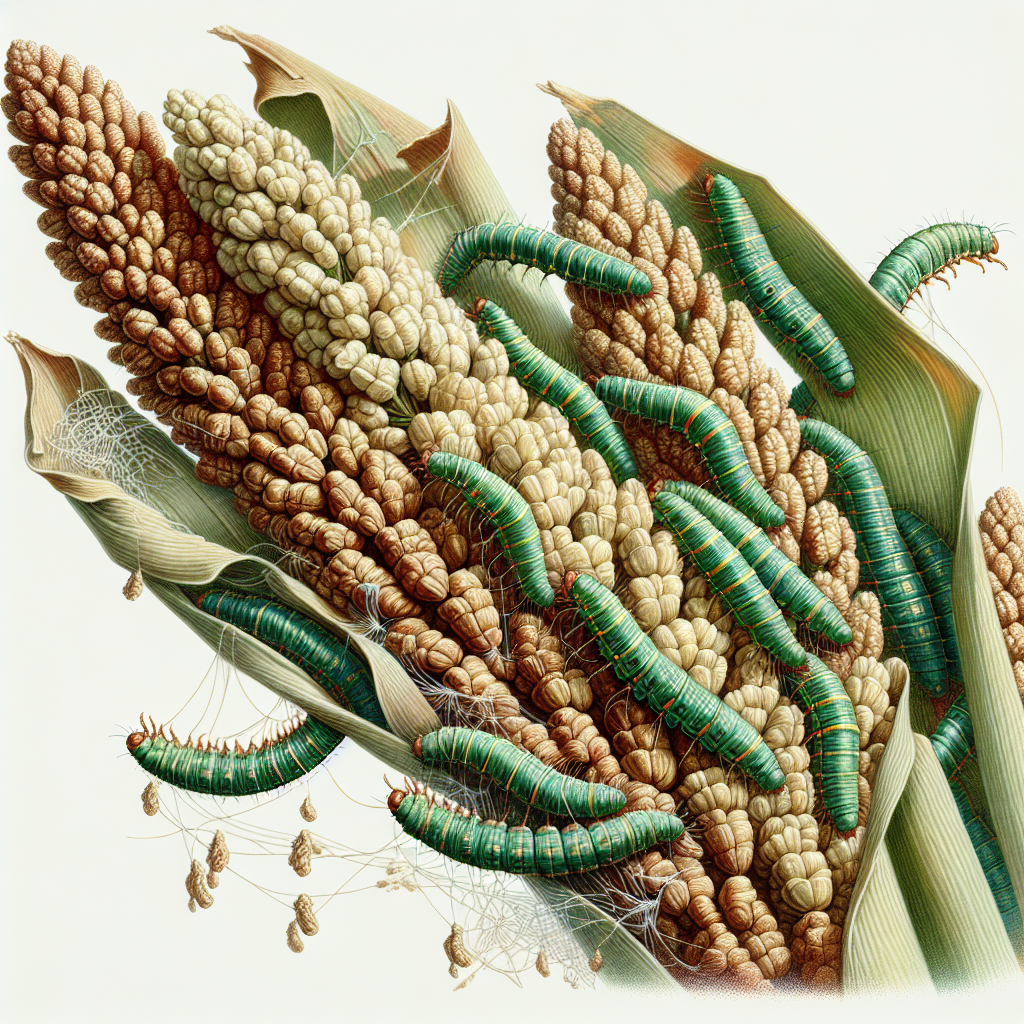
Spotting headworm damage early prevents catastrophic losses. Initial signs appear 7-10 days post-flowering: small entry holes (2-4 mm) on glumes or husks, surrounded by reddish frass pellets resembling mouse droppings. Larvae, 1-2 cm long initially, grow to 3-5 cm with green to brown bodies, longitudinal stripes, and dark heads—hence 'headworms.'
Dissect affected heads to confirm: live larvae tunneling through kernels, silk webbing binding grains, and moist, rotting kernels emitting foul odors. Severe infestations show 20-50% kernel damage, with heads prematurely graying or lodging under weight. Differentiate from European Corn Borer (cleaner tunnels, no frass) or head bugs (surface sucking, no boring). Use a 10x hand lens for eggs (white, ribbed, on silks) or small larvae on fresh silk. Threshold: 10-20% heads infested warrants action. Yield impact scales exponentially—10% damage equals 10% loss, but mold amplifies to 30-40%. Scout weekly from flowering using beat sheets or pheromone traps for precise counts.
Lifecycle and Progression of Headworms
Headworms complete 2-6 generations per season, timed to crop phenology. Adult moths (1.5-2 cm wingspan, tan with green spots) emerge at dusk, females laying 500-2000 eggs singly on silks, leaves, or tassels. Eggs hatch in 2-4 days (80-85°F), larvae progressing through 6 instars over 14-21 days, molting as they enlarge.
Neonates (1st-2nd instar) rasp silks, webbing ears; later instars bore kernels, preferring tender grains. Full-grown larvae drop to soil, pupate 5-10 cm deep for 10-14 days. Pupae overwinter in mild climates. Progression accelerates in heat (>90°F shortens cycle to 25 days); cooler temps extend to 40 days. Multiple generations overlap in tropics, sustaining pressure. Monitor with blacklight traps (peak flights pre-infestation) or degree-day models (base 55°F, 300-400 DD egg to pupa). Disrupt at neonate stage for 90% control efficacy.
Environmental Triggers & Risk Factors
Headworms thrive in warm, humid conditions: optimal 77-86°F, 70-90% RH during grain fill. Drought-stressed crops exude sugars from cracked glumes, attracting moths—irrigate evenly to mitigate. Continuous corn or sorghum monocultures amplify risk; rotate with soybeans or cowpeas (if available). Nearby cotton or tomato fields serve as reservoirs.
High N-fertility boosts silk attractiveness; balance with K and P. No-till fields harbor pupae; tillage buries 50-70%. Wind currents from source fields deposit eggs; border crops like millet act as traps. Climate change extends seasons, increasing generations. Risk peaks post-rain (humidity spikes egg survival). For more on predictive tools, see Why 80% of Small Farms Battle Weather Disasters - And How Hyper-Local AI Forecasts Can Save Your Harvest. Scout high-risk zones: field edges, low-lying humid areas.
Organic Control & Treatment Plans
Organic management emphasizes prevention and biologicals. Cultural: Plant early-maturing varieties (e.g., Bt hybrids where certified organic), destroy volunteer plants, deep plow post-harvest (buries 80% pupae). Biological: Release Trichogramma wasps (egg parasitoids, 5-10/acre weekly from bloom); apply NPV virus sprays (1x10^9 OB/acre, 80-90% larval kill, UV-protect with oil). Bacillus thuringiensis (Bt kurstaki, 1-2 lb/acre) targets neonates—apply evenings, 3x at 5-7 day intervals.
Mechanical: Clip and bag infested heads; use cone traps with pheromone lures (20/acre). Botanicals: Neem oil (0.5-1%) or spinosad (OMRI-approved, 0.1-0.2 oz/gal) at first silk—rotate to prevent resistance. Companion plant with marigold or nasturtium as repellents. Threshold-based: treat at 10% eggs or 5% small larvae. Integrate for >85% control. Monitor efficacy with 48-hr post-spray scouting. Avoid broad-spectrum sprays preserving predators like Orius bugs.
Preventing Headworms in the Future
Long-term prevention builds resilient systems. Scout religiously: delta traps (2/10 acres) from pre-tassel, log moth flights. Use reflective mulches early-season to deter oviposition. Crop rotation (2-3 years non-hosts) reduces soil pupae by 70%. Border sprays with approved organics create barriers. Select resistant varieties: tight-husked corn, pubescent sorghum. Post-harvest, shred residues, till shallow-wet to promote predators.
Enhance biodiversity: underplant with clover, encourage birds (birds eat 30% larvae). Degree-day forecasting predicts flights—base 55°F. Clean equipment prevents egg transport. For small farms, check Spring Pest Patrol: Organic AI Strategies to Shield Your Crops from Common Invaders. Annual IPM audits sustain low populations, cutting future costs 40-60%.
Crops Most Affected by Headworms
Headworms strike grasses and nightshades hardest. Primary: corn (ears), sorghum (panicles), millet, rice, wheat (heads). Secondary: cotton bolls, tomato fruit, chili pepper. Sorghum loses 1-2 tons/ha untreated; corn 20-30 bu/acre. Tropical sugarcane and barley vulnerable. Hybrids vary: sweet corn highly susceptible, dent corn moderate. Global impact: billions in losses yearly.