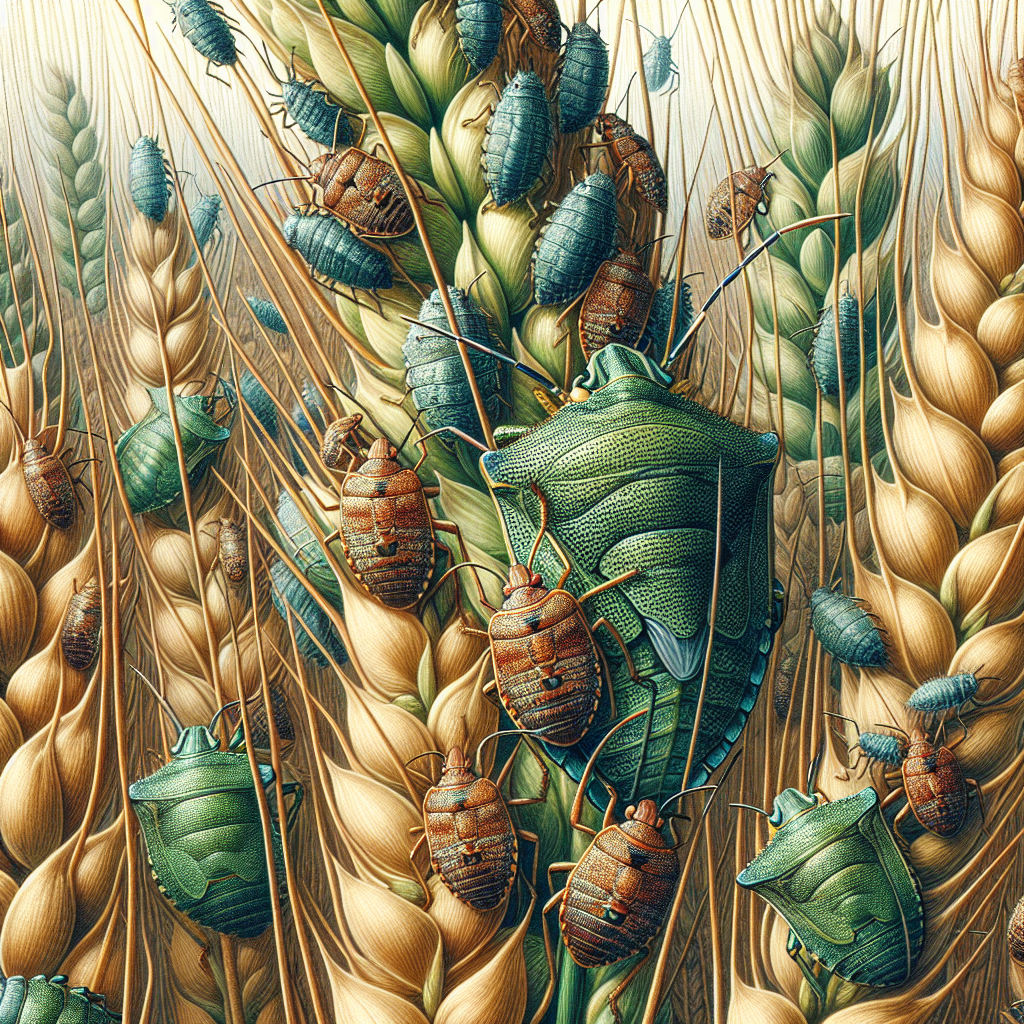
Introduction to head bugs
Head bugs, often referred to as earhead bugs or grain head bugs, represent a critical threat to grain production worldwide, particularly in tropical and subtropical farming regions. Scientifically aligned with pests like the corn earworm in their Heliothis complex, these insects specialize in infesting the reproductive structures of cereal crops during critical grain-filling stages. Farmers encounter head bugs as small, greenish-brown hemipterans or lepidopteran larvae that cluster on panicles, florets, and developing grains, sucking sap or chewing seeds.
The economic impact is staggering: infestations can slash yields by 20-50% in severe cases, turning marketable grain into lightweight, pest-riddled chaff. In regions like South Asia and sub-Saharan Africa, head bugs exacerbate food security challenges by targeting staple crops during vulnerable flowering periods. This guide equips agricultural professionals, smallholders, and extension agents with diagnostic tools, lifecycle insights, and proven organic management strategies. By understanding head bug behavior—from egg-laying to nymphal swarms—growers can implement integrated pest management (IPM) to safeguard harvests. Early detection via sticky traps and pheromone lures, combined with resistant varieties, forms the cornerstone of defense. For small farms, check out this Spring Pest Patrol: Organic AI Strategies to Shield Your Crops from Common Invaders for tech-enhanced scouting tips.
Identifying Symptoms & Damage
Spotting head bug infestations early is key to minimizing damage. Initial signs appear during crop heading or booting stages: look for clusters of tiny, pear-shaped nymphs (1-3 mm long) with piercing mouthparts huddled on spikelets. Adults are winged, mottled brown bugs about 4-6 mm, often fluttering at dawn or dusk.
Primary Symptoms:
- Chaffy Heads: Grains shrivel, leaving empty glumes that rattle in the wind—classic 'white ear' syndrome.
- Discolored Florets: Blackened or honeydew-coated spikelets from sap-feeding, often accompanied by sooty mold.
- Seed Pitting: Chewed or punctured kernels with sunken lesions, reducing test weight by up to 30%.
- Premature Drop: Infested panicles shed grains, mimicking fusarium head blight but distinguished by live insect presence.
Damage Progression: Light infestations (<5 bugs/head) cause 10-15% loss; moderate (10-20 bugs/head) up to 40%; heavy (>30 bugs/head) total crop failure. Differentiate from aphids by head bugs' aggressive head-targeting and lack of cornicles. Use a hand lens to confirm: head bugs excrete sticky frass and leave silk webbing on severe cases. Scout 20-30 heads per field quadrant weekly from boot stage; action threshold: 2-5 bugs per head.
Secondary effects include fungal entry points for head molds and mycotoxin contamination, rendering grain unfit for consumption. In storage, residual head bugs trigger storage beetles. Photograph suspect heads for precise ID—symptoms mimic earhead caterpillars but head bugs lack larval prolegs.
Lifecycle and Progression of head bugs
Head bugs complete 4-6 generations per season in warm climates (25-35°C optima), syncing perfectly with crop phenology. Lifecycle spans 25-40 days:
- Egg Stage (2-4 days): Tiny, barrel-shaped eggs (0.5 mm) laid singly or in clutches on leaf sheaths or boot leaves. Pale yellow, turning orange before hatch.
- Nymphal Stage (10-20 days): 5 instars; early nymphs mobile crawlers, later ones gregarious feeders on heads. Nymphs molt 4-5 times, growing from 0.5 mm to 4 mm.
- Adult Stage (7-15 days): Short-lived moths or bugs; females lay 100-300 eggs. Dispersal flights peak at dusk.
Progression ties to crop growth: first generation hits tillering in wheat; peak damage at anthesis. Overwinter as diapausing nymphs in crop residues or diapause eggs in soil. Pupation occurs in head or soil (3-7 days), favoring moist conditions. Monitor with yellow sticky traps (10-15 per ha); rising catches signal nymph hatch 7-10 days later.
Understanding this cycle enables precise timing: destroy volunteer plants to break diapause. In rice, synchronize with panicle emergence; in sorghum, target milky grain stage. Lifecycle accelerates in irrigated fields, demanding vigilant scouting.
Environmental Triggers & Risk Factors
Head bugs thrive under specific conditions amplifying outbreaks:
- Temperature & Humidity: Optimal 28-32°C with 70-90% RH; droughts stress crops, boosting bug reproduction.
- Crop Density: Dense stands (>300 plants/m²) hinder natural enemies and ease nymph dispersal.
- Nitrogen Excess: Lush, succulent heads from over-fertilization attract egg-laying females.
- Weed Hosts: Alternate hosts like wild sorghums harbor overwintering populations.
- Monocropping: Continuous cereals without rotation favor buildup; intercropping with legumes disrupts.
Risk spikes post-rainy season flushes or near waterways aiding adult migration. Late-planted fields overlap peak generations. Climate change extends seasons, increasing generations by 1-2 in warming tropics. Assess farm risk via history: fields with prior head-feeding insects infestations score high. Mitigate via diversified rotations and balanced nutrition.
Organic Control & Treatment Plans
Organic management emphasizes IPM, avoiding broad-spectrum sprays:
Cultural Controls: Early planting evades peak generations; destroy stubble post-harvest. Use resistant varieties like sorghum hybrids with tight glumes. Biological Controls: Conserve predators—ladybugs, parasitic wasps (Trichogramma spp.). Release 50,000/ha at boot stage. Mechanical: Shake heads over trays for nymph counts; rogue heavily infested plants. Botanicals: Neem oil (5 ml/L) + soap sprays weekly from heading; pyrethrum for nymph flushes (LC50 effective at 1-2%).
Treatment Plan:
- Scout weekly; treat at 2 bugs/head.
- Apply neem dusk (avoids bees).
- Follow with [Bt](Bacillus thuringiensis) for larvae (1 g/L).
- Re-scout 5-7 days post-treatment.
Rotate botanicals to prevent resistance. Success rates: 70-85% yield protection in trials. Integrate with trap crops like pearl millet borders.
Preventing head bugs in the Future
Long-term prevention builds resilient systems:
- Crop Rotation: 2-3 years non-hosts (peas, chickpeas).
- Varietal Selection: Heads-tight sorghums, pubescent wheats.
- Field Sanitation: Deep plow residues; weed-free borders.
- Monitoring Tech: Pheromone traps + apps for thresholds.
- Enhance Biodiversity: Plant marigold refuges for predators.
Annual IPM audits reduce incidence 60%. Seed treatment with biofungicides curbs soil pupae. Community-wide synchrony prevents regional migrations.
Crops Most Affected by head bugs
Head bugs devastate grains:
- Wheat: 30-50% losses in rainfed areas.
- Rice: Panicle bugs cause 'whitehead' syndrome.
- Sorghum: Grain set failure.
- Pearl Millet: Emerging threat.
Minor: Barley, maize ears. Global hotspots: India (sorghum), Africa (millet).