Introduction to Head diseases
Head diseases represent one of the most economically destructive challenges in global cereal production, affecting the flowering heads, panicles, or ears where grains develop. Unlike foliar diseases that damage leaves, head diseases strike at the crop's reproductive core, causing direct grain loss, reduced quality, and contamination with harmful mycotoxins like deoxynivalenol (DON) from Fusarium head blight. In severe outbreaks, losses can exceed 50% of yield, devastating small farms and large-scale operations alike. Key culprits include Fusarium species, smuts like loose smut, and ergot pathogens, which exploit warm, moist conditions during anthesis (flowering). This guide provides professional-grade diagnostics, organic management strategies, and prevention tactics tailored for wheat, rice, sorghum, and related grains. Understanding head diseases is crucial for sustainable agriculture, as they not only slash harvests but also render produce unmarketable due to toxin risks. Early detection and integrated pest management (IPM) are your best defenses, especially in humid regions where spores proliferate rapidly.
Identifying Symptoms & Damage
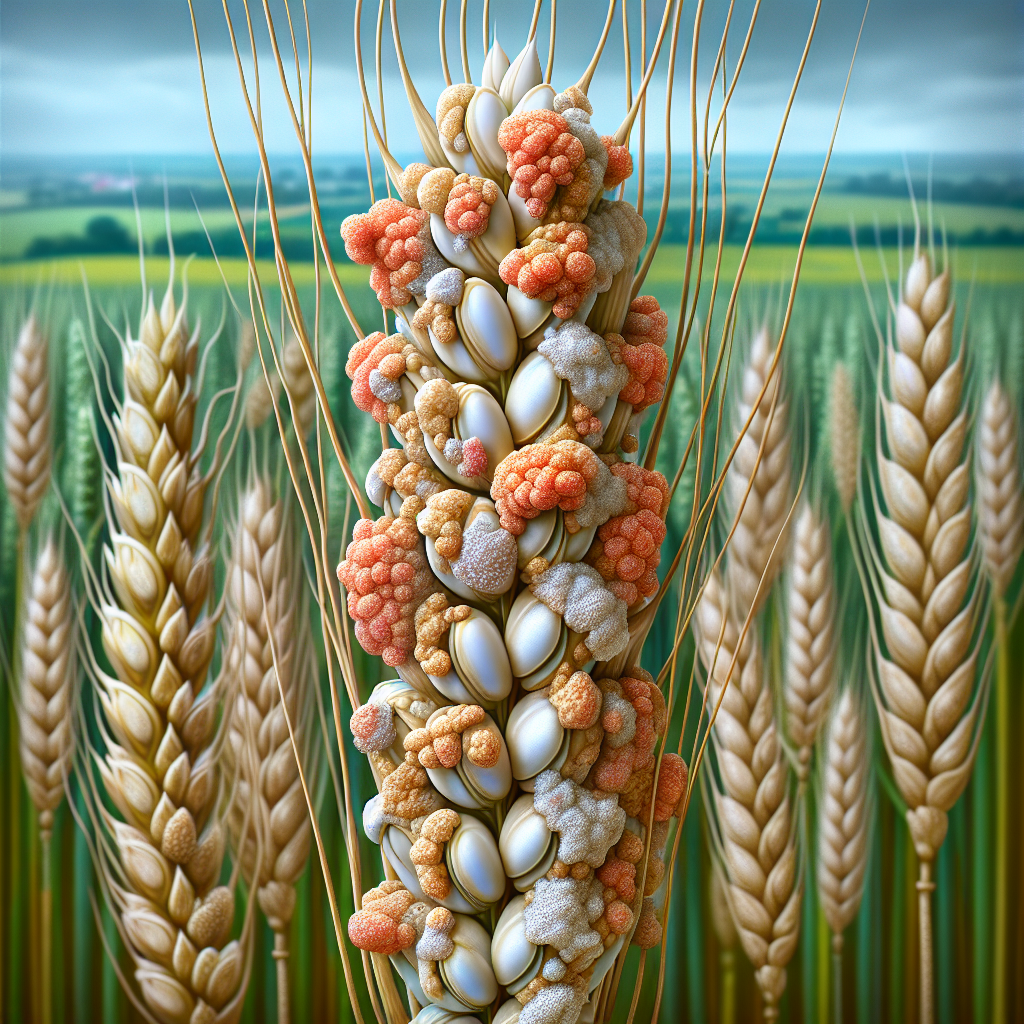
Spotting head diseases early is essential before widespread infection occurs. Initial symptoms often appear as subtle discoloration on florets or spikelets during grain fill. For Fusarium head blight, look for bleach-white or pinkish spikelets on wheat heads, with orange spore masses at the base under humid conditions. Infected grains become shriveled, lightweight 'tombstones,' and mycotoxins accumulate, making flour hazardous. Rice panicle blast shows grayish lesions on necks, causing panicles to droop and grains to abort entirely. Sorghum head smut manifests as swollen, gall-like heads filled with black spores, replacing normal grain. Ergot produces elongated, purple-black sclerotia in place of grains, contaminating harvests with alkaloids toxic to livestock. Damage extends beyond yield loss: a 20-30% infection rate can halve bushel weights and spike reject rates at elevators. Scout fields weekly from boot stage onward, using a hand lens to check for mycelium or spores. Differentiate from head-feeding insects like headworms, which leave frass and chew marks, versus fungal bleaching without excrement. Yield impacts are severe—Fusarium alone costs U.S. wheat growers $200-400 million annually. Test suspect samples for DON using ELISA kits for confirmation.
Lifecycle and Progression of Head diseases
Head diseases follow distinct lifecycles synchronized with crop phenology, primarily driven by fungal spores. Fusarium species overwinter as mycelium in crop residue or soil, producing ascospores in spring rains that infect open florets during anthesis. Macroconidia then spread via splash and wind, colonizing spikelets in 48-72 hours under 25-30°C and 90% humidity. Progression leads to senescence of infected heads within 7-10 days, halting grain fill. Smut pathogens like Ustilago in sorghum germinate from teliospores in soil, infecting seedlings systemically; symptoms erupt at heading as massive galls that burst, releasing billions of spores. Ergot (Claviceps purpurea) starts with honeydew exudate from infected ovaries, hardening into sclerotia that fall to soil and overwinter. A single lifecycle can produce 1,000-fold spore amplification per season. In rice, Magnaporthe oryzae (blast) cycles rapidly, with 10-14 day generations under favorable conditions. Progression accelerates in dense canopies with poor airflow, compounding with downy mildew or rusts. Understanding these cycles allows precise timing for interventions, such as fungicide sprays at 50% heading.
Environmental Triggers & Risk Factors
Head diseases explode under specific conditions: prolonged wetness during flowering (7+ hours leaf wetness), temperatures of 20-28°C, and high nitrogen fertility promoting lush heads. Conservation tillage leaving residue on soil surfaces harbors overwintering inoculum, increasing risk by 3-5x. Susceptible varieties like soft red winter wheat are prime targets, especially when sown early in fall, leading to prolonged exposure. High planting density (>15 plants/ft²) traps humidity in canopies, favoring spore germination. Regional factors include Midwest U.S. corn-wheat rotations fostering Fusarium from corn earworm vectors, and Asian rice paddies with standing water amplifying blast. Climate change extends wet windows, boosting epidemics—models predict 20% more Fusarium by 2050. Other risks: contaminated seed (5% infection halves stands), irrigation overhead, and adjacent corn or barley fields as bridges. Assess farm risk via weather stations tracking 'head blight risk indices' like McMullen-Wetter.
Organic Control & Treatment Plans
Organic management emphasizes cultural, biological, and resistant varieties over synthetics. Start with certified disease-free seed treated with Trichoderma viride (1-2g/kg) to suppress soil smuts. Rotate cereals with soybeans or peas for 2-3 years, burying residue deeply to degrade inoculum. Plant moderately susceptible varieties like 'Jamestown' wheat at optimal dates to dodge peak spore release. Enhance airflow with 7.5-inch rows and 1.2 million seeds/acre. Biologicals like Bacillus subtilis (e.g., Serenade) applied at flag leaf and heading reduce Fusarium by 40-60%. For active infections, prune and destroy affected heads, avoiding composting. Companion planting with marigold suppresses nematodes aiding Fusarium. In rice, silicon amendments (rice hull ash at 1 ton/ha) bolster blast resistance. Monitor with traps for head bugs, hand-removing early. Post-harvest, clean grain to <1% ergots and store at <14% moisture. Check out this Spring Pest Patrol blog for integrated scouting tips. Integrated plans cut losses 70% without chemicals.
Preventing Head diseases in the Future
Prevention is cheaper than cure—build resilience through IPM. Select resistant cultivars: 'Prointensive' wheat resists Fusarium (<10% infection), 'LAC 23' rice fights blast. Time planting to miss wet anthesis windows, using 14-21 day forecasts. Tillage incorporating residue 6-8 inches deep cuts inoculum 80%. Balance N at 80-120 lbs/acre, avoiding excess promoting heads. Foliar silicon or potassium boosts cell walls against penetration. Scout grids (1/acre) from boot stage, triggering action at 10% incidence. Eradicate volunteer wheat/corn, bridges for spores. Mulch with straw post-harvest to suppress splash. Long-term, breed for multi-resistance and diversify rotations with clover. Farm hygiene: clean equipment, rogue infected plants. Climate-smart: drain paddies pre-heading. Annual risk mapping via apps prevents outbreaks, sustaining yields >60 bu/acre.
Crops Most Affected by Head diseases
Head diseases predominantly ravage cereals: wheat (Fusarium head blight, loose smut), rice (panicle blast, neck blast), sorghum (head smut, ergot), barley (Fusarium, covered smut), and oats (crown rust on heads). Corn ears suffer common rust and smut. Grains like millet and triticale face similar threats. In high-risk zones, 30-100% losses occur.