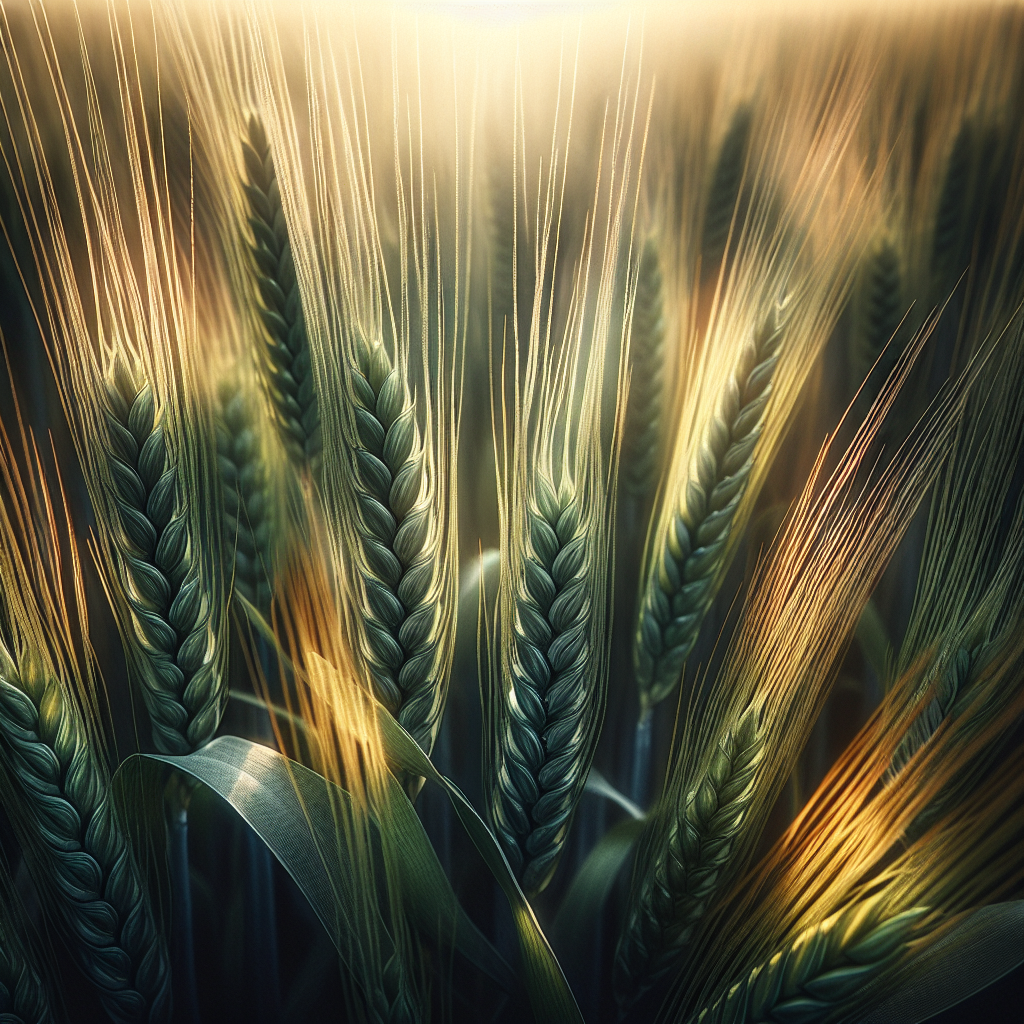
Introduction to Triticale
Developed in the late 19th and early 20th centuries and improved substantially through modern plant breeding, this hybrid cereal was designed to capture the best traits of its parents: the productivity and end-use quality of wheat and the rugged adaptability of rye. In practice, it has become especially valuable as a dual-purpose or flexible crop. Farmers grow it for grain, green chop, haylage, silage, winter forage, spring forage, and soil-building cover.
Its performance is strongest in temperate regions with cool-season growing conditions. Compared with common wheat, it often shows better tolerance to low-fertility soils, soil acidity, cold, and intermittent drought. Compared with rye, it generally produces heavier grain, greater forage quality, and improved feed value. That balance makes it attractive for mixed crop-livestock systems, low-input fields, and rotations where winter ground cover and spring biomass are both priorities.
Triticale is not a single uniform type. There are winter and spring forms, awned and awnless cultivars, shorter semi-dwarf grain types, and taller forage-oriented types. Grain-focused cultivars are selected for standability, test weight, and kernel fill, while forage cultivars are bred for rapid fall establishment, winter survival, and very high biomass accumulation. Choosing the correct market class and seasonal type is one of the most important decisions a grower makes before planting.
Botanical Profile of Triticale
This crop belongs to the grass family, Poaceae, and is classified botanically as × Triticosecale, reflecting its hybrid origin from Triticum species and Secale cereale. As an amphidiploid cereal, it contains complete chromosome sets that stabilize fertility and allow commercially viable seed production. Early triticale lines suffered from shriveled grain and poor agronomic reliability, but modern breeding has produced robust, fertile, high-yielding cultivars.
Growth begins with fibrous root development and emergence of a single shoot, followed by tillering, stem elongation, booting, heading, anthesis, and grain fill. Rooting depth can be substantial in well-structured soils, often exceeding 1 meter under favorable conditions, which helps explain its resilience under moisture stress. Leaves are typically broader than rye and often have a glaucous bluish-green cast. Heads can resemble wheat or rye depending on the cultivar, but most commercial triticale show elongated spikes with distinct awns in many lines.
Plant height commonly ranges from 90 to 150 cm depending on genetics, fertility, and intended use. Forage types are usually taller and leafier, while grain types are often shorter to reduce lodging risk. Flowering is largely self-pollinated, though some outcrossing can occur. Grain kernels tend to be larger than rye but often softer and less dense than premium bread wheat.
From a nutritional standpoint, triticale is highly valued in animal feeding. Grain protein commonly falls in the 10 to 15% range depending on nitrogen supply and environment, while forage can be highly digestible when harvested at the correct stage. It is especially important in dairies and beef systems because it can bridge the winter feed gap and deliver substantial tonnage before warm-season crops are planted.
For readers comparing cereal growth habits, the developmental framework is closest to Wheat, though triticale usually expresses stronger stress tolerance and a more forage-friendly canopy.
Soil, pH, and Climate Requirements for Triticale
This crop performs best in well-drained loam, silt loam, clay loam, or fertile sandy loam with moderate water-holding capacity and good internal drainage. It is more forgiving than wheat on lighter or lower-fertility soils, but it still responds strongly to proper soil structure. The ideal rooting environment is friable, aerated, and free of compacted plow pans. Bulk density that restricts root growth, especially in the top 20 to 30 cm, reduces tillering and winter survival.
Optimal soil pH is generally 5.8 to 7.2. One of its major advantages is acceptable performance on mildly acidic ground where wheat may struggle. It can tolerate pH down to about 5.2 to 5.5 better than many wheat cultivars, though nutrient availability and aluminum toxicity become limiting below that range. If soil pH is under 5.5, liming is usually justified, especially where phosphorus, molybdenum, or root growth are restricted.
Phosphorus and potassium should be guided by soil test, but as a practical benchmark, medium-testing soils should support strong establishment when fertility is built before planting. Phosphorus is particularly important in cool soils because early root vigor, tillering, and winter hardiness depend on adequate availability near the seed zone. Potassium helps with cold tolerance, water regulation, and stem strength.
The best climates are cool temperate regions with moderate rainfall or reliable supplemental irrigation. Winter triticale is generally seeded in autumn, vernalized by cold, and resumes growth early in spring. Spring triticale is planted where winters are too severe or where rotations favor spring sowing. It thrives in average daytime temperatures of 12 to 24°C during vegetative growth and performs best when grain filling occurs under mild conditions rather than hot dry winds.
Cold tolerance is usually superior to wheat but may vary by cultivar. Winter forms can survive substantial frost after hardening, especially when established early enough to produce 3 to 5 tillers before deep winter. However, poorly drained soils and repeated freeze-thaw cycles can be more damaging than absolute low temperature. Snow cover often improves overwinter survival by moderating crown temperature.
Moisture management is crucial. For establishment, the top 5 to 7 cm of soil should remain evenly moist, not saturated. Soil at field capacity is ideal: when squeezed by hand, it forms a weak ball but does not smear or release free water. Waterlogged conditions for more than 48 to 72 hours after emergence can cause yellowing, root stress, and stand thinning. During stem elongation and heading, prolonged moisture deficits reduce spike development and kernel number. During grain fill, drought shortens the filling period and lowers test weight. Yet chronic excess moisture is equally damaging, promoting root disease, lodging, and nutrient loss.
Step-by-Step Planting & Propagation
This crop is propagated almost exclusively by seed. Use certified or high-quality cleaned seed with strong germination, known varietal identity, and freedom from Ergot bodies, smut contamination, and excessive cracked kernels. For grain production, choose a cultivar adapted to local winter hardiness, disease pressure, and harvest window. For forage or silage, prioritize biomass yield, regrowth potential if grazing is planned, and heading date that fits your rotation.
Prepare the field by eliminating perennial weeds, correcting major fertility issues, and creating a firm seedbed. In conventional systems, light tillage or a final harrow pass should leave enough fine soil for seed-to-soil contact without creating a powdery crust-prone surface. In no-till systems, residue should be evenly distributed and the planter adjusted to cut through previous crop straw cleanly.
Base planting date on local climate and growth type. Winter forms are typically planted 2 to 4 weeks before the average hard freeze so seedlings can establish but not become excessively lush. Spring forms are planted as early as the soil can be worked in spring, ideally into cool moisture-retentive conditions. Delayed planting generally reduces tiller number and final yield.
Set seeding depth carefully. The ideal depth is usually 2.5 to 4 cm in medium-textured soils. In dry conditions on lighter soil, depth may increase to 5 cm to reach moisture, but going deeper often delays emergence and weakens seedlings. In heavy soils or crusting-prone clay, stay closer to 2.5 cm.
Seed at the correct population. Typical grain rates range from 100 to 160 kg/ha depending on seed size, planting date, and whether drilling or broadcasting is used. Late planting or forage use often justifies the higher end of the range. A stand target of about 200 to 300 established plants per square meter is common for grain, while denser stands may be used for forage biomass.
Use row spacing that matches the system. Narrow drill spacing of 15 to 20 cm usually maximizes light interception, suppresses weeds, and supports grain yield. Wider rows can work in low-rainfall regions or when interseeding cover crops, but canopy closure is slower.
Apply starter fertility if needed. In phosphorus-deficient or cold soils, placing a modest starter band near but not touching the seed can improve early vigor. Avoid excessive salt or ammonia near the seed furrow.
Roll or firm the seedbed if conditions are loose and dry. Good seed-soil contact speeds imbibition and emergence.
Emergence usually occurs in 5 to 10 days under favorable temperatures. After emergence, inspect stands for gaps, seedling disease, insect feeding, and crusting injury. Strong stands show uniform rows, upright leaves, healthy green color, and active tillering within a few weeks.
Care & Maintenance regimes for Triticale
Nitrogen management should be matched to the crop goal. For grain, total nitrogen often falls in the range of 70 to 150 kg/ha, adjusted for yield target, previous legume credits, residual nitrate, and organic matter mineralization. For forage or silage, nitrogen rates may be similar or slightly higher where very high biomass is expected. Split applications are often superior: a modest portion at or before planting, followed by topdress at tillering or green-up in spring. This reduces early leaching losses and better aligns supply with peak demand.
Watch plant color and canopy density as practical field indicators. Pale lower leaves, slow tillering, and reduced canopy fill often indicate nitrogen deficiency. Extremely lush dark growth, especially after high nitrogen and rainfall, can signal an elevated lodging risk. If stems begin elongating rapidly and the field is dense, avoid additional excess nitrogen unless tissue tests justify it.
Irrigation is often unnecessary in humid regions, but where rainfall is limited, critical timing matters. The crop needs consistent moisture during establishment, tillering, stem elongation, booting, and grain fill. A rough seasonal target in irrigated production is 350 to 550 mm total water, including rainfall, though this varies strongly by soil type and climate. If irrigating, aim to wet the root zone to 30 to 60 cm depth, then allow the upper layer to dry slightly before the next pass. Frequent shallow irrigation encourages weak rooting. Signs of underwatering include bluish cast, rolled leaves during the day, reduced tillering, and shortened heads. Signs of overwatering include persistent yellowing, stunted roots, anaerobic smell in the soil, and easy plant pull-up due to poor anchorage.
Weed management is most important from establishment through canopy closure. Triticale is competitive, especially in narrow rows and vigorous stands, but early weed pressure from annual grasses or broadleaves still reduces yield and complicates harvest. Start with a stale seedbed where possible, rotate crops, use clean seed, and keep field borders from setting seed. Dense stands and timely planting are among the strongest cultural suppression tools. More on integrated system design can be found in this soil health article.
Lodging prevention requires balance. Excess nitrogen, high plant density, rich manure history, and storms near heading all increase risk. Grain types with shorter straw are better for fertile fields. Lodged stands suffer lower harvest efficiency, reduced grain quality, and greater disease. Maintain balanced potassium, avoid overly late nitrogen, and choose a cultivar with good standability where high fertility is expected.
For grazing systems, begin only when plants are firmly rooted and resist pull-up, usually after they reach 15 to 20 cm and have developed several leaves and tillers. Avoid overgrazing below 7 to 10 cm stubble if regrowth is desired. Remove livestock during wet conditions to prevent hoof compaction and crown damage.
Pests, Diseases & Organic Management
This crop generally experiences fewer severe disease problems than wheat in many regions, but it is not immune. The major disease spectrum includes rusts, Powdery Mildew, Fusarium Head Blight, Septoria Leaf Blotch, Ergot, Common Root Rots, Take-All in some rotations, and various Seedling Blights. Pressure depends heavily on weather, residue, rotation, and cultivar susceptibility.
Rust diseases, especially Stripe Rust and Leaf Rust, can spread rapidly under cool to mild humid conditions. Look for orange to yellow pustules on leaves and leaf sheaths. Early infection before flag leaf emergence can significantly reduce yield. Organic management depends on resistant cultivars, balanced fertility, airflow, and avoiding excessive lush growth. Powdery Mildew appears as white powdery colonies, especially in dense stands with high humidity and excessive nitrogen.
Fusarium Head Blight is a serious concern in wet flowering periods, especially following corn residues. Symptoms include bleached spikelets, pinkish fungal growth under humid conditions, and shriveled lightweight kernels. Rotation away from cereals and maize, residue management, and cultivar selection are key. Ergot, more commonly associated with rye but also possible in triticale, produces dark sclerotia replacing kernels. It is favored by cool wet flowering weather and contamination from grasses or previous cereal hosts. Clean seed, mow surrounding grassy weeds before flowering, and reject heavily contaminated grain from feed or seed channels.
Insect pests vary by region but may include Aphids, Armyworms, Cutworms, Hessian Fly, Cereal Leaf Beetle, Wireworms, and Mites. Aphids are important not only for sap feeding but also as vectors of Barley Yellow Dwarf Virus. Scout field edges and low spots first. Economic damage often begins with patchy yellowing, distorted growth, or visible colonies on stems and leaves.
Organic and low-input management should emphasize prevention:
- Rotate with legumes, brassicas, or non-cereal broadleaf crops.
- Avoid repeated cereal-after-cereal sequences.
- Plant adapted resistant cultivars.
- Use certified clean seed and consider permitted seed treatments where local organic standards allow.
- Promote predator habitat for aphid control.
- Manage volunteer cereals and grass weeds that bridge pests and diseases.
- Prevent moisture stress and nutrient imbalance, both of which amplify susceptibility.
For Slugs or seedling pests in high-residue systems, check fields at dusk or under residue mats. Missing seedlings, shredded leaves, and slime trails indicate slug feeding. Reduce excessive surface trash concentration around the seed slot and encourage rapid emergence through proper planting depth and seedbed conditions.
Harvesting, Curing & Optimal Storage
Harvest strategy depends on end use. For grazing or green chop, cut in the vegetative to early boot stage for maximum quality and tenderness. For silage, the ideal stage is commonly late boot to soft dough, depending on whether the goal is protein-rich forage or higher starch accumulation. At soft dough, whole-plant moisture often approaches an ensiling range suitable for packing, though actual moisture must be checked because weather and maturity rate vary by environment.
For dry grain, harvest when kernels are fully mature and grain moisture is generally around 12 to 14% for safe direct storage, or 16 to 18% if it will be dried promptly. Heads should be fully turned, stems mostly dry, and kernels hard enough that a thumbnail leaves little to no dent. Delayed harvest increases shattering, weather damage, lodging loss, and pre-harvest sprouting in wet conditions.
Combine settings should be adjusted carefully because triticale grain can be more prone than wheat to cracked kernels or incomplete threshing if cylinder speed and concave clearance are poorly set. Start with moderate settings and inspect the sample frequently. Excess broken grain lowers storability and market quality.
For hay or baleage, cut before heads fully emerge or around early heading if the goal is a compromise between yield and quality. Condition stems for even drying, but avoid overly aggressive conditioning that strips leaves. Dry hay to roughly 15% moisture before baling to reduce mold and heating. Baleage should be wrapped at a higher moisture appropriate to the system, commonly around 40 to 60%, with rapid sealing to exclude oxygen.
Stored grain should be cooled and protected from insects and moisture migration. Even when grain enters storage at 13 to 14% moisture, warm grain can spoil if bins are not aerated. Aim to cool grain below 15°C for medium-term storage and lower for long-term holding where climate allows. Monitor monthly for hot spots, condensation, musty odor, insect activity, and crusting. If grain was harvested tough or if fines are concentrated in the center of the bin, spoilage risk increases sharply.
Seed intended for planting should be kept cleaner and drier than feed grain, ideally near 12% moisture or according to local seed storage recommendations, in rodent-proof and humidity-stable conditions.
Companion Planting for Triticale
In broad-acre agriculture, companion planting is better understood as intercropping, nurse cropping, understory establishment, or rotational pairing rather than close garden-style mixed planting. The strongest companions are species that complement nutrient use, improve forage quality, suppress weeds, or enhance soil structure without overwhelming the cereal.
Legumes are the most practical partners. Hairy vetch, crimson clover, field peas, and certain annual medics can be sown with or into triticale depending on climate and the intended harvest stage. In forage systems, a triticale-legume mixture often increases crude protein, improves mineral balance, and reduces the need for high nitrogen fertilizer. The cereal provides structural support for vining legumes and scavenges excess nitrogen, while the legume contributes biological nitrogen fixation over time.
For silage, triticale mixed with peas is a classic pairing in cooler regions. The triticale supplies yield and harvest structure; the peas improve protein and palatability. The key is balancing seeding rates so the legumes enhance rather than lodge the stand. Too much legume in a wet fertile season can flatten the crop.
Brassicas such as forage radish or turnip can fit as rotational companions or post-harvest associates more effectively than true same-row companions. They help break surface compaction, capture residual nutrients, and diversify rooting patterns. In cover-crop cocktails, triticale works well as the structural grass component because it establishes rapidly, anchors soil through winter, and produces abundant spring biomass.
Avoid pairing it too aggressively with other cereals of similar growth rate in fields already prone to lodging or where disease carryover is high. Multi-cereal mixtures can become difficult to manage for harvest timing and may complicate grain marketing.
The best companion strategy depends on purpose:
- For grain: keep stands pure or only lightly undersown with a non-competitive clover.
- For silage: combine with peas or vetch for quality.
- For grazing: integrate with annual legumes for better protein balance.
- For soil building: use it as the backbone species in diverse winter cover mixes.
As a rotation tool, triticale also serves as an excellent bridge crop before soybeans, corn silage, or warm-season annual forages, provided termination or harvest timing preserves soil moisture and planting windows.