Introduction to Fungal decline
Fungal decline represents a devastating syndrome impacting perennial crops worldwide, particularly in orchards and vineyards where long-term productivity is essential. Unlike acute diseases that strike suddenly, fungal decline is a slow-burning catastrophe, where soilborne fungal pathogens like Fusarium, Rhizoctonia, and Phytophthora gradually erode root systems, leading to canopy dieback, reduced yields, and eventual tree mortality. This condition often masquerades as environmental stress or nutrient deficiency, delaying diagnosis and allowing widespread damage.
Farmers first notice fungal decline during prolonged wet periods or after years of heavy irrigation without adequate drainage. The economic toll is immense: in avocado groves, for instance, it can wipe out 20-50% of trees over 3-5 years, costing thousands per acre in lost production and replanting. Understanding this disease requires a holistic view—it's not a single pathogen but a complex interplay of fungi exploiting weakened hosts. Early intervention through integrated organic management can salvage affected orchards, making prevention the cornerstone of sustainable agriculture. This guide equips growers with diagnostic tools, lifecycle insights, and proven organic strategies to combat fungal decline effectively.
Identifying Symptoms & Damage
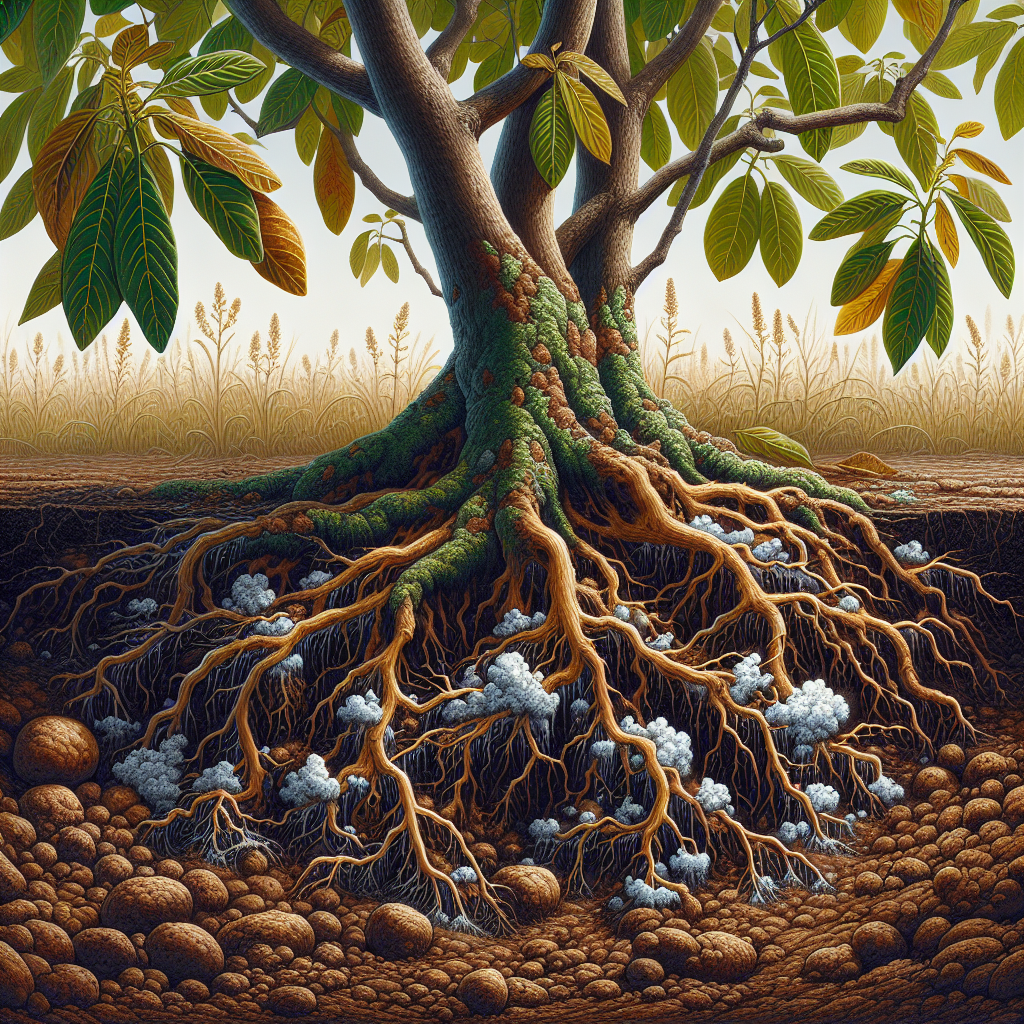
Recognizing fungal decline early is challenging because symptoms mimic drought, overwatering, or pest damage. Initial signs appear in the roots: dark, mushy lesions and rot, often with white mycelium or sclerotia (fungal survival structures) visible upon excavation. Above ground, affected trees show stunted growth, yellowing leaves starting from the edges, and premature leaf drop, creating a sparse canopy.
Progression reveals diagnostic hallmarks. In mid-stages, branches die back from the tips, forming a 'flag' pattern of bare limbs amid green foliage. Gummosis—oozing sap from trunk lesions—is common in stone fruits and avocado trees, staining bark dark brown. Advanced decline features basal cankers, cracked bark, and tree toppling due to root loss. Yield plummets: fruits are small, sunburned, or absent. To confirm, slice roots—healthy ones are firm and white; fungal-declined roots are brittle, discolored, and foul-smelling.
Differential diagnosis is key. Rule out root-knot nematodes (galls on roots) or Verticillium wilt (vascular browning). Soil tests for fungal DNA or culturing isolates provide lab confirmation. Scout systematically: check 10-20% of trees monthly, focusing on low spots. Early ID prevents 70% of spread. For Hass Avocado, look for Phytophthora-specific crown rot at the soil line.
Lifecycle and Progression of Fungal decline
Fungal decline pathogens are soil inhabitants with resilient lifecycles tailored for persistence. Spores and sclerotia survive decades in soil, germinating when moisture and temperature align—typically 60-80°F with waterlogged conditions. Infection starts at feeder roots via wounds or natural openings, colonizing vascular tissue and producing toxins that block water uptake.
The progression unfolds in phases. Year 1: subclinical root infection, no visible symptoms. Year 2: 20-30% root loss triggers mild wilting during stress. By year 3, 50%+ root decay causes chronic decline, with fungi moving upward via splash or tools. Sclerotia form in debris, ensuring reinfection. In Phytophthora, zoospores swim in saturated soil, infecting en masse after rain.
Epidemics peak in summer-autumn with irrigation mismanagement. Trees stressed by drought, nematodes, or poor nutrition are prime targets. Lifecycle completes with fruiting bodies on bark or soil, releasing billions of spores. Cultural breaks like rotation fail for perennials, emphasizing sanitation. Understanding this cycle informs timing: apply biocontrols pre-rainy season.
Environmental Triggers & Risk Factors
Fungal decline thrives where water pools and oxygen starves roots. Poor drainage tops the list—heavy clay soils or compacted fields retain moisture, favoring anaerobes like Phytophthora. Over-irrigation, especially flood methods, saturates root zones >48 hours, triggering zoospore release.
Climate plays a role: humid tropics/subtropics see chronic issues in mango and banana; temperate zones flare post-flood. Risk spikes with continuous monoculture—pathogen buildup over 5+ years. Compaction from machinery, low organic matter (<2%), and pH extremes (below 5.5 or above 7.5) exacerbate. Nutrient imbalances, like excess nitrogen, promote lush growth fungi exploit.
Associated pests like root mealybugs wound roots, opening infection courts. Learn from Soil Health Mastery: 5 Proven Strategies for Small Farms to Build Fertile Ground Without Breaking the Bank for mitigation. High-risk sites: orchard edges, tree skirts with grass, or post-construction fill dirt harboring inoculum.
Organic Control & Treatment Plans
Organic management targets the disease triangle: disrupt pathogen, bolster host, alter environment. No silver bullet exists, but layered strategies yield 60-80% control.
Cultural Controls: Install drainage tiles or berms in low areas; raise beds 12-18 inches. Drip irrigate to keep soil <20% saturated. Mulch with 4-6 inches coarse organic matter to moderate moisture and suppress sclerotia.
Biologicals: Apply Trichoderma harzianum or Bacillus subtilis drenches (5-10 gal/acre monthly). Mycorrhizal inoculants enhance root vigor. For Phytophthora, phosphite sprays (0-0-27 potassium phosphite) boost defenses—apply 3x/year.
Sanitation: Rogue dead trees promptly; remove stumps. Disinfest tools with 10% bleach. Solarize soil in non-bearing areas: clear plastic 4-6 weeks summer.
Resistants: Replant with tolerant rootstocks like Dusa for avocado or Geneva series for fruit trees. Integrated plan: monitor weekly, treat at 5% incidence. Success stories show 90% recovery in young orchards.
Preventing Fungal decline in the Future
Prevention beats cure—build resilience from planting. Site selection: avoid frost pockets/water tables <3 feet. Test soil pre-plant for drainage (dig 2x2x2 holes, fill with water; drain <2 hours). Amend with 20-30 tons/acre compost for aeration.
Plant certified stock on raised mounds (18-24 inches). Space for airflow: 15x20 ft trees. Mulch religiously, avoiding trunk contact. Rotate cover crops like mustard biofumigants to suppress pathogens.
Monitor via apps for hyper-local weather—avoid irrigating pre-rain. Annual soil tests guide amendments. Scout grids ensure <1% infection triggers action. Long-term, diversify: interplant clover for nitrogen fixation without host susceptibility. Educate crews on hygiene. These steps cut incidence 85% in proactive groves.
Crops Most Affected by Fungal decline
Perennials bear the brunt due to fixed positions in infested soil. Avocados top losses—Hass and Fuerte succumb to Phytophthora cinnamomi, with 30% global grove mortality. Citrus (orange, lemon) suffer root rot in wet subtropics.
Stone fruits like peach, plum, and cherry show Armillaria and Fusarium decline. Nut trees—almond, walnut—decline from Texan root rot. Mango and banana in tropics face Maladi piri-piri-like syndromes. Grapes (grapes) decline from crown gall complexes. Even annuals like potato show early decline in rotations. Prioritize high-value crops for vigilance.