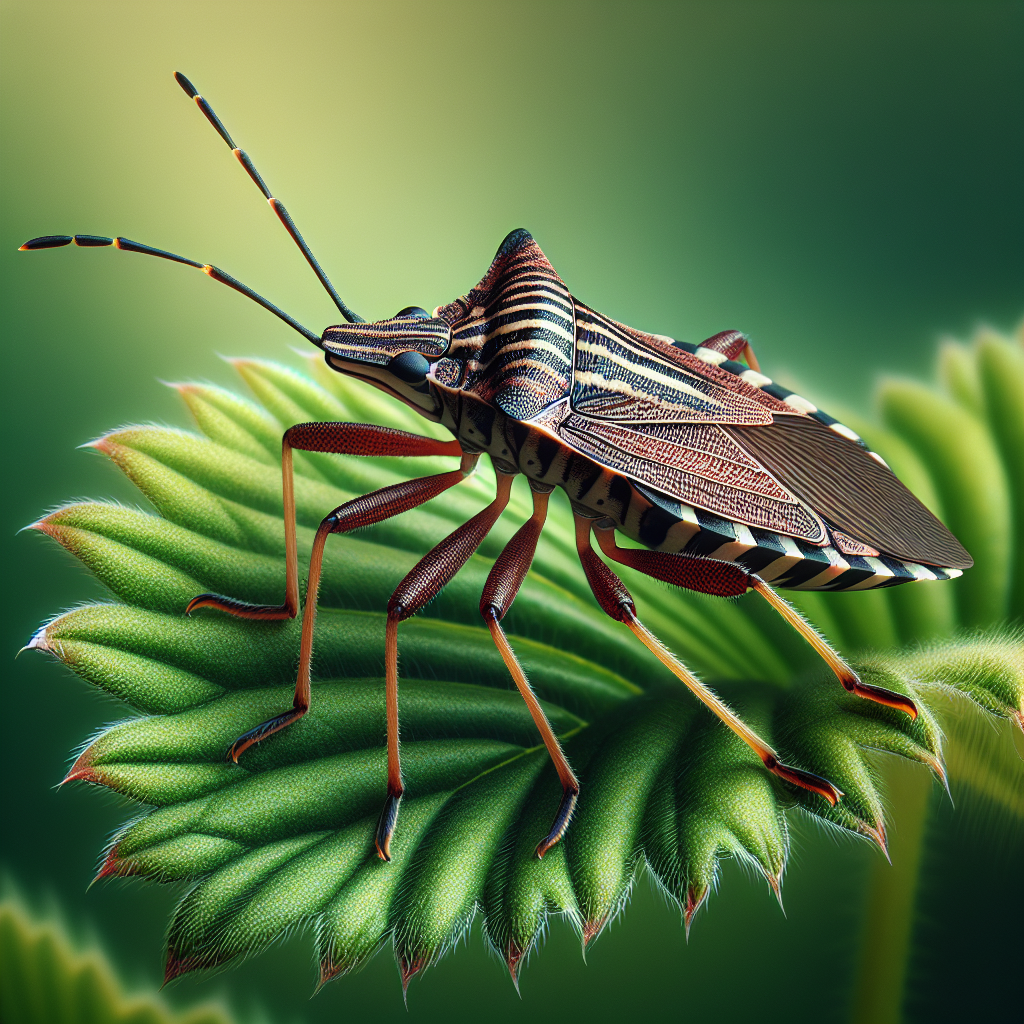
Introduction to Four-line plant bugs
Four-line plant bugs, scientifically known as Poecilocapsus lineatus, are notorious agricultural pests belonging to the Miridae family. These slender insects, typically 4-6 mm long, are characterized by their distinctive four pale lines running along their dark brown bodies, giving them their common name. Adults have fully developed wings, while nymphs are wingless and progressively develop wing pads through five instars.
These bugs are piercing-sucking herbivores that feed by inserting their needle-like mouthparts into plant tissues, extracting sap and injecting digestive enzymes and toxins. This feeding causes characteristic symptoms like yellowing, browning, and necrotic lesions on leaves, stems, and fruits. Four-line plant bugs are most problematic in temperate regions of North America, particularly the northeastern U.S. and Canada, where they overwinter as eggs and emerge in spring to attack tender new growth.
Farmers often underestimate these pests because early damage mimics nutrient deficiencies or diseases like Alternaria leaf spot. However, their rapid reproduction—females lay up to 100 eggs—can lead to explosive population growth, potentially reducing yields by 20-50% in severe infestations. Understanding their biology is crucial for timely intervention, especially in organic systems where chemical options are limited. This guide provides comprehensive diagnostic tools, lifecycle insights, and proven management strategies to protect your crops from four-line plant bugs. For small farms struggling with pest identification, check out Why Misidentifying Plants Costs Small Farms Thousands - And How AI Camera Diagnosis Fixes It Fast.
Identifying Symptoms & Damage
Diagnosing four-line plant bug damage requires keen observation, as symptoms often appear before the pests themselves are visible. Early signs include small, angular yellow or white spots on the upper leaf surfaces, particularly on new growth. These 'stipple spots' result from the bugs' toxic saliva disrupting chlorophyll production. As feeding continues, spots coalesce into larger necrotic areas with a bronze or black appearance, often surrounded by a chlorotic halo.
Affected leaves may curl, crinkle, or develop a tattered look due to tissue death. On fruits like tomato or strawberry, damage manifests as dimples, catfacing, or sunken lesions that render produce unmarketable. Stems show brown streaks or girdling, stunting plant vigor and leading to wilting. Nymphs cause the most severe damage because they feed gregariously in clusters.
To confirm infestation, shake plants over white paper; tiny green nymphs or adults will drop and scurry. Use a 10x hand lens to spot the four white stripes on the bugs' bodies. Differentiate from thrips (thinner damage, silvery trails) or mites (fine webbing, dust-like specks). Thresholds for action: 1-2 bugs per 10 sweeps with a beating sheet on row crops. Scouting twice weekly from bud break is essential. Severe damage can reduce photosynthesis by 30%, mimicking powdery mildew but without fungal growth.
Lifecycle and Progression of Four-line plant bugs
The lifecycle of four-line plant bugs is univoltine (one generation per year) in cooler climates, bivoltine in warmer areas. Overwintering occurs as eggs laid in late summer within slits in petioles, stems, or bark of host plants like apple trees. Eggs are tiny (1mm), orange-red, and barrel-shaped, hatching in early spring (April-May) when temperatures exceed 10°C (50°F).
Nymphs emerge pale green, progressing through five instars over 3-4 weeks. First instars are ant-like and wingless; later ones develop wing pads. They molt on the plant, leaving translucent exoskeletons. Nymphal feeding peaks during tender growth stages. Adults appear in June-July, are 4-5mm long, with males more slender. Females insert eggs with an ovipositor, preferring weeds like clover or mullein as reservoirs.
Total lifecycle: 30-45 days. Populations peak mid-summer, declining with heat stress above 32°C (90°F). Dispersal via flight up to 1km. Monitoring egg hatch with degree-day models (base 10°C, 200-300 DD to first nymphs) aids timing. In greenhouses, multiple generations occur year-round, complicating control.
Environmental Triggers & Risk Factors
Four-line plant bugs flourish in warm, dry springs with prolonged sunny days. Optimal temperatures: 20-30°C (68-86°F); humidity below 60% enhances survival. Drought-stressed crops are more susceptible as tender tissues attract feeding. Weedy field margins, especially with yarrow or thyme, serve as source populations.
Risk factors include reduced tillage preserving overwintering sites, dense plantings hindering natural enemies, and nearby orchards. Late-planted crops overlap with nymph emergence. Nitrogen excess promotes lush growth ideal for bugs. Climate change extends activity windows northward. Avoid monocultures; intercropping with nasturtium repels via glucosinolates. Monitor weather: rain washes off nymphs, cold snaps (<5°C) kill eggs.
Organic Control & Treatment Plans
Integrated Pest Management (IPM) is key for organic control. Cultural: Destroy weeds, prune infested tips pre-bloom, use reflective mulches to deter adults. Biological: Encourage predators like big-eyed bugs, damsel bugs, and ladybugs (generalists). Release lacewings (Chrysoperla spp.) at 1,000/acre. Parasitic wasps (Leiophron pallipes) attack nymphs.
Mechanical: Vacuum or beat plants early morning when bugs are sluggish. Organic sprays: Insecticidal soap (1-2% solution) or neem oil (0.5%) weekly at dusk, covering undersides. Pyrethrins for knockdown, rotated to avoid resistance. Horticultural oil smothers eggs in dormant season. Kaolin clay (Surround) creates physical barrier.
Treatment plan: Scout weekly; treat at 1 nymph/10 plants. Apply soap + neem 3x, 5-7 days apart. Follow with predators. For strawberry, row covers until bloom. Efficacy: 80-90% reduction with IPM vs. 50% soaps alone. Rotate modes; test small areas. For broader pest strategies, see Spring Pest Patrol: Organic AI Strategies to Shield Your Crops from Common Invaders.
Preventing Four-line plant bugs in the Future
Prevention starts with sanitation: remove plant debris, till lightly to expose eggs to predators. Plant resistant varieties like certain potato cultivars. Time planting to miss nymph peak (post-June in north). Use trap crops like mustard at borders.
Encourage biodiversity: sow marigold or Thai basil as repellents. Mulch with straw to suppress weeds. Monitor with sticky cards, pheromone traps for adults. Dormant oil sprays target eggs. Crop rotation disrupts lifecycle. Beneficial habitat strips with yarrow boost predators. Long-term: select fields away from woods. Annual IPM audits reduce incidence 70%.
Crops Most Affected by Four-line plant bugs
Four-line plant bugs attack over 50 plant families, preferring Rosaceae and Solanaceae. Top crops: strawberry (catfacing on berries), raspberry (tip blight), apple (shoot dieback), cherry (fruit dimpling), peach (leaf necrosis). Vegetables: tomato, potato, eggplant, bell pepper. Others: sunflower, soybeans, clover (forage loss). Ornamentals like rose, chrysanthemum also hit. Young transplants suffer most; mature plants tolerate better. In strawberry, yield losses up to 40%; in apple, deformed spurs reduce fruit set 25%.