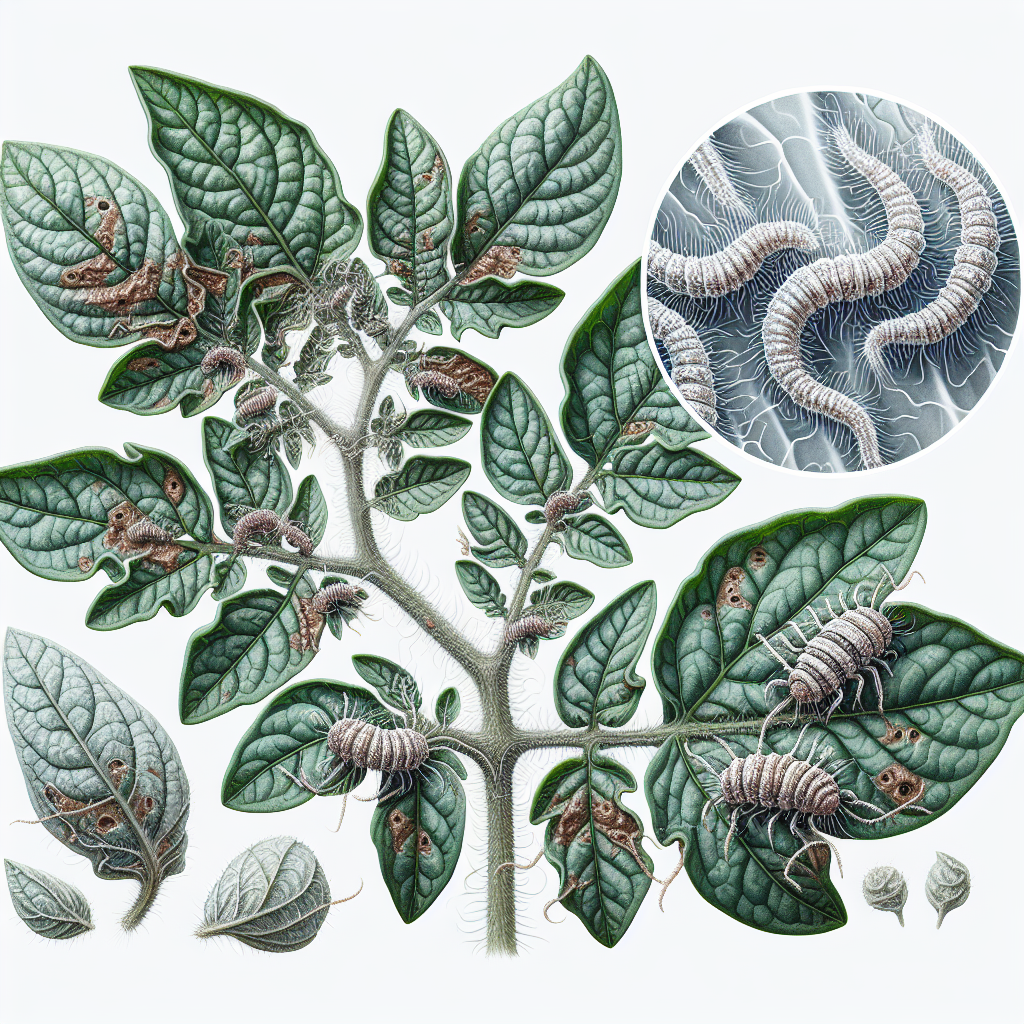
Introduction to Eriophyid mites
Eriophyid mites, belonging to the family Eriophyidae, represent one of the most diverse and challenging groups of plant pests in modern agriculture. These microscopic arachnids, often measuring less than 0.2 mm in length, are highly specialized, with over 4,000 described species, each typically targeting specific host plants. Unlike larger spider mites, eriophyids are worm-shaped, lacking distinct legs visible to the naked eye, and they reside in protected niches such as leaf folds, buds, or galls they induce on plants.
Farmers encounter eriophyid mites on a wide array of crops, where they cause symptoms ranging from silvering and bronzing to severe deformation and yield loss. Their economic impact is significant; for instance, species like the wheat curl mite (Aceria tosichella) vector deadly viruses, while pear rust mite (Epitrimerus pyri) reduces fruit quality in orchards. These pests are global, thriving in temperate and subtropical regions, and their rapid reproduction—females laying hundreds of eggs—makes outbreaks explosive under favorable conditions.
Understanding eriophyid mites is crucial for integrated pest management (IPM). They are notoriously difficult to detect without magnification, often going unnoticed until damage appears. This guide provides definitive diagnostics, lifecycle insights, and organic strategies to protect your crops effectively. Early intervention is key, as populations can double weekly in warm weather.
Identifying Symptoms & Damage
Diagnosing eriophyid mite infestations requires keen observation, as the mites themselves are invisible without a 20x hand lens or microscope. Symptoms vary by species and host but share hallmarks of cell proliferation and feeding injury. Common signs include:
- Leaf Distortions and Galls: Ivory-colored blisters or felt-like galls on tomato leaves (tomato russet mite, Aculops lycopersici), or finger-like galls on mango leaves (mango bud mite).
- Russeting and Bronzing: Rusty-brown scarring on fruits, as seen with apple rust mite (Aculus schlechtendali) on apple, reducing market value by up to 50%.
- Silvering and Crinkling: Upper leaf surfaces turn silvery, with downward curling, common in citrus rust mites (Phyllocoptruta oleivora) on orange.
- Bud and Shoot Damage: Blind buds or witches' brooms, like in wheat curl mite infestations causing leaf rolling and stunting.
- Fruit Deformation: Elongated, russeted berries in grapes (grape rust mite, Colomerus vitis) or pitted avocados (Hass Avocado).
Damage severity escalates with hot, dry spells; thresholds are low—10-20 mites per leaf can cause 20-30% yield loss. Differentiate from thrips or viral diseases by absence of webbing or stippling; scrape affected tissue onto white paper and tap—moving specks confirm mites. Use sticky traps near crop edges to monitor dispersal.
Lifecycle and Progression of Eriophyid mites
Eriophyid mites exhibit a simple lifecycle adapted for rapid colonization: egg, larva (two nymphal stages), and adult—all non-feeding protogyne (immature female) phases in some species. No true pupal stage exists; development completes in 7-14 days at 25-30°C (77-86°F), slowing below 15°C.
Adults are annulate, elongate (0.1-0.3 mm), with two pairs of hind legs reduced to setose stubs. Females overwinter in bark crevices, bud scales, or under leaf sheaths, resuming activity in spring. Parthenogenetic reproduction dominates—unmated females produce female offspring—yielding 20-50 eggs per female over 4-6 weeks. Peak populations align with new flush growth.
Progression: Eggs hatch in 2-4 days into active larvae that molt twice. Dispersal occurs via wind (aerial plankton), tools, or clothing. Multiple generations (10-20/year) overlap, with density-dependent galls protecting inner mites. Viruses like wheat streak mosaic are transmitted lifelong by viruliferous females.
Environmental Triggers & Risk Factors
Eriophyids flourish in warm (20-35°C), low-humidity (<60% RH) conditions, with outbreaks following drought stress. Over-fertilization with nitrogen promotes succulent growth, ideal for feeding. Poor airflow in dense canopies traps mites; overhead irrigation washes them off but splashing spreads them.
Risk factors include:
- Monoculture and Volunteer Plants: Reservoirs like weedy corn host wheat curl mites.
- Mechanical Spread: Pruning tools, harvesters.
- Adjacent Hosts: Soybeans near wheat amplify curl mites.
- Climate Shifts: Warmer springs advance emergence by 2-3 weeks.
Susceptible varieties (e.g., susceptible citrus cultivars) and weakened plants from root-knot nematodes face compounded damage.
Organic Control & Treatment Plans
Organic management emphasizes cultural, biological, and soft chemical controls. Check out Spring Pest Patrol: Organic AI Strategies to Shield Your Crops from Common Invaders for broader tactics.
Cultural Controls:
- Prune for airflow; remove galls and debris.
- Plant resistant varieties (e.g., 'Starkrimson' cherry for rust mites).
- Reflective mulches deter settling.
Biological Controls:
- Predators: Mites like Anthoseius spp., predatory thrips, lacewings.
- Release rates: 1,000-2,000 per acre.
Organic Treatments:
- Sulfur: 2-5 lb/100 gal, weekly sprays (pH 5-7); effective on rust mites.
- Neem Oil: 0.5-1% with adjuvant; disrupts feeding/oviposition.
- Insecticidal Soap + Oils: Potassium salts (2%) + hort oil; 3-5 applications, 7-day intervals.
- Kaolin Clay: Surround WP (25-50 lb/acre); physical barrier.
IPM Plan:
- Scout weekly with tapping method.
- Threshold: 5-10 mites/leaf.
- Rotate modes; avoid broad-spectrum sprays killing predators.
- Post-harvest: Dormant oil sprays (2-3% superior oil).
Field trials show 70-90% control combining sulfur and predators.
Preventing Eriophyid mites in the Future
Prevention hinges on farm hygiene and monitoring. Sanitize tools (10% bleach); rogue infested plants. Crop rotation disrupts reservoirs—avoid wheat after wheat. Windbreaks reduce windblown mites by 50%.
Use trap crops like clover borders. Soil solarization kills overwintering stages. Resistant rootstocks (e.g., for avocado) and certified clean stock minimize introductions. Hyper-local weather monitoring flags high-risk periods.
Long-term: Enhance biodiversity with marigold intercrops repelling mites. Annual audits track progress.
Crops Most Affected by Eriophyid mites
Eriophyids attack over 300 crops; top targets include:
| Crop | Key Species | Primary Damage |
|---|---|---|
| Wheat | Wheat curl mite | Leaf rolling, virus vector |
| Tomato | Tomato russet mite | Russeting, fruit drop |
| Citrus (Orange, Lemon) | Citrus rust mite | Fruit scarring |
| Apple, Pear | Rust mites | Fruit russeting |
| Grapes | Grape rust mite | Berry deformation |
| Mango | Mango bud mite | Bud galls |
| Hass Avocado | Persea mite | Leaf bronzing |
| Corn | Corn rust mite | Tassel damage |
Yield losses: 10-40% untreated. Prioritize scouting in these.
(Word count: 1,456)