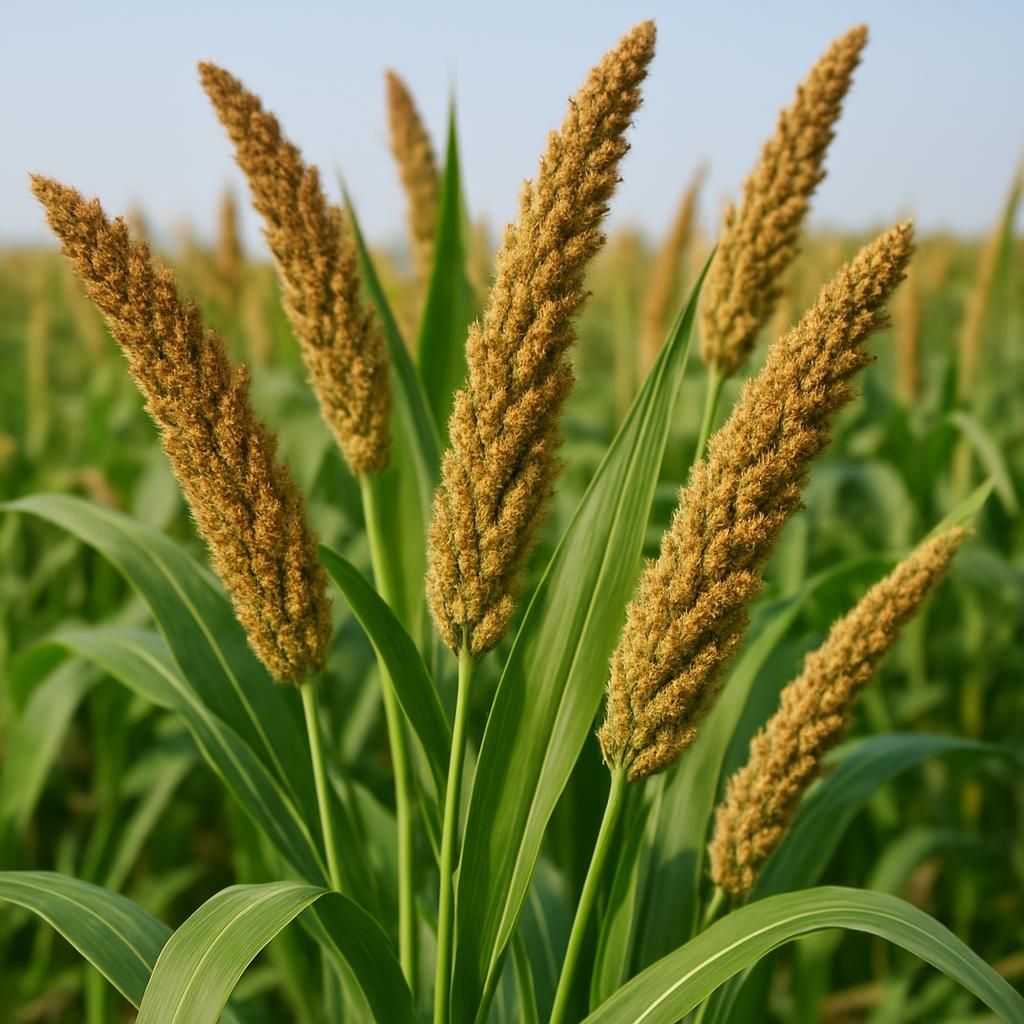
Introduction to Echinochloa
Echinochloa, commonly known as barnyard millet or cockspur grass, belongs to the Poaceae family and serves as an important cereal and forage crop across Asia, Africa, and parts of the Americas. Farmers value the species for its rapid growth cycle, drought tolerance once established, and ability to produce grain on marginal lands where Rice or Wheat may struggle. The crop is particularly suited to smallholder systems because it requires low external inputs while delivering nutritious grain and straw for livestock.
Global interest in climate-resilient grains has renewed attention on Echinochloa as a sustainable alternative or complement to major cereals. Its short duration (60–90 days) allows multiple harvests per year in suitable climates and fits well into rotations with legumes or vegetables. In addition to human consumption, the plant provides high-quality green fodder and silage, making it valuable for integrated crop-livestock farms.
Botanical Profile of Echinochloa
Echinochloa crus-galli is an annual grass reaching 30–150 cm in height with erect or decumbent culms. Leaves are linear-lanceolate, 10–40 cm long, and glabrous with a prominent midrib. The inflorescence is a panicle 5–25 cm long bearing densely packed spikelets armed with short awns that give the head a bristly appearance. Seeds are small (2–3 mm), ovoid, and enclosed in tough glumes that protect them during storage.
The species exhibits high phenotypic plasticity, allowing adaptation to both upland and lowland conditions. Root systems are fibrous and shallow, enabling quick uptake of surface nutrients and water after rainfall or irrigation. Flowering occurs 35–50 days after emergence, followed by grain fill within three weeks. Genetic diversity exists among landraces, offering breeders traits such as early maturity, shattering resistance, and improved grain quality.
Soil, pH, and Climate Requirements for Echinochloa
Echinochloa performs best on fertile, well-drained loams but tolerates heavy clays and waterlogged soils better than most cereals. It grows across a wide pH range yet shows optimal nutrient uptake between 5.5 and 7.0. The plant prefers warm temperatures and adequate moisture during establishment, followed by moderate drought stress that encourages grain filling.
| Parameter | Ideal Range | Notes |
|---|---|---|
| Soil Type | Loam to clay loam | Tolerates heavy clays and slight salinity |
| Soil pH | 5.5 – 7.0 | Avoid strongly acidic soils below 5.0 |
| Temperature (day) | 25 – 35 °C | Growth ceases below 15 °C |
| Temperature (night) | 18 – 25 °C | Frost kills seedlings |
| Annual Rainfall | 600 – 1200 mm | Supplemental irrigation improves yields |
| Altitude | 0 – 2000 m | Higher altitudes extend maturity |
Step-by-Step Planting & Propagation
Site preparation begins with one or two shallow cultivations to create a fine, weed-free seedbed. In lowland systems, fields are puddled and leveled to ensure uniform water distribution. Farmers broadcast 8–12 kg of seed per hectare or drill rows 20–25 cm apart at 2–3 cm depth. Pre-soaking seed for 12–24 hours accelerates germination in dry soils.
For transplanting systems common in parts of India and China, 20–25 day seedlings are pulled and planted at 15 × 15 cm spacing. Early flooding to 3–5 cm depth suppresses weeds and promotes tillering. In rainfed uplands, sowing coincides with the onset of monsoon rains. Intercropping with Pigeon pea or Sesame at 2:1 or 3:1 ratios increases land-use efficiency and provides additional income.
Care & Maintenance regimes for Echinochloa
Timely weed control during the first 25–30 days is critical; thereafter the crop canopy suppresses most weeds. Hand weeding or a single application of a selective post-emergence herbicide keeps plots clean. Irrigation is applied every 5–7 days during vegetative growth and reduced during grain fill to avoid lodging. Nitrogen top-dressing at 20–25 days after sowing boosts tiller number and grain weight.
| Growth Stage | Water Schedule | Fertilizer (N-P-K) | Pruning / Other Operations |
|---|---|---|---|
| Germination (0–15 d) | Light irrigation every 3 days | Basal: 20-20-20 kg/ha | None |
| Vegetative (15–35 d) | Flood or irrigate to 5 cm | 30 kg N top-dress | Weed control, thinning |
| Flowering (35–55 d) | Maintain 3–5 cm standing water | 15 kg N if needed | Monitor for lodging |
| Grain Fill (55–75 d) | Withhold water 10 days before harvest | None | No pruning required |
Pests, Diseases & Organic Management
Major insect pests include grasshoppers, stem borers, and army worms. Cultural practices such as early planting, field sanitation, and use of resistant varieties reduce damage. When populations exceed thresholds, neem-based sprays or Bacillus thuringiensis provide effective organic control. Birds can consume ripening grain; netting or scare devices are recommended near harvest.
Diseases are relatively few but leaf spot diseases and grain mold can appear under humid conditions. Resistant landraces and proper spacing improve air circulation and lower incidence. Crop rotation with non-hosts such as Legumes breaks disease cycles. Seed treatment with Trichoderma viride offers biological protection against soil-borne fungi.
Harvesting, Curing & Optimal Storage
Echinochloa is ready for harvest when panicles turn golden brown and grains reach physiological maturity (approximately 75–90 days after sowing). Manual harvesting with sickles or combine harvesting at 18–20 % moisture prevents shattering losses. Bundles are dried in the field for 3–5 days, then threshed and winnowed.
Cleaned grain is further sun-dried to 12 % moisture before storage. Use hermetic bags or metal silos to protect against storage beetles and bruchids. Maintain storage temperature below 25 °C and relative humidity under 65 % for long-term viability. Straw is baled for livestock feed or used as mulch in subsequent crops.
Companion Planting for Echinochloa
Echinochloa integrates well with legumes that fix nitrogen and improve soil structure. Common pairings include Pigeon pea, Cowpea, and Mung bean planted on field bunds or as intercrops. These combinations enhance biodiversity, reduce pest pressure, and provide additional protein sources for farm households.
Border plantings of Marigold or Sesame attract beneficial insects and deter aphids and leafhoppers. In rotation systems, following Echinochloa with Potato or Onion breaks weed and disease cycles while utilizing residual soil moisture. Avoid planting near Sorghum or Corn if stem-boring insects are prevalent in the region.