Introduction to Douglas-fir
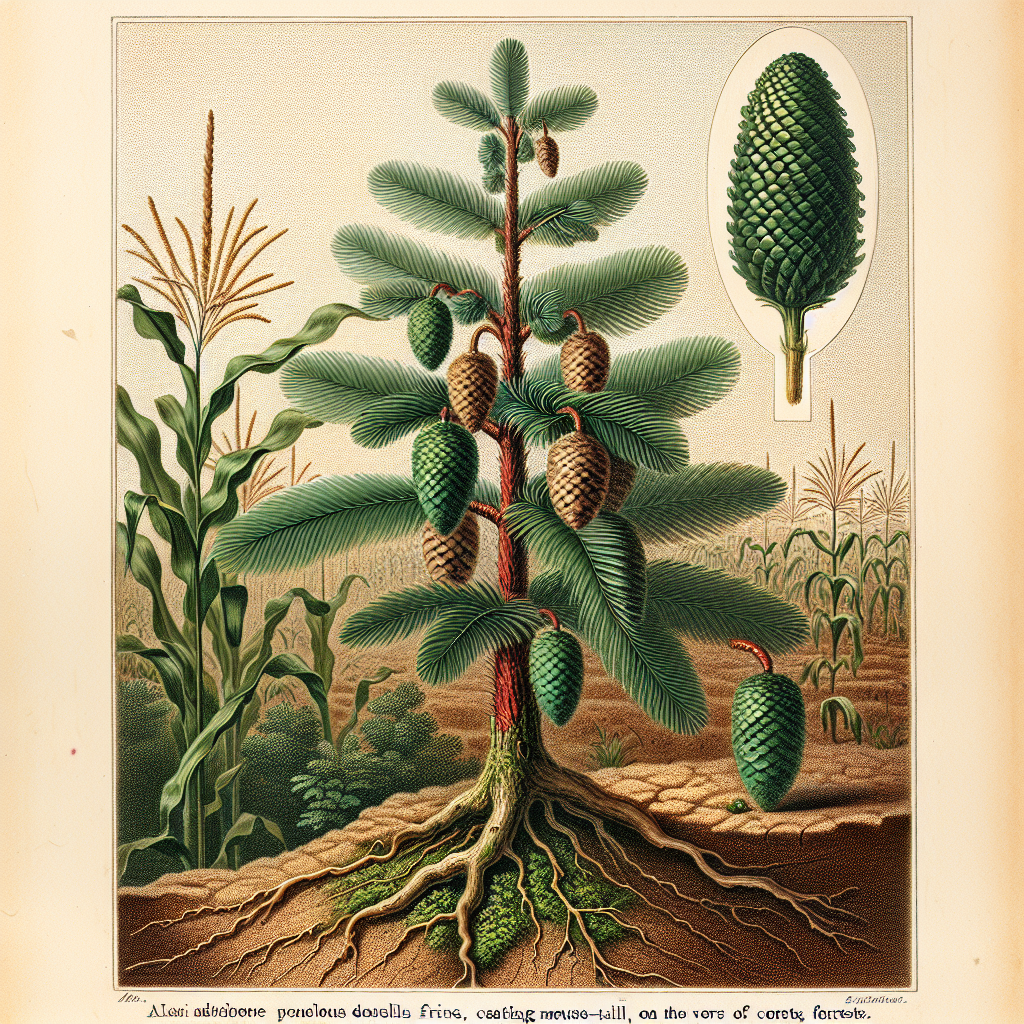
Douglas-fir (Pseudotsuga menziesii), commonly known as Douglas-fir, is one of North America's most iconic coniferous trees, prized for its rapid growth, straight trunk, and versatile timber used in construction, plywood, and Christmas trees. Native to the Pacific Northwest, Rocky Mountains, and parts of Mexico, it thrives in a wide range of elevations from sea level to over 9,000 feet. Botanically distinct from true firs (Abies spp.) due to its distinctive three-pointed bracts resembling mouse tails on its cones, Douglas-fir can reach heights of 200-300 feet with diameters up to 12 feet in old-growth forests.
While ecologically vital for wildlife habitat and carbon sequestration, Douglas-fir poses significant challenges in agricultural landscapes. It aggressively invades pastures, orchards, and crop fields, particularly in regions transitioning from forestry to farming. Seedlings and saplings spread via wind-dispersed seeds, forming dense thickets that outcompete desirable crops for light, water, and nutrients. In forestry-adjacent farms growing apple or pear trees, Douglas-fir can hybridize management issues by hosting shared pests such as spider mites. Early identification and proactive management are crucial to prevent establishment, as mature trees are extremely difficult to eradicate without heavy machinery. This comprehensive guide equips farmers with diagnostic skills, lifecycle insights, and organic control methods to safeguard crop yields. For more on integrating AI into invasive species management, check this insightful blog post.
Identifying Symptoms & Damage
Recognizing Douglas-fir invasion early is key to minimizing crop losses. Seedlings emerge as single, needle-like structures 1-2 cm tall, with soft, flat needles arranged spirally around reddish-brown stems. Young saplings (1-5 years) develop a conical shape with dense, dark green foliage that casts heavy shade, reducing photosynthesis in understory crops by up to 90%. Look for characteristic 2-4 inch cones hanging downward, unlike upright fir cones, adorned with unique trident bracts.
Damage manifests as stunted growth in adjacent crops due to resource competition. In corn fields, Douglas-fir saplings create 'skip rows' where seedlings fail to establish. Orchard trees like cherry suffer yellowing leaves and reduced fruit set from root competition and pest spillover. Needles dropping in autumn form thick litter layers that inhibit seed germination and foster fungal pathogens like root rot. Physical damage occurs when falling branches wound crop trunks during storms.
Diagnostic tips: Scrape bark to reveal orange cambium layer (vs. white in pines). Crush needles for citrusy scent. In mixed infestations, distinguish from true firs by pendulous cones and non-pubescent shoots. Scout field edges and windbreaks annually in spring; use transect sampling (10x10m plots) to quantify density. Threshold: >5 saplings per 100m² warrants action. Associated signs include increased deer browsing on crop edges seeking Douglas-fir alternatives and elevated whiteflies populations migrating from conifer hosts.
Lifecycle and Progression of Douglas-fir
Understanding the lifecycle enables targeted interventions. Douglas-fir is a long-lived perennial, maturing in 40-60 years but reproducing from age 10. Seeds, produced abundantly every 2-3 years in 'mast' events, are wind-dispersed up to 1 km, with 1-2 million seeds per mature tree. Germination occurs in mineral soil exposed by disturbance, peaking in moist spring conditions (60-80% viability).
Seedlings grow 1-2 feet/year initially, accelerating to 3-4 feet after year 5 under optimal light. Juveniles form dense self-thinning stands, suppressing competitors. Sexual maturity brings cone production; pollen (yellow clouds in spring) fertilizes female flowers, yielding serotinous cones that open post-fire or dry spells. Roots are extensive: deep taproots (>20 feet) plus laterals competing fiercely with shallow-rooted crops like potato.
Progression phases: Year 1-3 (vulnerable seedlings), Year 4-20 (sapling thickets), Year 20+ (pole to mature tree). Full canopy closure in 15-20 years excludes all understory growth. In invaded fields, progression leads to 50-70% pasture productivity loss within a decade. Winter dormancy sees needle retention, unlike deciduous invaders. For deeper insights into tree lifecycles impacting farms, see the Wiki page on apple.
Environmental Triggers & Risk Factors
Douglas-fir thrives in USDA zones 4-6, preferring cool, moist climates with 30-60 inches annual rainfall. Triggers include soil disturbance from tillage, exposing mineral seedbeds; fire suppression allowing seedling buildup; and abandoned fields. Risk factors: Proximity to seed sources (forests <1 mile), acidic soils (pH 5.5-6.5), and north-facing slopes retaining moisture.
Climate change exacerbates spread: Warmer winters extend viable germination windows, while droughts stress crops, favoring drought-tolerant Douglas-fir. Overgrazing by rabbits or livestock creates invasion corridors. Poor crop rotation neglecting cover crops like clover leaves bare soil vulnerable. High-risk crops include forage grasses near timberlands and young orchards. Monitor via soil seedbank tests; viability persists 3-5 years.
Organic Control & Treatment Plans
Organic management emphasizes prevention and mechanical/ biological methods. Seedling Stage (most effective): Hand-pull or hoe seedlings <2 feet, ensuring taproot removal. Mow repeatedly (every 4-6 weeks) during growing season to exhaust root reserves; 3-5 years depletes seedbank. Mulch with cardboard/sawdust (6-inch layer) suppresses germination.
Sapling Stage: Cut-stump treatment: Fell with pruning saw, immediately paint cut surface with 20-30% acetic acid (horticultural vinegar) or concentrated citrus oil. Girdle larger stems (remove 2-inch bark ring) in late summer. Goats or sheep grazing control regrowth; rotational browsing 2-3 times/year.
Integrated Plan: 1) Scout quarterly. 2) Solarize soil (clear plastic, 6 weeks summer) for high-density patches. 3) Plant competitive cover crops (rye). 4) Encourage natural enemies like deer browsing young shoots. Avoid burning due to seed stimulation. Monitor efficacy with pre/post density counts. For chemical-free alternatives, vinegar applications achieve 85-95% control on stumps <4 inches diameter. Combine with thyme companion planting to deter via allelopathy.
Preventing Douglas-fir in the Future
Prevention hinges on landscape hygiene. Maintain 100-foot buffers of dense, competitive vegetation (e.g., wheat borders) around fields. Eradicate source trees on adjacent properties via cooperative agreements. Use windbreaks of deciduous species that drop leaves, smothering conifer seeds.
Soil management: Avoid tillage; no-till with hairy vetch covers. Flame weeding edges annually kills seedlings pre-emergence. Monitor weather for mast years (high cone crops every 3 years). Certify weed-free hay/mulch. Long-term: Restore native prairies post-clearing to resist reinvasion. Annual audits reduce recurrence by 90%. Educate neighbors; community programs amplify success.
Crops Most Affected by Douglas-fir
Douglas-fir primarily impacts timber-adjacent agriculture. Pastures/Forages: Grasses lose 60-80% productivity under shade. Orchards: Apple, pear, peach suffer light reduction, pest reservoirs. Berries: Blueberry, raspberry invaded in Pacific Northwest. Row Crops: Corn, wheat edges overtaken. Christmas Tree Farms: Ironically, competes with itself and firs. Vineyards: Grapes shaded in foothills. Small farms near forests face highest risk; diversify with shade-tolerant undercrops like oyster mushroom.