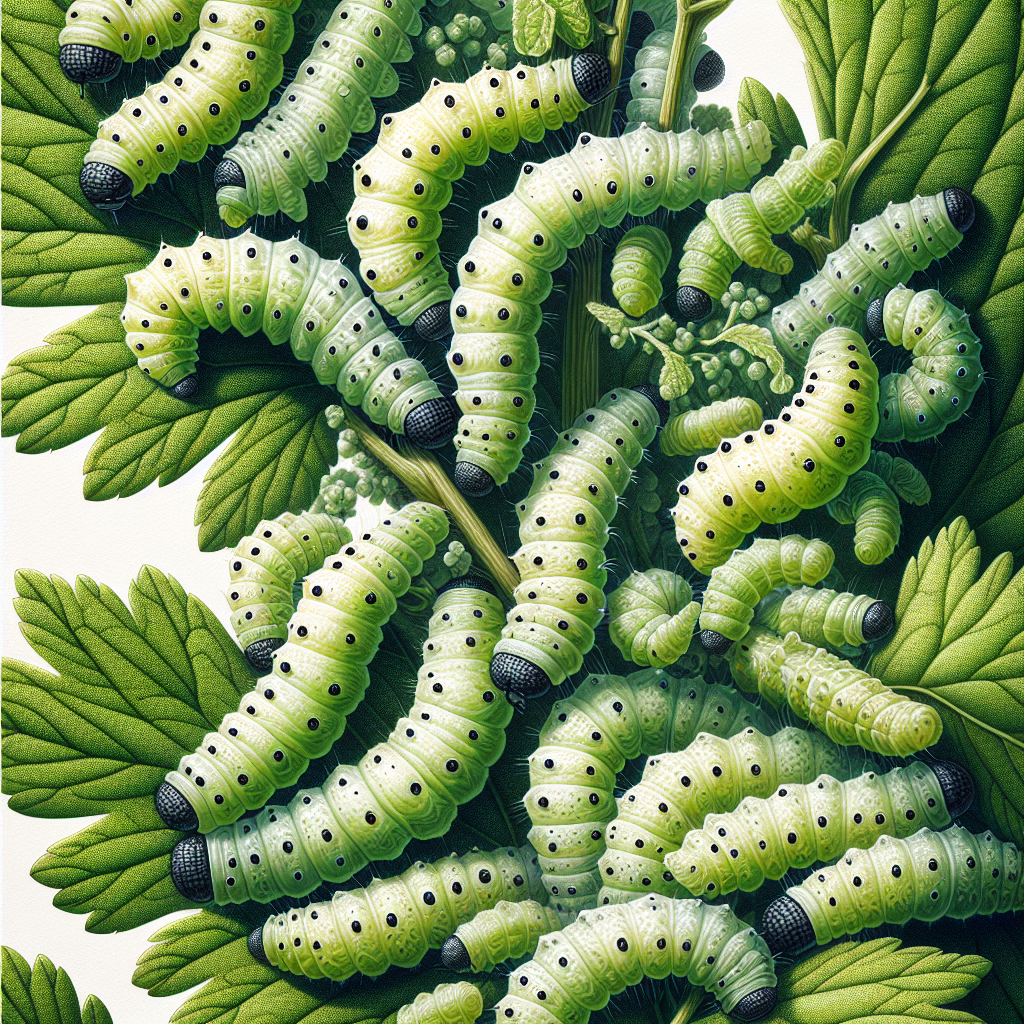
Introduction to Currant sawfly larvae
Currant sawfly larvae (Nematus ribesii) represent one of the most destructive pests targeting red currant, black currant, and white currant bushes, as well as gooseberry (Pixwell). These pale green, slug-like caterpillars emerge in spring and can rapidly defoliate entire plants, often leaving only the stems behind. A single infestation can reduce fruit yields by up to 90% if unchecked, making prompt identification and management essential for berry producers.
Native to Europe but widespread in North America, currant sawfly larvae thrive in temperate climates, completing 2-3 generations per year. Adults are small, black sawflies resembling wasps, but it's the larvae that cause the damage. This comprehensive guide draws from entomological research and practical agricultural experience to equip growers with professional-grade diagnostics and organic solutions. For more on related pests, see our sawflies wiki page. Understanding their behavior allows for targeted interventions that preserve plant health and maximize harvests.
In commercial and home settings, currant sawflies pose a recurring threat, especially in organic systems where chemical controls are avoided. Early scouting, combined with cultural and biological controls, forms the backbone of effective IPM (Integrated Pest Management). This pest's rapid reproduction demands vigilance from bud break through summer.
Identifying Symptoms & Damage
Spotting currant sawfly larvae early is critical to prevent skeletonization of foliage. Initial signs include small, translucent holes in young leaves, progressing to complete defoliation. Larvae are 10-15 mm long, pale green with black spots, a dark head, and a tapered tail, mimicking slugs but with three pairs of true legs and prolegs.
Damage typically starts on the lower leaves, with larvae feeding gregariously in groups of 10-50. Affected leaves show veins intact but tissues eaten away, giving a lacy appearance. Severe infestations leave bushes bare by early summer, weakening plants and reducing fruit set. Frass (droppings) is granular and green, often accumulating below.
Differentiate from caterpillars by the lack of prolegs on thoracic segments and slug-like gliding motion. Unlike aphids, no honeydew or sooty mold appears. Inspect undersides of leaves at dawn or dusk when larvae are active. Yellow sticky traps can capture adults, confirming presence. In gooseberry (Pixwell), damage mirrors currants but may include fruit scarring.
Secondary signs include stunted growth, fewer berries, and increased susceptibility to powdery mildew or American gooseberry mildew. Scouting weekly from April (Northern Hemisphere) reveals 80-90% of infestations before economic thresholds.
Lifecycle and Progression of Currant sawfly larvae
Currant sawfly lifecycle spans one year with 2-3 generations in warm regions. Adults emerge in spring (April-May), laying 50-100 eggs in rows on leaf undersides. Eggs hatch in 7-10 days into tiny larvae that feed for 2-3 weeks, molting four times.
Mature larvae drop to soil, spin cocoons, and pupate for 10-14 days. Second generation adults emerge in June-July, repeating the cycle. Third generation occurs in August-September in southern areas. Overwintering pupae survive 6-9 months in soil 5-10 cm deep.
Optimal conditions: 20-25°C, high humidity. Each female produces 70 eggs; populations explode without controls. For deeper insights, check our Spring Pest Patrol: Organic AI Strategies to Shield Your Crops from Common Invaders. Timing sprays or treatments to egg hatch (egg-laying scars visible) maximizes efficacy.
Environmental Triggers & Risk Factors
Currant sawfly larvae flourish in moist, mild springs (10-20°C), with peaks after warm rains. Overwintering pupae survive no-till soils, weedy orchards, and nearby wild hosts like elderberry (American). Monocultures of susceptible currants amplify risks.
Poor air circulation in dense plantings, excessive nitrogen fertilizer (lush growth attracts), and nearby raspberry or blackberry bushes increase infestations. Climate change extends generations northward. Soil pH 6.0-7.0 favors pupal survival; compacted soils hinder natural predators.
Risk mapping: High in USDA zones 4-8, UK hardiness H5-H6. Weeds like clover harbor adults. Avoid planting near imported currant worm hotspots.
Organic Control & Treatment Plans
Organic management emphasizes prevention and thresholds (10 larvae/plant). Cultural: Hand-pick larvae early morning into soapy water (efficacy 70-90%). Till soil in fall/winter to expose pupae to predators/birds.
Biological: Introduce nematodes (Steinernema carpocapsae) at pupation (late May, July) via soil drench; 80% control. Parasitic wasps (Braconidae) target 30-50% naturally. Encourage ladybugs via flowering borders.
Botanicals: Neem oil (azadirachtin) at egg hatch (0.5-1% solution, weekly); disrupts molting (85% reduction). Pyrethrum or spinosad (OMRI-listed) for outbreaks, targeting larvae only. Bt (Bacillus thuringiensis) ineffective on sawflies.
Treatment Timeline: Scout weekly; treat at 5-10 larvae/leaf. Rotate modes; avoid bloom to protect pollinators. Mulch with straw disrupts pupation. In trials, combined hand-picking + nematodes yields 95% control.
Monitor with traps; remove debris. For gooseberry sawfly, same protocols apply.
Preventing Currant sawfly larvae in the Future
Long-term prevention integrates IPM: Plant resistant varieties like 'Consort' black currant or 'Hinnonmaki Red'. Space bushes 1.5m for airflow. Remove wild hosts within 100m.
Fall tillage + solarization (clear plastic, 4-6 weeks) kills 70% pupae. Companion plant with garlic or onion (repels adults). Birdhouses attract wrens, devouring 50% larvae.
Annual soil tests; balance NPK to avoid lush growth. Prune for open canopy. Cover crops like mustard biofumigate soil. Monitor degree-days (base 10°C) for first flight.
Succession plantings stagger risk. Clean equipment prevents spread. Organic certification? These methods comply fully.
Crops Most Affected by Currant sawfly larvae
Primarily red currant, black currant, white currant, and gooseberries (80% damage). Secondary: raspberry, blackberry, elderberry (American). Rare on strawberry or blueberry.
Commercial impact: Berry farms lose $1000s/ha untreated. Home gardens see total defoliation. Focus protection here for ROI.