Introduction to Red Currant
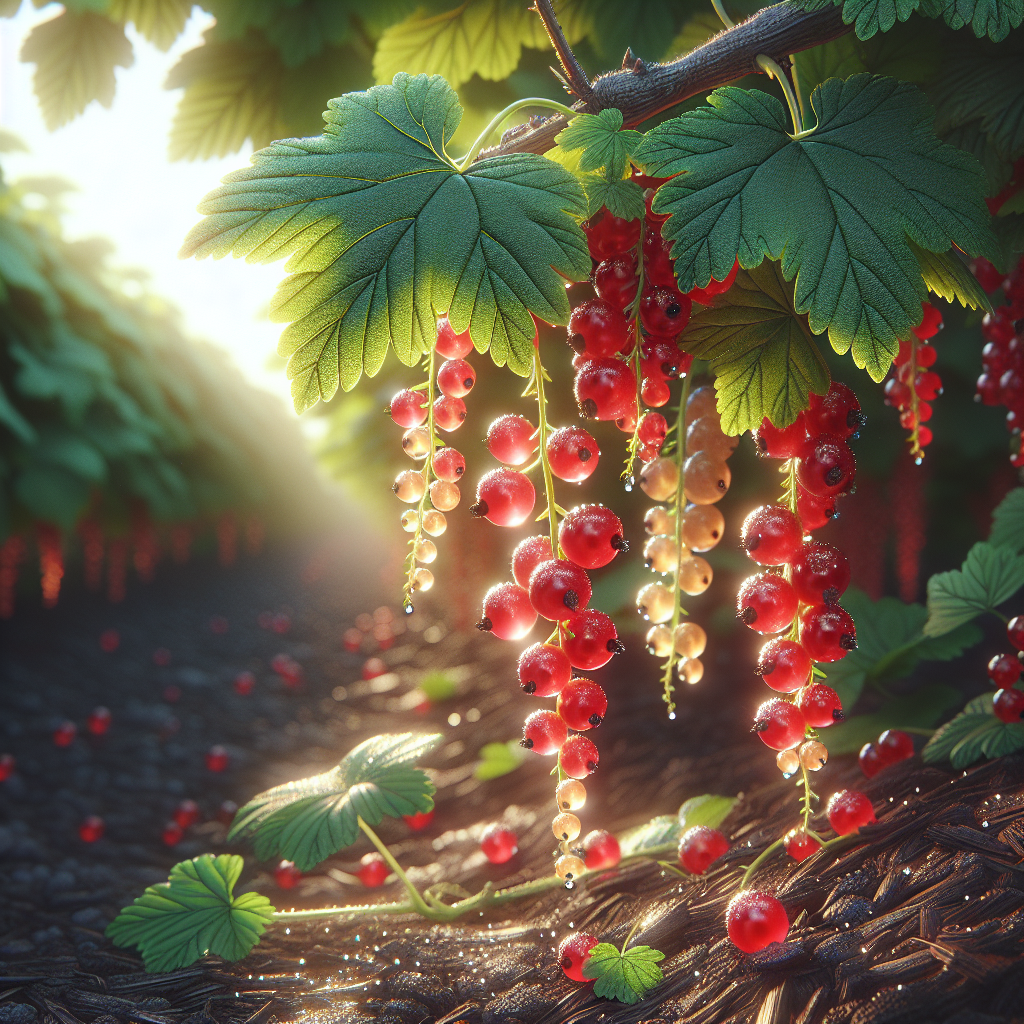
A classic European berry crop, this species has been cultivated for centuries for fresh use, preserves, cordials, syrups, desserts, and high-pectin jelly production. Its fruits are typically bright red, glossy, and borne in dangling strings known as strigs, giving the plant strong ornamental value as well as commercial usefulness. Compared with black currants, red currants are generally milder in aroma, more acid-forward, and especially valued in culinary processing because their flavor remains vivid after cooking.
In professional production, the crop is attractive because shrubs are compact, winter-hardy, and productive in relatively small spaces. Plants usually begin meaningful harvests within 2 to 3 years after planting and can remain economically productive for 10 to 15 years or more with disciplined pruning and disease management. Red currants are also more shade-tolerant than many fruit crops, making them useful on the cooler edge of orchards, windbreak margins, north-facing slopes, or mixed berry systems.
Historically, currants were widely grown in northern and central Europe, especially in the United Kingdom, Netherlands, Germany, Poland, and Scandinavia. Modern cultivars differ in berry size, truss length, cluster uniformity, flavor balance, and ripening period. Popular traits in improved selections include resistance to spring frost damage, upright habit for easier picking, and tolerance to foliar diseases. If you already grow Black Currant, you will notice red currants usually need similarly cool conditions but are often managed for cleaner, more open architecture because fruit display and air circulation strongly influence harvest quality.
Botanical Profile of Red Currant
This shrub belongs to the Grossulariaceae family and is closely related to white currants and gooseberries. Botanically, red currants are deciduous, thornless, multi-stemmed shrubs with a naturally rounded to slightly upright habit, typically reaching 1 to 1.5 meters tall and wide under standard management, though vigorous cultivars can exceed this in fertile soils.
Leaves are palmately lobed, medium green, and lightly aromatic when crushed, though far less resinous than black currant foliage. Flowers are small, greenish to yellow-green, and borne in spring on racemes that later elongate into fruiting strigs. Most cultivars are self-fertile, but fruit set and berry size often improve where pollinator activity is strong and multiple cultivars bloom together.
Fruit is technically a true berry, usually 6 to 10 mm in diameter depending on cultivar and crop load. Berries ripen in clusters rather than singly, and this trait matters practically: commercial and skilled home growers harvest whole trusses to reduce skin damage and preserve shelf life. Red coloration develops before full flavor, so visual ripeness alone is not a perfect indicator. Fully mature fruit becomes bright to deep translucent red, softens slightly, and accumulates enough sugars to balance acidity without losing firmness.
The bearing habit is crucial to pruning decisions. Red currants fruit most heavily on spurs borne on 2- and 3-year-old wood, though they can continue cropping on older branches if those branches remain healthy and well lit. Unlike cane berries that depend on rapid cane turnover, currants reward selective retention of productive framework stems. Good pruning therefore aims not at constant renewal of all wood, but at balancing young replacement shoots with mature fruiting branches.
Chilling is important for reliable dormancy release. The plant needs a true winter rest and is poorly adapted to hot winter climates with insufficient cold accumulation. In mild regions, leaf-out can be uneven, flowering may be weak, and fruit set often suffers.
Soil, pH, and Climate Requirements for Red Currant
This crop performs best in cool-temperate climates with cold winters and moderate summers. Ideal growing conditions are USDA zones roughly 3 through 7, with some success in zone 8 if summers are not excessively hot and plants receive afternoon shade. The best sites have winter chilling, spring moisture, and summer temperatures that remain below prolonged extremes. Once daytime highs repeatedly exceed 29 to 32°C, fruit quality declines, sunscald risk rises, and leaf stress becomes common.
An ideal planting site receives full sun in cool northern regions or morning sun with light afternoon shade in warmer temperate areas. Total light should still be sufficient for flowering and sugar accumulation; dense shade produces weak wood, elongated internodes, and poor truss fill. Air movement is equally important. A sheltered but not stagnant site helps reduce mildew, Leaf Spot, and Botrytis around ripening clusters.
Soil should be deep, moisture-retentive, and well drained, with high organic matter. The crop dislikes drought stress but also performs poorly in waterlogged ground. Loam or sandy loam with 4 to 6% organic matter is excellent. Heavy clay can work if drainage is improved and the site is not compacted. In poorly aerated soil, roots become shallow and brittle, leaves may yellow from impaired nutrient uptake, and shrubs show reduced shoot extension.
The preferred pH range is about 6.0 to 6.8, though plants tolerate 5.5 to 7.0 if fertility is balanced. Below pH 5.5, calcium and magnesium often become limiting and microbial activity slows. Above pH 7.0, micronutrient lockout, particularly iron and manganese, can lead to interveinal chlorosis on young foliage. Before planting, a professional approach is to conduct a soil test and amend 3 to 6 months in advance rather than at the moment of planting.
Moisture management is one of the defining factors in successful red currant production. The root zone should remain evenly moist, especially from bud break through berry sizing. As a practical target, maintain soil moisture at roughly 60 to 80% of field capacity in the top 20 to 30 cm of soil. In field terms, the soil should feel cool and slightly cohesive when squeezed, but not sticky, shiny, or anaerobic-smelling. If the top 5 cm repeatedly dries to powder between irrigations, expect smaller berries and increased fruit drop. If the soil stays saturated for days, symptoms may include limp foliage despite wet ground, yellow lower leaves, weak new shoots, and a sour smell near the root zone.
Mulching is highly beneficial. A 5 to 8 cm layer of weed-free compost, shredded leaves, aged bark, or straw helps moderate temperature swings, suppress weeds, and maintain shallow feeder roots in active condition. Keep mulch a few centimeters back from the crown to reduce rot and vole pressure.
For broader soil resilience strategies in perennial fruit blocks, see soil health tips.
Step-by-Step Planting & Propagation
Start with dormant bare-root plants or healthy container-grown stock from reputable nurseries. Choose disease-free plants with 3 to 5 strong shoots and a dense, fibrous root system. Avoid pot-bound plants with circling roots or bare-root stock with dried, brittle roots.
Plant in late autumn after leaf fall or in very early spring before bud break. In cold regions, spring planting is often safer if winter heaving is a concern. Prepare the site by removing perennial weeds thoroughly; currants compete poorly against grass and rhizomatous weeds during establishment.
Space plants 1.2 to 1.5 meters apart in rows 1.8 to 2.4 meters apart for hand-harvest systems. Tighter spacing can work in highly managed gardens, but shrubs need interior light penetration for healthy spur development. Dig a hole wide enough to spread roots naturally. Mix in finished compost if soil is low in organic matter, but do not create a rich pocket in otherwise poor subsoil; the goal is broad soil improvement, not a bathtub effect.
Set plants slightly deeper than they stood in the nursery, usually 5 to 8 cm deeper, to encourage additional basal shoots. Spread roots, backfill with friable soil, firm gently, and water deeply to eliminate air pockets. After planting bare-root shrubs, prune top growth back to 2 to 4 buds above ground to stimulate strong framework stems from the base. This hard heading can feel severe, but it improves long-term structure.
Propagation is usually done from hardwood cuttings. In late autumn to winter, take pencil-thick, disease-free one-year shoots 20 to 25 cm long. Make the basal cut just below a bud and the top cut above a bud. Insert cuttings into a nursery bed or propagation trench so that only 2 buds remain above the surface. Keep evenly moist through spring and summer. Rooting is generally reliable, and transplants are often ready by the following dormant season.
Layering is another excellent method for preserving cultivar identity. A low, flexible shoot can be pegged to the soil in spring, lightly wounded, and covered with 5 to 8 cm of soil while the tip remains exposed. By autumn or the next spring, rooted sections can be severed and transplanted.
Seed propagation is uncommon outside breeding work because seedlings are variable and do not come true to cultivar.
Care & Maintenance regimes for Red Currant
During the first growing season, the main goal is root establishment and framework development. Provide about 2.5 to 4 cm of water per week from rain plus irrigation, adjusted for soil type. Sandy soils may need smaller, more frequent irrigations; loams can often be watered deeply once or twice weekly. Drip irrigation is preferred because it maintains even root-zone moisture while keeping foliage dry.
Mature shrubs should receive consistent moisture from bloom through harvest. Water stress during flowering can reduce berry set; stress during fruit enlargement leads to smaller berries and more uneven ripening. A useful rule is to irrigate before leaves lose turgor. If midday wilt persists into evening, the plant is already under significant stress. Conversely, overwatering often shows as pale leaves, reduced vigor, soft unripe fruit, and poor soil smell rather than visible thirst.
Fertilization should be moderate, not excessive. Overfed shrubs produce lush, disease-prone growth at the expense of fruit quality. In most garden and small-farm settings, an annual topdressing of compost plus a balanced spring feed is sufficient. As a rough annual target for established plantings, supply the equivalent of 40 to 80 g actual nitrogen per mature bush depending on soil fertility, organic matter, and vigor. Split applications are safer on lighter soils: half at bud swell, half just after fruit set. If shoot growth exceeds about 25 to 30 cm yearly on most framework branches, nitrogen is probably adequate or even high. If annual extension is consistently under 10 to 15 cm and leaves are pale, nutrition may be limiting.
Pruning is the skill that separates mediocre from excellent red currant production. In years 1 to 3, build a bush with 8 to 12 well-spaced stems of mixed ages. Each winter, remove weak, crossing, low, or inward-growing shoots. Preserve the strongest young basal shoots as replacements. Once the bush matures, aim to maintain a balance of one-, two-, and three-year-old wood, while gradually removing the oldest, least productive stems at the base.
A practical mature pruning system is:
- retain 2 to 4 strong one-year shoots,
- retain 2 to 4 two-year stems,
- retain 2 to 4 three-year stems,
- remove a similar number of older stems annually.
Also shorten vigorous laterals if needed to keep the center open, but avoid excessive heading of all shoots because that can stimulate rank vegetative growth. The objective is a goblet-like, light-filled shrub with fruiting spurs distributed along well-exposed branches.
Weed control is essential because the crop has shallow feeder roots. Maintain a weed-free strip at least 60 to 90 cm around each bush. Hand weeding, mulching, shallow hoeing, and organic sheet mulches are safer than deep cultivation, which damages roots and reduces drought tolerance.
Bird protection can be necessary as fruit colors. Netting installed before full red color develops is the most reliable solution. Secure edges well because Birds quickly learn to exploit gaps.
Pests, Diseases & Organic Management
Common pests include Aphids, Currant Sawfly, Spider Mites, Scale Insects, and Birds. Aphids often cluster on young shoot tips, causing curling and sticky honeydew. Early infestations can be suppressed by strong water sprays, encouraging predators, or applying insecticidal soap with thorough underside coverage. Avoid overfertilizing with nitrogen, which makes tender growth more attractive.
Currant Sawfly larvae can defoliate shrubs rapidly, sometimes stripping leaves in a few days. Inspect regularly from spring onward, especially the leaf undersides. Hand removal works in small plantings. Spinosad or neem-based products may be useful in organic systems when larvae are young, but timing is critical.
Spider Mites are more likely in hot, dusty conditions. Fine stippling, bronzing, and webbing are typical signs. Increase humidity around the planting through mulch and dust reduction, and use horticultural oils only when temperatures are suitable and plants are not drought-stressed.
Major diseases include Powdery Mildew, Anthracnose, Leaf Spot, Botrytis, Cane Dieback, and Root Rots in wet soils. Powdery Mildew appears as white, dusty growth on leaves and young tips, especially in shaded or congested canopies. Good spacing, open pruning, and drip irrigation are the first lines of defense. Anthracnose and Leaf Spots cause dark lesions and premature defoliation, which weakens the plant and reduces next year’s crop. Sanitation matters: remove fallen leaves, prune for airflow, and avoid overhead irrigation.
Botrytis can attack flowers and ripening clusters in prolonged damp weather. Dense canopies, weed pressure, and delayed harvest worsen the problem. Harvest promptly and avoid damaging berries. If repeated problems occur, thin canopy density more aggressively during dormant pruning.
Root diseases are almost always related to drainage failures. If a plant remains stunted with yellow foliage, poor shoot growth, and dieback despite irrigation, inspect drainage before adding fertilizer. Correcting waterlogging solves more currant “nutrient problems” than additional feeding does.
In some regions, currants have regulatory relevance because certain Ribes species can host White Pine Blister Rust. Local laws vary; always verify whether restrictions apply before establishing a planting near five-needle pines.
Organic management works best as an integrated system: resistant cultivars, open pruning, consistent mulch, sanitation, beneficial insect habitat, and frequent scouting. Flowering support plants such as Yarrow, Thyme, and Nasturtium can improve predator and pollinator presence around currant blocks when placed nearby without crowding the shrubs.
Harvesting, Curing & Optimal Storage
Harvest usually occurs in early to mid-summer, depending on cultivar and climate. Unlike some berries, red currants can often hang on the bush for a short period after coloring without immediate collapse, which helps spread labor. For the best balance of acidity and sweetness, wait until the entire truss is evenly colored and berries are fully translucent. Immature berries are more opaque, sharply sour, and less aromatic.
Pick in cool morning conditions after dew has dried. Harvest whole trusses by clipping or gently snapping the stem, rather than stripping individual berries unless they are for immediate processing. Whole-truss harvest reduces juice leakage, maintains appearance, and extends storage life. Handle shallowly and avoid deep containers that crush the bottom layers.
There is no true curing stage as with onions or winter squash, but postharvest conditioning still matters. Rapid field heat removal is beneficial. Cool fruit to 0 to 2°C as soon as possible with high relative humidity, ideally 90 to 95%. At these conditions, sound fruit may store 1 to 2 weeks, sometimes a bit longer if harvested with stems intact and kept dry. Without refrigeration, shelf life is short.
Do not wash berries before storage unless necessary; wash just before use. Excess free moisture encourages mold. For long-term preservation, currants freeze exceptionally well. Freeze berries first in a single layer, then pack into airtight containers. They are also ideal for juice, jelly, syrup, coulis, and fermentation.
Signs of overripe fruit include soft skins, splitting, dull color, fermented smell, and berry drop from the truss. In wet seasons, delayed harvest significantly increases Botrytis risk.
Companion Planting for Red Currant
The most useful companions are low-competition species that improve beneficial insect activity, suppress weeds, or occupy the soil surface without aggressively stealing moisture from shallow currant roots. The best companions are usually not tall vegetables but restrained insectary herbs and flowers.
Yarrow is particularly valuable because its flat flower clusters attract hoverflies, parasitic wasps, and other beneficial insects that help suppress Aphids and small caterpillars. It is drought tolerant once established, but it should be planted at the edge of the currant row rather than directly at the crown.
Thyme works well as a low-growing aromatic groundcover in well-drained sites. It can reduce bare-soil exposure, limit weed germination, and provide nectar for small pollinators. Keep a small open ring around the currant base so woody crowns do not stay damp.
Nasturtium functions as a sacrificial and pollinator-friendly companion in mixed gardens. It can draw Aphids away from tender currant shoots and adds living mulch value where summers are not excessively dry. Monitor it so it does not smother young shrubs.
A nitrogen-fixing living mulch such as Clover can also be useful between rows, particularly in larger plantings, provided it is mowed low and not allowed to compete directly within the root zone. In high-rainfall sites, clover alleyways improve trafficability and soil structure, but within 30 to 45 cm of the shrub crown, weed-free mulch is usually still superior.
Avoid companions that are tall, thirsty, or heavily shading, and avoid dense plantings that block airflow around the bush. Red currants benefit from biologically diverse surroundings, but they still require an open canopy, consistent root moisture, and easy access for harvesting and pruning.