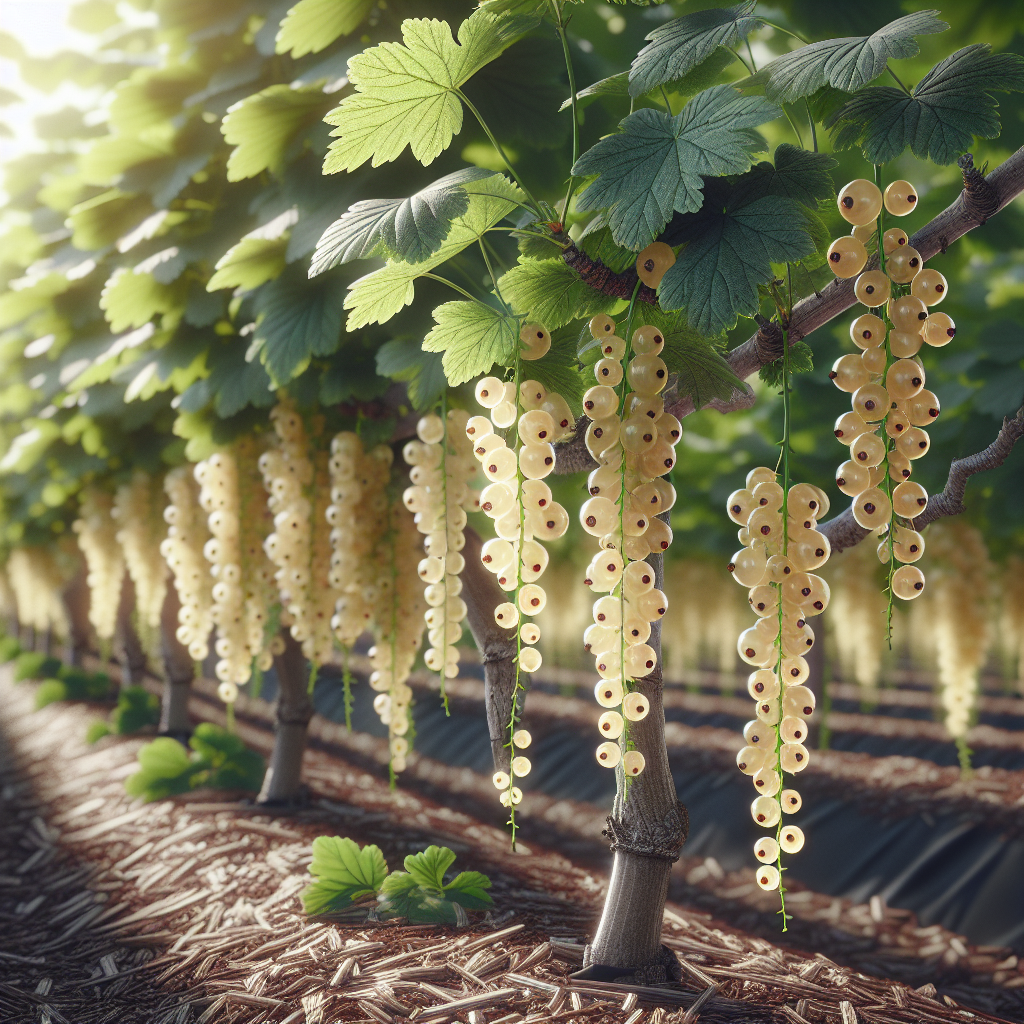
Introduction to White Currant
A white currant planting offers something unusual in the berry garden: clusters of translucent cream to straw-colored fruit with a gentle, less acidic flavor than red currants and a cleaner finish than many black currants. These shrubs have been cultivated in Europe for centuries, especially in kitchen gardens and mixed fruit borders, where their ornamental racemes and reliable cropping made them valuable both for fresh eating and preserves. Historically, white currants were often selected as chance pale-fruited sports from red currant populations, then maintained vegetatively because seed propagation does not reliably reproduce the same fruit quality.
For growers, the main attraction is the balance between productivity and resilience. White currants tolerate winters well, fruit on relatively compact bushes, and can succeed in partially shaded sites where some fruiting crops struggle. Their fruit is typically borne in pendulous strings called strigs, and the berries are delicate-skinned, which means harvest timing and handling matter. While they are sometimes overshadowed by Red Currant in commercial discussions, white currants deserve serious consideration for home orchards, small farms, edible landscapes, and specialty market production.
From a culinary perspective, the berries are prized for fresh snacking, garnishes, jellies, syrups, desserts, and white or blush-colored preserves. Because the fruits are lower in anthocyanin pigments than red or black currants, they often have a more honeyed, floral presentation. Good cultivars can be notably sweet when fully ripe, but sugar accumulation depends heavily on sunlight exposure, canopy openness, and consistent soil moisture through fruit swell.
Botanical Profile of White Currant
This shrub belongs to the Grossulariaceae family. White currants are not a separate species in most horticultural classifications; they are white-fruited forms of Ribes rubrum, the same species that includes most red currants. The plants are deciduous, multi-stemmed shrubs typically reaching 1 to 1.5 meters tall and wide, though mature specimens can exceed this under ideal conditions and lax pruning.
Growth habit is upright to arching, with new canes emerging from the crown and older branches gradually becoming less productive. Leaves are palmately lobed, medium green, and mildly aromatic when crushed. Flowers are small, greenish to yellowish, and arranged in drooping racemes in spring. Pollination is usually achieved by bees and other small insects. Many cultivars are self-fertile, but cross-pollination between compatible currant cultivars can improve fruit set and berry size.
The fruit develops on short lateral spurs and young wood, especially one-, two-, and three-year-old branches. This age-related fruiting pattern is central to pruning strategy. Very old wood tends to produce shorter strigs, fewer berries, and smaller fruit. A well-managed bush therefore contains a rotating framework of young and middle-aged canes rather than a thicket of old stems.
Notable cultivar characteristics vary. 'White Grape' is a classic heirloom type known for mild, sweet flavor and good dessert quality. 'Blanka' is often favored for heavy yields and long strigs, making harvest easier. 'Versailles Blanche' is another traditional cultivar valued for pale berries and dependable cropping. In cooler climates, flavor tends to be bright and aromatic; in hotter regions, fruit quality may suffer if plants are exposed to intense afternoon heat or drought stress.
White currants break dormancy early, flower relatively early in spring, and can therefore be vulnerable to late frosts in frost-pocket locations. However, the dormant shrubs themselves are highly winter hardy. Their chilling requirement is generally well aligned with cold-temperate regions, and they perform best where winters are cool enough to satisfy dormancy and summers are not excessively hot.
Soil, pH, and Climate Requirements for White Currant
The ideal soil is deep, moisture-retentive but free-draining loam rich in organic matter. White currants strongly prefer even root-zone moisture, yet they resent waterlogging. A soil that stays saturated for more than 24 to 48 hours after heavy rain greatly increases the risk of root stress, Phytophthora problems, weak growth, and premature leaf yellowing. At the same time, shallow, sandy soils that dry rapidly during flowering and fruit fill often lead to small berries, shortened strigs, and poor sweetness.
Best soil pH is slightly acidic to neutral, roughly 6.0 to 6.8, though plants can still perform reasonably from about 5.5 to 7.0 if fertility and drainage are good. Below pH 5.5, calcium and magnesium availability may decline and root performance can suffer. Above about 7.0, iron and manganese deficiencies become more likely, particularly in calcareous soils; symptoms include interveinal chlorosis on younger leaves while veins remain green. If soil is strongly alkaline, incorporate organic matter repeatedly and use acid-forming amendments only when backed by a soil test.
Before planting, work in 5 to 10 cm of mature compost or well-rotted manure over the planting zone and loosen soil to at least 30 cm deep. Avoid fresh manure, which can stimulate lush, disease-prone growth. White currants are moderate feeders, not heavy nitrogen-demanding shrubs. Excess nitrogen causes long, soft shoots, delayed hardening before winter, and greater susceptibility to Aphids and fungal disease.
Climatically, the crop is best suited to temperate and cool-temperate regions. Optimal growing conditions include cold winters, a frost-free flowering period, and summer temperatures that commonly remain between 15 and 27°C. Plants can tolerate colder winters far below freezing when dormant, but prolonged summer heat above 30°C, especially when paired with dry winds, can reduce fruit size, bleach foliage, and induce sunscald on exposed berries.
A site with full sun in cool climates is ideal. In warmer temperate zones, morning sun with light afternoon shade is often superior, protecting fruit quality and reducing heat stress. Good air movement is important to reduce foliar disease, but avoid exposed wind corridors that desiccate shoots and interfere with pollinator activity during bloom. Low-lying frost pockets are risky because flowers and newly set fruit can be damaged by late spring freezes.
Mulching is especially beneficial. A 5 to 8 cm organic mulch layer helps stabilize soil moisture, limit weed competition, moderate root-zone temperature, and add humus over time. Keep mulch 5 to 8 cm away from the crown and basal stems to avoid bark rot and vole shelter.
For a broader framework on building resilient berry soils, see soil health strategies.
Step-by-Step Planting & Propagation
Plant dormant bare-root bushes in late fall through early spring wherever the soil is workable and not frozen. Container-grown plants can also be set out in spring or autumn, but planting during cool weather gives the root system time to establish before summer demand rises.
- Choose certified disease-free stock from a reputable nursery. Select plants with 3 to 5 strong shoots and a healthy, fibrous root system.
- Prepare the site by removing perennial weeds thoroughly. Currants compete poorly with couch grass, bindweed, and other aggressive root systems.
- Dig a hole wide enough to spread the roots naturally, usually 40 to 45 cm wide and 30 to 35 cm deep for a bare-root plant. Avoid digging a narrow, polished-sided hole in heavy clay.
- Incorporate compost into the backfill if the native soil is low in organic matter, but do not create a radically different pocket that traps water.
- Set the bush slightly deeper than it grew in the nursery, usually 5 cm deeper. This encourages the development of additional basal shoots and a stronger stool.
- Space plants 1.2 to 1.5 meters apart in-row, with 1.8 to 2.4 meters between rows depending on cultivar vigor and access needs.
- Firm the soil gently around roots to remove air gaps, then water deeply to settle the planting zone.
- After planting, prune existing shoots back by about one-third to outward-facing buds if the nursery stock is tall and unbalanced. With very weak or damaged stock, harder heading may be justified.
Propagation is usually done by hardwood cuttings, layering, or stooling rather than seed. Hardwood cuttings are the simplest and most reliable for preserving cultivar identity. In late autumn after leaf drop, take pencil-thick cuttings 20 to 30 cm long from mature current-season wood. Remove the soft tip, cut just below a bud at the base, and insert the cutting into a prepared nursery bed or potting trench so that only the top 2 to 3 buds remain above the soil. Rooting is often successful without hormone treatment, though rooting powder can increase uniformity.
Layering also works well. Bend a low, flexible cane to the ground in spring, lightly wound the underside, pin it under soil, and leave the tip exposed. By autumn or the following dormant season, roots should have formed at the buried section.
Commercial growers may train white currants as bushes, cordons, or fans. Bush form is easiest for general production. Cordons are useful in narrow spaces and can improve light interception, but they require more deliberate pruning and support.
Care & Maintenance regimes for White Currant
Irrigation should be steady rather than frequent and shallow. The root zone should remain evenly moist to a depth of 15 to 25 cm during establishment and fruit development. As a practical field guide, squeeze a handful of soil from the root zone: it should hold together lightly but not ooze water. If it breaks apart as dust, irrigation is overdue; if it forms a slick, sticky mass and smells anaerobic, the site is too wet.
Young plants generally need 2.5 to 4 cm of water per week from rain or irrigation during the first growing season, adjusted for soil type and temperature. Mature plants may need less frequent but deeper watering, especially in loam soils. Critical periods are bloom, fruit set, berry swell, and the six weeks following harvest when buds for the next season are developing. Drought stress at any of these stages can reduce both current and future yields.
Signs of underwatering include dull, limp leaves during morning hours, reduced shoot extension, small berries, and fruit drop. Signs of overwatering include persistent yellowing lower leaves, poor vigor despite ample fertility, stem base darkening, and a sour smell in the soil. Drip irrigation is ideal because it keeps foliage dry and delivers water directly to the root zone.
Fertilization should be moderate and timed carefully. In early spring, apply a balanced organic fertilizer or a light nitrogen dressing once growth begins. A common approach is 2 to 4 kg of well-rotted compost per bush annually plus a modest supplemental feeding based on soil test results. In low-fertility soils, a spring application equivalent to 30 to 50 g actual nitrogen per mature plant may be appropriate, but avoid late-summer nitrogen, which can push soft growth vulnerable to winter injury.
Potassium is particularly important for fruit quality, sugar movement, and cane strength. Where soil tests show deficiency, sulfate of potash or wood ash in cautious, measured amounts can help, though ash should be used only where pH will not be pushed too high. Magnesium deficiency may appear in sandy or acidic soils as interveinal yellowing on older leaves; correct with dolomitic lime or magnesium sulfate according to testing.
Pruning is the central skill in white currant culture. The aim is to maintain 8 to 12 productive main branches of mixed ages with good light penetration. During the first three years, build a framework by retaining strong young shoots and removing weak, crossing, or ground-hugging stems. Once the bush is established, remove about one-quarter to one-third of the oldest wood each dormant season, cutting it to the base and replacing it with vigorous young canes.
Also shorten overcrowded side shoots where needed to maintain an open center and improve airflow. Because fruit is borne on spurs and younger wood, indiscriminate shearing is a mistake; it creates congestion and sacrifices fruiting structure. Summer pruning is minimal, but damaged, diseased, or heavily shading shoots can be thinned after harvest.
Weed management should be persistent but shallow. Currants have relatively shallow feeder roots, so aggressive hoeing can damage the plant. Maintain a weed-free strip at least 60 to 90 cm around each bush. Organic mulches, hand weeding, landscape fabric in commercial rows, or shallow cultivation are all workable options.
Bird pressure can be severe, especially as berries turn translucent and sweet. Netting is often essential for reliable harvest. Install it before full ripening and secure it at the base to exclude blackBirds, thrushes, and other berry-feeding species.
Pests, Diseases & Organic Management
Aphids are among the most common pests, often clustering on young shoot tips and the undersides of leaves. They cause curling, sticky honeydew, and distorted growth. Small infestations can be suppressed by pruning out infested tips, encouraging predators, and using insecticidal soap with full coverage. Avoid excessive nitrogen, which drives lush succulent growth attractive to Aphids.
Currant sawfly larvae can skeletonize leaves rapidly, sometimes stripping a bush in a short period. Regular inspection from spring onward is important. Hand-picking works in small plantings; Bacillus thuringiensis is not effective because sawflies are not caterpillars. Spinosad may be used where permitted in organic-compatible systems, but timing must protect pollinators.
Spider mites become more problematic during hot, dusty weather and cause stippling, bronzing, and webbing. Preventive steps include reducing drought stress, avoiding dusty conditions, and preserving predatory mites.
Birds are often the biggest practical pest during ripening. Netting remains the most dependable control. Reflective tape and scare devices have limited success once Birds learn the food source is real.
Major diseases include Powdery mildew, Leaf spot, Cane dieback, and Root disorders in poorly drained soils. Powdery mildew appears as a whitish coating on leaves and young shoots, sometimes causing distorted growth. It is favored by poor airflow and dense canopies. Space plants correctly, prune for openness, avoid overhead irrigation late in the day, and remove infected material. Sulfur-based sprays can help if applied preventively and within label restrictions.
Leaf spots, including Anthracnose-like symptoms, usually begin as small dark lesions that enlarge and may trigger premature defoliation. Repeated early leaf loss weakens the bush and lowers next year's crop. Sanitation is critical: remove and destroy fallen leaves, maintain mulch, and irrigate at soil level. Copper products may provide suppression, but overuse can accumulate copper in soil.
Stem or Cane dieback often enters through wounds, winter injury, or neglected old wood. Prune out affected branches below the damaged zone during dry weather and disinfect tools if disease pressure is high.
White pine blister rust regulations affect currant growing in some regions because Ribes species can serve as alternate hosts for the pathogen. Before planting, check local legal restrictions and disease prevalence. Where blister rust is a concern, site selection, resistant material, and regional guidance are essential.
Organic management works best as a system rather than a spray schedule: disease-free planting stock, proper spacing, mulch, balanced nutrition, sanitation, beneficial insect habitat, and regular scouting. A stressed currant bush attracts and succumbs to far more problems than a well-sited, well-pruned one.
Harvesting, Curing & Optimal Storage
Harvest begins when berries reach full translucent coloration, soften slightly, and taste sweet with balanced acidity. Unlike some fruits, white currants do not continue improving significantly once picked, so premature harvest leads to bland or sharply acidic berries. Fruit on a single strig often ripens fairly evenly, allowing cluster harvest.
Pick in the cool of morning after dew has dried. Harvest whole strigs rather than individual berries whenever possible; this reduces skin tearing and improves presentation. Use shallow containers because the fruit is delicate and can crush under weight. Avoid harvesting during rain or immediately after irrigation, as wet berries are more prone to splitting and postharvest breakdown.
There is no true curing stage as with onions or winter squash. Instead, the priority is rapid cooling. Move harvested fruit to shade immediately and refrigerate as soon as possible. Ideal storage is near 0 to 2°C with high relative humidity around 90 to 95%. Under these conditions, white currants may keep for about 1 to 2 weeks, though quality is best when marketed or consumed quickly.
Do not wash before storage unless necessary; excess surface moisture shortens shelf life. If washing is required, dry the fruit thoroughly on absorbent towels before chilling. For longer preservation, berries can be frozen either on or off the strigs. Individually quick-frozen fruit retains quality better than berries packed wet in bulk. White currants also process exceptionally well into jelly because their natural pectin content is useful for setting.
Yield varies with cultivar, bush age, pruning quality, and climate. A healthy mature bush may produce 2 to 4 kg of fruit annually, with higher yields possible under excellent management. Commercial value often depends less on total tonnage than on appearance: intact pale strigs, clean fruit, and careful packing command premium interest in specialty markets.
Companion Planting for White Currant
Useful companions are those that improve pollinator activity, support beneficial insects, suppress weeds, or occupy the shallow margins of the root zone without creating strong competition. Thyme is especially valuable as a low-growing aromatic groundcover near but not directly against the crown. It attracts pollinators when flowering, helps shade soil, and does not usually compete aggressively for space.
Yarrow is another strong companion because its umbels attract hoverflies, parasitic wasps, and predatory insects that help regulate Aphids and other soft-bodied pests. Place it at the edge of the currant row rather than packed tightly beneath the bush to preserve airflow.
Clover can function as a living alley cover between rows, reducing erosion and improving soil structure. However, it should be managed carefully around the root zone because vigorous cover crops can compete for moisture in dry climates. Mow or suppress clover during drought and keep the area immediately around trunks weed-free.
Nasturtium can be used as a seasonal sacrificial companion to attract Aphids away from young currant growth and to bring in pollinators. It is most useful in diversified gardens rather than dense commercial plantings.
Avoid planting currants directly beside large, hungry perennials or trees that create heavy shade and root competition. Also avoid crowding them with dense vegetable plantings that demand constant irrigation and fertility. Companion systems work best when the shrub's need for airflow, moderate nutrition, and consistent but not excessive moisture remains the priority.