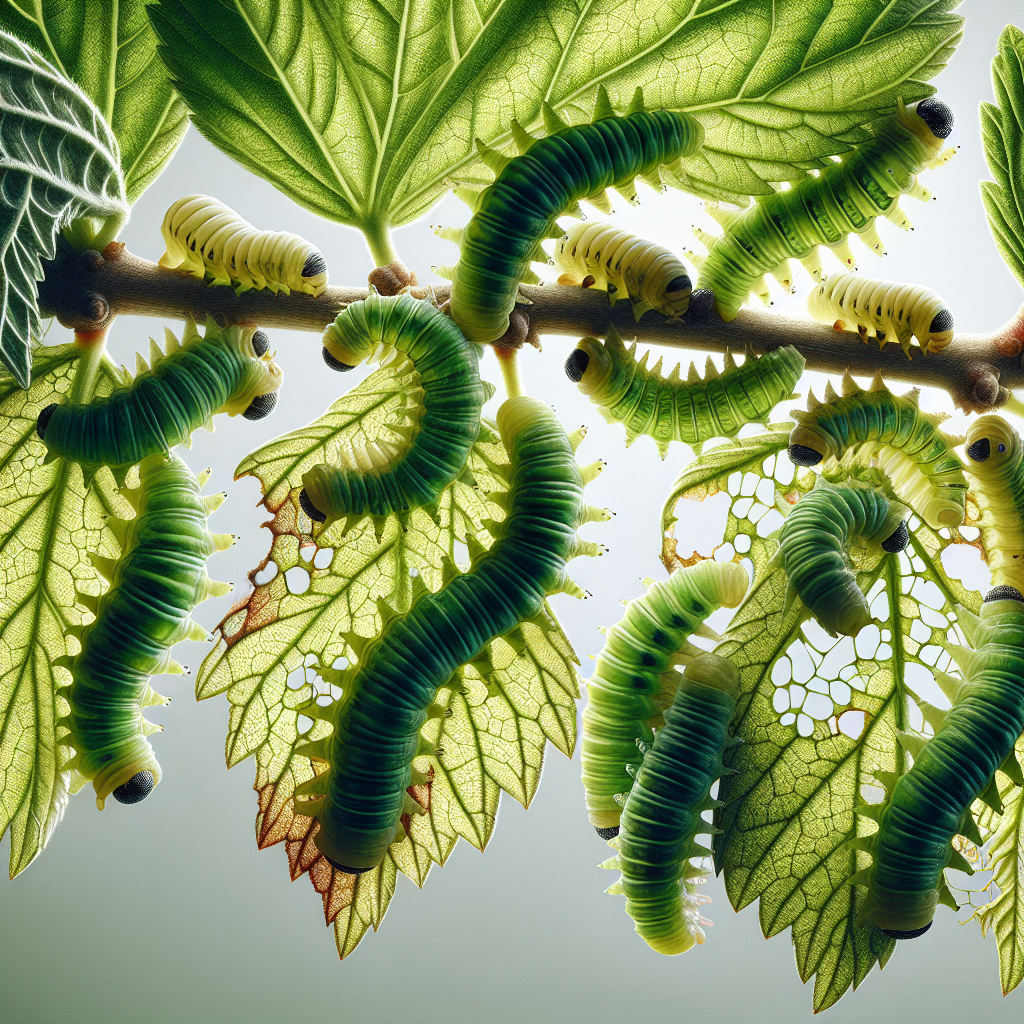
Introduction to Gooseberry sawfly
The Gooseberry sawfly, scientifically known as Nematus ribesii, is one of the most notorious pests affecting berry crops in temperate regions worldwide. Native to Europe but now widespread in North America, Asia, and other areas, this insect belongs to the Symphyta suborder of Hymenoptera, characterized by its plant-feeding larvae that mimic caterpillars. Adult sawflies are small, stout wasps about 7-10 mm long with dark bodies, yellowish markings, and a distinctive black spot on the thorax. However, the real damage comes from their larvae, which are pale green, slug-like creatures up to 20 mm long with a black head and faint spots.
Gooseberry sawfly infestations can devastate bushes, stripping leaves entirely and leaving plants vulnerable to sunscald, reduced fruit production, and secondary infections. In severe cases, repeated attacks over multiple generations can kill established plants or stunt young ones permanently. This pest thrives in home gardens, small farms, and commercial orchards, particularly where Gooseberry (Pixwell) and currants are grown. Early intervention is critical, as larvae feed voraciously and can skeletonize foliage in days. Understanding this pest's behavior empowers growers to implement targeted, organic controls that preserve beneficial insects and maintain ecosystem balance. For more on related sawfly pests, see the sawflies wiki page.
Identifying Symptoms & Damage
Spotting Gooseberry sawfly damage early is key to minimizing losses. Initial signs appear in late spring as small, translucent windows in leaves where larvae have eaten the epidermis, leaving the lower cuticle intact. As feeding progresses, leaves develop irregular holes, progressing to complete defoliation. Affected foliage turns brown and shrivels, often dropping prematurely. Larvae are frequently seen in groups on the undersides of leaves, especially on new growth at shoot tips.
Examine bushes closely: larvae are smooth, legless, and hump-backed, distinguishing them from true caterpillars which have prolegs. Frass (droppings) is granular and green, accumulating beneath plants. Severe infestations cause bush-wide defoliation by early summer, halting photosynthesis and fruit set. Differentiate from other pests like caterpillars or imported currant worm, which may cause similar damage but have different morphologies—sawfly larvae lack thoracic legs and move in a looping motion.
Physical inspection under magnification reveals eggs laid in rows along leaf veins, pale yellow and barrel-shaped. Adults are rarely seen but flutter weakly when disturbed. Yield impacts include up to 100% fruit loss on heavily infested bushes, with weakened plants susceptible to American gooseberry mildew or powdery mildew. Regular scouting from bud break through fruiting is essential; check 20-30 leaves per bush weekly.
Lifecycle and Progression of Gooseberry sawfly
Gooseberry sawfly completes 2-3 generations per year, depending on climate, with overlapping cycles in warm regions. Overwintering occurs as prepupae in cocoons 2-5 cm deep in soil or plant debris. Adults emerge in early spring (April-May in temperate zones) coinciding with host bud break. Females insert 20-30 eggs singly or in clutches along leaf veins using their saw-like ovipositor—hence the name "sawfly."
Eggs hatch in 1-2 weeks into tiny larvae that feed gregariously, molting through five instars over 2-4 weeks. Mature larvae drop to soil, spin cocoons, and pupate for 1-2 weeks before the next adult generation. Second generation peaks in June-July, third in August-September. Full cycle: 4-6 weeks. In cooler climates, only one generation occurs.
Population dynamics explode with mild winters and wet springs favoring egg survival. Larvae are most vulnerable during early instars. For insights into spring pest management, check this Spring Pest Patrol: Organic AI Strategies to Shield Your Crops from Common Invaders blog post. Monitoring degree-days (base 10°C) predicts emergence: first adults at 100-150 DD.
Environmental Triggers & Risk Factors
Gooseberry sawfly thrives in cool, moist conditions ideal for Ribes species. Key triggers include mild winters (above -15°C) allowing high pupal survival, followed by warm, humid springs accelerating egg hatch and larval development. Over-fertilized bushes with lush, nitrogen-rich foliage attract egg-laying females. Poor air circulation in dense plantings exacerbates outbreaks by shielding larvae from predators.
Risk factors: Monoculture of susceptible crops like gooseberries near wild Ribes, weedy borders harboring alternate hosts (red currant, black currant), and minimal tillage leaving pupae undisturbed. Drought-stressed plants recover poorly from defoliation. Proximity to woodlands increases migration from wild populations. Climate change extends generations northward. Soil pH above 6.5 and organic matter >5% boost overwintering success. Scout high-risk sites first.
Organic Control & Treatment Plans
Organic management emphasizes prevention and biological controls. Cultural: Hand-pick larvae daily into soapy water—effective for small infestations (<10% leaves affected). Till soil in fall/winter to expose pupae to predators. Mulch with coarse materials to deter burrowing.
Biological: Encourage natural enemies—tachinid flies, birds, and ground beetles. Release nematodes (Heterorhabditis bacteriophora) at 1st instar (evenings, moist soil). Bacillus thuringiensis (Bt) var. kurstaki targets young larvae; apply weekly at 1-2 g/L from egg hatch.
Organic Sprays: Neem oil (0.5-2% azadirachtin) disrupts feeding/oviposition; apply at dusk to spare bees. Insecticidal soaps smother larvae; rotate to prevent resistance. Pyrethrum as last resort.
Treatment Plan: 1. Scout weekly. 2. <5% infestation: hand-pick. 3. 5-20%: Bt + neem. 4. >20%: combine with nematodes + tilling. Timing: First spray at 50% egg hatch. Reapply after rain. Monitor 2 weeks post-treatment.
Preventing Gooseberry sawfly in the Future
Long-term prevention integrates IPM. Plant resistant varieties like 'Hinnonmaki Red' or 'Invicta'. Space bushes 1.5m apart for airflow. Remove wild Ribes within 500m. Fall clean-up: rake debris, solarize soil. Companion plant with thyme or yarrow to repel adults. Net bushes with 1mm mesh from bud swell to fruit set.
Encourage biodiversity: Bird boxes, beetle banks. Reflective mulches deter egg-laying. Early-spring dormant oil sprays smother overwintering stages. Rotate crops if possible; avoid Ribes for 2 years. Monitor with pheromone traps. Annual soil tests guide fertility to avoid lush growth.
Crops Most Affected by Gooseberry sawfly
Primarily attacks Ribes genus: gooseberries (all cultivars), red, white, and black currants. European gooseberries most vulnerable; American types somewhat resistant. Occasionally raspberry or blackberry, but rarely significant. No records on other berries like strawberry or blueberry. Prefers young shoots; commercial hedges suffer most. Wild Ribes serve as reservoirs.