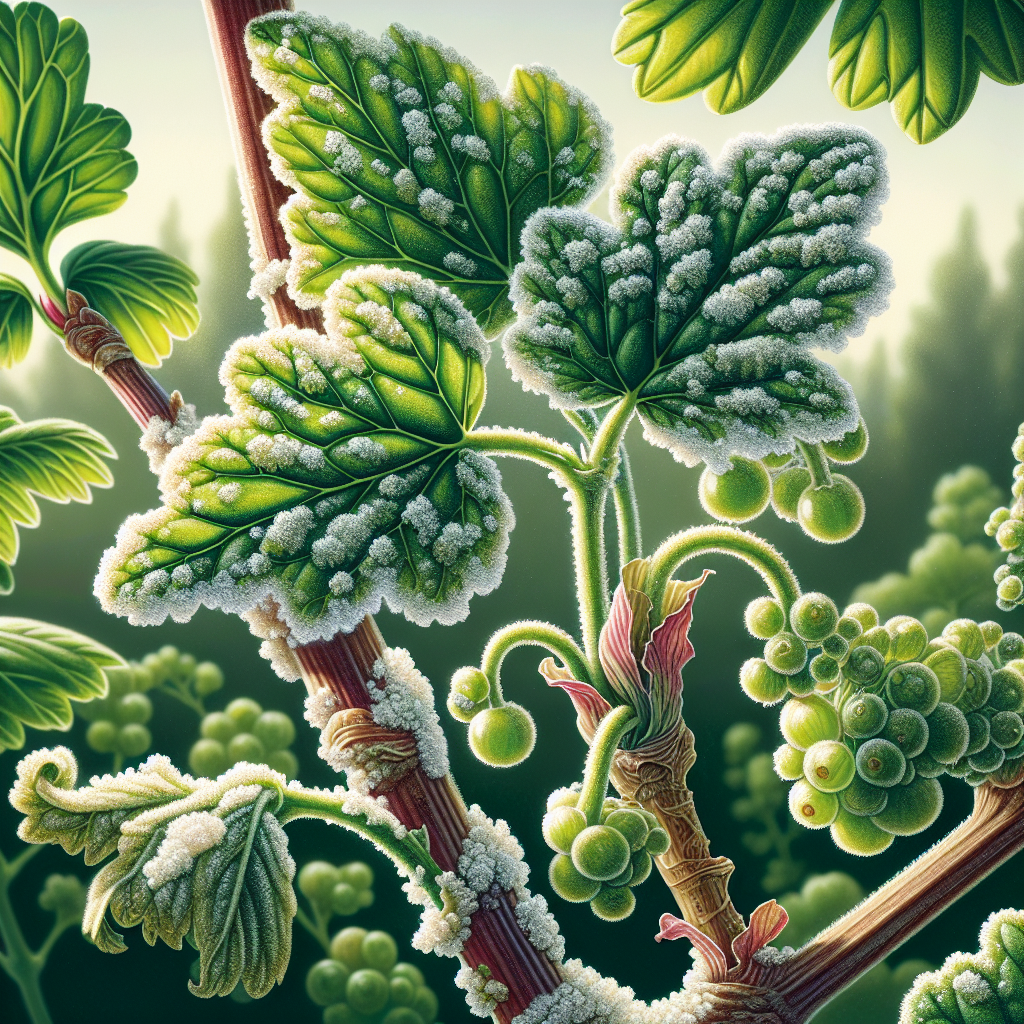
Introduction to American gooseberry mildew
American gooseberry mildew, caused by the fungal pathogen Sphaerotheca mors-uvae (synonym Podosphaera mors-uvae), is one of the most prevalent and damaging diseases affecting gooseberry (Ribes uva-crispa) and currant (Ribes spp.) crops worldwide, particularly in temperate regions of North America, Europe, and parts of Asia. First identified in the United States in the 19th century, this obligate parasite belongs to the powdery mildew family, Erysiphaceae, and spreads rapidly under favorable conditions, often devastating commercial and home gardens alike.
The disease manifests as a characteristic white, powdery fungal growth on plant surfaces, inhibiting photosynthesis, distorting growth, and rendering fruits unmarketable. In severe outbreaks, it can defoliate bushes, weaken plants over multiple seasons, and lead to dieback. Gooseberry growers report yield losses of up to 80-100% in unmanaged fields, making timely diagnosis and management critical for sustainable production. This guide provides professional-grade diagnostic criteria, lifecycle insights, organic treatment protocols, and prevention strategies optimized for small farms and orchards. Understanding American gooseberry mildew empowers growers to protect their Gooseberry (Pixwell) and related berry crops effectively.
Identifying Symptoms & Damage
Early detection is key to minimizing damage from American gooseberry mildew. Initial symptoms appear on young leaves and shoots as small, circular white patches of mycelium—the fungal body—that resemble a dusting of flour. These patches expand rapidly, coalescing into a dense, felt-like coating covering entire leaves, stems, petioles, and flower clusters. Affected tissues often curl, pucker, or become chlorotic (yellowed), with leaves brittle and prone to premature drop.
On fruits, the mildew produces a white bloom that cracks as berries swell, leading to russeting, cracking, and reduced size. Infected buds fail to open properly, resulting in stunted shoots with shortened internodes—a condition known as "blind buds." Severe infections cause twig dieback, with brown, necrotic areas beneath the white growth. Differentiate from other issues like gooseberry sawfly damage (skeletalized leaves) or Botrytis (gray fuzz and rot).
Damage assessment reveals significant economic impacts: defoliation reduces carbohydrate reserves, weakening canes and lowering next season's yields. Fruits become shriveled, bitter, and unsellable, while persistent infections invite secondary pests like aphids. Scout weekly during spring flush, using a 10x hand lens to confirm powdery spores. Threshold: 5-10% shoot tips infected warrants action.
Lifecycle and Progression of American gooseberry mildew
Sphaerotheca mors-uvae is an obligate biotroph, completing its lifecycle on living host tissue without a sexual resting stage in many strains—relying on overwintering mycelium in dormant buds. Primary inoculum emerges in early spring (bud swell stage) as conidia (asexual spores) from infected buds, dispersed by wind up to 100 meters. Optimal spore germination occurs at 15-25°C (59-77°F) with relative humidity above 70%, infecting new growth within 4-6 hours.
The lifecycle progresses rapidly: incubation lasts 3-7 days, producing new conidia in chains on conidiophores. Each lesion releases 100,000+ spores daily for 2-3 weeks, with 10-20 infection cycles per season. Peak activity aligns with shoot elongation (May-June), slowing in hot, dry midsummer but resuming in fall. Unlike downy mildew, it doesn't require free water—high humidity suffices. Cleistothecia (sexual fruiting bodies) form rarely in cooler climates, aiding long-distance spread via infected cuttings.
Progression varies by cultivar susceptibility: European gooseberries highly vulnerable, American types more tolerant. Monitor with disease models tracking degree-days above 10°C from bud break.
Environmental Triggers & Risk Factors
American gooseberry mildew flourishes in cool, humid microclimates (18-22°C, 90%+ RH), common in dense plantings or valleys with poor air drainage. Nighttime fog or dew sustains spore germination, while daytime winds spread conidia. Overcrowded bushes (>1m spacing) trap moisture, exacerbating outbreaks—ideal conditions persist 6-8 hours post-rain.
Risk factors include susceptible varieties (e.g., 'Hinnonmaki Red'), excessive nitrogen fertilization promoting succulent growth, and overhead irrigation. New plantings from infested stock introduce inoculum. Regions like the Pacific Northwest and Midwest U.S. see annual epidemics due to maritime climates. Soil pH above 6.5 and high organic matter favor root health but indirectly boost canopy density, heightening risk. Climate change extends humid periods, intensifying pressure—integrate with broader powdery mildew management.
Organic Control & Treatment Plans
Organic management emphasizes integrated approaches. Cultural Controls: Prune for open canopies (20-30% removal annually), spacing 1.5-2m. Remove mummies and prunings, destroying via burning or solarization. Mulch to suppress splash dispersal.
Biologicals: Apply Bacillus subtilis (e.g., Serenade) or Ampelomyces quisqualis at 7-10 day intervals from green tip. Potassium bicarbonate sprays (1-2% solution) disrupt spore walls—reapply after rain. Sulfur-based fungicides (microthiol, 3-5 lbs/acre) are cornerstone, safe below 85°F.
Treatment Timeline:
- Dormant: Lime sulfur 1-2%.
- Bud break: Bicarbonate weekly.
- Bloom: Alternate sulfur with biofungicides.
- Post-harvest: Urea 5% + sulfur to reduce overwintering inoculum.
For Spring Pest Patrol: Organic AI Strategies to Shield Your Crops from Common Invaders, combine with insect monitoring. Rotate modes of action; efficacy reaches 70-90% with scouting. Test soil for imbalances.
Preventing American gooseberry mildew in the Future
Prevention hinges on resistance and hygiene. Plant tolerant cultivars like 'Pixwell', 'Poorman', or 'Captivator'—yield 20-50% less disease. Site selection: south-facing slopes with good airflow, avoiding low spots. Eradicate wild Ribes nearby.
Annual programs: Dormant oil + sulfur, followed by 4-6 summer sprays. Monitor with sticky traps for spore counts. Companion plant with thyme or yarrow for biocontrol volatiles. Soil solarization pre-planting kills soilborne remnants. Long-term: Breed for multigenic resistance; track via apps. Read Soil Health Mastery: 5 Proven Strategies for Small Farms to Build Fertile Ground Without Breaking the Bank for resilient beds. Renew bushes every 10-15 years.
Crops Most Affected by American gooseberry mildew
Primarily devastates gooseberries (Ribes uva-crispa), with 'Invicta' and European types most susceptible. Black currants (Ribes nigrum) suffer heavily, red/white currants (R. rubrum/sativum) moderately. Occasionally impacts raspberry, blackberry, and strawberry under wet conditions. Non-Ribes like apple rarely affected. Focus IPM on Ribes blocks.