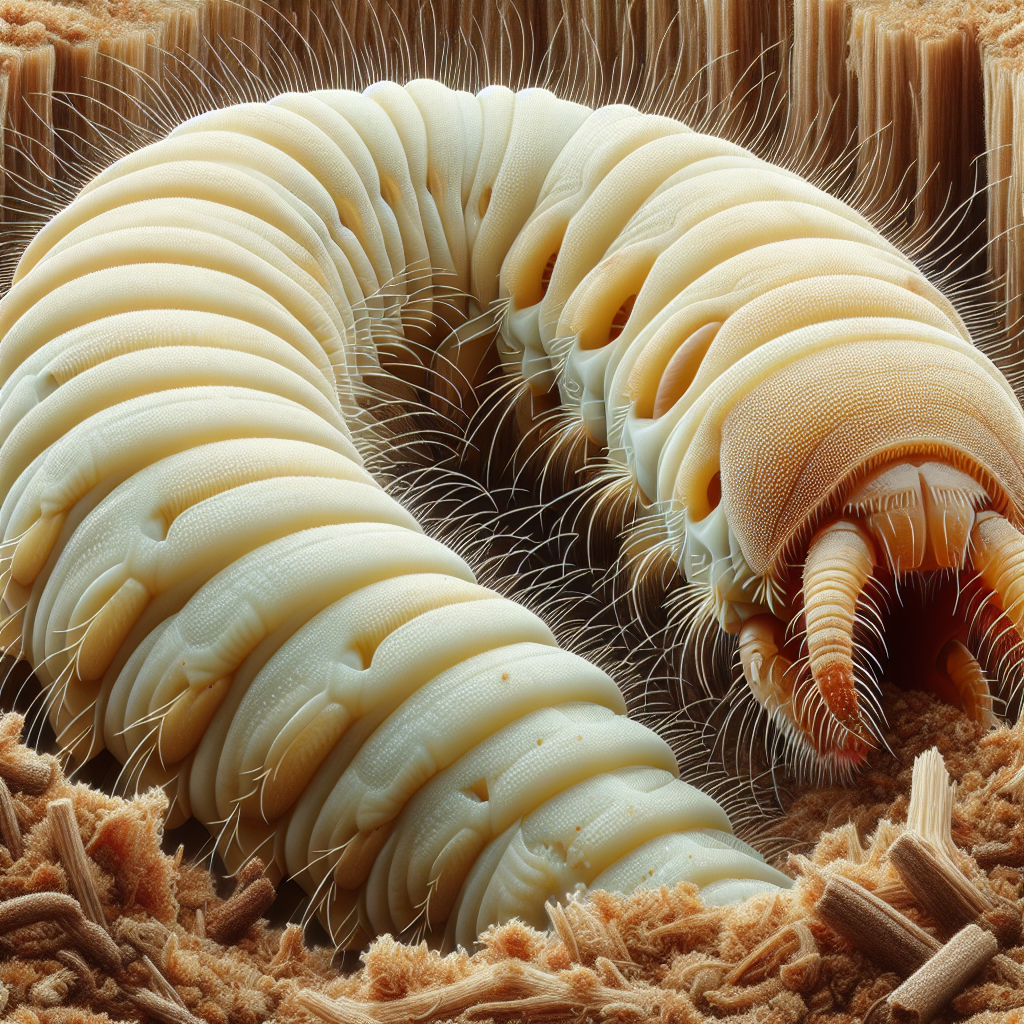
Introduction to Crown borer
Crown borer, scientifically known as Synanthedon hector, represents one of the most insidious threats to perennial crops and fruit trees in agricultural systems worldwide. This clearwing moth species mimics wasps in appearance, allowing adults to evade predators while laying eggs at the soil line near vulnerable plant crowns. The larvae, creamy-white with brown heads, tunnel into the base of stems and roots, girdling vascular tissues and severing the plant's lifeline. Damage often goes unnoticed until wilting, yellowing foliage, and sudden collapse occur, leading to 20-50% yield losses in unmanaged orchards. In commercial settings, crown borer infestations can devastate Hass Avocado groves and stone fruit plantations, where economic stakes are high. Early detection is critical, as mature infestations are nearly impossible to reverse without plant replacement. This guide provides professional-grade diagnostics, lifecycle insights, and organic management strategies tailored for small to medium-scale farmers. Understanding crown borer biology empowers growers to implement integrated pest management (IPM) that minimizes chemical use while maximizing crop resilience. For real-world applications, check out this Spring Pest Patrol: Organic AI Strategies to Shield Your Crops from Common Invaders for complementary tactics.
Identifying Symptoms & Damage
Diagnosing crown borer requires keen observation of both above- and below-ground signs. Initial symptoms mimic drought stress: leaves yellow from the top down, branches die back progressively, and plants exhibit stunted growth. Closer inspection reveals the hallmark damage at the crown—the swollen base where stem meets roots. Look for:
- Girdling scars: Clean, oval or D-shaped chew marks at soil level, often 1-2 cm wide, with frass (sawdust-like excrement) piled nearby.
- Pinhole exits: Small, round holes (2-4 mm) in the bark where larvae enter or pupate.
- Gumming and cankers: Resin or sap oozing from wounds, frequently accompanied by crown rot or Phytophthora root rot.
- Sawdust trails: Fine, reddish-brown frass extruding from tunnels, especially after rain.
Sever affected plants at the base and split the crown longitudinally to confirm: live larvae (up to 3 cm long) coiled in galleries filled with frass. Differentiate from borers like peach tree borer (Synanthedon exitiosa) by the clearwing moth's metallic blue-black wings with yellow bands. Secondary symptoms include wilting during peak water demand, premature fruit drop, and increased susceptibility to root-knot nematodes or Fusarium wilt. Use a knife to probe suspicious areas; healthy tissue is firm and white, while infested cambium is brown and water-soaked. In young trees, entire plants may topple due to root severance. Document damage with photos for IPM records, noting infestation levels: light (<10% crowns affected), moderate (10-30%), severe (>30%). Accurate ID prevents misdiagnosis with environmental stress or collar rot.
Lifecycle and Progression of Crown borer
Crown borer completes one to two generations annually, synchronized with host phenology. Adults emerge in late spring (May-June in temperate zones), coinciding with bloom. Females lay 100-200 eggs singly on bark crevices or soil near crowns, preferring wounds or cankers. Eggs hatch in 10-14 days, and neonates bore into the crown, feeding on cambium for 4-6 weeks before tunneling deeper.
Larvae overwinter in the crown/roots, resuming feeding in spring. By summer, mature larvae (25-35 mm) pupate in enlarged chambers, forming a silk-frass plug. Adults eclose after 2-3 weeks, mate, and oviposit. Full cycle: egg (10 days), larva (8-10 months), pupa (14-21 days), adult (7-10 days). Progression stages:
- Egg stage: Tiny, flat, white scales; monitor with yellow sticky traps.
- Early larva: Surface feeding, creating entry holes.
- Mature larva: Deep galleries, girdling 50-100% circumference.
- Pupa: Exposed after frass expulsion.
Peak damage occurs mid-larval stage (July-August), when girdling disrupts phloem/xylem. In tropics, continuous generations accelerate outbreaks. Population dynamics favor stressed plants; scout weekly from egg hatch to pupation. Pheromone traps detect males, predicting oviposition 2 weeks prior.
Environmental Triggers & Risk Factors
Crown borer thrives under conditions stressing host defenses. Key triggers include:
- Mechanical injury: Cultivation tools, mowers, or frost cracks expose cambium.
- Soil conditions: Compacted, waterlogged soils (pH >7.5) limit root vigor, concentrating food at crowns.
- Climate: Warm, humid summers (>25°C, 70% RH) boost larval survival; drought weakens trees.
- Plant stress: Over-fertilization with nitrogen promotes succulent growth; poor drainage invites root rots.
Risk factors: New plantings (1-3 years old) suffer 80% mortality; weeds harbor adults. Monocultures like avocado orchards amplify spread via wind-dispersed adults (up to 1 km). Irrigation timing matters—overhead watering splashes eggs into wounds. Monitor stem borers as co-pests exacerbating damage. Climate change extends generations northward, per recent studies.
Organic Control & Treatment Plans
Organic management emphasizes prevention and biologicals over reactives. Step 1: Cultural—Maintain 10-15 cm mulch ring around crowns, avoiding trunk contact to deter egg-laying. Improve drainage with berms; prune low branches for airflow.
Step 2: Biological—Apply Steinernema carpocapsae nematodes (10^6/acre) in evening irrigation targeting larvae. Release Trichogramma wasps pre-bloom for egg parasitism (2-3 releases/week).
Step 3: Mechanical—Probe tunnels with wire (July-August); excise girdled tissue, paint with lime-sulfur. Trap adults with girth bands (tar paper + Tanglefoot).
Step 4: Organic sprays—Spinosad (OMRI-listed) at 1-2 ml/L, 7-10 day intervals from egg hatch. Neem oil (2%) disrupts molting; apply with pyrethrin for synergism. Pheromone mating disruption: dispensers at 400/ha reduce captures 90%.
Treatment timeline:
| Stage | Action | Timing |
|---|---|---|
| Pre-egg | Pheromone traps | April |
| Larva | Nematodes + spinosad | June |
| Pupa | Girdle removal | August |
IPM threshold: Treat at 5% crowns with pinholes. Rotate modes to prevent resistance. Success rates: 70-85% in peach trials.
Preventing Crown borer in the Future
Long-term prevention builds resilient systems. Select resistant rootstocks (e.g., Nemaguard for stone fruits). Plant at proper depth (5 cm above graft union). Scout monthly; remove volunteers. Companion plant marigold as trap crop. Solarize soil pre-planting (6 weeks, 50°C). Annual trunk paints (lime + copper) deter oviposition. Foster biodiversity: Intercrop with clover to support predators. Monitor via apps for degree-day models (base 10°C, 800 DD to adult emergence). Quarantine new stock. Post-harvest, disk fields to expose pupae. Integrated with borers protocols, prevention sustains yields >95%.
Crops Most Affected by Crown borer
Crown borer targets woody perennials and tubers with exposed crowns:
- Stone fruits: Peach, plum, cherry—80% losses in young orchards.
- Avocados: Hass Avocado, Fuerte Avocado—girdling mimics Phytophthora crown rot.
- Pome fruits: Apple, pear.
- Nuts: Almond, walnut.
- Others: Sweet Potato, grapes, raspberry.
Prefers Prunus spp.; impacts scale with tree age inversely.