Introduction to cowpeas
Cowpeas (Vigna unguiculata) serve as a critical protein source and soil-improving legume across Africa, Asia, and the Americas. Grown for dry grain, fresh pods, and fodder, the crop is prized for its drought tolerance and nitrogen-fixing ability. However, its productivity is frequently limited by insect pests, plant-parasitic nematodes, and fungal or bacterial pathogens. Effective management requires accurate identification of symptoms, understanding pest lifecycles, and implementing timely, integrated controls.
Identifying Symptoms & Damage
Early detection begins with regular scouting of leaves, stems, flowers, pods, and roots. Key indicators include:
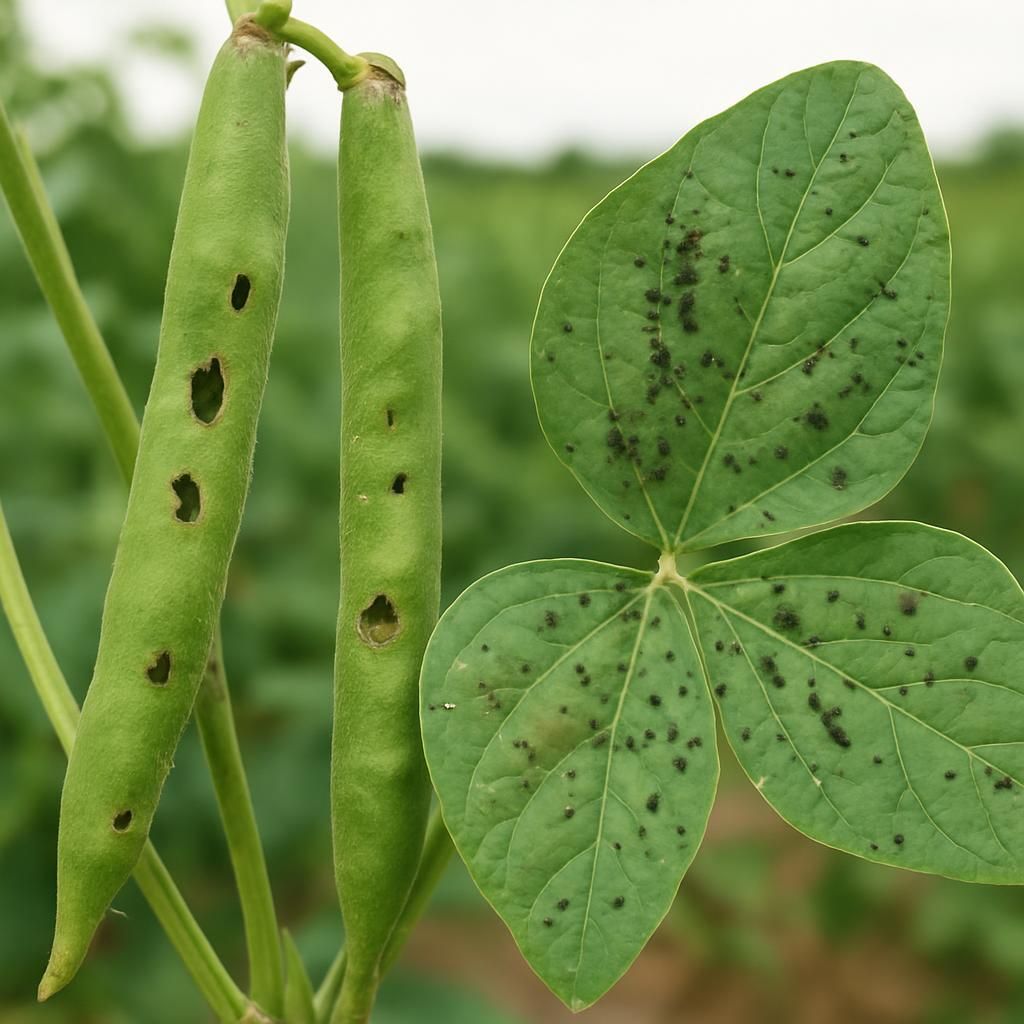
- Foliar damage: Skeletonized leaves, shot-hole patterns, or silvery trails from leafminers.
- Pod injury: Entry/exit holes, frass, and premature pod drop caused by pod borers and cowpea curculio.
- Sap-feeding symptoms: Yellowing, curling, and sticky honeydew leading to sooty mold from aphids and whiteflies.
- Root symptoms: Galls, lesions, or stunting from root-knot nematodes and plant-parasitic nematodes.
- Vascular wilt: Progressive yellowing and wilting from Fusarium wilt or bacterial blight.
Lifecycle and Progression of cowpeas
Cowpea pests progress through distinct developmental stages influenced by temperature and host availability. The table below summarizes typical timelines under warm-season conditions (25–32 °C).
| Stage | Duration | Key Characteristics | Management Window |
|---|---|---|---|
| Egg | 2–5 days | Laid on leaves, pods, or soil surface | Target with oils or biologicals |
| Larva/Nymph | 7–21 days | Feeding damage peaks; most destructive phase | Scout weekly; apply controls |
| Pupa | 3–10 days | Soil or plant debris; non-feeding | Cultural sanitation critical |
| Adult | 5–30 days | Mating, egg-laying, dispersal | Traps, natural enemies, thresholds |
Environmental Triggers & Risk Factors
Outbreaks intensify under specific abiotic and agronomic conditions. High temperatures (above 30 °C) accelerate insect development, while moderate humidity favors fungal pathogens. Sandy or compacted soils increase root-knot nematodes and Fusarium wilt severity. Continuous monoculture, poor drainage, and excessive nitrogen favor aphids and whiteflies. Late planting often coincides with peak populations of pod borers and stink bugs.
Organic Control & Treatment Plans
An integrated approach combining cultural, biological, and approved organic inputs delivers sustainable results. Begin with resistant varieties and rotate with non-hosts such as maize or sorghum. The following table outlines proven organic treatments and application frequencies.
| Treatment Option | Target Pests | Application Frequency | Notes |
|---|---|---|---|
| Neem oil (0.5–1%) | Aphids, whiteflies, thrips | Every 7–10 days until pressure drops | Apply at dusk; avoid temperatures >32 °C |
| Bacillus thuringiensis (Bt) | Pod borers, caterpillars | Every 5–7 days during larval hatch | Target early instars; reapply after rain |
| Spinosad (0.01–0.02%) | Thrips, leafminers, beetles | Every 7–14 days | Rotate with other modes of action |
| Trichoderma harzianum drench | Fusarium, root rots | At planting and 3 weeks later | Improves root health and suppresses soil pathogens |
| Yellow sticky traps | Whiteflies, aphids, leafhoppers | Replace weekly | 1 trap per 10 m²; monitor counts |
| Companion planting (marigold) | Nematodes, aphids | Interplant every 4–6 rows | Releases allelopathic compounds |
Preventing cowpeas in the Future
Prevention relies on proactive cultural practices. Implement a 3–4 year rotation with non-legumes. Use certified seed free of seedborne smuts and viruses. Maintain optimal plant spacing (20–30 cm within rows) and avoid excess nitrogen. Incorporate well-decomposed compost to boost soil microbial activity. Remove and destroy crop residues immediately after harvest to break pest cycles. Consider The Overlooked Art of Crop Rotation for Small Farm Resilience for detailed rotation templates.
Crops Most Affected by cowpeas
While cowpeas themselves are the primary host, several related legumes and neighboring crops suffer secondary damage or share common pests. Chickpeas, lentils, soybeans, peanuts, and common beans frequently experience cross-infestation by pod borers, aphids, and root-knot nematodes. Intercropped maize or sorghum may also host shared stem borers and leaf-feeding caterpillars when planted adjacent to cowpea fields.