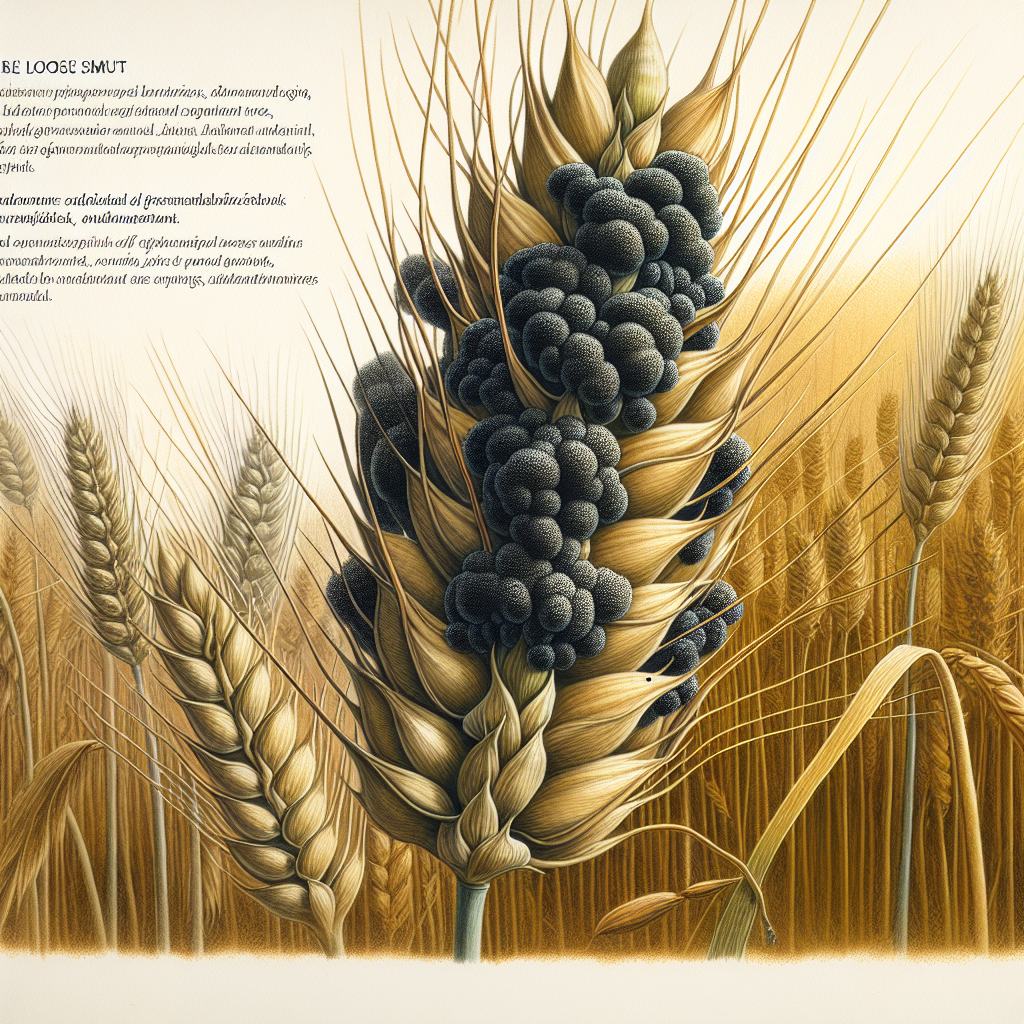
Introduction to seedborne smuts
Seedborne smuts represent a critical group of fungal diseases that pose persistent threats to global grain production, particularly in cereal crops. Caused primarily by basidiomycete fungi in genera such as Ustilago, Tilletia, and Sphacelotheca, these pathogens infect seeds before planting, remaining dormant until germination. Unlike soilborne or airborne smuts, seedborne variants hitchhike directly on planting material, making them insidious and capable of spreading over vast distances through contaminated seed lots.
The economic impact is staggering: in severe outbreaks, yield losses can exceed 50-100% in affected heads, with contaminated grain fetching lower market prices due to smut spores that render flour black and unpalatable. For small-scale farmers and large operations alike, seedborne smuts undermine food security, especially in developing regions reliant on staple crops like wheat and rice. This guide provides definitive diagnostic criteria, lifecycle insights, and proven organic management strategies to safeguard your harvest. Understanding these diseases empowers growers to implement preventive measures that minimize losses without synthetic fungicides.
Key species include Ustilago nuda (loose smut of barley and wheat), Tilletia caries and T. controversa (common and dwarf bunt of wheat), and Ustilago tritici (loose smut of wheat). These fungi produce teliospores—thick-walled resting structures—that survive harsh conditions inside seeds, germinating only when conditions favor infection. Early intervention through seed treatment is paramount, as once infection establishes systemically, control becomes nearly impossible.
Identifying Symptoms & Damage
Diagnosing seedborne smuts requires keen observation during crop development, as symptoms often mimic nutrient deficiencies or other stresses until reproductive stages. Initial signs appear subtly: seedlings from infected seeds may exhibit slight stunting or chlorosis, but definitive symptoms emerge at heading or ear formation.
For loose smuts (Ustilago spp.), infected heads replace normal florets with a mass of olive-black teliospores, emerging as the glumes open. The spore mass is powdery, easily dislodged by wind, leaving only bare rachises—hence 'loose.' In barley, affected tillers produce sori (spore masses) that rupture at anthesis, contaminating fields and equipment.
Bunt diseases (Tilletia spp.), conversely, produce 'covered' sori where grain kernels swell into gall-like structures filled with fishy-smelling brown-black spores. Kernels may crack open at harvest, releasing spores that soil grain. Damage quantification: a single infected wheat head can release billions of spores, each viable for years in soil or seed.
Assess damage by scouting 1% of your field at soft dough stage: count infected heads per 100. Thresholds vary—over 0.5% infection warrants immediate action. Differentiate from common rust or fusarium head blight via spore color and odor; lab confirmation involves plating seeds on agar or ELISA tests for teliospores. Yield losses correlate directly with infection rate: 1% smut equals 1% grain loss, plus downgraded quality.
Lifecycle and Progression of seedborne smuts
Seedborne smuts follow a precise lifecycle optimized for seed transmission, distinguishing them from foliar pathogens. Infection begins pre-planting: teliospores on or within the seed embryo overwinter viability, enduring desiccation, cold, and burial.
Upon planting, teliospores germinate in soil (optimal 10-20°C, moist conditions), producing sporidia (basidiospores) that fuse (plasmogamy) and form promycelia. These hyphae penetrate the emerging seedling coleoptile or mesocotyl within 24-48 hours of germination, establishing systemic infection without external symptoms. The fungus colonizes meristems, hijacking vascular tissues to reach florets undetected.
Progression accelerates at booting: by anthesis, mycelia fill ovaries, converting developing grain into sori. For loose smuts, sori burst at maturity; for bunts, galls harden until harvest. Spores disseminate via wind, rain splash, or machinery, contaminating clean seed. Overwintering occurs primarily in seed (up to 20 years viability), secondarily in soil.
Temperature drives progression: U. nuda requires 18-22°C for sporidia germination; cooler soils (below 10°C) delay but don't prevent. Moisture is critical—drought suppresses but doesn't eradicate. Understanding this enables precise timing for seed treatments, targeting the brief infection window.
Environmental Triggers & Risk Factors
Seedborne smuts thrive under specific conditions that growers can monitor to assess risk. Cool, moist soils at planting (5-15°C, >60% field capacity) favor teliospore germination and seedling penetration, explaining prevalence in temperate wheat belts and highland rice areas.
Prolonged leaf wetness during booting (12+ hours at 15-20°C) boosts sporidia fusion, while high humidity (>80%) sustains mycelial growth. Risk spikes with volunteer plants or common bunt carryover from previous crops. Poor seedbed preparation—clumpy soil retaining moisture—exacerbates issues.
Key risk factors: using farm-saved seed without certification (infection rates >5% common); continuous cereal monoculture; acidic soils (pH <6.0); and mechanical spread via shared equipment. Climate change intensifies risks through erratic springs, prolonging optimal infection windows. For more on predictive tools, check Why 80% of Small Farms Battle Weather Disasters - And How Hyper-Local AI Forecasts Can Save Your Harvest.
Regional hotspots include Pacific Northwest wheat fields (T. controversa) and South Asian rice paddies (U. nuda). Scout histories: fields with prior smut warrant vigilance.
Organic Control & Treatment Plans
Organic management hinges on integrated strategies targeting seed infection, as curative options are limited post-emergence. Paramount: source certified smut-free seed (infection <0.1%), verified by grow-out tests or hot water treatment (52°C for 10-15 min for wheat/barley, killing 99% teliospores without viability loss).
Dry heat (70°C, 5 days) or solarization (black plastic over moist seed, 50-60°C) offer alternatives. Biologicals like Pseudomonas fluorescens or Trichoderma spp. suppress germination (apply 10^9 CFU/kg seed). Resistant varieties—e.g., 'Harrington' barley or 'Eltan' wheat—reduce infection by 80-90%; rotate with non-hosts like peas or clover.
Foliar boosts: compost teas or potassium bicarbonate at booting deter sporidia. Field sanitation: rogue infected heads pre-anthesis, burn residues. For seed lots suspect, blend with lime (1:10) to neutralize spores. Monitor via seed assays; treat if >0.5%. Integrated plans yield 95% control without chemicals. Learn diagnostic aids in Why Misidentifying Plants Costs Small Farms Thousands - And How AI Camera Diagnosis Fixes It Fast. Refer to loose smut for species-specifics.
Preventing seedborne smuts in the Future
Long-term prevention builds resilient systems: certify all seed annually, implementing 3-year rotation (cereals <33% of cycle). Soil solarization (6 weeks summer, 50°C+) reduces residual spores by 90%. Deep plowing buries telia beyond germination depth.
Enhance vigor with balanced nutrition—adequate zinc/phosphorus buffers susceptibility. Windbreaks curb spore dispersal. Track via field mapping; isolate high-risk zones. Breed/ select locals: community seed banks sharing resistant lines. Policy: advocate certification standards. Future-proof with climate-resilient varieties and predictive modeling.
Crops Most Affected by seedborne smuts
Seedborne smuts predominantly target Gramineae family: wheat (common/dwarf bunt, loose smut), barley (loose/covered smuts), oats (U. avenae), rye (U. occulta), sorghum (covered kernel smut), corn (head smut), and rice (false loose smut). Minor hosts include triticale and millet. Global losses: 10M tons wheat annually.