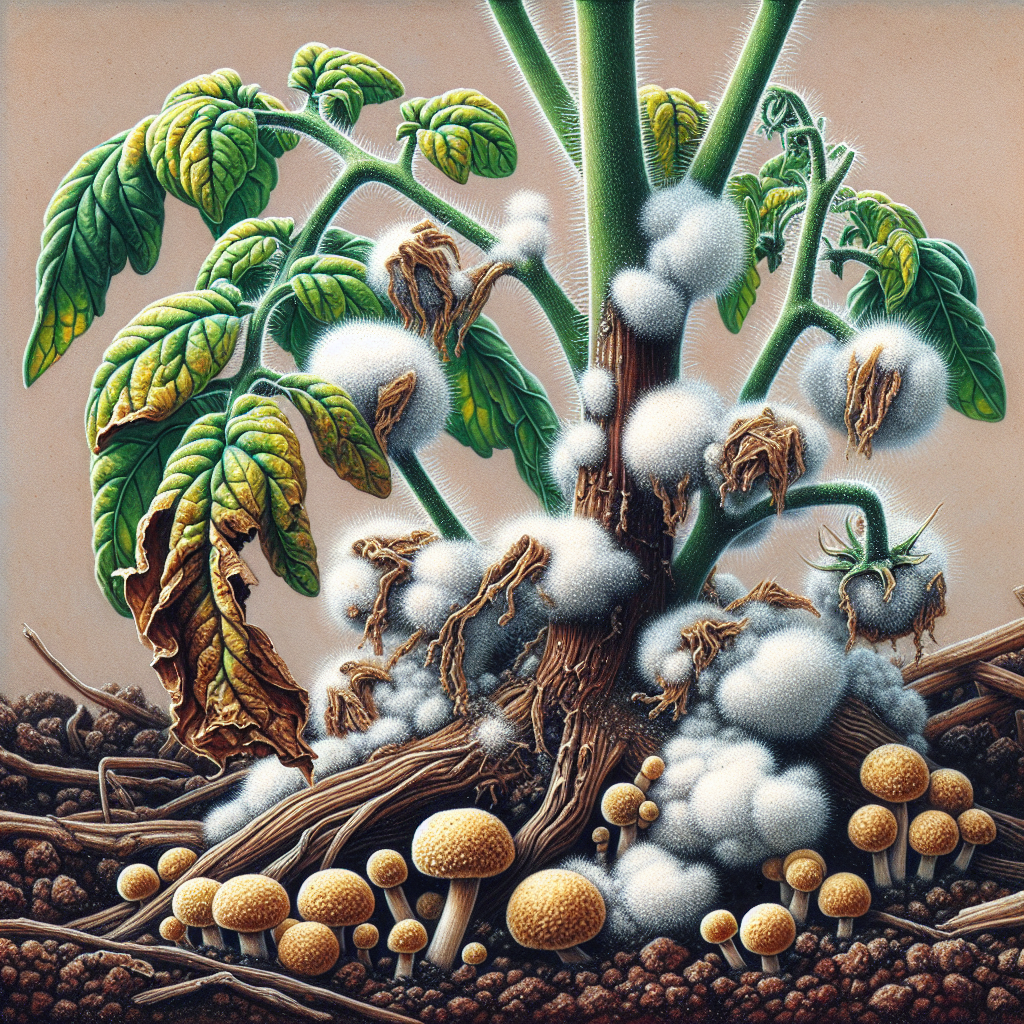
Introduction to Clump rot
Clump rot, scientifically known as Sclerotium rolfsii infection (teleomorph: Athelia rolfsii), is one of the most notorious soilborne fungal pathogens affecting agricultural crops worldwide. This disease is particularly devastating in tropical and subtropical regions where high temperatures and humidity create ideal conditions for its proliferation. Farmers often first notice it as sudden wilting in otherwise healthy plants, progressing to complete collapse as white, cottony fungal growths appear at the soil line, accompanied by small, tan sclerotia resembling mustard seeds.
The pathogen's resilience comes from its sclerotia, which can survive in soil for up to 3-5 years, making eradication challenging. Clump rot attacks over 500 plant species, including major crops like tomato, peanut, and onion, causing annual global losses estimated in billions. Early diagnosis is critical, as infected plants rarely recover, but integrated organic management can significantly reduce incidence. This guide provides professional-grade diagnostic criteria, lifecycle insights, and proven organic strategies to protect your farm. Understanding clump rot's biology empowers growers to implement preventive measures that safeguard yields and soil health long-term.
Identifying Symptoms & Damage
Recognizing clump rot early is essential for limiting spread. Initial symptoms mimic water stress: lower leaves yellow and wilt during the day, even with adequate moisture. As progression occurs, the wilting becomes permanent, affecting the entire plant. Examine the base of the stem at soil level—hallmark signs include a water-soaked, brown lesion that girdles the stem, often covered in abundant white mycelium resembling clumps of cotton or spider webs, especially visible in early morning dew.
Sclerotia, the fungus's survival structures, form within 2-3 days: 0.5-1.5 mm tan to brown spheres clustered like birdshot or mustard seeds around the infected area and on the soil surface. Roots may show dark rot, but aerial symptoms dominate. In advanced stages, plants collapse, leaving stubble with fungal mats. Differentiate from root rot or phytophthora by the presence of sclerotia and mycelial clumps— Pythium lacks sclerotia, while Rhizoctonia produces reddish-brown mycelium.
Damage quantification varies: in peanuts, losses reach 50-100% in heavily infested fields; tomatoes lose 20-80% yield. Seedlings exhibit damping-off with hypocotyl girdling. Conduct a soil dig: if sclerotia exceed 10 per 100g soil, risk is high. Use a hand lens for confirmation. For precise identification, plate stem sections on potato dextrose agar—colonies grow rapidly at 30°C with yellow mycelium turning white. Read our comprehensive blog on misidentifying plants and diseases for AI-assisted diagnostics.
Lifecycle and Progression of Clump rot
Sclerotium rolfsii lifecycle is adapted for persistence and rapid infection. Sclerotia, the primary inoculum, germinate in response to host exudates or moisture, producing mycelium that contacts roots or lower stems. Optimal germination occurs at 28-35°C and high humidity (>90% RH). Mycelium grows 1-2 cm/day, colonizing tissue within 24-48 hours.
Infection starts at wounds or natural openings, facilitated by oxalic acid and enzymes that soften plant cell walls. Within 3-5 days, mycelial clumps form, producing more sclerotia (up to 10,000 per infected plant). Under dry conditions, sclerotia sclerose and survive indefinitely. The fungus spreads via splashing rain, irrigation, tools, or machinery, with airborne basidiospores playing a minor role.
Progression phases: Day 1-2 (latent infection), Day 3-4 (wilting and lesion), Day 5+ (collapse and sclerotia formation). In crops like chickpeas, epidemics build during monsoon seasons. Crop rotation fails if sclerotia persist; deep plowing buries them >20 cm, delaying germination. Lifecycle completes in 7-10 days per host, enabling polycyclic epidemics. Monitor with baiting techniques: place carrot disks in soil for 3 days, check for mycelium.
Environmental Triggers & Risk Factors
Clump rot explodes under specific conditions: soil temperatures 25-35°C, pH 4-6 (acidic soils favor it), and excessive moisture from over-irrigation or poor drainage. High organic matter (>2%) fuels mycelial growth. Risk spikes post-harrowing when soil is disturbed, exposing sclerotia.
Key triggers: close plant spacing reducing airflow, monocropping without breaks, and infected plant debris. Susceptible crops like potato and soybeans amplify inoculum. Flooded fields or mulching with infested material accelerates spread. In greenhouses, high humidity (>85%) from overhead watering is deadly.
Risk assessment: Fields with prior history have 10x higher sclerotia density. Companion with marigold reduces risk via nematicidal effects, as nematodes vector secondary infections. Climate change extends favorable windows, increasing outbreaks. Test soil pH and drainage before planting; amend with lime if <5.5.
Organic Control & Treatment Plans
No cure exists for infected plants—remove and destroy immediately to curb spread. Organic management emphasizes prevention, but active treatments suppress populations.
Cultural Controls: Flood fields (2-4 weeks at 30°C) to kill 80-90% sclerotia. Deep plow (30 cm) to bury sclerotia. Solarize soil: cover with clear plastic 4-6 weeks pre-planting, reaching 50°C lethality.
Biological Controls: Apply Trichoderma harzianum or Pseudomonas fluorescens (10^9 CFU/g) as seed/root dips—colonizes rhizosphere, parasitizes sclerotia (70% reduction). Bacillus subtilis produces antibiotics effective at 28°C. Mustard cake amendments (2 t/ha) release biofumigants.
Organic Fungicides: Cinnamon oil or garlic extract sprays (1:100 dilution) inhibit mycelium. Neem cake soil incorporation (500 kg/ha) deters germination.
Integrated Plan: 1) Pre-plant solarization + Trichoderma drench. 2) Plant resistant varieties (e.g., certain onion hybrids). 3) Drip irrigate, avoid overhead. 4) Rotate 3-4 years with non-hosts like corn. 5) Mulch with solar-heated straw. Monitor weekly; rogue infected plants. Efficacy: 60-85% control in trials. Boost success with soil health strategies.
Preventing Clump rot in the Future
Prevention is the cornerstone: certify clean seed/transplants. Implement 3-year rotation excluding solanaceae/legumes. Raise beds 20-30 cm for drainage. Adjust pH to 6.5-7.5 with lime/dolomite.
Site selection: Avoid low-lying, flood-prone areas. Use fumigants like mustard seed meal (biofumigation). Introduce antagonists: green manure with Brassica spp. releases isothiocyanates toxic to sclerotia.
Scout rigorously: Set traps (carrot baits) quarterly. Sanitize tools with 10% bleach. Post-harvest, disk infested debris and solarize. Long-term: Build soil microbial diversity via compost (mycorrhizae compete). Resistant rootstocks for grafted crops. Track via field maps. These steps reduce incidence <5%.
Crops Most Affected by Clump rot
Clump rot strikes broadly, but legumes and vegetables suffer most. Top victims:
- Legumes: Peanuts (pod rot, 50% losses), chickpeas, soybeans, cowpeas.
- Vegetables: Tomato, potato, onion, garlic, eggplant.
- Tropicals: Banana, mango, papaya.
- Others: Strawberry, lettuce, ornamentals.
Susceptibility: Shallow-rooted, warm-season crops. In Asia/Africa, devastates rice nurseries. Tailor rotations per crop.