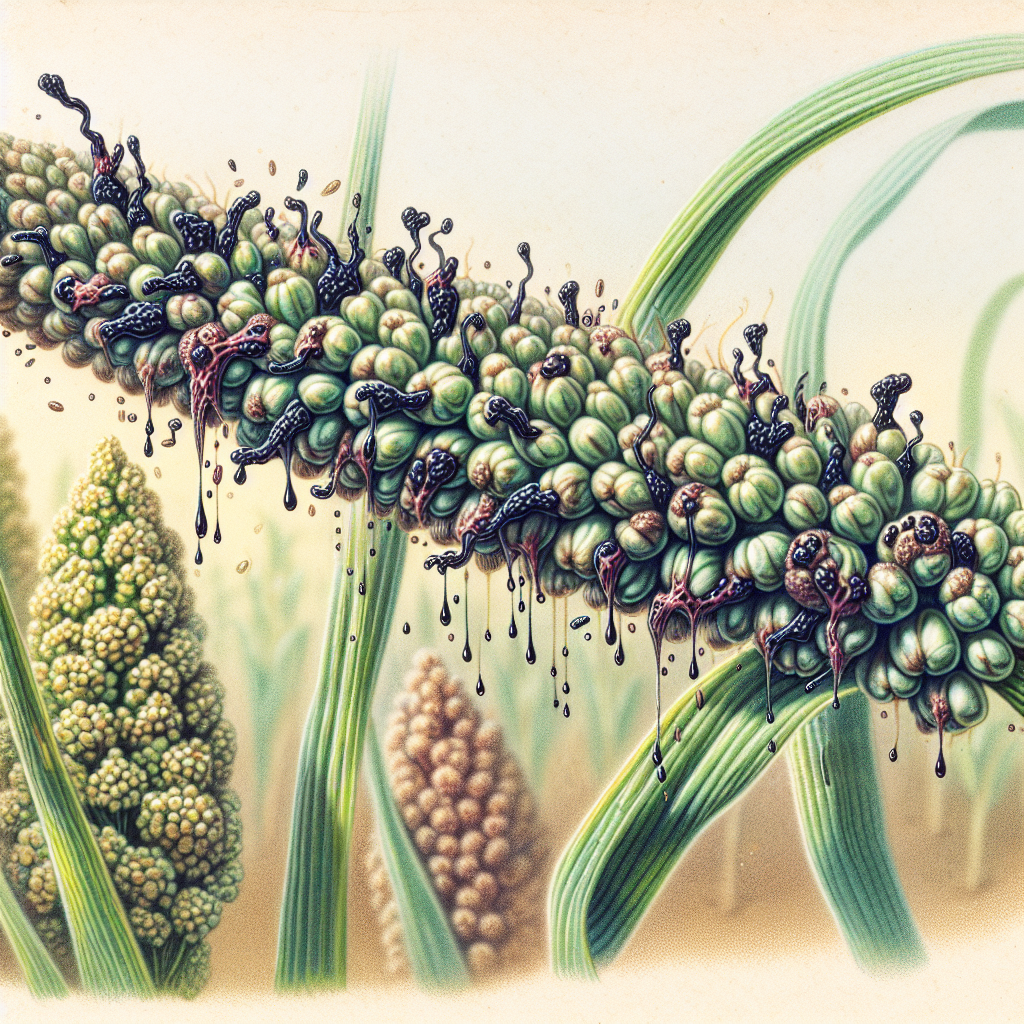
Introduction to Chirke
Chirke, also known as ergot or sorghum ergot, is a destructive fungal disease that plagues grain crops, particularly in tropical and subtropical regions. Caused by fungi in the Claviceps genus, it replaces healthy grains with hard, black sclerotia filled with toxic alkaloids that can contaminate food supplies and harm livestock. First documented in ancient texts from India, Chirke has been a persistent threat to food security, causing yield losses up to 100% in severe outbreaks. Farmers recognize it by the honeydew exudate and elongated black fungal bodies protruding from grain heads. Understanding Chirke is crucial for sorghum and pearl millet growers, as timely intervention can save crops. This guide draws from botanical, entomological, and agricultural expertise to deliver actionable diagnostics and management plans.
The disease thrives in warm, humid conditions, spreading via airborne spores and infected seeds. Economic impacts are profound: in India alone, Chirke causes annual losses exceeding millions in sorghum production. Early detection and organic controls are key to mitigating damage, especially for small-scale farmers relying on these staples. By integrating crop rotation, resistant varieties, and biological controls, Chirke can be managed effectively without synthetic chemicals.
Identifying Symptoms & Damage
Chirke manifests in distinct stages, making visual diagnosis straightforward for vigilant farmers. Initial symptoms appear 10-20 days after flowering: infected florets ooze a sticky, honey-like substance called sphacelia, which contains millions of conidia. This 'honeydew' attracts insects like flies, aiding spore dispersal. Affected heads droop, and the honeydew dries into white fungal growth.
As the disease progresses, honeydew is replaced by elongated, boat-shaped sclerotia—black, horn-like structures 1-3 cm long—that emerge from spikelets, mimicking grains. Healthy grains abort, leading to sparse heads. Sclerotia are toxic, containing ergotamine and other alkaloids that cause vasoconstriction in mammals, leading to gangrene or convulsions if ingested.
Damage assessment reveals 20-80% yield loss per plant, with total crop failure in epidemics. In millet fields, Chirke reduces grain quality, making flour bitter and unsafe. Secondary infections from armyworms exacerbate damage by feeding on weakened heads. Inspect fields weekly during anthesis; cut open heads to confirm sclerotia presence. Differentiate from smut by sclerotia's external protrusion versus internal galls.
Lifecycle and Progression of Chirke
Claviceps fungi follow a complex lifecycle synchronized with host flowering. Ascospores overwinter in sclerotia buried in soil or on debris. Spring rains (20-30°C, >90% humidity) trigger germination, producing ostioles that release ascospores carried by wind to flowering panicles.
Spores germinate on stigmas, colonizing ovaries within 48 hours. Mycelium produces sphacelia stage (5-7 days), exuding conidia in honeydew. Conidia splash or are insect-vectored to nearby flowers, amplifying epidemics. After 10-14 days, sphacelia differentiates into sclerotia, maturing in 3-4 weeks.
Sclerotia fall to soil, persisting 1-2 years. Progression accelerates in dense plantings with overlapping flowering. A single sclerotium produces 100,000+ ascospores, infecting 1-5m radius. Disease cycles 2-3 times per season in irrigated fields. Monitor using traps or weather data correlating rain events with anthesis. Lifecycle knowledge enables precise fungicide timing, though organic methods target sclerotia survival.
Environmental Triggers & Risk Factors
Chirke epidemics correlate with specific conditions: temperatures 25-32°C, relative humidity >90% during flowering, and rainfall >500mm. Night temperatures above 20°C prolong spore viability. Risk spikes in lowland tropics, monsoon seasons, and irrigated fields with poor airflow.
Key factors include susceptible hybrids, high plant density (>200,000 plants/ha), and ratooning without sanitation. Weedy hosts like wild sorghum harbor inoculum. Insect vectors (thrips) and mechanical spread via harvest equipment amplify outbreaks. Soil pH >7 and nitrogen excess promote lush flowering, ideal for infection.
Climate change intensifies risks with erratic monsoons. Fields near rivers or with overhead irrigation face 5x higher incidence. Assess risk via flowering calendars synced to forecasts—avoid planting during peak humid periods. Companion crops like marigold reduce humidity microclimates.
Organic Control & Treatment Plans
Organic management emphasizes cultural, biological, and mechanical tactics. Sanitation first: Deep plow post-harvest (30cm) to bury sclerotia >10cm, promoting decay via soil microbes. Remove and burn infected heads; avoid composting. Use seed cleaners to float out sclerotia (density 1.0-1.2 g/cm³).
Resistant varieties: Plant hybrids like CSV 15 or ICSV 93046 with tight glumes inhibiting infection. Rotate with non-hosts like cowpea or legumes for 2 years. Adjust planting density to 150,000/ha for better aeration.
Biological controls: Apply Trichoderma viride (5g/kg seed) or Pseudomonas fluorescens as soil drench to degrade sclerotia. Neem oil (2%) sprays during early flowering deter vectors. Introduce predatory fungi like Myco-Max.
Treatment protocol:
- Scout weekly from boot leaf stage.
- Roguing: Hand-remove 5%+ infected panicles.
- Foliar spray: Milk stage—garlic-chili extract (1:1:100) + cow urine (1:20).
- Post-harvest: Solarize soil 4-6 weeks.
For severe cases, integrate neem cake (250kg/ha) amendments. Check Why Companion Planting Feels Like Guesswork for Small Farms - And How AI Makes It Foolproof for synergistic plantings reducing humidity. Yields recover 40-70% with IPM.
Preventing Chirke in the Future
Long-term prevention builds resilient systems. Select certified, sclerotia-free seeds treated with hot water (52°C, 10min) or biofungicides. Time planting to escape peak monsoon flowering—early sowing in rabi season.
Enhance field hygiene: Destroy volunteer plants, weed margins. Mulch with dry straw to suppress soil splash. Promote biodiversity with border crops like thyme repelling vectors. Monitor via sticky traps for conidia.
Soil health is foundational: Maintain 5.5-6.5 pH, balance NPK. Use cover crops like hairy vetch to outcompete inoculum. Educate communities on avoiding contaminated grain. Annual rotation cycles (sorghum-legume-fallow) reduce inoculum 90% over 3 years. Leverage weather apps for risk alerts. Resistant breeding programs yield promising lines; stay updated via extension services.
Crops Most Affected by Chirke
Chirke predominantly strikes sorghum (80% cases), especially grain types like rabi sorghum. Pearl millet suffers 20-50% losses in hybrid fields. Other hosts include finger millet, foxtail millet, teff, and wild grasses. Sudan grass and johnsongrass act as reservoirs.
Rarely affects wheat or rice, but cross-infection occurs near boundaries. In India, kharif sorghum faces highest risk; Africa reports epidemics in grain sorghum. Pearl millet hybrids like HHB 67 are vulnerable. Diversify with unaffected crops like chickpeas or lentils in rotation.