Introduction to Carrot (Cosmic Purple)
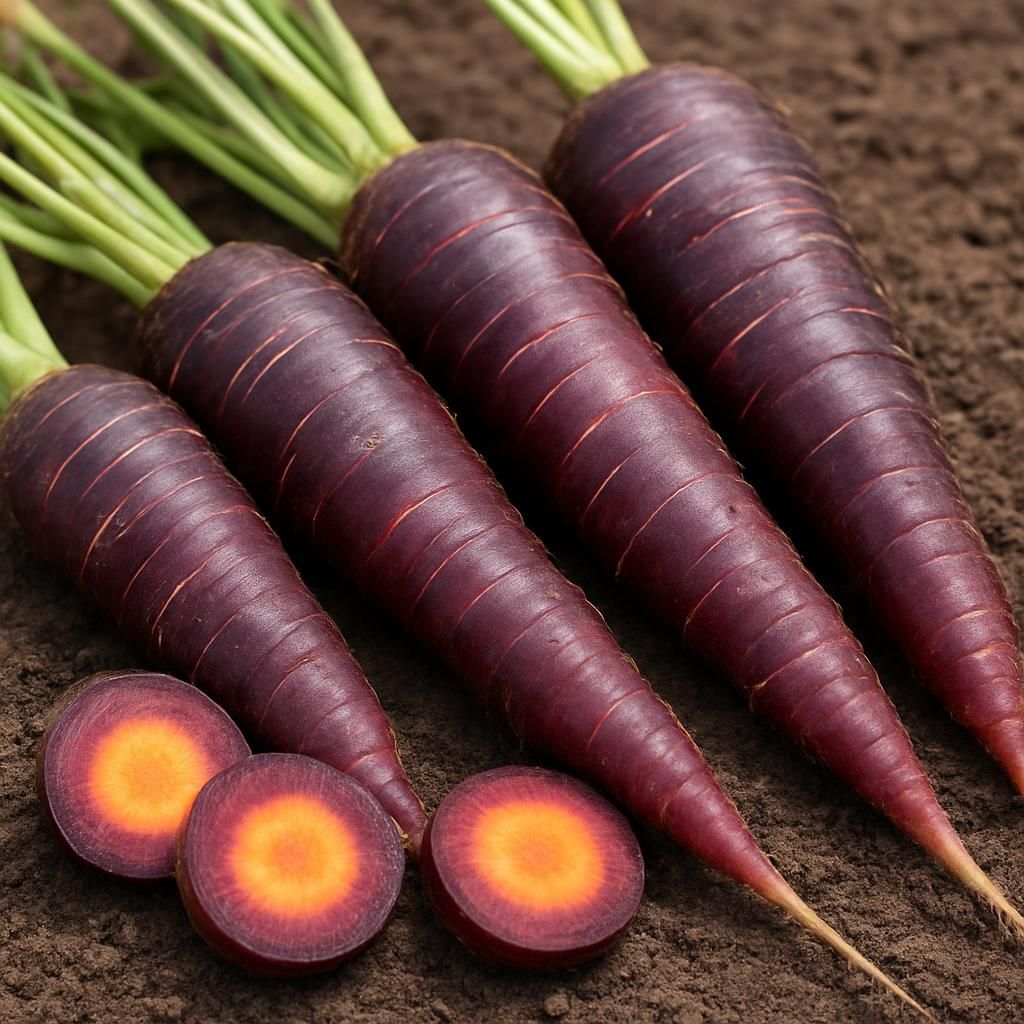
Cosmic Purple carrot is an eye-catching heirloom-type variety developed for both visual appeal and superior eating quality. Its deep purple exterior contrasts beautifully with a bright orange interior, making it a favorite among chefs and home cooks alike. The variety delivers a balanced sweetness with mild earthy undertones and retains its color when lightly cooked or used raw in salads.
This carrot excels in cool-season production and is valued for its uniform roots that reach 7-8 inches in length. Cosmic Purple performs reliably in home gardens and small-scale farms, offering disease resistance and strong bolt tolerance. Its striking color also increases market value at farmers' markets and specialty produce outlets.
Growers appreciate its adaptability to a wide range of temperate climates and its ability to store well after harvest. Whether used for fresh market sales, CSA boxes, or home consumption, Cosmic Purple delivers both visual impact and consistent flavor.
Botanical Profile of Carrot (Cosmic Purple)
Cosmic Purple belongs to the Apiaceae family and exhibits the typical biennial growth habit of carrots. In its first season, it produces a tapered storage root rich in anthocyanins responsible for the purple pigmentation. The foliage forms a rosette of finely divided, feathery leaves that reach 12-18 inches in height.
The root features smooth skin with minimal lateral roots when grown in optimal conditions. Its core remains distinctly orange while the cortex displays intense purple hues, providing a striking visual when sliced. This pigmentation also contributes to elevated antioxidant levels compared to standard orange varieties.
Flowering occurs in the second year if plants are overwintered, producing white umbels typical of the species. Seed production requires isolation from other carrot varieties to maintain purity. The variety shows moderate resistance to common foliar diseases and demonstrates good cold hardiness.
Soil, pH, and Climate Requirements for Carrot (Cosmic Purple)
Cosmic Purple carrots demand deep, friable soil free of rocks and compaction to produce straight, unbranched roots. Heavy clay soils should be amended with generous amounts of organic matter and coarse sand to improve drainage and root penetration. Raised beds or deep-dug beds are highly recommended for consistent results.
| Parameter | Ideal Range | Notes |
|---|---|---|
| Soil Type | Sandy loam to loam | Deep, loose structure prevents forking |
| Soil pH | 6.0 - 6.8 | Slightly acidic to neutral; avoid lime excess |
| Soil Temperature | 50-75°F (10-24°C) | Optimal germination at 55-65°F |
| Air Temperature | 60-75°F (15-24°C) days | Cool nights enhance sweetness |
| Sunlight | Full sun (6-8 hours) | Partial shade acceptable in hot climates |
| Soil Moisture | Consistent, well-drained | Avoid waterlogging; mulch helps retain moisture |
Avoid planting in freshly manured beds, as high nitrogen promotes excessive top growth at the expense of root development. Incorporate well-rotted compost or aged manure several weeks before sowing for best results.
Step-by-Step Planting & Propagation
Prepare seedbeds by removing all stones, clods, and debris to a depth of at least 12 inches. Create fine, level seedbeds with good tilth. Sow seeds directly outdoors once soil temperatures reach 50°F, typically 2-3 weeks before the last expected frost in spring.
Sow seeds ¼ inch deep in rows spaced 12-18 inches apart. Thin seedlings to 2-3 inches between plants once they reach 2 inches tall. For continuous harvest, sow succession crops every 2-3 weeks through mid-summer in cooler regions.
Germination typically occurs in 7-14 days. Keep the seedbed consistently moist during this period using light, frequent watering or row covers. Avoid letting the surface crust form, which can impede emergence.
Care & Maintenance regimes for Carrot (Cosmic Purple)
Consistent moisture is critical during root development. Apply 1 inch of water per week, increasing to 1.5 inches during peak growth in warm weather. Mulch with straw or shredded leaves to suppress weeds and maintain even soil moisture.
| Growth Stage | Watering Schedule | Fertilizer Application | Pruning/Maintenance |
|---|---|---|---|
| Germination (0-14 days) | Light daily misting to keep surface moist | None; pre-plant compost only | None |
| Seedling (2-4 weeks) | 0.5 inch every 3 days | Side-dress with low-nitrogen organic fertilizer at 3 weeks | Thin to 2-3 inch spacing |
| Vegetative (4-8 weeks) | 1 inch per week | Light compost tea every 4 weeks | Weed regularly; avoid root disturbance |
| Root Bulking (8+ weeks) | 1-1.5 inches per week | Avoid high nitrogen; potassium-rich amendments optional | Remove weeds; monitor for pests |
Avoid over-fertilizing with nitrogen, which causes hairy or forked roots. Side-dressings should be minimal and balanced. Hand-weed carefully to prevent damage to developing roots.
Pests, Diseases & Organic Management
Common pests include carrot rust fly, aphids, and wireworms. Use floating row covers immediately after sowing to exclude carrot rust fly. Encourage beneficial insects by planting flowering herbs nearby.
Diseases such as alternaria leaf spot and powdery mildew can affect foliage. Practice crop rotation and avoid overhead irrigation to reduce disease pressure. Remove and destroy infected leaves promptly.
For organic control, apply neem oil or insecticidal soap for aphids and use diatomaceous earth around plant bases for slugs. Maintain healthy soil biology through regular compost additions to suppress soil-borne pathogens naturally.
Harvesting, Curing & Optimal Storage
Harvest Cosmic Purple carrots when roots reach 7-8 inches and shoulders are ¾ to 1 inch in diameter, typically 65-75 days after sowing. Loosen soil with a fork before pulling to avoid breakage. Harvest in cool morning hours for best quality.
Gently wash roots to remove soil, then allow them to air-dry briefly before storage. Trim tops to ½ inch to reduce moisture loss. Store unwashed carrots in perforated plastic bags in the refrigerator crisper for up to 3-4 weeks.
For longer storage, pack roots in damp sand or sawdust in a cool root cellar (32-40°F). Do not wash before long-term storage. Carrots can also be blanched and frozen for extended preservation.
Companion Planting for Carrot (Cosmic Purple)
Carrots pair well with onion, leek, and garlic to deter carrot rust fly. Lettuce and radish make excellent neighbors, utilizing different soil depths and maturing at different times.
Avoid planting near dill or parsley, as these can cross-pollinate or attract similar pests. Tomato and pepper plants provide beneficial shade in hotter climates.
Incorporate marigold or nasturtium as trap crops to draw aphids away from carrot foliage. These colorful companions also enhance biodiversity and pollinator activity in the garden.
Carrot (crop) varieties such as Nantes Carrot and Danvers Carrot offer similar growing requirements and can be interplanted for extended harvests.
For additional organic soil health strategies, see The Hidden Power of Mulching: 8 Organic Strategies to Transform Small Farm Soil.